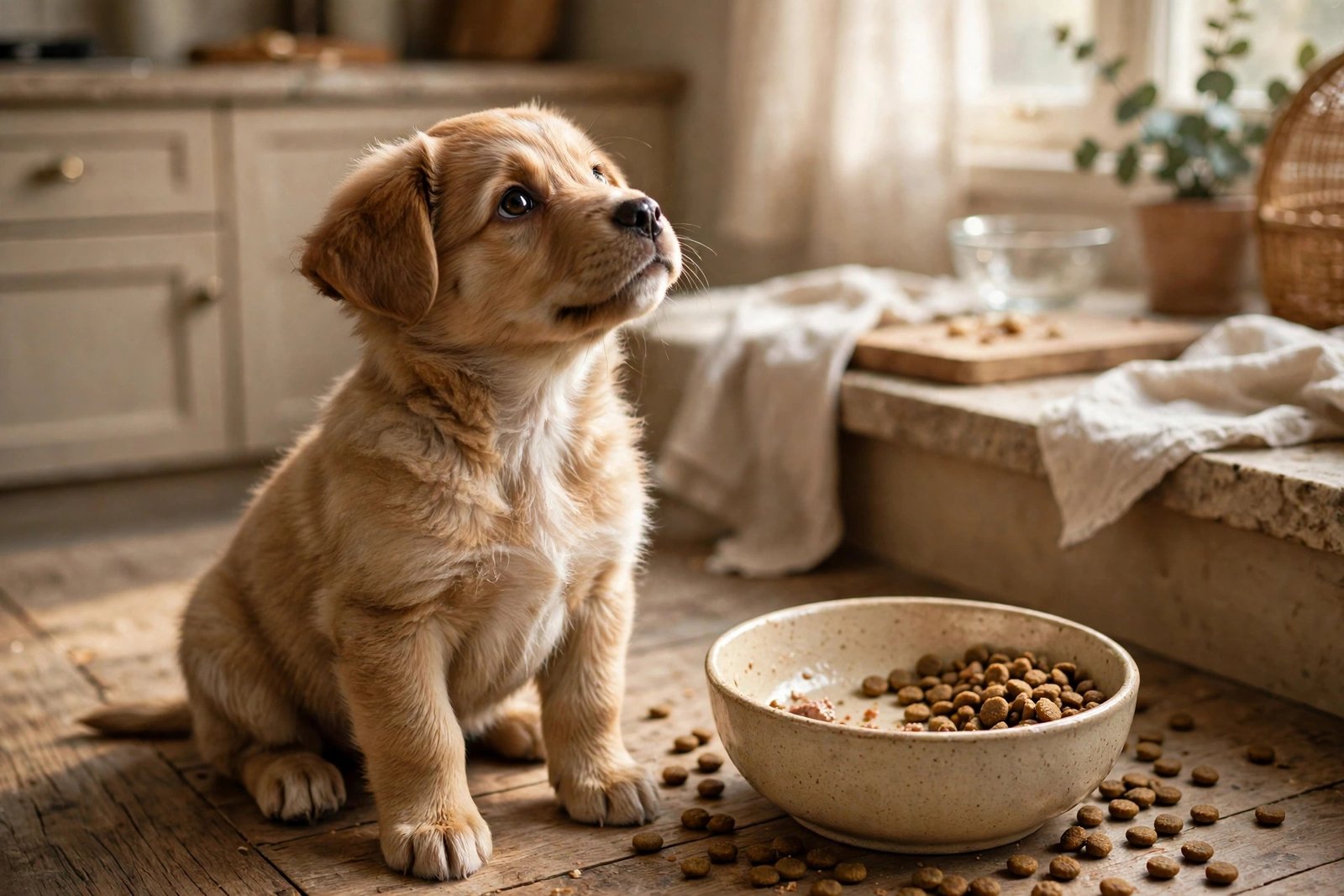
You measure the food, set the bowl down with love, and your puppy eats half of it, looks up at you, and wanders off to chew a shoe. If your puppy is not finishing food, it is natural to worry. Is the portion wrong? Is he bored of it? Is something wrong with him?
The reassuring truth is that an unfinished bowl is one of the most common puppy puzzles, and most of the time the cause is simple: the serving is bigger than his stomach, his mouth is sore from teething, or he is going through a perfectly normal fussy phase. This guide helps you work through each cause calmly, and shows you the signs that mean it is time to stop guessing and see a vet.
Quick Answer
Most puppies who leave food are being offered more than they need, are distracted, or have sore gums from teething. Compare the amount you serve with the feeding guide on the food for your puppy’s age and weight, split the daily amount into proper puppy meals instead of one large one, serve in a quiet spot, and pick the bowl up after about 20 minutes. Do not top the bowl up with tastier extras, as that teaches him to hold out. Watch his body, not just the bowl: a puppy who is growing, gaining weight steadily, and full of energy is usually eating enough. But a puppy who stops eating altogether, loses weight, or seems unwell needs a vet.
Important note: this article is general information only. It is not veterinary advice and it cannot diagnose your puppy. Only a vet who examines your puppy can tell you why his appetite has changed.
Reason 1: The Portion Is Simply Too Big
This is the most common cause of all. Puppy food guides are easy to misread, and many owners accidentally serve the whole day’s amount in one meal, or guess with a big scoop. A small puppy has a small stomach, roughly the size of his little paw pad fist, and he fills up long before a generous bowl is empty.
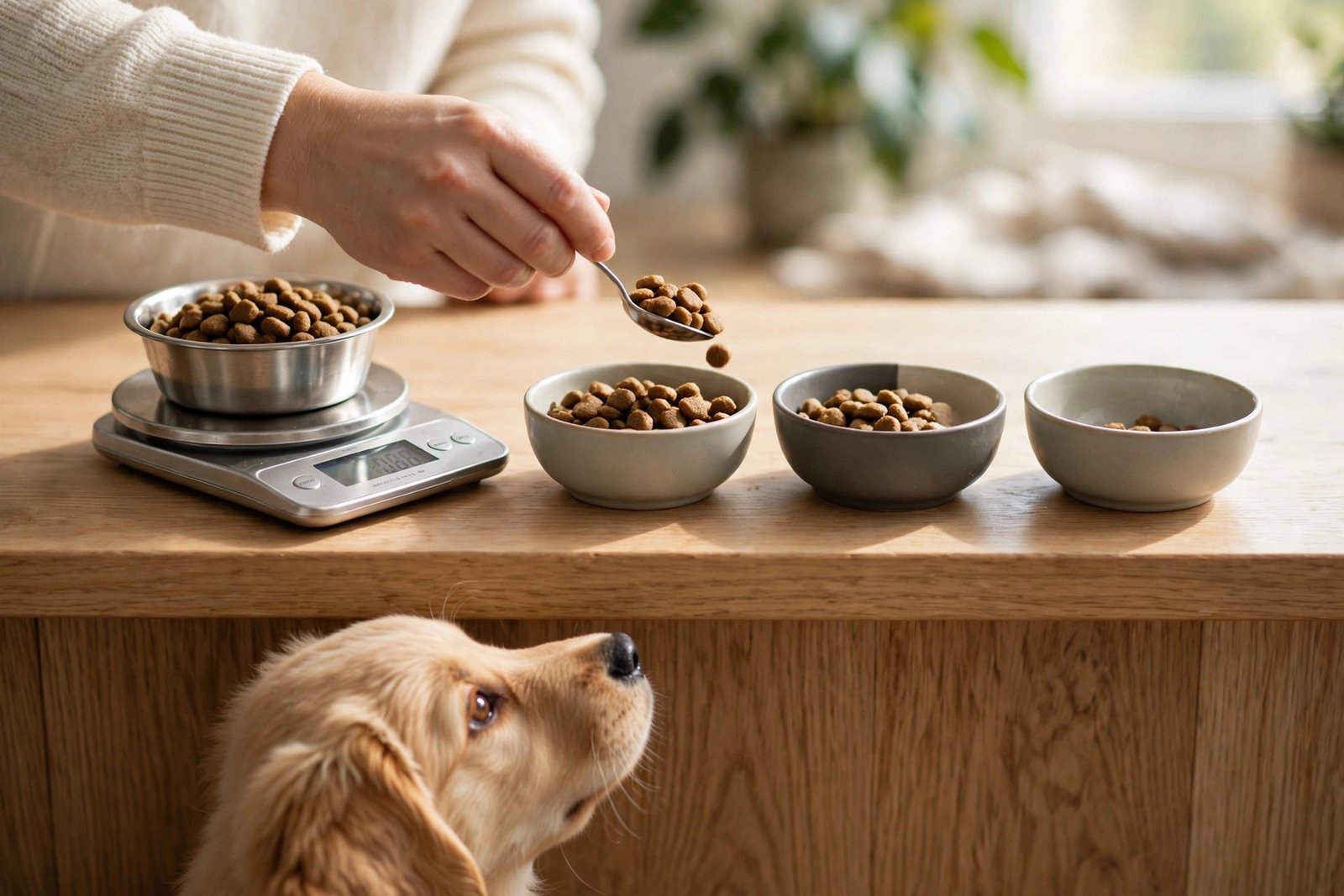
Check the feeding guide on your food and weigh out the daily amount once, so you can see what it really looks like. Then divide it into the right number of meals for his age. Our guide on how many times a day you should feed walks through meal frequency by age, which matters just as much as the total. If the unfinished bowl disappears once portions shrink, you have found your answer.
Reason 2: Teething Makes Eating Uncomfortable
Between roughly three and seven months, puppies lose their baby teeth and grow adult ones. During the sorest weeks, crunchy dry food can hurt, and many puppies eat less, eat slowly, or leave the hard pieces behind while still begging for softer things.
Signs teething is the issue include extra chewing on toys and furniture, slightly sore or pink gums, the odd tiny tooth found on the floor, and enthusiasm for soft food but not dry. You can help by softening dry food with a little warm water for a few minutes before serving, and by offering suitable chew toys between meals to ease the ache. This phase passes on its own. If your puppy refuses all food, drools a lot, paws at his mouth, or seems in real pain, that is more than ordinary teething, and a vet should check his mouth.
Reason 3: Normal Fussy Phases and Growth Changes
Puppy appetites are not steady. During growth spurts a puppy may eat like a wolf, and in the quieter weeks between spurts he may need noticeably less. Many puppies also go through a picky stage at five to eight months, testing whether complaining brings something better.
How you respond matters. If leaving food earns cheese, chicken, or a brand-new menu, your puppy learns that refusing pays. Adult dogs do this too, and our guide on what to do when a dog won’t eat new food explains the same habit in grown-ups. For a healthy puppy, keep the same food, keep mealtimes calm and brief, and let the next meal be the next meal. A missed portion or two will not harm a thriving puppy, and his appetite usually returns within a day.
Reason 4: The Setting Is Working Against Him
Too many distractions
Puppies have the attention span of a toddler in a toy shop. If the bowl sits beside children playing, another pet wandering past, or a busy doorway, many puppies eat a little, then run off to join the fun, and forget to come back. Serve meals in a quiet, boring corner and stay nearby but relaxed.
A dirty or smelly bowl
Puppies smell far more than we do. Yesterday’s dried food film and a sour-smelling bowl can put a sensitive puppy off before he starts. Wash the bowl between meals, not just when it looks dirty, and our guide to dog food bowl hygiene mistakes shows the simple habits that keep bowls fresh and safe.
Food that has gone stale
Dry food left open for weeks loses its smell and appeal, and the fats in it slowly turn. Store food sealed, in a cool dry place, and buy bag sizes your puppy will finish within about a month of opening.

A Simple Routine That Fixes Most Cases
- Weigh the daily amount from the food’s guide and split it into age-appropriate meals.
- Serve at the same times each day, in the same quiet spot.
- Give the meal about 20 minutes, then pick up whatever is left without fuss or scolding.
- Keep treats modest, and count them as part of the day’s food.
- Track weight weekly: feel for ribs under a thin layer of fat, and note steady growth.
- Change only one thing at a time, so you can see what actually helped.
When to See a Vet
Do not wait and watch if you see any of the following:
- Your puppy refuses all food for 24 hours, especially a young puppy under four months.
- He stops eating and also vomits, has diarrhoea, or passes worms or blood.
- He seems tired, weak, wobbly, or uninterested in play and people.
- He is losing weight, or his ribs and hips start to show.
- He drools, paws at his mouth, cries when eating, or has very swollen gums.
- The appetite change came on suddenly after he could have swallowed something he should not have.
Young puppies have small reserves, so vets would always rather see a puppy early and find nothing than see one late. Trust that instinct.
Mistakes to Avoid
- Adding toppers at every refusal. Cheese, gravy, and chicken on top teach your puppy that leaving food upgrades it.
- Swapping foods again and again. Constant changes upset the stomach and create a fussier eater, not a happier one.
- Leaving the bowl down all day. Grazing hides how much he really eats and makes meals lose all meaning.
- Hand-feeding every meal. A few hand-fed pieces are fine for training, but a puppy who only eats from your hand has learned a habit, not solved a problem.
- Judging by the bowl instead of the puppy. Body condition and energy tell you far more than one unfinished serving.
Frequently Asked Questions
How long can a puppy safely skip food?
A bright, drinking, playful older puppy who skips one meal is rarely an emergency, but puppies should not go a full day without eating. If your puppy refuses everything for 24 hours, or sooner if he is very young, small, or seems unwell in any way, call your vet the same day.
Should I change my puppy’s food if he leaves some?
Not straight away. First check the portion size, the meal routine, and whether teething or distractions explain it. If he eats the food happily most of the time and is growing well, the food is fine. Frequent swapping usually makes pickiness worse.
My puppy eats breakfast but leaves dinner. Why?
Often the day’s treats, training rewards, and chews have quietly filled him up, or his morning portion was too generous. Count everything he eats across the day, trim the extras, and slightly rebalance the two meals before worrying.
Is it okay to soften puppy food with water?
Yes. Warm water softens dry food, releases more smell, and is a kind help during teething. Just serve it fresh and throw away what is left after the meal, because soaked food spoils faster than dry food left in the bowl.

1 thought on “Puppy Not Finishing Food? Portions, Teething and Fussy Phases”