
Run a finger inside your dog’s bowl an hour after a meal and you will probably feel it: a slippery, slimy film that a quick rinse never quite removes. That film is where most dog food bowl hygiene mistakes begin, and it is the reason a bowl can look clean while being anything but.
The good news is that bowl hygiene is one of the easiest wins in dog care. A few small habits, done daily, keep bowls genuinely clean, keep food tasting fresh, and remove one quiet cause of upset tummies and picky eating. Here is what goes wrong in most homes, and the simple routine that fixes it.
Quick Answer
Wash your dog’s food bowl with hot water and washing-up liquid after every meal if he eats wet or fresh food, and at least once a day for dry food. Wash the water bowl daily too, and refill it with fresh water rather than topping it up. Scrub properly instead of rinsing, dry the bowl fully, replace scratched plastic bowls, and never leave wet food sitting out for hours. That short routine removes the slimy bacterial film that builds up in bowls and makes food smell and taste stale.
What That Slimy Film Actually Is
Within hours of a meal, bacteria from your dog’s mouth and food settle on the bowl’s surface and link together into a thin, sticky layer often called biofilm. It is the same kind of film that makes a neglected water bowl feel slippery. A splash of cold water slides over it without removing it, which is why bowls can pass a glance test and still be far from clean.
This is not about panic. Dogs are robust animals with strong stomachs, and a normal home bowl is not a danger zone. But a heavy, days-old film can contribute to tummy upsets, can put sensitive dogs off their food, and is simple to prevent, so there is no reason to let it build.
The Most Common Bowl Hygiene Mistakes
Only rinsing instead of washing
A rinse wets the bowl but leaves the film behind. Bowls need friction and soap: a brush or sponge, hot water, and ordinary washing-up liquid, exactly like your own plates. If you would not eat dinner off a plate that was only rinsed for a week, your dog’s bowl deserves the same standard.
Washing the food bowl but forgetting the water bowl
Water bowls are often topped up for days, growing slimier each time. Empty, wash, and refill the water bowl daily. This matters even more for dogs who seem fussy about drinking, since stale water in a filmed bowl tastes worse. If your dog is a leftover-leaver at mealtimes too, our guide to a puppy not finishing food covers bowl freshness along with portions and teething.
Leaving wet food sitting out
Wet and fresh food at room temperature is a friendly place for bacteria. Serve what your dog will eat, pick the bowl up after about 20 to 30 minutes, and put leftovers in the fridge or throw them away. Dry food is more forgiving, but even kibble goes stale and its bowl still grows film.

Using a badly scratched plastic bowl
Plastic bowls are light and cheap, but teeth and claws score them with tiny grooves, and those grooves shelter bacteria where a sponge cannot reach. Some dogs also develop an irritated, spotty chin from bowls that are hard to keep clean. If your plastic bowl is rough, cloudy, or chewed, replace it. Smooth stainless steel and glazed ceramic are generally easier to scrub truly clean, though any bowl still needs daily washing.
Ignoring the feeding area around the bowl
Spilled food under a mat, crumbs in a corner, and a feeding stand that is never wiped all add smells and attract pests. Wash feeding mats weekly, wipe stands down, and sweep the spot as part of the routine, especially in warm weather.
A Simple Bowl Routine That Works
- After wet or fresh meals: wash the bowl in hot soapy water, or in the dishwasher if the bowl is dishwasher safe.
- For dry food: wash at least once a day, and wipe out crumbs between meals.
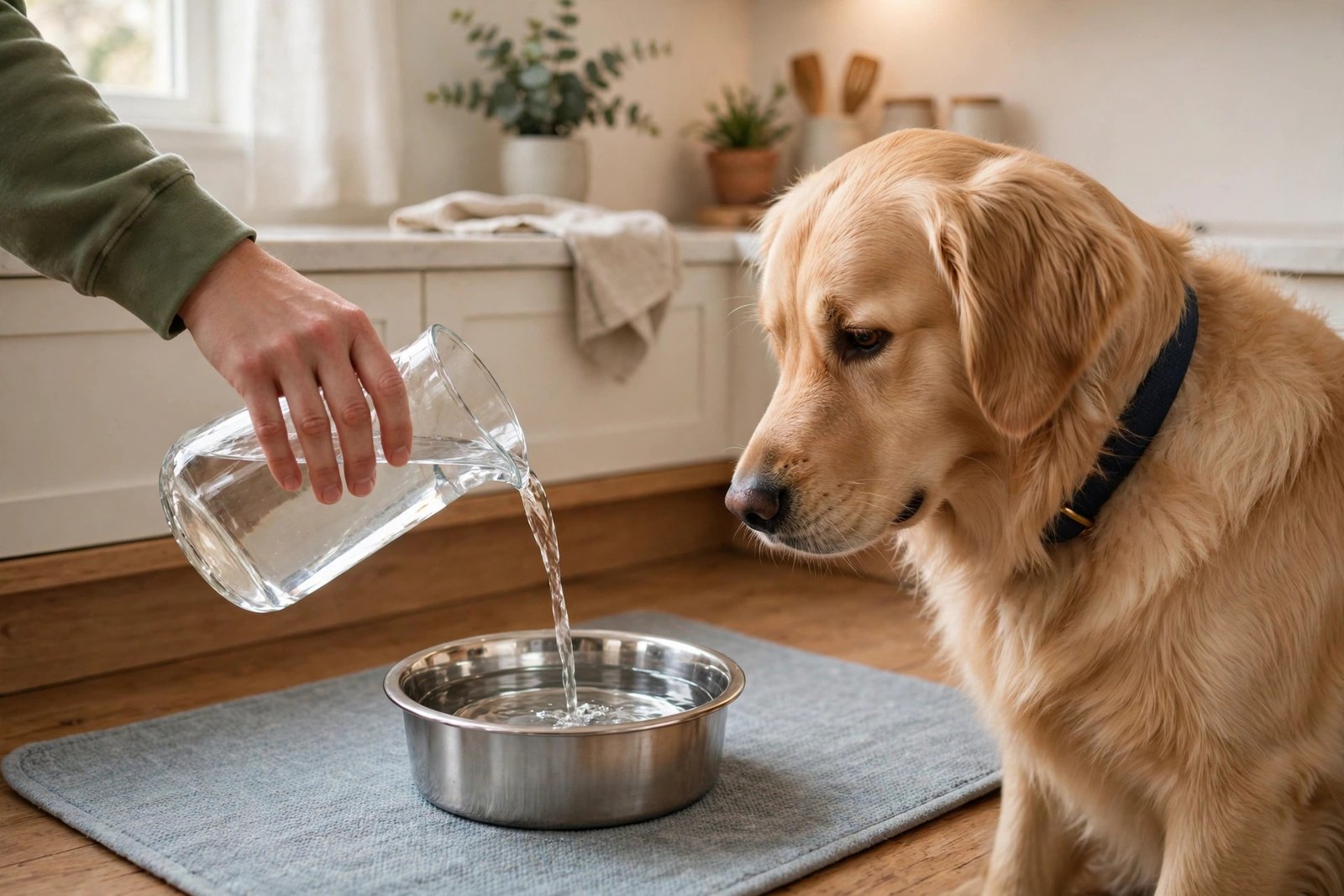
- Water bowl: empty, wash, and refill with fresh water every day.
- Drying matters: let bowls dry fully or dry them with a clean cloth, because bacteria enjoy damp surfaces.
- Weekly: wash feeding mats and wipe the stand or feeding area.
- Monthly check: look for scratches, chips, and cracks, and replace bowls that are damaged.
Having two sets of bowls makes all of this easier. One set can be in the dishwasher while the other is in use, so a clean bowl is never the reason a wash gets skipped. Feeding style plays a part as well: dogs who graze from a bowl left down all day make hygiene harder, which is one more reason our comparison of grazing vs scheduled meals leans toward set mealtimes for most homes.
Bowls, Feeders, and Slow Feeders
Raised stands, automatic feeders, and puzzle bowls all need the same care as a plain bowl. Slow feeders have ridges and corners where food and saliva collect, so they need a real scrub, not a rinse, and many are dishwasher safe for exactly this reason. If you use one for a dog who bolts his meals, our guide to a dog who eats too fast explains the options; whichever you choose, wash it daily. Water fountains need their filters changed on schedule and their bowls washed like any other, or the water simply circulates past the same film.
Extra Care for Puppies, Seniors, and Raw or Fresh Diets
Some dogs deserve an even stricter routine. Puppies and elderly dogs, and dogs recovering from illness, have less margin for error than a healthy adult in his prime, so their bowls should be washed after every single meal without exception. The same goes for any dog fed raw or fresh food: those meals leave more residue than dry food and should never sit in the bowl between meals. In a multi-dog home, wash each bowl rather than letting dogs swap and share, which spreads germs from a mildly unwell dog to the rest. None of this needs special products or disinfectants. Hot water, washing-up liquid, and a proper scrub, done consistently, is the whole secret.
When Bowl Hygiene Might Be Part of a Bigger Problem
Clean bowls will not fix every issue, but poor hygiene is worth ruling out if your dog has repeated mild tummy upsets, keeps going off food that he used to enjoy, or develops a sore, spotty chin. Fix the bowl routine first, give it a week or two, and if the problem continues, see a vet rather than guessing further. A dog who vomits repeatedly, has ongoing diarrhoea, or stops eating needs a vet regardless of how clean his bowls are.
Mistakes to Avoid
- The eternal rinse. Water alone does not remove the slimy film; soap and scrubbing do.
- Topping up the water bowl for days. Fresh water in a washed bowl, every single day.
- Leaving wet food down for hours. Pick it up after the meal window and store or bin the rest.
- Keeping a chewed plastic bowl for years. Deep scratches shelter bacteria; replace damaged bowls.
- Using strong chemicals and not rinsing. Ordinary washing-up liquid is enough, and bowls must be rinsed clean so no residue reaches your dog.
Frequently Asked Questions
How often should I wash my dog’s bowl?
After every meal for wet or fresh food, and at least once a day for dry food. The water bowl should be washed and refilled daily. Think of it like your own dishes: a plate used for dinner is washed before breakfast, not rinsed and reused all week.
Can a dirty bowl really make my dog sick?
A neglected bowl can contribute to mild tummy upsets and can spoil the taste of food and water, which puts some dogs off eating. Most healthy dogs cope well, so there is no need to worry, but daily washing removes the risk almost entirely and takes a minute.
Which bowl material is easiest to keep clean?
Smooth stainless steel and glazed ceramic are generally the easiest to scrub clean and often tolerate dishwashers well. Plastic is fine while it is smooth and undamaged, but once it is deeply scratched it becomes hard to clean and should be replaced.
Is the dishwasher okay for dog bowls?
Yes, if the bowl is labelled dishwasher safe. The heat and full wash cycle do an excellent job. If you wash by hand, use hot water, washing-up liquid, and a brush or sponge kept for the dog’s things, and let the bowl dry completely before the next meal.

1 thought on “Dog Food Bowl Hygiene Mistakes That Can Make Your Dog Sick”