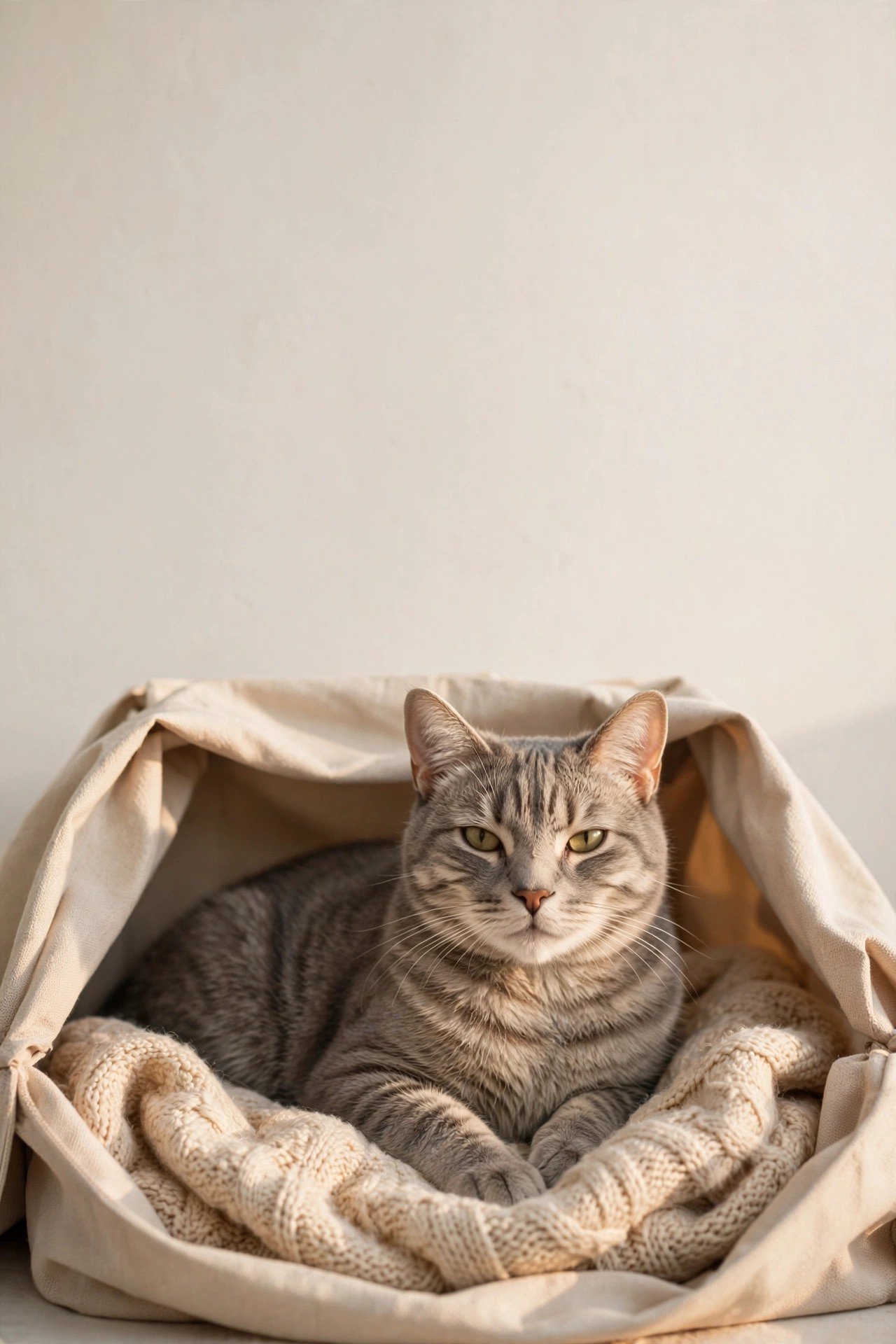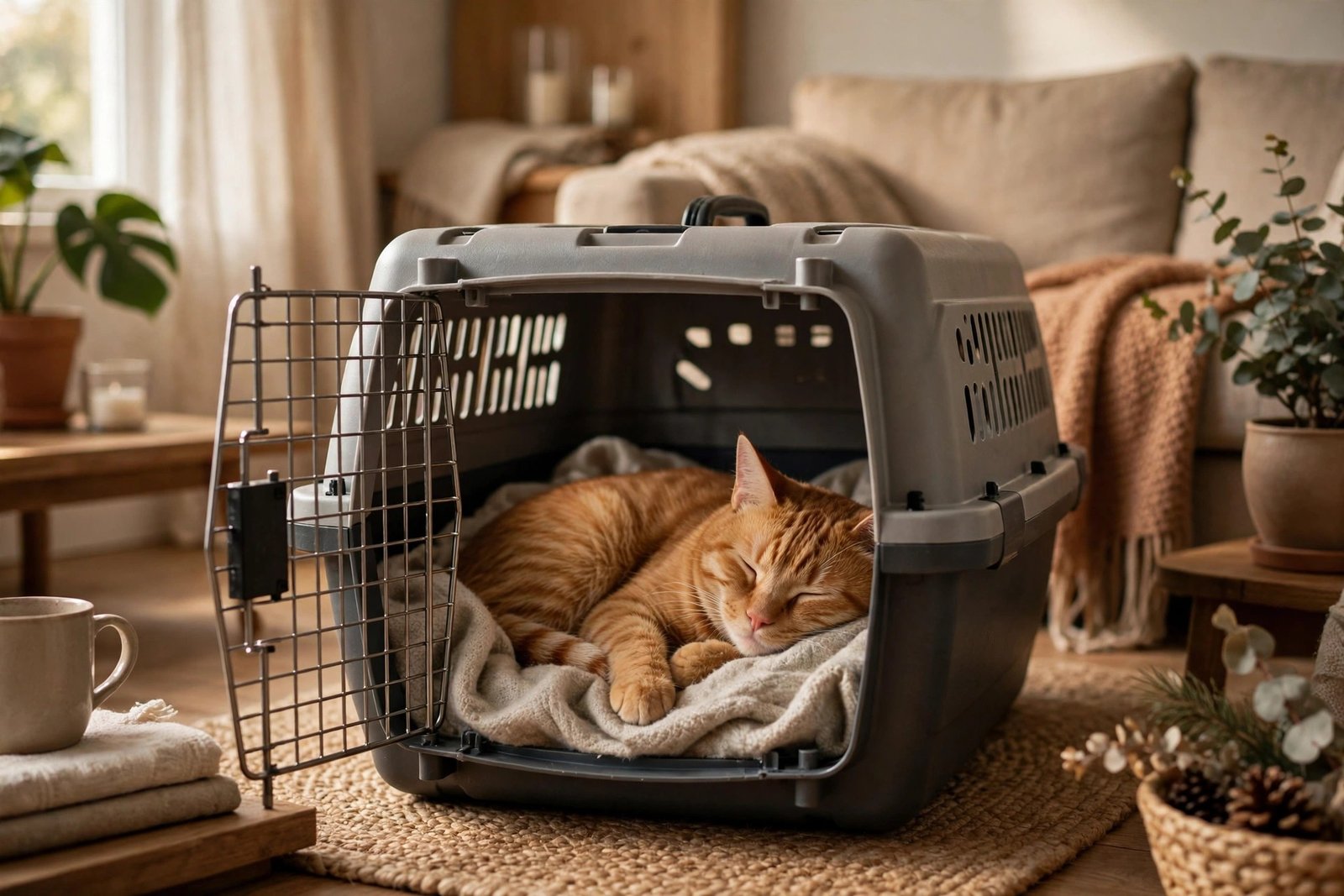
Most pets meet their travel carrier exactly twice a year: once when it comes down from the cupboard smelling of dust, and once when they are put inside it, alarmed, on the way to the vet. No wonder the carrier itself becomes the scariest part of the trip — the pet is not afraid of the car, he is afraid of the box that only ever predicts bad things. The fix is wonderfully simple: make the carrier an ordinary, pleasant piece of furniture in your home, long before any journey. Done kindly, most cats and dogs learn to walk into it by choice.
Quick Answer
Choose a carrier your pet can stand up in, turn around in, and lie down stretched in — no bigger, or he will slide around in transit. Then leave it out at home, permanently, with the door open and a familiar blanket inside, so it becomes a napping den rather than a warning sign. Build up in tiny steps over days and weeks: treats and meals near it, then inside it, then with the door closed for seconds, then lifted, then short practice trips that end at home with dinner — never forced, always at your pet’s pace. First real journeys then become just another outing instead of the worst day of the year.
Choosing the Right Size and Style
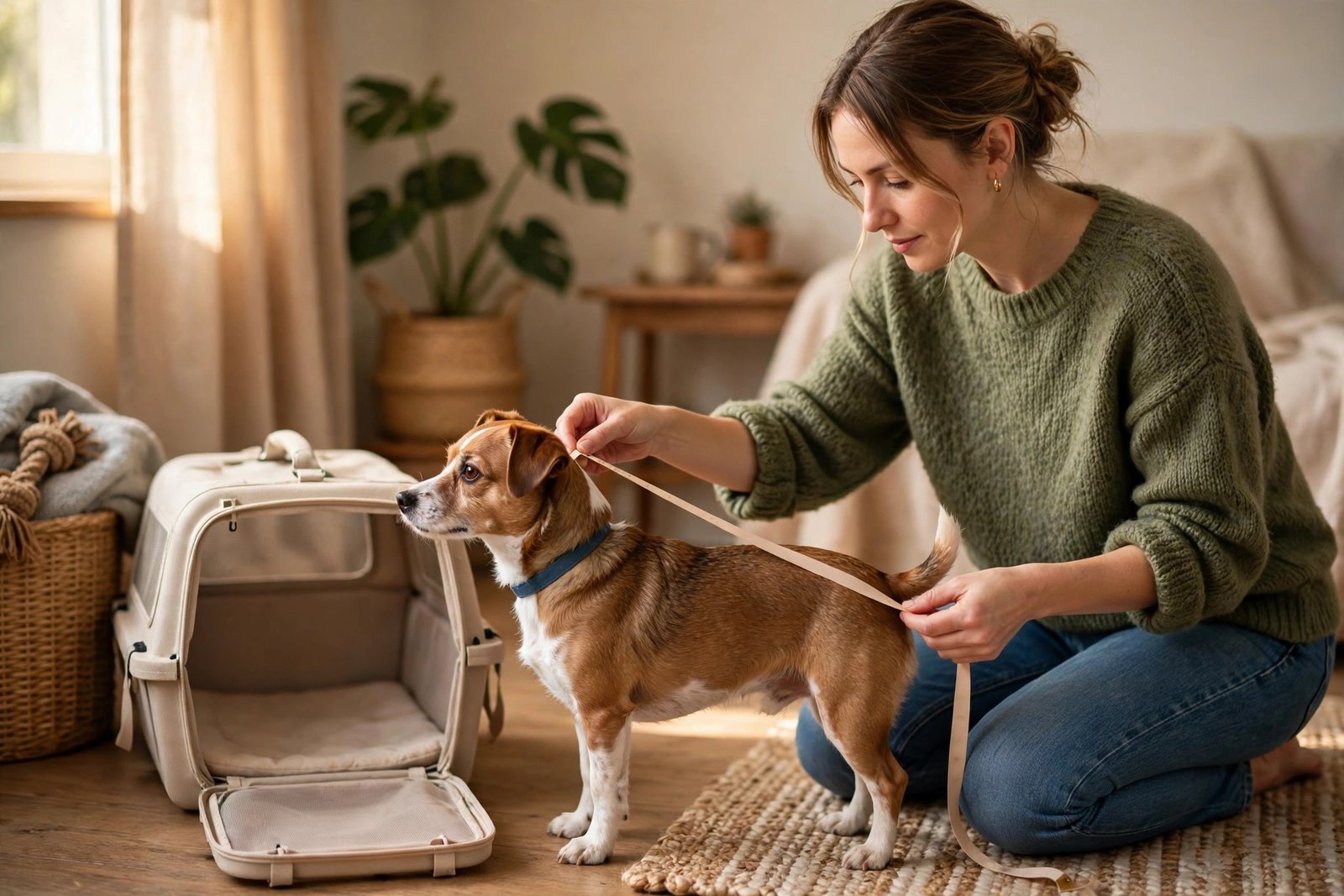
The sizing rule is the same one used for crates: your pet should be able to stand at full height without crouching, turn around comfortably, and lie down on his side with legs extended. Measure your pet from nose to tail base and from floor to the top of the head or ears, then compare with the carrier’s inside measurements — outside numbers flatter. Resist buying “room to grow” for travel: in a moving vehicle, an oversized carrier lets a pet slide and bump, which adds stress and can cause injury in a sudden stop. Puppies who will outgrow a carrier in months are the same sizing puzzle as crates — the measuring method in our guide on how to choose a puppy crate size works for carriers too.
- Hard-sided carriers are sturdy, stackable, easy to clean after accidents, and the usual requirement for any air travel. A top opening is a genuine blessing for cats, who can be lifted in rather than pushed through a front door.
- Soft-sided carriers are lighter, squeeze a little under seats, and suit calm, small pets on short car trips — but a determined chewer or scratcher can work through mesh, and they clean less easily.
- Whatever the style: check that latches feel solid, ventilation is generous on more than one side, and the base is rigid enough not to sag when carried — a sagging floor feels like a trapdoor to the passenger.
Step One: The Carrier Lives in Your Home
Put the carrier in a room your pet already likes, door fixed open (or removed), with bedding that smells of home inside. Then do nothing. Let curiosity work: a cat will investigate a new box within days because investigating boxes is what cats do; a dog will sniff it, and find the treats you casually keep “dropping” nearby. Feed regular meals beside it, then just inside the doorway, then fully inside with the door still open. Scatter the occasional surprise treat inside during the day so the carrier randomly produces good things. This stage alone — carrier as furniture — does most of the training, and it is exactly the same den principle that helps pets settle after a house move in our guide on a cat hiding all day after moving house: familiar, enclosed, and smelling of home equals safe.
Step Two: Doors, Lifting, and Standing Still
Once your pet naps or eats inside happily, begin the tiny-steps ladder. Keep every step short, end on success, and spread the steps across days:
- Close the door for two seconds while your pet eats a treat inside; open it before he even thinks of asking.
- Build closed-door time gradually — seconds to a minute to a few calm minutes — always paired with something pleasant to chew or lick.
- Lift the carrier a few centimetres and set it down. Then carry it to the next room. Treat after each step.
- Place it in the car, engine off. Sit, treat, come back inside. Nothing about the car should be new on a real trip day.
- Engine on, no driving. Then a two-minute drive around the block that ends at home, with dinner after. Short, boring, survivable — that is the lesson you want installed.
If your pet panics at any step, you have skipped one: go back to the last easy stage and rebuild more slowly. There is no deadline in training that kindness cannot improve.
Step Three: Calm Vet Trips and Real Journeys
With the groundwork done, real trips change character. Line the carrier with the familiar blanket, add a worn T-shirt that smells of you, and cover a cat’s carrier with a light cloth — most cats travel calmer in a dim, den-like space. Drive smoothly, keep music low, and secure the carrier so it cannot slide (a seatbelt through the handle or a snug spot in the footwell). For vet visits specifically, the practice trips that end at home are what break the carrier-equals-vet spell; some owners add an occasional “happy visit” — carrier, short drive, treat in the waiting room, home again — so the clinic is not always bad news either. On travel days, the same calm kit logic from our dog walking gear essentials guide applies: ID tags on, lead and bags ready, water for longer journeys.

Cats and Dogs: The Small Differences
Cats, being cats, usually need longer at Step One and benefit most from a top-loading carrier and a cover in transit; leave the carrier out for weeks before judging it, and let the cat choose the pace entirely. Dogs often progress faster — many already associate outings with fun — but excitable dogs need the calm steps just as much, because a bouncing passenger is a safety problem, not enthusiasm. For both: one pet per carrier, always, even if they are best friends. A frightened traveller can redirect that fear onto a companion in a confined space, and separate carriers side by side keep everyone safe.
Mistakes to Avoid
- Do not store the carrier away and produce it only on trip days. That single habit is what teaches most pets to fear it.
- Do not force, push, pour, or dump a pet into a carrier. One frightening wrestle undoes weeks of patient work; if a trip is truly urgent and training is not done, ask your vet for advice on safe handling and calming options instead.
- Do not buy a carrier so large “for comfort” that your pet slides around in it — snug and stable feels safer than spacious in a moving car.
- Do not make the first-ever trip a long one. Build duration through practice, the same way you built everything else.
- Do not feed a big meal right before travelling; a light meal a few hours earlier suits most stomachs better and reduces travel sickness and accidents.
- Do not leave a pet in a parked car in warm weather, carrier or not — even minutes can become dangerous.
Frequently Asked Questions
How long does carrier training usually take?
For a young or confident pet, the whole ladder can take a week of tiny daily sessions. For a cat with years of carrier fear, plan on several weeks, most of it just spent at Step One with the carrier sitting out as furniture. That slow start is not wasted time — it is the training. Rushing the early stages is what makes the later ones fail.
My cat hides the moment she sees the carrier. Can this still work?
Yes — hiding at the sight of it just confirms the carrier currently means “bad day.” Leave it out permanently so it stops being an event, let her discover treats appearing in and around it on her own schedule, and never begin a session by fetching her to it. Cats trained this way commonly end up napping in the carrier voluntarily, which feels miraculous and is really just patience paying off.
Should I put treats or toys inside on real trips?
A familiar blanket and something that smells of home help most. A favourite soft toy is fine for a calm traveller; skip anything noisy, and skip food toys for pets prone to travel sickness. For most pets the kindest in-trip offering is simply a smooth, quiet ride and a covered carrier.
Is a soft or hard carrier better for a nervous pet?
A sturdy hard-sided carrier usually wins for nervous pets: it feels like solid shelter, does not flex when carried, survives an accident cleanup, and a top-loading version avoids the dreaded front-door push entirely. Soft carriers suit already-calm small pets on short trips. When in doubt, choose the one your pet can be lifted into most calmly.