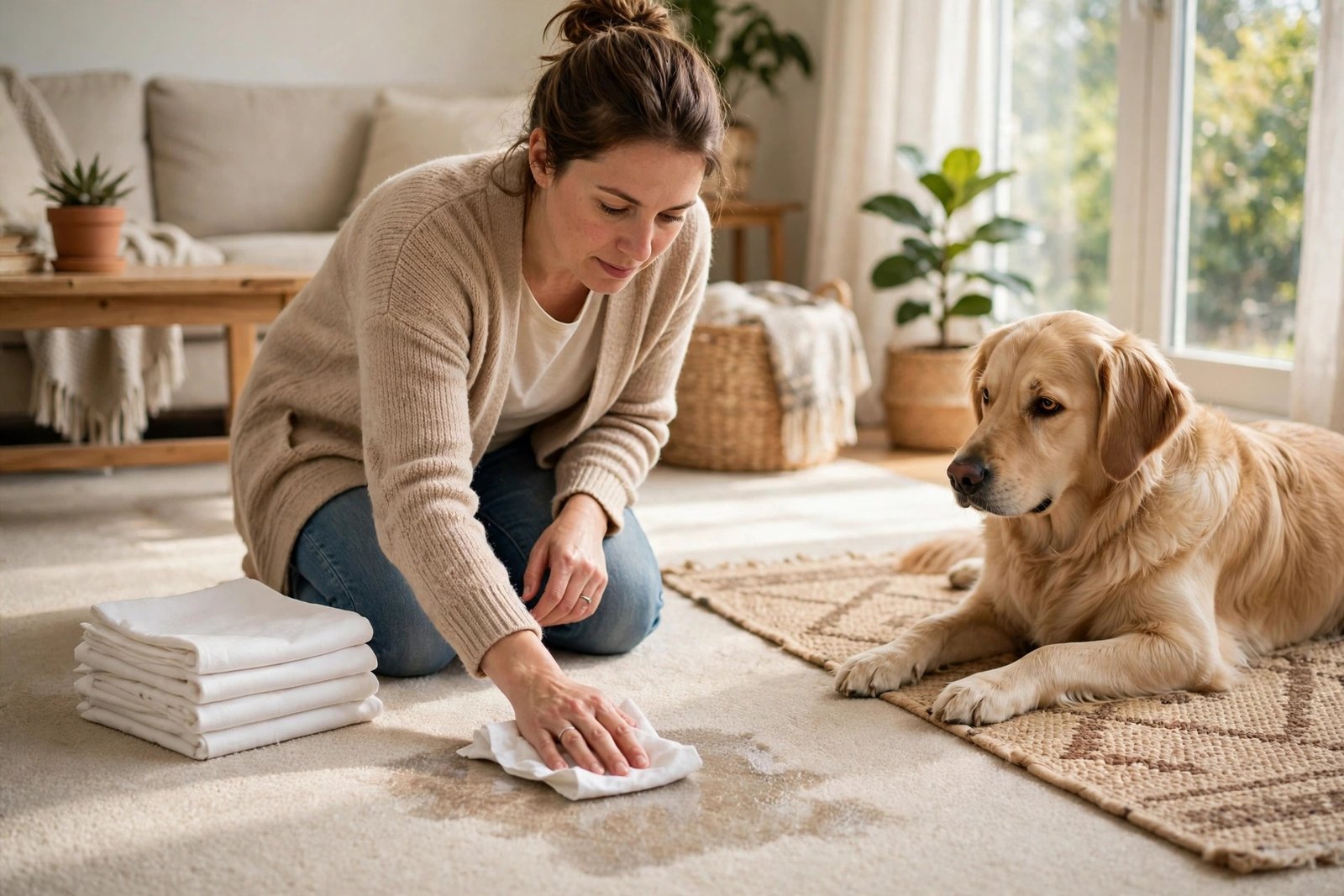
Every pet home knows the moment: you walk in, catch a smell you cannot locate, and realise your nose has become a detective. Pet accidents are a normal part of life with dogs and cats — puppies in training, senior pets, a litter tray missed by inches — but the stains and smells they leave behind are only stubborn if they are cleaned the wrong way. The method matters more than the product shelf. This guide gives you the right method for each surface, how to find smells you cannot see, and the safety rules that keep cleaning from becoming dangerous.
Quick Answer
Act fast and blot, never rub: lift solids, then press clean cloths or paper towels into the spot, standing on them if needed, until they come away nearly dry. For urine and other organic messes on washable surfaces, follow with an enzyme cleaner (the kind whose active ingredients digest the proteins causing the smell) used exactly as directed — these need time and a damp surface to work. Carpets and padding need repeated blotting and patience; upholstery needs a gentleness check in a hidden spot first; hard floors are the easy ones — clean, rinse, dry. For smells you cannot find, darken the room and use a UV blacklight torch: old urine glows. And the golden safety rule: never mix cleaners, especially bleach with anything containing ammonia — the fumes are genuinely dangerous.
Step One: The Blot-Don’t-Rub Rule
Almost every failed cleanup fails in the first minute. Rubbing or scrubbing a fresh accident does three bad things: it pushes the mess deeper into fibres or grout, it spreads it over a wider area, and it roughs up carpet pile so the spot holds dirt forever after. Blotting does the opposite. Work from the outside edge of the spot towards the centre so you do not enlarge it, use white cloths or plain paper towels (patterns and dyes can transfer onto pale carpet when wet), and keep swapping to a clean section as each one soaks up liquid. For a soaked carpet spot, stack towels, stand on them, and repeat — you will be surprised how much a “dry” carpet is still holding. Only when the blotting comes away almost clean is the surface ready for a cleaning product.

Cleaning by Surface
Carpets and rugs
After blotting, apply an enzyme cleaner generously enough to reach as deep as the urine did — the padding underneath holds smell long after the surface looks clean — then cover with a damp cloth and leave it for the hours the directions specify. Enzymes work slowly and stop working if they dry out or get hot. Afterwards, blot again and rinse by blotting with plain water. For washable rugs, the washing machine after pre-treating is simpler and better. If a bedroom carpet keeps smelling after treatment, the padding itself may be the reservoir; at some point replacing a small section of underlay beats a fifth cleaning attempt.
Sofas and upholstery
Check the maker’s cleaning code on the label if there is one, and always test any product on a hidden patch first. Blot as with carpet, use enzyme cleaner sparingly (overwetting upholstery invites mildew inside the cushion), and speed drying with a fan. Removable covers are the lucky case: pre-treat the spot, then wash them like the throws in our pet hair on sofa fixes routine — shake, wash, dry fully before they go back on. If your cat’s accidents cluster near the sofa rather than the tray, it is also worth reviewing placement with our best litter box setup for small apartments guide, because prevention cleans better than any product.
Hard floors: tile, laminate, vinyl, and sealed wood
The easy surfaces — mostly. Wipe up, wash with a plain floor cleaner or a little dish soap in warm water, rinse, and dry. The catch is the seams: urine that reaches grout lines, laminate joints, or the edge where floor meets skirting can wick underneath and smell for weeks. Run your cleaning along seams deliberately, and for grout, an enzyme cleaner left to dwell works there too. Unsealed or worn wood is the one genuinely hard case, because liquid soaks into the grain; repeated enzyme treatments help, but a dark, deep stain may need sanding and resealing to truly leave.
About Enzyme Cleaners, in Plain Terms
Ordinary cleaners wash away the visible part of a mess and perfume the rest. Enzyme cleaners work differently: they contain biological agents that break down the actual proteins and uric acid crystals in urine, vomit, and faeces — the parts that keep smelling and that call a pet back to the same spot. Three things decide whether they work: use enough to reach everything the mess reached; give them the full dwell time on the label; and do not use a strong disinfectant on the spot first, because it can neutralise the enzymes before they start. Old, set stains may need two treatments. That is normal chemistry, not a failed product.

Finding Smells You Cannot See
When the room smells but no spot shows, think like the smell: low, along skirting boards, behind furniture, under rugs, and in the corner a pet could reach in seconds. A UV blacklight torch (sold cheaply for exactly this job) makes old urine deposits glow yellow-green in a darkened room — go slowly at night, mark finds with sticky notes, and treat them one by one with the blot-and-enzyme method. Also check the non-floor suspects people forget: the litter tray area itself, pet bedding due for its deep wash, the tray’s surrounding mat, and the deep-clean routine in our guide on how to clean a litter box properly — a shocking share of “mystery smells” turn out to be a tray that needs its full reset rather than a hidden accident at all.
Old Stains and Repeat Spots
A spot your pet returns to is a spot that still smells like a toilet to a nose far better than yours. Treat repeat areas with extra generosity — wider and deeper than the visible stain, since urine spreads sideways under carpet — and once clean, change what the spot means: feed treats there, play there, or place the pet’s bed nearby, because animals avoid soiling feeding and sleeping areas. For puppies and cats still learning, blocking access to a favourite accident corner while retraining continues is management, not defeat.
Safety: Cleaners That Must Never Meet
- Never mix bleach with ammonia or with cleaners containing it (some glass and floor cleaners do) — the reaction releases toxic gas that can seriously harm you and your pets.
- Never mix bleach with vinegar or acidic descalers — same problem, chlorine gas.
- One product at a time, rinsed between: if one cleaner has not worked, rinse the area thoroughly with water and let it dry before trying another.
- Keep pets out until it is dry: paws pick up residues and tongues follow paws. Ventilate the room while you work.
- Store everything closed and high: the cleaning cupboard is as much a pet-proofing job as the kitchen bin.
Mistakes to Avoid
- Do not scrub. Rubbing spreads the mess, drives it deeper, and frays carpet fibres so the patch traps dirt permanently.
- Do not use a steam cleaner on a urine stain that has not been enzyme-treated first — heat can set the protein and the smell into the fibres for good.
- Do not rely on strongly scented sprays to “cover” a smell. Your pet’s nose reads straight through the perfume to the accident underneath, and so, eventually, does yours.
- Do not punish your pet for an accident you found later. They cannot connect the telling-off with the event, and punishment around toileting creates anxiety-driven hiding of accidents — the opposite of what you want.
- Do not skip the rinse after ordinary detergents; residue left in carpet is sticky and attracts new dirt to exactly the spot you just cleaned.
- Do not ignore a sudden run of accidents in a house-trained adult pet. That is a health or stress signal to discuss with your vet, not a cleaning problem.
Frequently Asked Questions
Why does the smell come back on humid days?
Moisture in the air re-activates dried urine crystals left deep in carpet padding or grout, which is why a room can seem cured for a week and then announce itself again. It means the treatment did not reach everything the original mess reached. Re-treat wider and deeper with an enzyme cleaner, and if a carpet spot keeps resurrecting, suspect the underlay beneath it.
Can I use vinegar or baking soda instead of an enzyme cleaner?
They help with surface freshness — baking soda absorbs some odour as it dries, and diluted vinegar suits a quick wipe on hard floors — but neither digests the uric acid crystals that cause the long-term smell and the return visits. For urine especially, they are a partial fix. Use them for minor freshening; use enzymes for the spots that matter.
How do I get the smell out of a mattress or thick cushion?
Blot hard and repeatedly, then saturate with enzyme cleaner to the depth you judge the liquid reached, cover with plastic or a damp towel to keep it working for the full dwell time, and dry it thoroughly afterwards — a full day with a fan is not excessive. Thick foam dries slowly, and rushing this step is how mildew joins the problem.
My pet keeps using the same corner. What actually stops it?
Three things together: a truly deep enzyme clean of that corner (wider than the stain), making the corner boring or inaccessible while habits reset, and giving the spot a new job — meals, play, or a bed near it. If the behaviour is new in an adult pet, or comes with straining, blood, or much more frequent toileting, skip the strategy and call the vet first.
