A good walk is built long before you reach the park. The lead that rubs your hand raw, the collar your dog slipped out of at the one moment a cat crossed the road, the forgotten poop bags — small gear failures turn a relaxing daily ritual into a stressful one. The good news is that dog walking gear is simple: a well-fitted way of attaching the lead, the right lead for the place you are walking, and a tiny everyday kit. Get those three right and most walks quietly sort themselves out.
This guide walks through each piece in general terms — no brands, no prices — so you can judge whatever you already own, or choose sensibly when something wears out.
Quick Answer
For most dogs, a well-fitted harness is the kindest everyday choice because it spreads pressure across the chest instead of the throat; a flat collar still matters because it carries your dog’s ID tag. Fit either one with the two-finger rule — you should be able to slip two fingers snugly underneath — and check weekly that a growing, slimming, or fluffy dog cannot back out of it. Use a standard lead of about 1.2 to 1.8 metres for pavements and busy places, and a longer line only in open, safe areas where you can manage the slack. Then add the small kit: ID tag on the collar, poop bags (plus a spare), water on warm or long walks, and a clip-on light after dark. Good gear keeps your dog safe and comfortable — but remember it supports training, it does not replace it.
Harness or Collar? An Honest Comparison
The flat collar
A simple flat collar is light, cheap to replace, and always on — which is exactly why it should carry your dog’s ID tag with your phone number. For a calm dog who walks loosely beside you, a collar and lead can be perfectly comfortable. The weakness shows when a dog lunges or pulls: all the pressure lands on the throat and neck, which is uncomfortable at best and a poor idea for dogs with neck, breathing, or eye problems. Collars are also the easiest gear to escape — a startled dog who spins and backs up can slip a loose collar in a second.
The harness
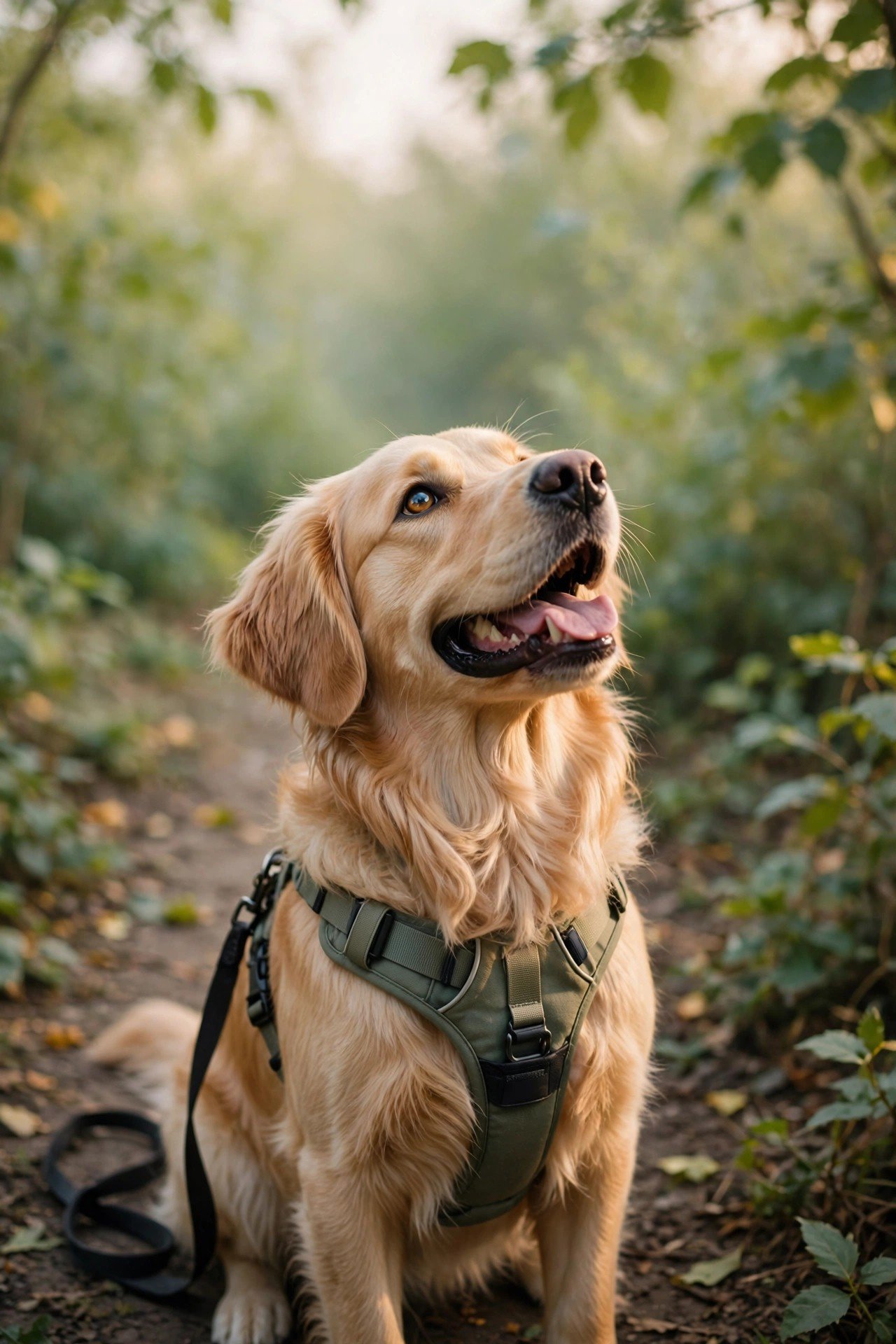
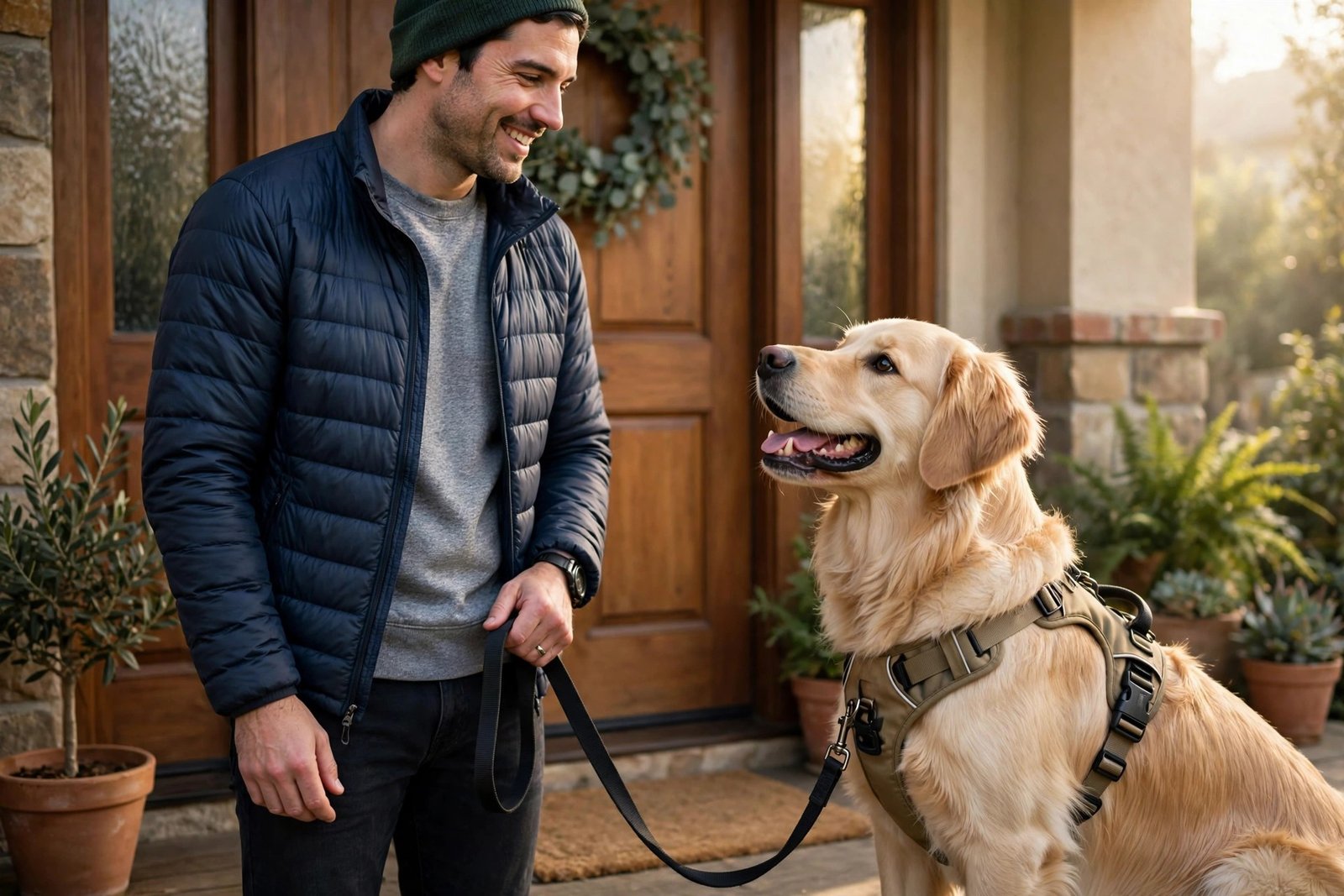
A harness spreads the force of a pull across the chest and shoulders, which makes it the better default for puppies, small dogs, strong pullers, and any dog who coughs or chokes on a collar. Look for a design that leaves the shoulders free to move — straps should not cut across the front legs’ natural swing — and that has adjustment points at both the neck and the chest so you can fine-tune it. Some harnesses clip the lead at the back, some at the chest, and some offer both; a chest clip can gently discourage pulling while you work on training. The trade-offs: a harness takes a moment longer to put on, can rub behind the front legs if it fits badly, and gives a determined dog more comfortable pulling power — which is a training matter, covered below.

Getting the Fit Right: The Two-Finger Rule
Whatever you choose, fit decides whether it is safe. Use the two-finger rule: with the collar or harness fastened, you should be able to slide two fingers flat between the strap and your dog’s body — snug, not tight, and definitely not loose enough to gap. Then do three escape checks:
- The back-out test: stand in front of your dog, hold the lead with gentle steady pressure, and encourage him to step backwards. If the collar rides up over his head or the harness twists and loosens, it is too loose or the wrong shape for him.
- The shake test: let your dog shake, roll, and scratch as he would on a walk. Gear should settle back into place, not spin around the neck or slide off a shoulder.
- The weekly re-check: puppies grow, winter coats thicken and shed, and active dogs change shape. A fit that was perfect last month may not be now — make checking part of your weekly routine.
For harnesses, also run a finger behind each front leg: there should be a small gap of strap-free space so the edge cannot chafe the armpit area on long walks.
Choosing a Lead: Length by Situation
- Short lead (about 1 to 1.2 metres): for crowded pavements, vet waiting rooms, and road crossings, where you need your dog close and predictable.
- Standard lead (about 1.2 to 1.8 metres): the everyday workhorse for most walks — enough slack for sniffing, short enough to manage.
- Long line (5 metres or more): for practising recall and giving freedom in open fields or beaches where dogs must stay attached. Only use one where you can see the whole line, gather slack quickly, and keep it off the ground reasonably — tangled long lines trip dogs and people alike.
- Material and clip: flat woven leads are kindest to hands; round or rope styles suit smaller dogs. Whatever the style, the clip matters most — it should swivel, feel solid, and open and close cleanly even with cold fingers. Retractable leads deserve a word of caution: they teach a dog that pulling makes the lead longer, give you very little control in a sudden lunge, and the thin cord can injure hands and legs. Most everyday walkers are better served by a fixed-length lead.

The Small Everyday Kit
- ID tag: engraved with your phone number (and a second number if there is space), attached to the collar that stays on. Check the engraving yearly — tags wear smooth and phone numbers change.
- Poop bags, plus a spare: tie a couple to the lead handle or use a small holder, and keep a backup roll in your coat pocket. Running out is a poor look and, in many places, a fine.
- Water: for walks over half an hour, warm days, or older dogs, carry a small bottle and a collapsible or foldable bowl. Offer little drinks often rather than one huge one at the end.
- Light after dark: a small clip-on light on the collar or harness makes your dog visible to drivers and cyclists, and helps you see what he is sniffing at unlit corners.
- Treats: a pocket of small treats turns every walk into easy training — rewarding check-ins, calm passes, and a reliable recall. The same kit, plus the ID habit, is also what makes the calm-travel routine in our travel carrier training basics guide go smoothly on trip days.
A Note on Pulling: Gear Supports Training, It Does Not Replace It
If your dog pulls like a train, new gear will make walks safer and more comfortable — but no harness, collar, or lead can teach loose-lead walking by itself. That skill is built with short, patient practice: rewarding the dog when the lead is loose, stopping or changing direction when it tightens, and keeping early sessions short and boring enough to succeed. Puppies especially benefit from learning this young, and our step-by-step guide on how to teach a puppy to walk on a leash lays out exactly that kind of kind, reward-based routine. Think of gear as the seatbelt and training as the driving lesson: you want both.
After the Walk: Thirty Seconds of Gear Care
Wet and muddy walks are where gear quietly fails later. Rinse mud off clips so the spring keeps snapping shut, hang leads and harnesses to dry fully instead of leaving them in a damp ball, and wipe your dog’s paws at the door — it keeps floors and sofas far cleaner, and the full method for the mud that does get through is in our pet stain and smell cleanup guide. Once a month, flex-test the collar and harness straps and look for frayed stitching; webbing usually looks tired long before it actually snaps, which is your cue to replace it.
Mistakes to Avoid
- Do not buy gear by breed name alone (“medium dog harness”) without measuring your dog’s chest and neck — sizes vary wildly between makers, and the tape measure never lies.
- Do not leave a harness on all day at home. Constant wear rubs, mats the coat, and gives a chewing puppy something expensive to destroy.
- Do not attach the lead to a collar that is loose enough to slip “because he never runs off.” The one time it matters is the one time he startles.
- Do not use a retractable lead near roads, cyclists, or other dogs — the lack of control shows up exactly when you need control most.
- Do not expect a new harness to fix pulling overnight. Gear changes comfort and safety; behaviour changes with training and time.
- Do not skip the ID tag because your dog is microchipped. A chip needs a scanner at a vet or shelter; a tag gets your dog home with one phone call.
Frequently Asked Questions
Is a harness better than a collar for every dog?
Not for every dog, but it is the safer default for most. Harnesses protect the throat and suit puppies, small breeds, pullers, and dogs with breathing or neck issues. A calm, loose-lead adult dog may be perfectly comfortable in a flat collar — and every dog should wear a collar with an ID tag regardless of what the lead clips to. When in doubt, use both: collar for ID, harness for the lead.
How tight should a harness be, exactly?
Use the two-finger rule at both the neck and chest straps: two fingers should slide underneath snugly, with no room for the strap to lift away from the body. Then run the escape checks — a gentle back-out test and a good shake — because a harness can measure correctly and still be the wrong shape for a narrow-chested or very fluffy dog.
My dog pulls hard. Which gear helps most?
A well-fitted harness with a front (chest) clip point can gently turn your dog’s shoulder when he surges, which makes walks more manageable while you train. But treat that as assistance, not a cure: pair it with short loose-lead training sessions, reward heavily when the lead hangs slack, and keep expectations realistic — weeks of small improvements, not one magical walk.
How often should I replace leads, collars, and harnesses?
Replace anything with frayed webbing, cracked plastic buckles, a clip that sticks or feels loose, or stitching that is pulling apart — check monthly so wear never surprises you. Puppies may simply outgrow sizes every few weeks. Sound gear can last years; the inspection habit matters more than any fixed schedule.