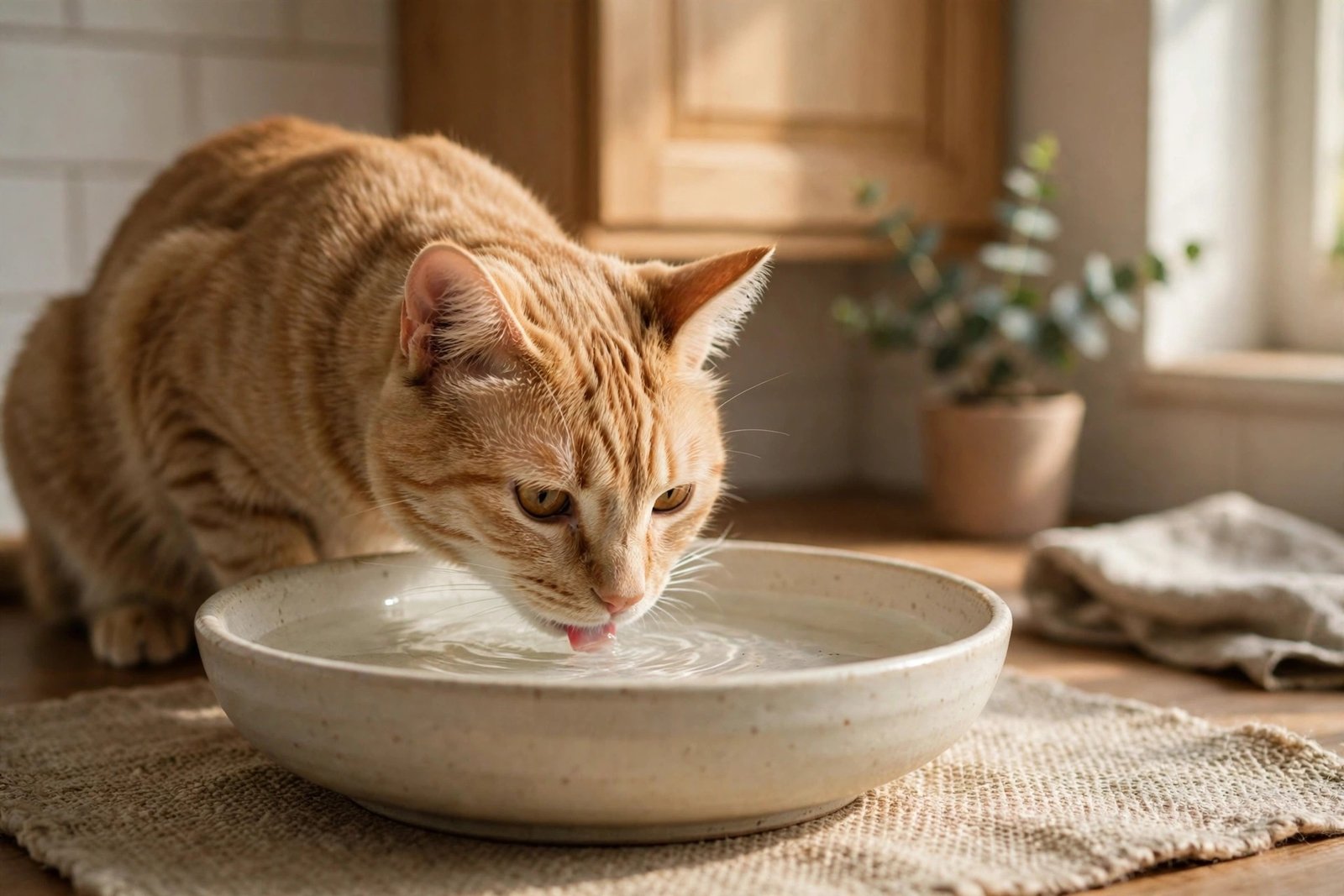
Some cats drink delicately from a deep, fresh bowl for years without a complaint. Others march past a perfectly good bowl to lick the dripping tap instead. That contrast is why pet water fountains sell so well — and why many of them end up in a cupboard six months later, with an owner back to a bowl and a guilty feeling. The honest answer to “which is better?” is that it depends on your cat’s habits and, just as much, on how much cleaning you will genuinely do. This guide compares the two fairly, in general terms.
Quick Answer
Neither option wins for every cat. A plain bowl of fresh water, refreshed daily and placed away from food and litter, keeps most cats perfectly well hydrated at almost no cost or effort. A fountain can help the minority of cats who are genuinely drawn to moving water — some will visit it more often and linger longer — but it only stays hygienic with real work: a full scrub every few days and regular filter changes, because a neglected fountain grows slime faster than a neglected bowl. Choose the bowl if you want simple and reliable; choose the fountain if your cat ignores still water, prefers taps, and you are honestly willing to clean it. And remember: a sudden increase in drinking is a vet question, not a shopping question.
Why Some Cats Are Drawn to Moving Water
It is often said that cats instinctively distrust still water, and there may be a small truth in it — in the wild, moving water tends to be fresher than stagnant water. Practically, though, the reasons are simpler and vary by cat. Some cats like the sound and sparkle, which makes the water easier to find; some dislike dipping their whiskers into a narrow bowl and prefer a wide, flowing surface; some simply enjoy the novelty and the gentle play of it. What the evidence does not support is the dramatic version: a fountain does not cure kidney problems, does not treat any condition, and does not turn a healthy bowl-drinker into a meaningfully healthier cat. At most, for the right cat, it encourages a few extra visits to the water station. That can be worthwhile — but it is encouragement, not medicine.

The Humble Bowl, Done Well
Most “my cat won’t drink” problems are bowl problems, not water problems. Before spending anything, check these:
- Freshness: rinse and refill daily. Water that has sat for three days collects dust, hair, and a stale taste cats notice long before we do.
- Shape: a wide, shallow bowl lets a cat drink without bending sensitive whiskers against the sides — whisker discomfort is a real reason some cats lap awkwardly, paw water out, or drink from taps instead. Glass, ceramic, and stainless steel are easy to keep truly clean; scratched plastic can hold odours.
- Placement: put water away from the litter tray and, if your cat is fussy, a little distance from food too — many cats prefer their water source separate. A second bowl in another quiet room often raises drinking more than any gadget.
- Hygiene: wash water bowls as seriously as food bowls — the slimy film that builds up in both is exactly the problem described in our guide to dog food bowl hygiene mistakes, and it applies to cat bowls word for word. In a small home, the placement ideas in our best litter box setup for small apartments guide help you keep water, food, and litter sensibly separated.
The Fountain, Honestly: What You Are Signing Up For
A pet fountain is a small pump circulating water through a filter, usually with a gentle stream or bubbling surface. The appeal is real: the water looks and sounds fresh, the reservoir holds more than a bowl, and some cats clearly prefer it. The honesty part is the upkeep:
- Cleaning rhythm: the whole unit — reservoir, pump housing, and spout — needs dismantling and scrubbing every few days in warm weather, weekly at the outside. The pump itself harbours the worst of the slime if skipped.
- Filters: the charcoal-style filters need replacing on the maker’s rhythm (generally every few weeks). That is a small ongoing cost and a small ongoing chore; a fountain run on an exhausted filter is worse than a bowl.
- Noise and power: pumps hum, louder as the water level drops, and the unit needs a socket nearby and a top-up habit so the pump never runs dry.
- The mid-point truth: a clean bowl beats a dirty fountain every single time. If your routine is already stretched thin, the bowl is not the budget option — it is the responsible one.

Side by Side: The Differences That Actually Matter
- Hydration: equal for most cats; a fountain edges ahead only for tap-lovers and still-water refusers.
- Effort: bowl — thirty seconds a day. Fountain — minutes every few days, plus filter changes.
- Running cost: bowl — essentially none. Fountain — replacement filters and a trickle of electricity, ongoing.
- Capacity: fountain wins for multi-cat homes or a day away, thanks to the reservoir — though fresh daily water is still the ideal either way.
- Failure mode: a bowl fails by going stale, which you fix in seconds. A fountain fails by growing a slime farm quietly, which you fix with a full scrub.
When Drinking Changes Are a Vet Matter, Not a Product Matter
No fountain, bowl, or flavour trick is the right response to a cat who suddenly drinks much more than usual — emptying the bowl twice as fast, drinking from taps and glasses she never touched, or producing much bigger litter clumps alongside it. A clear change in thirst is one of the signs vets take seriously, because several common conditions announce themselves this way, and only an examination and tests can sort out which. Our guide on a cat drinking a lot of water explains how to measure intake at home and which accompanying signs make the visit urgent. Buy the fountain for preference if you like — but book the vet for change.
Mistakes to Avoid
- Do not buy a fountain to avoid a vet visit when drinking has clearly increased. Preference is a shopping matter; change is a medical one.
- Do not run a fountain on a “top it up and forget it” basis. Topped-up is not cleaned — the pump and walls still need scrubbing on schedule.
- Do not place any water source right beside the litter tray or the food if your cat is reluctant; location puts off more cats than water style does.
- Do not use scented cleaners or detergents with residue on bowls or fountains. Cats taste what we cannot smell; rinse everything plain and thoroughly.
- Do not assume one cat’s preference is every cat’s. Multi-cat homes often do best with both: a fountain where the tap-lover hangs out, plain bowls elsewhere.
- Do not let a fountain’s reservoir convince you water can be changed weekly. Fresher is better in every format.
Frequently Asked Questions
Do vets recommend water fountains for cats?
Many vets are mildly positive about fountains for cats who clearly prefer running water, because anything that encourages drinking is welcome. But that is a long way from saying fountains are necessary or medically better: a vet will just as happily approve a clean, well-placed bowl. No fountain prevents or treats disease, whatever the packaging implies.
How often does a cat fountain really need cleaning?
Plan on a full dismantle-and-scrub every three to four days in a warm home, weekly at the very most, with the filter changed every few weeks as the maker directs. If that rhythm sounds unlikely in your house, believe yourself — and choose the bowl without guilt.
My cat drinks from the tap but ignores her bowl. Will a fountain fix it?
It is the best-case scenario for a fountain — tap-lovers are the cats most likely to take to one. Before buying, try the free fixes first: a wider, shallower bowl, fresher water, a second bowl in a quieter spot. If she still queues at the tap, a fountain is a reasonable, honest purchase for her preference.
Can I leave a fountain running while I am away for a weekend?
The reservoir makes a fountain handy for a short absence, provided it starts full, freshly cleaned, and the pump is in good order. For anything longer, a trusted person checking in daily is better than any device — they refresh the water, notice a stopped pump, and notice your cat, which no gadget does.
