
Your puppy is sweet, sleepy, and cuddly — and then, without warning, a tiny land shark. He bites hands during play, grabs trouser legs as you walk, chews shoes, table legs, and anything that fits in his mouth. It can feel personal, and it can hurt, even from small teeth. It is also completely normal puppy behaviour, and it does not mean you have an aggressive dog.
Puppies explore the world with their mouths, play with their mouths, and soothe sore teething gums with their mouths. Your job is not to punish the mouth — it is to teach your puppy, kindly and consistently, what is for biting and what is not. This guide shows you how, using positive methods only.
Quick Answer
To stop a puppy biting everything without punishment, do three things every time: give him legal things to bite, calmly end the fun when teeth touch skin or clothes, and reward gentle behaviour generously. Offer a chew toy the moment the biting starts, play in short sessions with breaks, and make sure he gets enough sleep, because overtired puppies bite most. Most puppies improve within a few weeks of everyone in the home following the same simple rules, and biting fades further once teething ends and adult teeth come through, usually by around six to seven months.
Why Puppies Bite So Much
Exploration and play
A puppy has no hands. Mouthing is how he investigates textures, tastes, and moving things — including you. In the litter, puppies play by mouthing each other, and they begin learning limits from the reactions of their brothers and sisters. At home, you take over that teaching job.
Teething
Between about three and six months, baby teeth fall out and adult teeth push through. Gums feel sore and itchy, and chewing is relief. A teething puppy will seek harder chewing than usual and may be mouthier on some days than others, for the same reason a teething baby is unsettled.
Over-excitement and tiredness
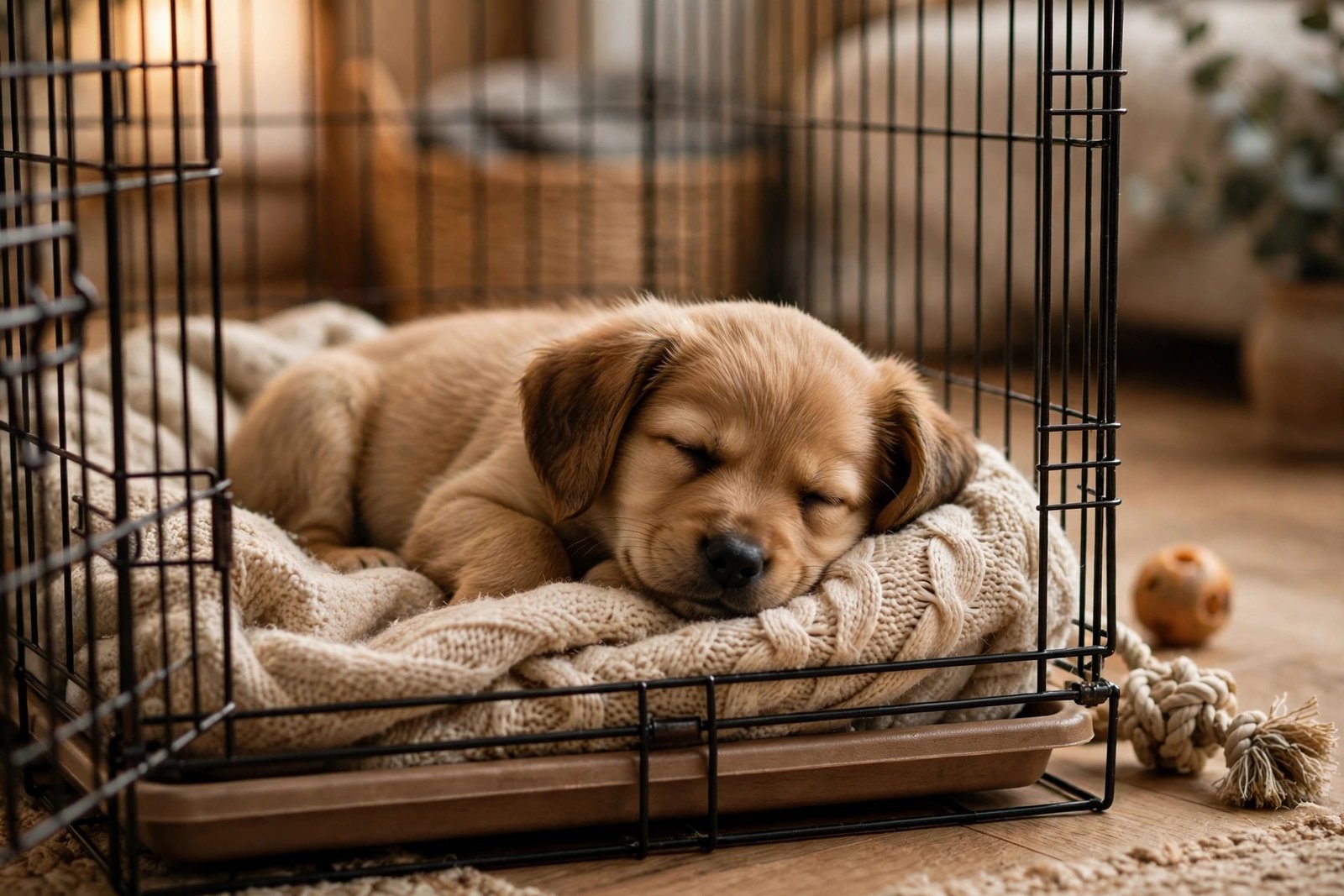
The wildest biting usually arrives in the evening, after a lot of playing, or when visitors excite him. Puppies need far more sleep than most owners expect — around eighteen to twenty hours a day for young puppies. An overtired puppy loses his brakes, just like an overtired toddler. Many “naughty” biting spells are really a puppy who needs a nap in a quiet, cosy spot; our guide on puppy crying at night in the crate covers building that calm sleep routine from the first week.
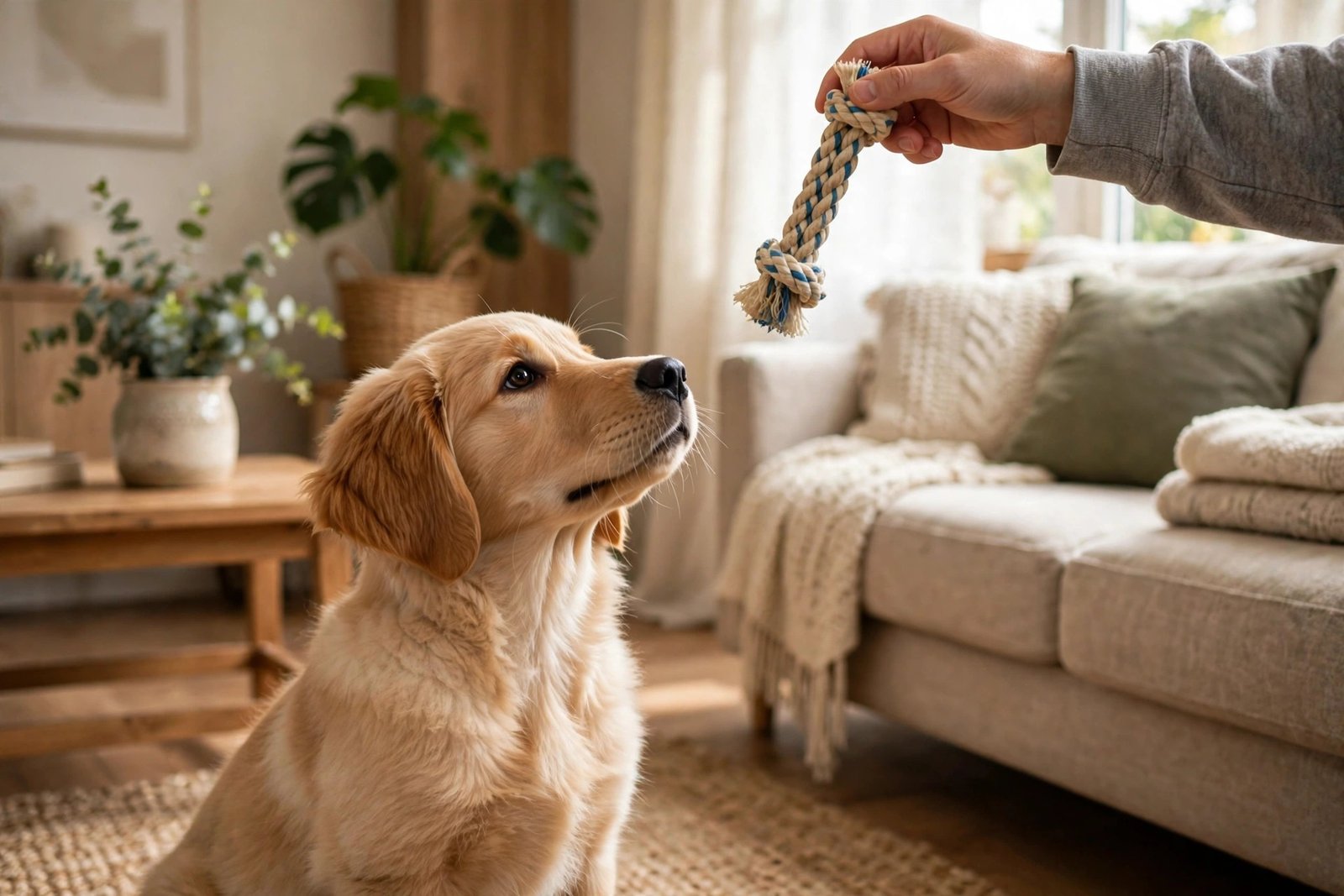
What to Do When Your Puppy Bites You
Step 1: Freeze and be boring
When teeth touch skin, stop moving your hand and go quiet and still. Moving, squealing, and pulling away look like play to a puppy and can make him grab harder. A still, boring hand is no fun to bite.
Step 2: Redirect to a toy
Keep a soft toy or chew within reach in every room you use with your puppy. The moment he lets go — or before he starts — offer the toy, wiggle it to make it interesting, and praise him warmly when he bites that instead. You are not rewarding the biting; you are teaching the swap: people are boring, toys are brilliant.
Step 3: End the game briefly if he persists
If he keeps targeting your hands after two or three redirects, stand up calmly, fold your arms, and turn away for twenty to thirty seconds, or step behind a baby gate. Then try again. This short, quiet pause teaches the real lesson — biting people makes play stop — without frightening him. Repeat patiently; puppies learn by many small repetitions.
Step 4: Reward every gentle moment
Notice and praise the good choices: licking instead of biting, playing with a toy beside you, settling with a chew. Treats, gentle praise, and calm stroking for gentle behaviour build the habits you want far faster than scolding builds anything.
Set Your Puppy Up to Succeed
- Provide plenty of legal chews: soft toys, rubber chew toys made for puppies, and age-suitable edible chews used under supervision. Rotate a few so they stay interesting.
- Manage the environment. Shoes in a closed cupboard, children’s small toys up high, cables tidied away, and a playpen or baby gates for times you cannot watch him. Management is not cheating — it prevents practice of the wrong habits while the right ones grow.
- Use calm play. Short games of tug with a toy are fine if you include pauses and swaps, and end the game if teeth touch skin. Avoid wrestling with your hands, face-to-face rough play, and games that wind him up to frantic levels.
- Protect sleep. Build in enforced nap times in his crate or pen after play, meals, and training. A rested puppy is a gentle puppy.
- Get everyone following the same rules. If one person plays hand-wrestling and another scolds biting, the puppy learns nothing clear. Agree the plan as a household, including how children should behave: calm hands, no running and squealing around the puppy, and an adult always supervising.
Furniture is the other classic target. The same swap-and-reward approach works there, and our guide on puppy chewing furniture goes deeper on saving your sofa and table legs while chewing needs are at their peak.
Biting Guests, Clothes, and Children: Extra Care
Puppies often bite hardest at moving targets: swinging hands, dangling sleeves, running children, and excited guests. Prepare visitors before they arrive: greet calmly, keep the puppy on a lead or behind a gate for the first minutes, and give guests a toy to offer instead of their fingers. Ask everyone to stand still “like a tree”, arms folded, if the puppy gets mouthy, and to let an adult take over.
Jumpy, mouthy greetings are easier to prevent than to fix later, so start practising calm hellos now with the steps in our guide on how to stop a puppy from jumping on guests — the two habits usually improve together. And never leave a young puppy and young children alone together, however sweet both are; mouthing can frighten a child, and a frightened reaction can escalate a game neither of them understands.
When Biting Is Not Normal Puppy Biting
Normal puppy biting is playful, the puppy’s body is loose and wiggly, and he can be distracted. Take a different path — a vet check first, then a qualified, reward-based trainer or behaviourist — if you see hard staring, a stiff frozen body, guarding of food or toys with growling and snapping, biting that breaks skin with intent to hold on, or biting linked with pain or illness. Pain, including ear, mouth, or tummy pain, can make any puppy snap, so a health check is always the right first step when behaviour changes suddenly.
Mistakes to Avoid
- Do not hit, tap the nose, hold the mouth shut, or scruff your puppy. Punishment does not teach what to bite; it teaches fear of hands and people, and it often makes biting worse.
- Do not shout or squeal dramatically. To an excited puppy, loud reactions are exciting feedback, not a correction.
- Do not play hand-wrestling games “just sometimes”. Mixed messages are the fastest way to keep biting alive.
- Do not leave a puppy without legal chews and then blame him for chewing the house. Chewing is a need; your job is to aim it.
- Do not expect too much too fast. Baby puppies have baby brains. Weeks of calm repetition is normal progress, not failure.
- Do not let children handle all the biting moments. Adults set up the training; children join in the calm parts.
Frequently Asked Questions
At what age do puppies stop biting everything?
Most puppies bite far less once teething finishes and the adult teeth are through, usually around six to seven months, provided they have been taught gentle habits along the way. Mouthing often improves noticeably from around four to five months. If biting stays intense, hard, or is getting worse after six months rather than better, book a vet check for pain and ask a reward-based trainer for a personalised plan.
Should I yelp like a puppy when my puppy bites me?
A short, high sound can interrupt some puppies, but it excites others and turns into part of the game. If you try it once or twice and your puppy gets more excited, drop it. The reliable method for every puppy is the boring freeze, the toy swap, and the brief pause in play — calm consequences teach more clearly than any sound effect.
What can my puppy chew safely?
Choose toys made for puppies that are too big to swallow, soft enough not to crack teeth, and intact — throw away anything breaking into pieces. Age-suitable edible chews are fine in moderation and always with you watching. Avoid cooked bones, which splinter, very hard items that can break teeth, and any household object as a “toy”, because a puppy cannot tell your old shoe from your new one.
My puppy bites more in the evening. Why?
Evenings collect the day’s excitement and tiredness into one wild hour — trainers often call it the witching hour. The fix is a routine: a calm walk or sniffing game, dinner, a toilet trip, a chew in his pen, and then sleep, rather than more exciting play. If evening biting is your main battle, a scheduled nap before the usual wild time often changes everything within days.

3 thoughts on “Puppy Biting Everything: How to Stop It Without Punishment”