
It is two in the morning. Your new puppy is crying in his crate like his little heart is breaking, and you are lying awake wondering what you are doing wrong. First, the most important thing: almost every new puppy owner has this night, and it does not mean you picked the wrong puppy or the wrong training method. Night crying in the first week is normal, expected, and temporary.
Until now, your puppy has slept in a warm, breathing pile of brothers and sisters, pressed close to his mum. Your crate — however soft the blanket — is quiet, still, and lonely by comparison. The crying is not naughtiness or manipulation. It is a baby animal calling for company in the only language he has. Your job in the first week is simple: answer real needs calmly, make the crate feel safe, and teach him, in small steps, that night time is sleep time.
Quick Answer
For the first week, keep the crate beside your bed, make it cosy and den-like, and settle your puppy after a final toilet trip and a calm last hour. When he cries, first check for a real need — usually the toilet — and handle it as a short, boring, low-light trip with no play. Comfort him quietly with your voice or a hand near the crate, then let him resettle. Most puppies cry far less by nights four to seven, and sleep mostly through within two to three weeks.
Why Puppies Cry at Night
He is lonely and missing the litter
This is the biggest reason. Your puppy has never slept alone in his life. Darkness, silence, and an empty bed feel wrong to him, so he calls out the way he would call his mum. This crying settles fastest when the puppy can see, hear, or smell you nearby.
He needs the toilet
A young puppy’s bladder is tiny. As a rough guide, a puppy can hold on for about one hour per month of age when awake, and a little longer asleep — but an eight-week-old will still need one or two toilet trips in the night. Crying is often the only polite warning you get, and it is far better than a wet crate.
The crate itself is still strange
If the crate appeared on day one and has only ever meant “the place where the fun stops”, your puppy is crying about the box as much as the night. Puppies who play, eat, and nap in their crate during the day settle in it far better at night, because it already smells like good things.
He is overtired — or not tired enough
Both ends cause tears. An overtired puppy who has been played with until he is wild and bitey finds it hard to switch off. A puppy who slept the whole evening on the sofa may not be ready for sleep. A calm, predictable wind-down in the last hour before bed fixes both most of the time.
Set the Crate Up for Sleep Before Night One
- Put the crate beside your bed for the first nights. If it will live somewhere else later, move it gradually — a little further each night — once he is sleeping calmly.
- Make it den-like: a crate just big enough to stand, turn, and stretch out in, soft washable bedding, and a blanket draped over the top and sides for darkness. Leave the front partly uncovered for air.
- Add a familiar smell. Ask the breeder or rescue for a small blanket that smells of the litter, or sleep with his new blanket in your bed for a night before he arrives. Familiar scent is a powerful comfort.
- Keep it warm but not hot, away from draughts and radiators.
- Some puppies settle with a soft puppy snuggle toy. Remove anything with parts that can be chewed off, and check toys each morning.

Your First-Week Night Plan
Nights 1 and 2: be close
End the evening calmly: gentle play or a short sniffy walk, a final toilet trip, then into the crate beside your bed with a small safe chew or snuggle toy. Talk in a soft, boring voice for a minute or two. Some crying is normal — stay relaxed and keep everything dark and dull. If he cries hard and does not settle at all, check the toilet before deciding it is just protest.
Nights 3 and 4: small steps
By now most puppies fuss for shorter spells. Keep the routine identical — same order, same calm voice, same boring toilet trips. If he is settling well, you can begin edging the crate a little further from the bed, or stay quiet a touch longer before murmuring to him.
Nights 5 to 7: the routine sets
Most puppies now go into the crate with little fuss and wake mainly for the toilet. Keep the same bedtime and pre-bed sequence; puppies learn routines fast, and routine is what turns a frightening night into a boring one. If your puppy is still very unsettled after a week, the daytime tips below usually hold the answer.
What to Do When the Crying Starts
Work through this calm sequence every time:
- Wait one short minute. Some puppies grumble briefly as they resettle between sleep cycles. Jumping up at the first squeak can wake a puppy who was about to sleep.
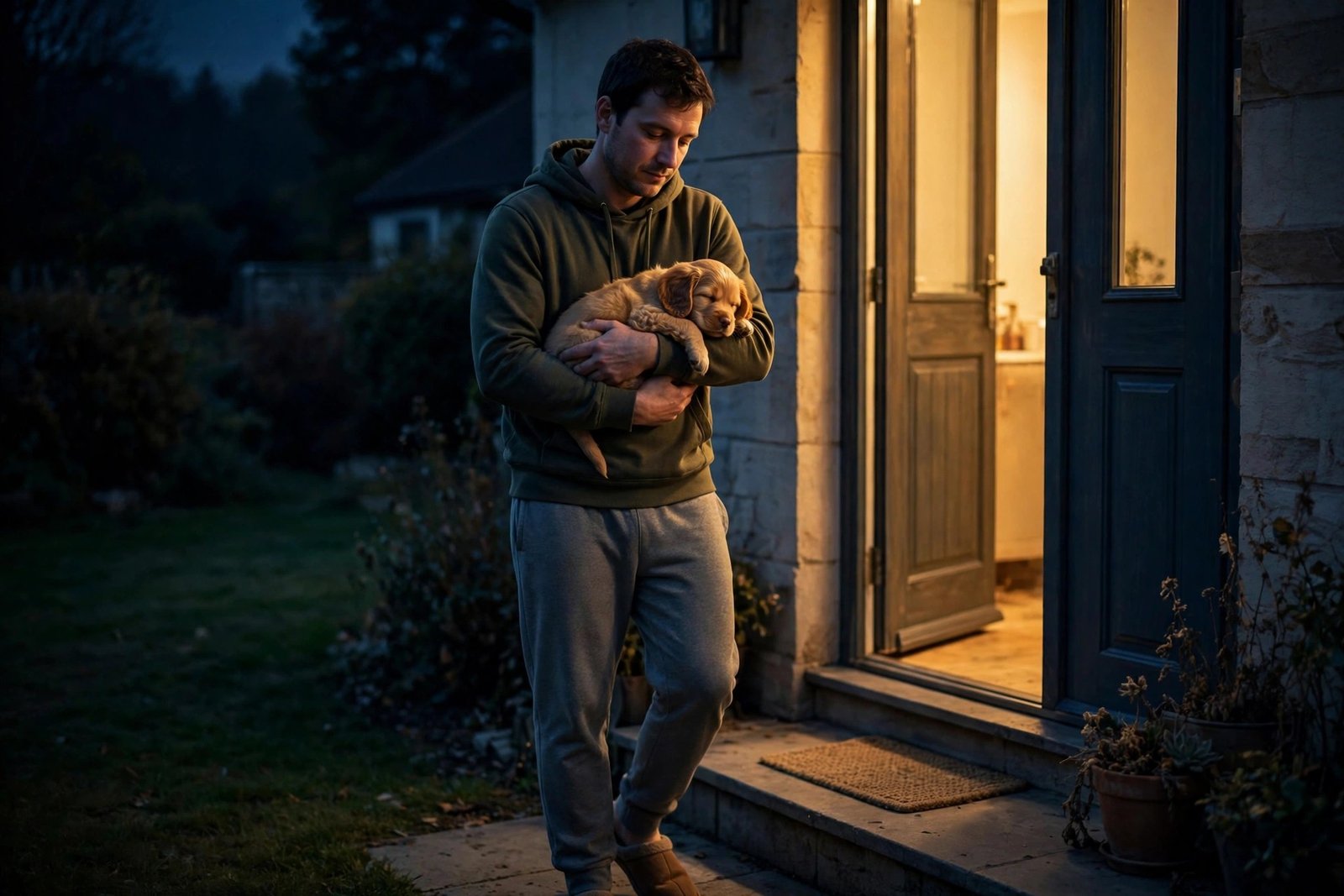
- Check the real needs. If he has been asleep a while, assume toilet first: carry him straight out, stand still, praise softly when he goes, and carry him straight back. Lights low, voice low, no games. Boring is the whole point.
- Comfort without a party. Back in the crate, a quiet word, a finger rested against the crate bars, then withdraw. You are saying “I am here and everything is fine” — not “crying produces cuddles and play”.
- Repeat without changing the rules. The plan works because it never changes. The night you give in and throw a party at 3 a.m. teaches him that long, loud crying is the key that works.
Night Toilet Trips: Keep Them Short and Dull
Set an alarm rather than always waiting for crying — waking him just before he would wake himself keeps the crate quiet and the bedding dry. One trip around 2–3 a.m. suits many eight-week-old puppies; some need two at first. Outside, business only: same small spot, same quiet praise, straight back in. If your home means stairs, a lift, or a balcony setup, our guide on how to potty train a puppy in an apartment covers smooth night trips in detail.
Daytime Habits That Fix Night Crying
Night crying is usually a daytime problem in disguise. Feed some meals in the crate with the door open. Play little crate games, tossing treats in for him to fetch out. Most importantly, schedule naps in the crate after play, meals, and training, so it becomes his normal sleep place, not a night-only prison. Protect those naps: young puppies need around eighteen to twenty hours of sleep a day, and the puppy running on empty by evening is the one who is bitey, wild, and then tearful — the same overtired pattern behind a puppy biting everything in the evening witching hour.
A Routine That Lasts Beyond Puppyhood
Stick with the calm pattern and most puppies soon graduate to sleeping through the night without a sound. Dogs who learn a clear, kind night routine early rarely become the adults who whine and scratch at the bedroom door — and if door-scratching appears later, the same boring-consistency approach in our guide on how to stop a dog from scratching the door at night is what fixes it. The first week feels long, but you are building years of peaceful nights.
Mistakes to Avoid
- Do not shout at a crying puppy, bang on the crate, or shake it. Shouting does not teach quiet; it teaches a lonely baby that the dark is scary and so are you. Crying reduces when puppies feel safe, not when they feel punished.
- Do not leave a very young puppy to cry for hours without checking — crying can mean a full bladder, cold, a trapped paw, or pain. Check quietly, fix real needs, then let him resettle.
- Do not turn a night waking into playtime, cuddles on the sofa, or a midnight snack party. Comfort is fine; entertainment teaches him to order it again tomorrow.
- Do not change the rules nightly — crate on Monday, your bed on Tuesday, crate again on Wednesday. Inconsistency makes crying last longer, because the puppy keeps trying the method that once worked.
- Do not use the crate as punishment during the day. A crate that means “you are in trouble” will never feel like a safe bedroom at night.
- Do not keep him up late with wild games to “wear him out”. Overtired puppies switch off worse, not better.
Frequently Asked Questions
How many nights will my puppy cry in the crate?
Most puppies cry noticeably for the first two or three nights, much less by nights four to seven, and are sleeping mostly through — apart from toilet trips — within two to three weeks. Puppies vary, and one from a busy litter may take a little longer. Steady improvement, even slow improvement, is the normal pattern.
Should I let my puppy cry it out?
Not with a young puppy in the first weeks. “Crying it out” ignores the message, and a puppy left to panic can learn the crate is a frightening place — the opposite of what you need. Check real needs, comfort briefly and boringly, and let him resettle beside you. Short fussing as he drifts off is fine to leave; distressed, escalating crying is a signal to check, not a test to win.
Should the crate be in my bedroom?
For the first week or two, yes — it is the single easiest change for calmer nights. Your breathing, smell, and nearness tell the puppy he is not alone, and you will hear the toilet-cry before it becomes an accident. Once he is sleeping soundly, move the crate a little further away each night until it reaches its permanent spot — or keep it in the bedroom forever, if you prefer; that is a lifestyle choice, not a training failure.
When is night crying a reason to see a vet?
See a vet promptly if crying comes with diarrhoea, vomiting, straining to wee or poo, blood anywhere, a puppy who cannot settle at all and seems in pain, or any sudden change in a puppy who used to sleep through. Trust your instincts: a quick check is always worth it for a very small puppy.

1 thought on “Puppy Crying at Night in the Crate? A Calm First-Week Plan”