One of the most common reasons a “better” food gets blamed unfairly is the switch itself. A dog can be perfectly suited to a new food and still get an upset stomach simply because the change happened overnight. The bacteria in a dog’s gut are used to the old food, and they need time to adjust to the new one.
The good news is that a slow, simple transition almost always prevents the problem. This guide gives you the classic 7 to 10 day schedule, explains which mild signs are normal along the way, and shows you when to slow down, when to pause, and when to call the vet instead.
Quick Answer
Switch dog food gradually over 7 to 10 days: roughly three quarters old food to one quarter new food for the first two or three days, then half and half, then mostly new food, and finally all new. Slightly softer stools and a little extra gas are common in the first days and usually settle. If you see vomiting, watery diarrhoea, blood, or a dog who stops eating, slow the switch down, step back to the last mixture that suited him, or speak to your vet. Never swap the whole bowl in one day unless a vet has told you to.
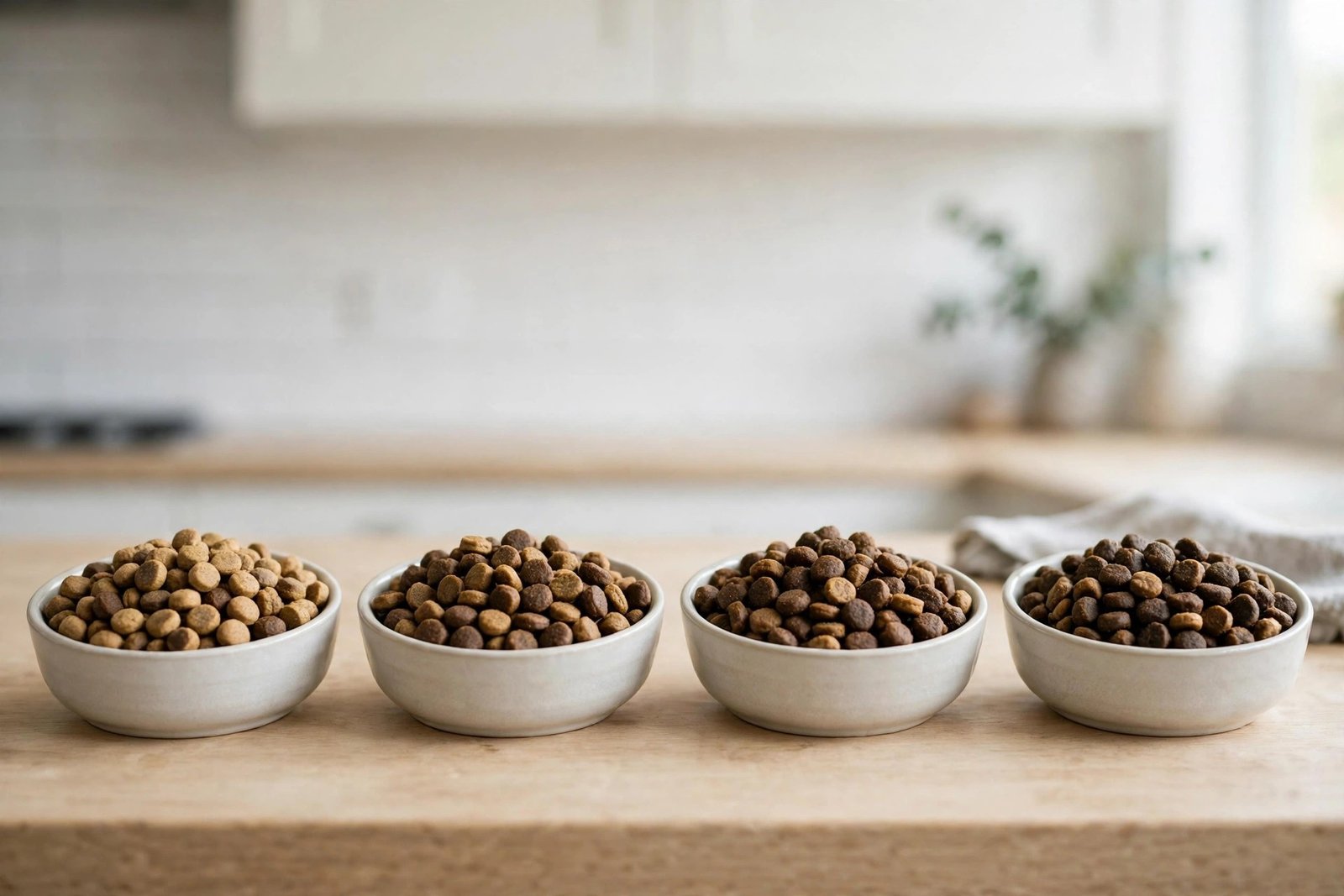
The 7 to 10 Day Transition Schedule
The exact days can flex. The proportions matter more than the calendar.
- Days 1–2 (or 1–3): about 75% old food, 25% new food.
- Days 3–4 (or 4–6): about 50% old food, 50% new food.
- Days 5–7 (or 7–8): about 25% old food, 75% new food.
- Days 8–10: 100% new food.
Use the longer, 10-day version for puppies, elderly dogs, dogs with sensitive stomachs, and dogs who have been on the same food for years. If your dog’s stools stay firm at each stage, you can move at the quicker end of the range. If things soften, hold the current mixture for an extra day or two before increasing. There is no prize for finishing on day 7.
What Is Normal During a Switch
A healthy gut adjusting to new ingredients commonly produces a few mild, short-lived changes:
- Slightly softer stools for a day or two after each increase, while still formed.
- A little more gas than usual, especially if the new food has different fibre or protein sources.
- Slight hesitation at the bowl, because the food smells and tastes different. That is a taste issue, not a stomach one, and our companion guide for a dog who won’t eat new food covers the patient plan for picky eaters.
- A mild rumble or two in the tummy shortly after meals in the first days.
These signs should be mild, and each stage should look better than the last. Normal adjustment improves as you go. Problems do the opposite.
Signs to Slow Down, Pause, or See a Vet
Slow down and step back if you see:
- Stools that get progressively softer at each new stage.
- Loose stools lasting more than two days at one mixture.
- Your dog going off the mixed food after eating happily at the previous stage.
Stepping back is simple: return to the last proportion that produced normal stools, stay there for two or three days, then increase again in smaller steps. Some dogs do best moving in 10% steps rather than 25%.
See a vet rather than pushing on if you see:
- Vomiting, especially repeated vomiting or vomiting plus diarrhoea.
- Watery diarrhoea, or any blood in stool or vomit.
- Complete refusal to eat for more than a day, or a dog who seems lethargic, weak, or in pain.
- Signs of an allergic-type reaction such as facial swelling, hives, or frantic itching. These are uncommon but need prompt veterinary care.
It also helps to remember that not every upset stomach during a switch is caused by the switch. Dogs pick up bugs, eat things on walks, and get unwell for unrelated reasons. Timing is a clue, not proof.
Practical Tips That Make Switching Easier
Change only one thing at a time
Do not start the new food in the same week as a house move, a new treat, a worming change, or kennels. If the stomach complains, you want to know what caused it. Keep treats simple and familiar during the transition week, and keep the total daily amount of food the same as usual, split between old and new.
Keep meal times and portions steady
Feed at the usual times and resist adding toppers to make the mixture more exciting. A splash of warm water is fine for smell. If your dog’s stomach already tends to be sensitive first thing, our guide on a dog vomiting yellow bile in the morning explains the empty-stomach pattern that can overlap with food changes and how feeding times can help.
Watch the whole dog, not just the bowl
Energy, coat, itching, ear health, and body weight all tell you how a new food suits your dog, but they change over weeks, not days. Judge the food after three to four settled weeks on 100% new food, not during the transition itself. And keep an eye on the amount you feed: foods differ in richness, so check the new food’s feeding guide for your dog’s weight rather than automatically serving the same volume as before, a point we also make in our guide on how many times a day to feed a dog and portion basics.
Switching Puppies, Seniors, and Sensitive Dogs
Some dogs deserve an extra-gentle version of the plan. Puppies have developing digestive systems and important growth needs, so switch them over the full 10 days and never let experimenting interrupt their eating for long. Senior dogs and dogs with a history of pancreatitis, colitis, or food sensitivities should move in the smallest steps, sometimes staying at each proportion for three or four days instead of two. Dogs switching for a health reason, for example onto a diet their vet has recommended, may have their own timetable, and the vet’s instructions always come before this general schedule. If your dog has a diagnosed condition, ask the vet how quickly to transition before you begin, and report any strong reaction rather than quietly persevering.
Mistakes to Avoid
- Swapping the whole bowl overnight. The number one cause of switch-related tummy trouble. Even a dog who loves the new food can pay for the sudden change the next day.
- Switching because of one loose stool. A single soft stool during a gradual switch is usually normal adjustment. Panic-swapping to yet another food restarts the whole process and gives the gut no chance to settle.
- Changing food, treats, and chews all at once. If something disagrees with your dog, you will have no idea which change caused it. One change per week is plenty.
- Pushing through vomiting or watery diarrhoea. Determination is not a treatment. Step back, and if signs are strong or last beyond a day or two, involve your vet.
- Judging the new food in the first week. The transition period reflects adjustment, not the food’s long-term effect. Decide after a few stable weeks, unless clear intolerance signs appear.
Frequently Asked Questions
What if I run out of the old food before finishing the switch?
Do your best to buy one more small bag of the old food, because even a shortened gradual mix is kinder than a sudden stop. If that is impossible, feed the new food in smaller, more frequent meals for the first two or three days, keep treats minimal, and watch stools closely. Most dogs cope, but plan ahead next time so the transition can be done properly.
Can I switch flavours within the same food instantly?
Often yes, if the recipes are very similar and made to the same base, many dogs handle a flavour change with little or no transition. But if your dog has a sensitive stomach, a short two or three day mix is still the safer choice. A complete change of food type, for example from dry to fresh or raw-style food, deserves the full gradual schedule.
My dog had soft stools on day 3. Should I stop the new food?
Not usually. Hold the current mixture for an extra day or two instead of increasing, and most dogs firm up again. Go back one step if stools get worse rather than better. Stop and speak to a vet only if you see vomiting, watery diarrhoea, blood, appetite loss, or a dog who seems unwell in himself.
How do I know the new food actually suits my dog?
After three to four weeks fully on the new food, look at the whole picture: firm, regular stools, comfortable digestion, a healthy coat, steady weight, and a dog who eats happily and has normal energy. No single day tells the story. If doubts remain after a fair trial, discuss them with your vet, who can also check that nothing medical is hiding behind the digestive signs.