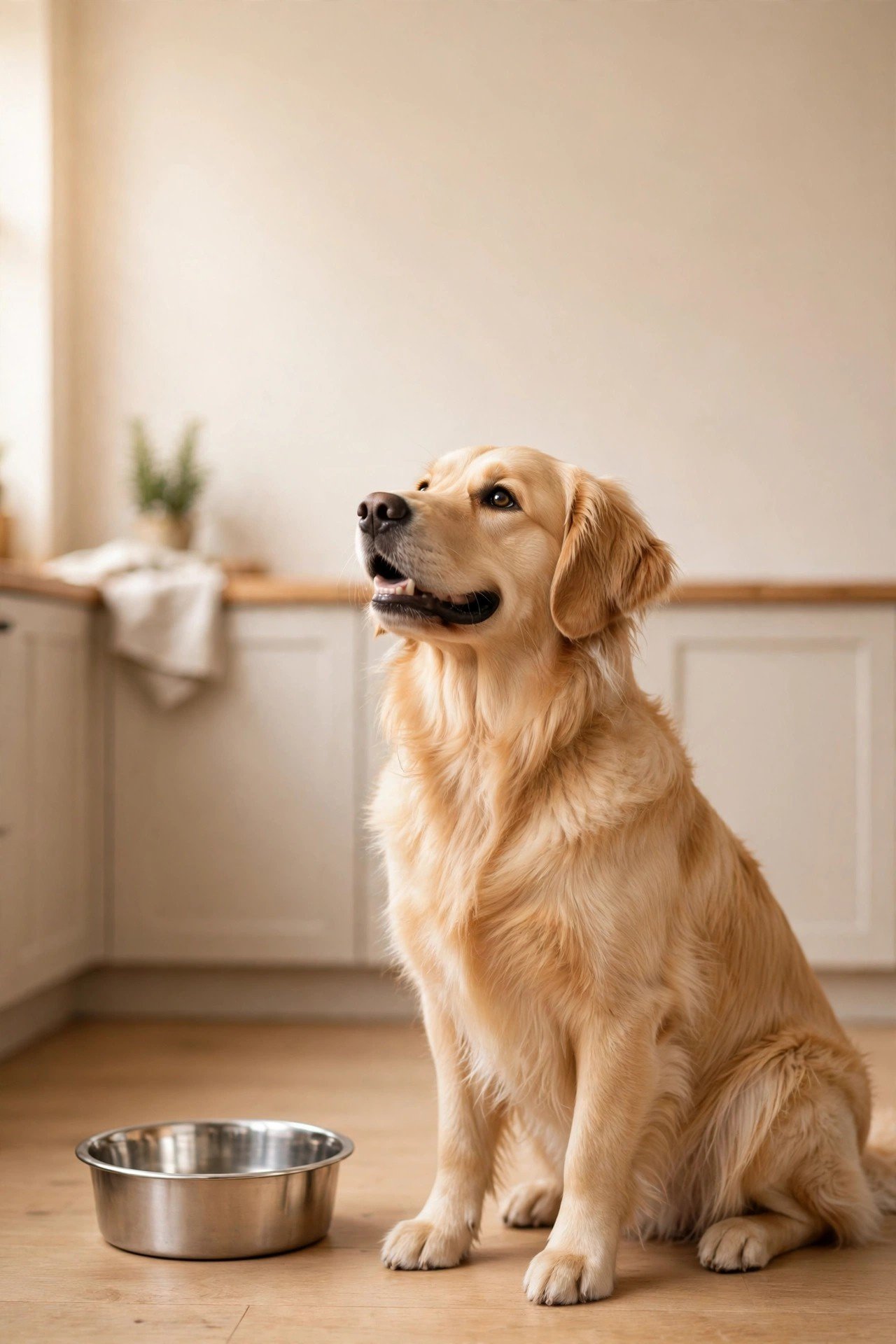
Some homes fill the bowl in the morning and let the dog help himself all day. Others serve breakfast and dinner at set times and put the bowls away in between. Both groups of owners love their dogs, and both feeding styles are common, so which is actually better: grazing or scheduled meals?
The honest answer is that grazing works for a small number of dogs, while scheduled meals suit most dogs and most homes better, for reasons that go beyond convenience. This guide compares the two fairly, looks at hygiene and health monitoring as well as behaviour, and helps you decide which fits your dog.
Quick Answer
Grazing, or free feeding, means food is available all day and the dog eats small amounts whenever he likes. Scheduled feeding means measured meals at set times, with the bowl picked up after 20 to 30 minutes. Grazing suits a few calm, self-regulating dogs in single-dog homes, but it makes weight control, hygiene, toilet timing, and appetite monitoring much harder. Scheduled meals make it easy to spot a lost appetite early, manage weight, keep food fresh, and build a predictable toilet routine, which is why they are the better default for most families.
How Each Style Works in Real Life
Grazing (free feeding)
The bowl is filled, often once a day, and topped up as it empties. The dog wanders over and eats a few pieces whenever he feels like it. There are no mealtimes, no waiting, and no food routine for the owner to keep. Owners who choose it usually like its simplicity and worry that set meals might leave their dog hungry between feedings.
Scheduled meals
The dog’s daily food is divided into set meals, usually two for an adult dog, served at roughly the same times each day. The bowl is picked up after a set time whether it is empty or not. You always know exactly what went in, and when. If you are unsure how to divide the day, our guide on how many times a day you should feed a dog breaks it down by age and size.
The Case for Grazing
Grazing is not careless feeding, and for the right dog it has real advantages:
- Very low effort. No clock-watching, no meal prep moments, and no hungry dog following you around before dinner.
- Gentle on some nervous nibblers. A few anxious or formerly underfed dogs feel calmer knowing food is always there, and eat small, relaxed amounts across the day.
- Some dogs genuinely self-regulate. A minority of dogs eat exactly what they need, stay lean for years, and never guard or gorge. If your dog is one of these, grazing feels easy and natural.
- No food rushing. Dogs who always have food available rarely gulp, because there is no sense that the meal might disappear.
The Problems Grazing Quietly Causes
You lose your best early health signal
A drop in appetite is one of the earliest signs that a dog is unwell. With scheduled meals, a refused breakfast stands out on the same day. With grazing, food disappears so gradually that “he seems to be eating less” can take a week to notice, and by then a problem has a head start. Owners of grazers often cannot answer the vet’s simplest question: when did he last eat properly?
Weight creeps up unnoticed
Topping up a bowl is not measuring. A slightly generous hand each day, plus treats on top, is exactly how steady weight gain happens. With scheduled meals, the daily amount is fixed, measured, and adjustable. Grazing also makes it impossible to know whether a new food amount is right for your dog’s body condition.
Food does not stay fresh
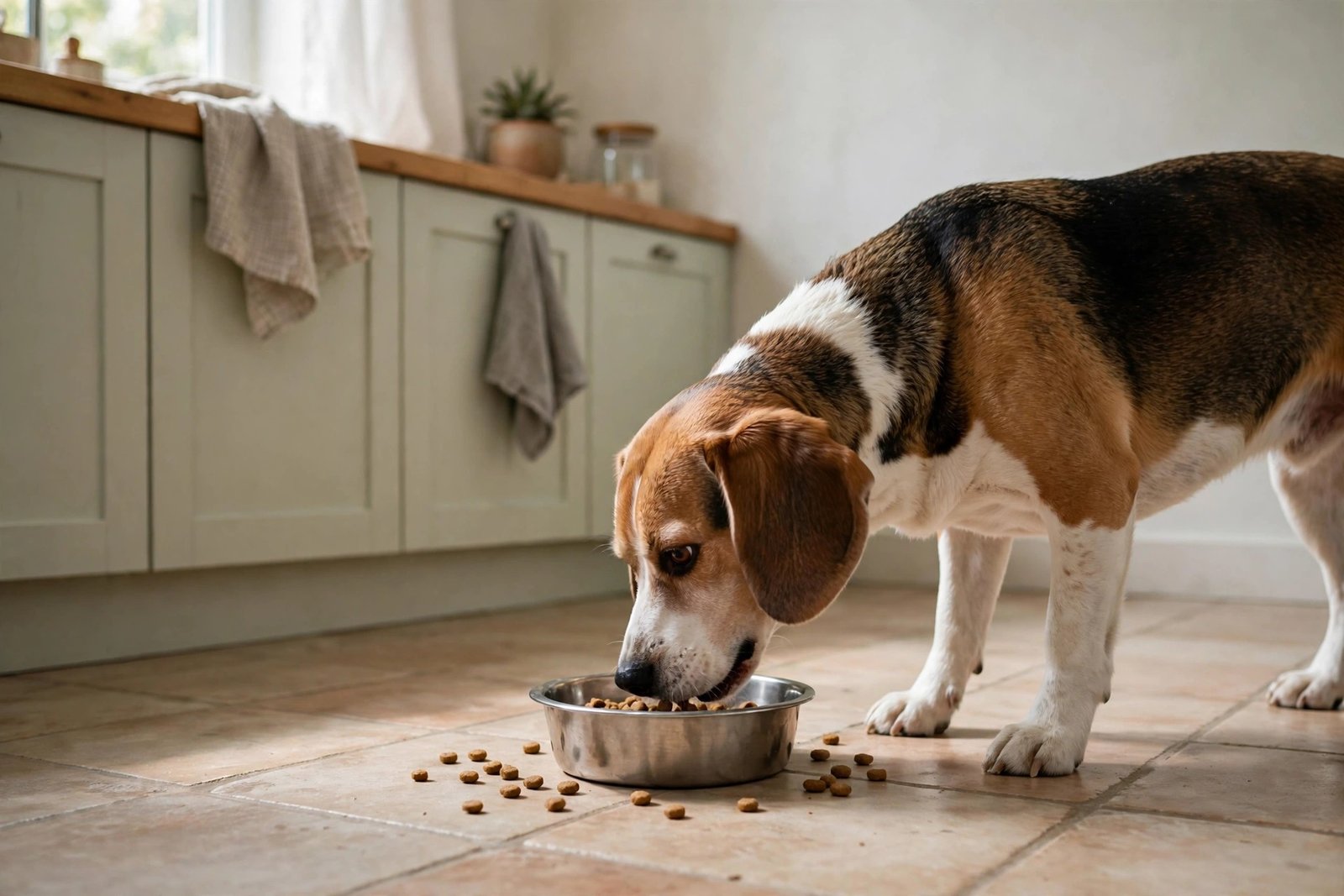
Dry food left out all day goes stale, absorbs moisture and kitchen smells, and attracts flies, ants, and in warm weather worse. Wet food should never be grazed at all, as it spoils within a couple of hours. Bowl hygiene matters more than most owners realise, a topic we cover in our guide to dog food bowl hygiene mistakes. Food that has sat out for hours is also simply less appealing, which can turn a normal dog into an apparently fussy one.
It complicates multi-dog homes and training
In homes with more than one pet, grazing means you cannot be sure who ate what, and a confident dog may quietly eat two shares while a shy one waits. Food down all day can also fuel guarding around the bowl. And because food has no special value to a grazer, using small pieces of his daily food as training rewards works far less well.
Toilet timing becomes a guessing game
Dogs usually need the toilet a predictable time after eating. With nibbling all day, output is spread unpredictably across the day too, which makes house training slower for young dogs and routines harder for everyone.
Why Scheduled Meals Suit Most Homes
Scheduled meals turn feeding into a small, calm routine with several built-in benefits:
- Instant appetite information. A finished bowl is normal; a refused meal is noticed the same day.
- Accurate portions. You can measure the day’s food once, split it, and adjust slowly based on body condition.
- Fresher, cleaner feeding. Food is eaten promptly, bowls are washed after meals, and nothing sits out attracting pests.
- Predictable toilet times, which helps puppies, older dogs, and anyone planning the day around walks.
- Easier food changes and medication. When you need to mix in a new food gradually, or hide a tablet in a meal, set mealtimes make both simple, and a dog who eats fast at his set meal can be managed with the slow-feeding ideas in our guide for a dog who eats too fast.
How to Move From Grazing to Scheduled Meals
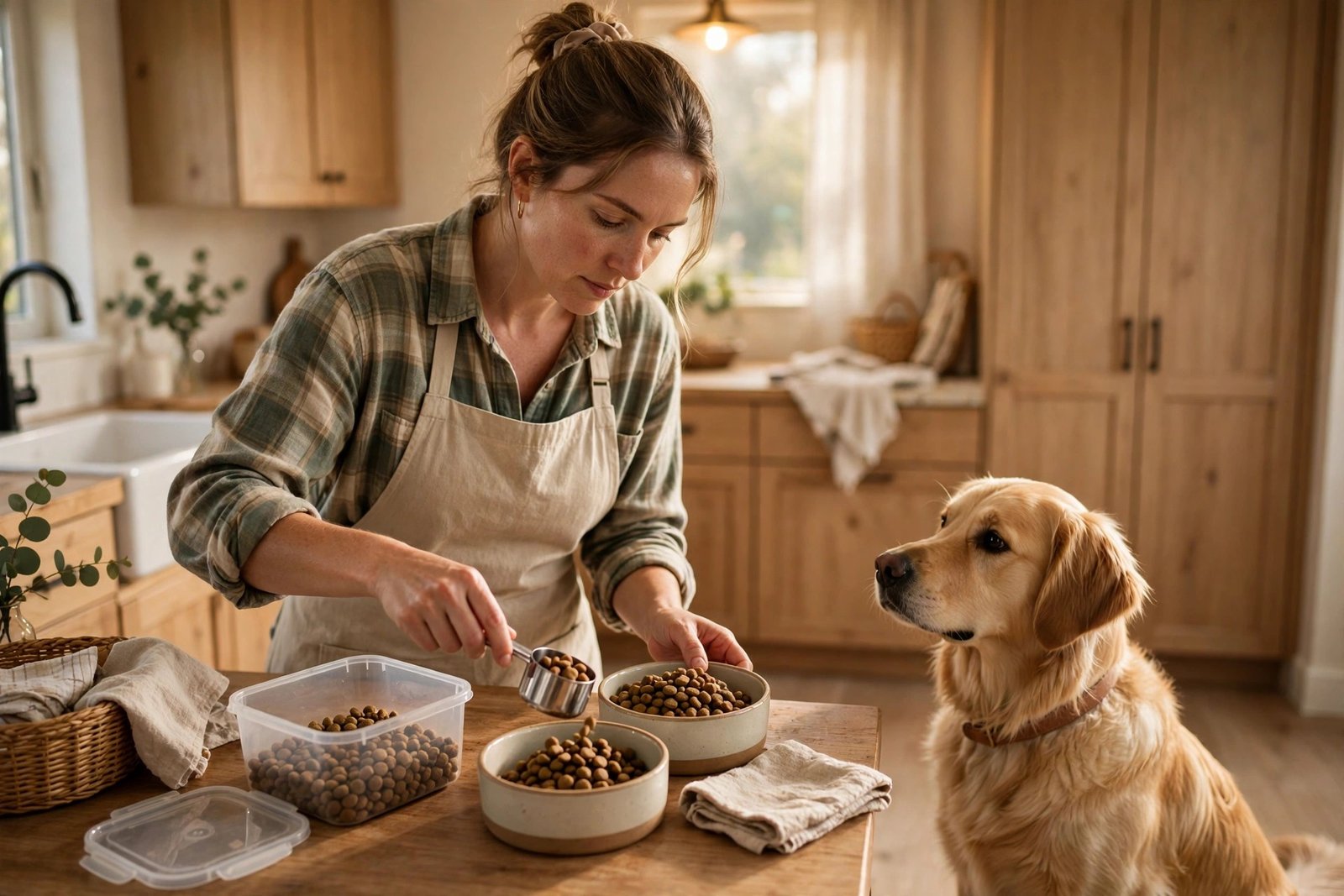
Most grazers adjust within a week. Start by measuring out the full day’s food in the morning so the total stays honest. Offer half as breakfast at a set time, pick the bowl up after 20 to 30 minutes whatever is left, and offer the rest as dinner. Do not add the leftovers of a refused meal on top of the next one, and do not compensate with extra treats. A healthy dog may skip the first meal or two out of surprise, then settle into the routine once he learns food now has a schedule. Keep meal times, walking times, and the feeding spot consistent while he learns.
Mistakes to Avoid
- Topping up instead of measuring. A grazer’s bowl that is refilled whenever it looks low can easily hold far more than a day’s food. If you graze, at least measure the full day’s amount into the bowl once each morning.
- Leaving wet food out to graze on. Wet and fresh foods spoil quickly at room temperature and can make a dog ill. Grazing, if used at all, only suits dry food, and even that goes stale.
- Switching styles overnight with a big dog or a puppy. Puppies need frequent set meals for growth and house training, and should never simply be moved to all-day food. Change routines gradually over several days.
- Assuming a grazing dog “eats when he’s hungry, so he’s fine”. Without meals, you have no baseline. Weigh your dog monthly and do the ribs-and-waist check so changes do not slip past you.
- Letting one dog graze in a multi-pet home. It almost always ends with the wrong dog eating the food. Feed separately, on a schedule, so every pet gets their own measured share.
Frequently Asked Questions
Is grazing ever the right choice?
Yes, for a small minority of dogs: a single, healthy adult dog who has stayed a steady weight for a long time, eats dry food calmly, and lives in a pest-free home where the bowl can be kept clean. Even then, measure the day’s food each morning and weigh your dog regularly, so you would notice a change. If any of those conditions stop being true, scheduled meals are safer.
Will my dog be hungry between scheduled meals?
Most dogs adapt quickly and are content between meals once the routine is familiar, especially with walks, play, and rest filling the gaps. A dog who seems genuinely hungry all day despite correct portions is a different issue, worth checking portions and body condition first, and then mentioning to a vet if the hunger is new or intense.
How long should I leave a scheduled meal down?
Twenty to thirty minutes is a good window for most dogs. It is long enough for a calm eater, short enough to keep food fresh and make refusals obvious. Pick the bowl up when the time is over, even if food remains, and note how much was left. That small habit is what turns feeding into useful health information.
Can I graze a puppy until he is older?
It is not a good idea. Puppies need set meals to support steady growth, to build a toilet routine, and so you can see at once if a young puppy goes off his food, which can matter quickly at that age. Scheduled meals from the start make house training noticeably easier, because input and output both become predictable.