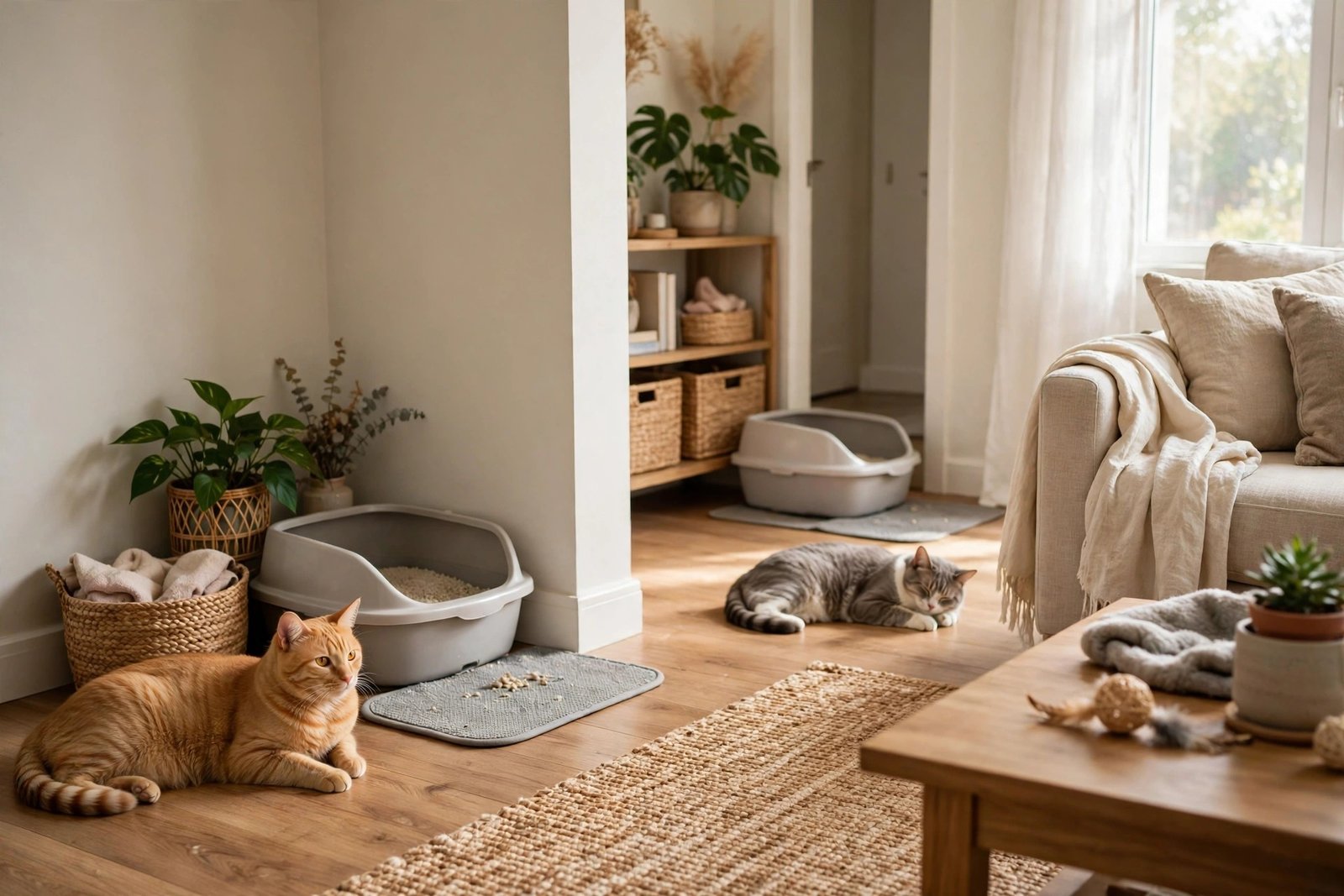
One cat, one litter box: it sounds logical, and it is the setup most homes start with. It is also the setup behind a surprising number of litter problems. Cats are particular creatures with strong opinions about toilets, and what looks like plenty to us can feel like a compromise to them. The good news is that there is a simple, well-known rule for getting the number right, and it costs nothing more than a second tray and a bit of floor space.
This guide explains the rule, why it works, where the extra boxes should actually go, and the situations where you may need even more than the rule suggests.
Quick Answer
The simple rule is: one litter box per cat, plus one extra. One cat needs two boxes, two cats need three, three cats need four, and so on. The boxes should be in different locations around the home, not lined up side by side, because cats count places, not trays. Add them in quiet, easy-to-reach spots away from food and water, and spread across floors in a multi-storey home. Too few boxes is one of the most common and most fixable causes of accidents, stress, and one cat quietly guarding the only toilet in the house.
The Rule: One Per Cat, Plus One Spare
The “plus one” part is not a sales trick; it solves real behaviour. Cats in the wild would never be forced to use exactly one spot, and many pet cats strongly prefer to urinate in one place and pass stool in another. A spare box also means there is always a clean option when one box is dirty, occupied, or briefly out of reach behind a closed door. And in multi-cat homes, it gives a lower-ranking cat an alternative when a bolder housemate happens to be near the main box.
So the maths is simple:
- One cat: 2 boxes.
- Two cats: 3 boxes.
- Three cats: 4 boxes.
- Four cats: 5 boxes.
If you currently have fewer than the rule suggests and your home has any litter tension at all, adding boxes is the cheapest experiment you will ever run, and very often the one that works.

Location Matters as Much as the Number
Two boxes side by side in the laundry room count as one location in your cat’s mind. The whole point of extra boxes is choice of place, so spread them out: one in the usual quiet corner, another in a different room your cat already spends time in. In a home with more than one floor, aim for at least one box on every floor your cat uses, because a cat upstairs with a full bladder and a long trip downstairs is a cat who may choose the carpet instead.
Good locations are quiet, private, and easy to reach at all hours, with an escape route so the cat never feels trapped while using the box. Keep boxes away from food and water bowls, away from loud appliances that can startle mid-use, and never in a spot that gets shut off at night. If your cat has already chosen a favourite accident spot, placing a box there temporarily is often smarter than fighting it; you can edge it towards a better position later, a little at a time.
When You May Need Even More
Multi-cat homes with tension
If one cat ambushes, stares at, or blocks another near the box, the number is not the real issue: access is. Add boxes in separate territories so the nervous cat never has to pass the bold one to reach a toilet. Blocked access is a classic hidden cause behind cases of a cat not using the litter box, and it disappears surprisingly often once a safe second location exists.
Kittens, seniors, and unwell cats
Young kittens cannot hold on for long and do not travel far, so extra boxes near where they play and sleep prevent accidents while they learn. Senior cats and cats with arthritis or illness benefit from more boxes too, ideally with low sides, placed so no stairs stand between the cat and the nearest option. During any illness that increases urination, a temporary extra box near your cat’s favourite resting spot is a kindness.

What About One Very Large Box Instead?
Size helps, but it does not replace numbers. A generous box gives a big cat room to turn and dig, and many cats do prefer a larger tray. But one big box is still one location, one chance of being dirty, and one spot another cat can guard. If you are choosing where to spend first, meet the number rule with ordinary-sized boxes in separate places, then upgrade sizes as you can.
Choosing the Boxes Themselves
Once the number is right, a few choices about the boxes make them work harder. Size comes first: most standard trays are smaller than cats would choose, so go bigger where space allows, roughly one and a half times your cat’s length, so she can turn, dig, and choose a clean corner. Open boxes are the safer default, because hooded boxes trap smell inside and some cats feel cornered in them; if you use a cover, watch that every cat still uses the box happily.
Sides matter too. High sides help enthusiastic diggers keep litter in, but kittens and older cats with stiff joints need at least one box with a low entry they can step into without climbing. If one cat in the home is spraying or aiming high, a high-sided box with one lowered entry cut or moulded in solves both problems at once. The rule is simple: the box should fit the cat who finds it hardest to use, not the average cat.
A Quick Troubleshooting Check
If your numbers already match the rule but accidents continue, the count is probably not the real cause. Work through the likely suspects in order: a health check first, since urinary pain makes cats avoid boxes; then cleanliness, because a box that is scooped too rarely fails every cat in the house at once; then location changes, new pets, building work, or other stress at home. Numbers fix access. They cannot fix pain or a box that smells, and confusing the two is how small problems drag on.
Keeping Up With More Boxes
More boxes does not mean more work if the routine is simple: a quick scoop of each box once or twice a day, top up the litter depth as needed, and a full change and wash on a regular cycle. In fact, litter in a multi-box home often stays fresher longer because each box is used less. If a box still smells despite good cleaning, our guide to fixing a litter box that smells bad even after cleaning works through the hidden causes, and our routine for how to clean a litter box properly keeps the whole system low-effort.
Mistakes to Avoid
- Lining all the boxes up in one row: cats count locations, not trays. Boxes side by side are one toilet area with extra steps.
- Putting every box in the busiest or noisiest room: a box beside a roaring washer or a slamming door teaches cats to find somewhere quieter, like your laundry pile.
- Placing boxes next to food and water: cats instinctively separate eating and toileting. Keep them in different areas.
- Forgetting night-time access: a box behind a door that closes at night simply does not exist for half the day.
- Assuming one cat means one box is plenty: many single cats still strongly prefer a second spot, and the spare keeps a clean option always available.
Frequently Asked Questions
Can two cats share one litter box?
Some tolerant cats will, but it is not recommended. The guide is one per cat plus one spare, because sharing removes choice, builds smell faster, and gives a nervous cat no alternative if the box is occupied or guarded.
Where is the best place for a second litter box?
A different, quiet room your cat already uses, easy to reach day and night and away from food. In a multi-storey home, one box per floor is a good target.
Do kittens need their own litter boxes?
Kittens need easy access more than ownership. Place boxes near where the kitten plays and sleeps, with low sides, because young kittens cannot hold on or travel far.
Is a bigger box as good as two boxes?
No. A bigger box is more comfortable, but it is still one location, and it can still be dirty or guarded. Numbers and placement come first; size is a bonus.
Toilets are a small thing that shape a cat’s whole day. One box per cat, plus one spare, spread across calm and reachable places, removes a whole category of stress from your home, for your cat and for you.
1 thought on “How Many Litter Boxes Do You Need? The Simple Rule Explained”