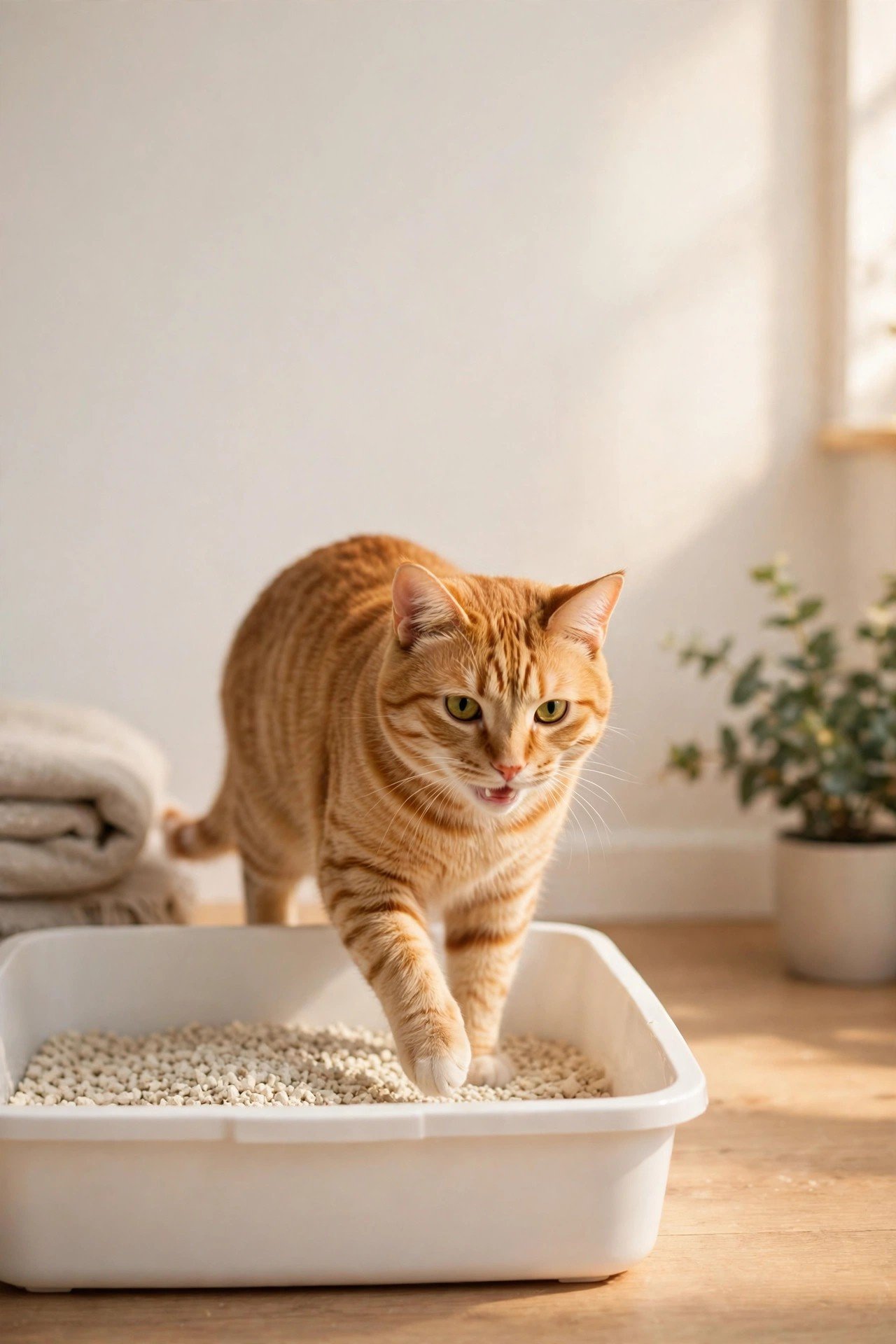
You scoop the box, you wash the box, you change the litter, and somehow the room still smells like a litter tray. If that sounds familiar, do not blame your nose, or your cat. A litter box that smells bad even after cleaning is almost always a sign that something deeper needs attention: urine soaked into the plastic, litter that is not deep enough, hidden accidents outside the box, or sometimes a change in your cat’s health that makes her urine stronger than usual.
The good news is that this is a very fixable problem. It just needs a proper investigation instead of more perfume and more scrubbing. Work through the causes below in order, and most owners find the real culprit within the first few.
Quick Answer
When a litter box smells even after cleaning, the smell is usually hiding somewhere: scratched plastic that has absorbed months of urine, too-shallow litter that lets urine pool at the bottom, old litter that needs a full change rather than another top-up, accidents soaked into carpet or skirting boards nearby, or a litter type that simply does not control odour well for your cat. Replace tired boxes once a year or so, keep litter deep enough (around 5 to 7 cm), do a full litter change and hot wash on a routine, and hunt for hidden soak spots with your nose at floor level. If the urine itself smells far stronger than it used to, book a vet check, because that can be an early health sign.
Cause 1: The Box Itself Has Absorbed the Smell
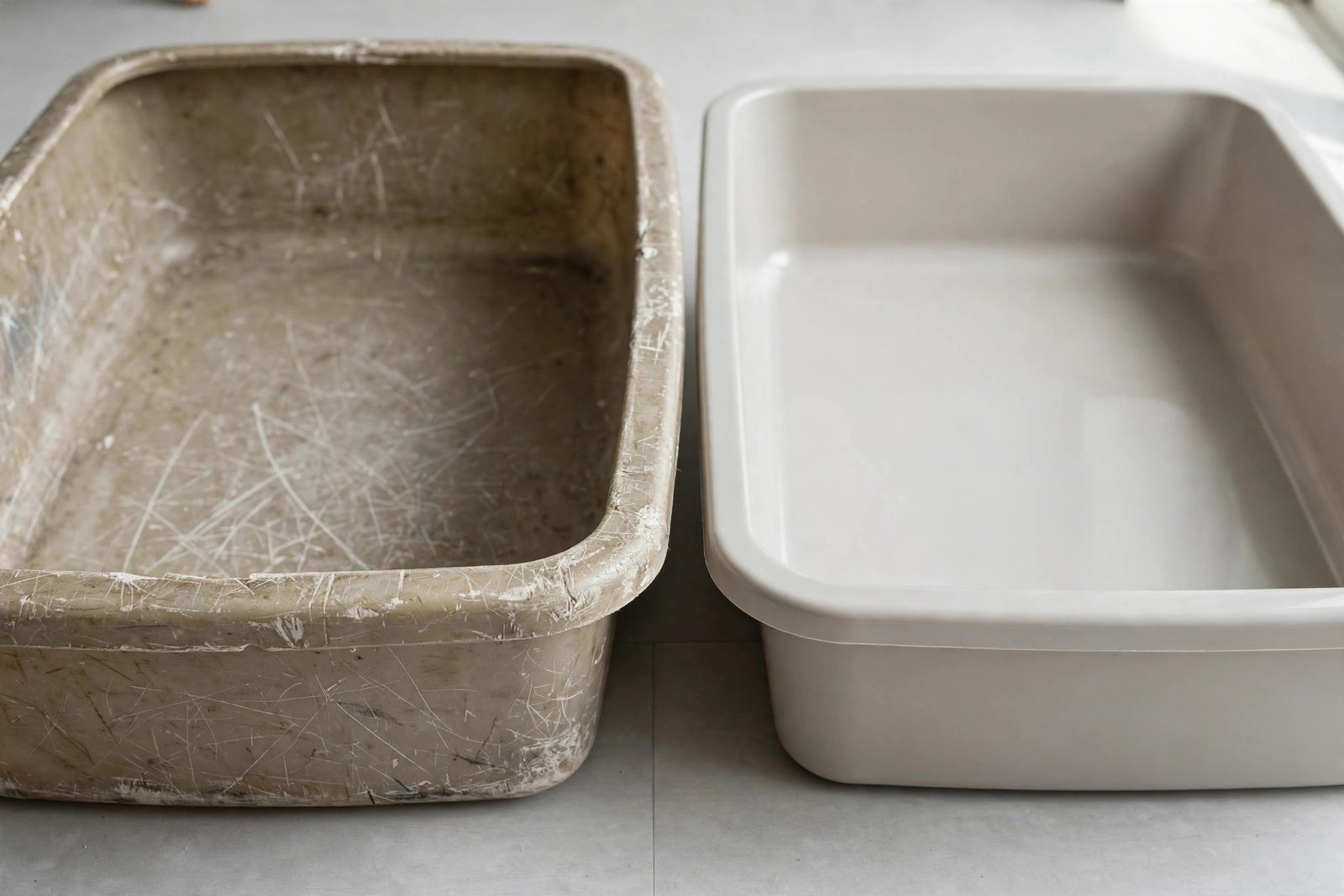
Plastic litter boxes are not forever. Over months of use, cats scratch the base and walls every time they dig, and those fine scratches trap urine deep inside the plastic where no amount of scrubbing can reach it. The box can look perfectly clean and still hold a permanent smell that releases every time it warms up or gets fresh urine on it.
Test it honestly: empty the box, wash it, dry it, and then sniff the bare plastic up close before adding any litter. If the empty box already smells, the box is the problem, and replacing it will feel like a miracle. Most owners do well replacing plastic boxes every 6 to 12 months, sooner if the base looks heavily scored. Smooth, hard plastic scratched less deeply lasts longer than soft, cheap plastic.
Cause 2: The Litter Is Too Shallow or Too Old
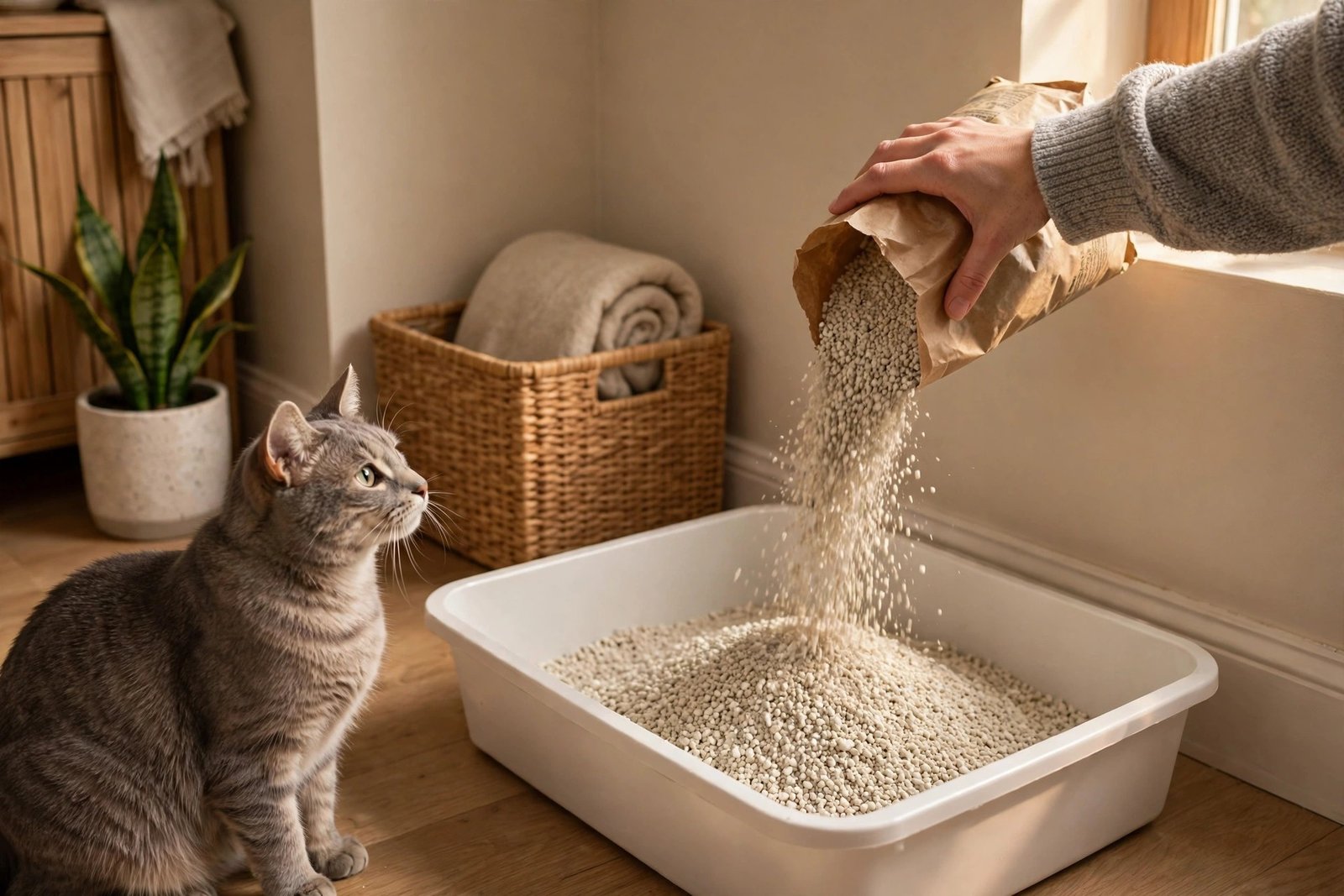
Litter can only absorb urine if there is enough of it. When the layer is too thin, urine runs straight through to the base, pools underneath, and sits there breaking down into that sharp ammonia smell that hits you when you walk into the room. Aim for a depth of roughly 5 to 7 cm across the whole box, and top up little and often so the depth never drops.
The second half of this cause is age. Scooping removes the clumps and solids, but the remaining litter slowly absorbs odours over time. Topping up forever without a full change is one of the most common reasons a box smells despite daily scooping. Set a routine: a complete empty, hot wash, and refill on a regular cycle, shorter for non-clumping litter and busy multi-cat boxes. Our step-by-step guide on how to clean a litter box properly covers the full routine, including which cleaning products are safe around cats.
Cause 3: The Smell Is Not in the Box at All
Sometimes the box is genuinely clean and the smell is coming from the room around it. Urine that missed the box weeks ago, soaked into carpet underlay, grout, or the bottom of a skirting board, will keep releasing odour indefinitely, and it often smells strongest exactly where the box sits, which sends owners scrubbing the tray while the real source is the floor beneath it.
Get down to floor level and sniff around the box: the wall behind it, the floor under and beside it, any mat, and nearby soft furnishings. An enzymatic cleaner made for pet urine is what breaks down the soaked-in residue; ordinary cleaners mostly mask it, and to a cat’s nose the spot still smells like a toilet, which can quietly encourage repeat accidents there. If your cat has been going outside the box at all, our guide on why a cat stops using the litter box walks through the medical and stress causes to check in the right order.
Cause 4: Not Enough Boxes, or One Overworked Box
A single box shared by several cats, or one box that gets very heavy use, reaches its limit quickly. The litter becomes saturated faster, smells build between scoops, and the whole setup never gets a chance to reset. The usual guide is one box per cat plus one spare, and our article on how many litter boxes you need explains the rule and the placement tips that go with it. An extra box in a second location often reduces odour more than any scented product, simply because the load is spread.
Cause 5: The Litter Type Is Not Doing Its Job
Litters vary a lot in odour control. Fine clumping litters that form tight, hard clumps usually remove more of the urine at each scoop, so less smell stays behind. Some cats are fussy, though, and the best litter in the world is useless if your cat dislikes it and starts avoiding the box. Change litter gradually, mixing new into old over a week or so, and watch that she is still using the box happily. Heavily perfumed litters deserve caution: what smells like flowers to us can smell overwhelming to a cat whose nose is far more sensitive, and scented litter is a known reason some cats quietly give up on a box.
When the Urine Itself Smells Worse Than Usual
There is one cause that is not about cleaning at all. If the smell has changed, rather than simply lingered, pay attention. Much stronger, sharper, or sweeter-smelling urine, straining, visiting the box more often, drinking noticeably more, or any blood in the urine are all reasons to book a vet visit rather than buy another air freshener. Urinary infections and several other conditions can announce themselves through the litter box first. This article is general information only and not veterinary advice, but a change in your cat’s urine is exactly the kind of small sign that is worth checking early.
Mistakes to Avoid
- Masking instead of fixing: scented sprays, plug-ins, and perfumed litters layer perfume over the source and often make cats avoid the box. Find and remove the cause instead.
- Using strong bleach or ammonia-based cleaners: harsh smells linger in the tray, ammonia smells like urine to a cat, and residues are not kind to paws and noses. Warm water and a mild, unscented wash is the safer routine.
- Topping up forever: scooping plus endless top-ups never resets the litter. Old litter holds odour no matter how tidy it looks.
- Keeping a scratched old box for years: if the empty, washed box smells, it is finished. Replacing it is cheaper than months of products.
- Ignoring a change in the urine itself: a suddenly stronger smell plus any straining, blood, or extra drinking is a vet visit, not a cleaning problem.
Frequently Asked Questions
How often should I replace a plastic litter box?
As a general guide, every 6 to 12 months. Scratches from digging trap urine in the plastic over time, and once a washed, empty box still smells, replacing it is the real fix rather than more cleaning.
Does deeper litter really help with smell?
Yes. Around 5 to 7 cm gives urine something to be absorbed into instead of pooling on the base where it breaks down and smells sharp. Keep the depth topped up so it never gets thin.
Why does the room smell when the box looks clean?
Usually because the smell is in the room, not the tray: soaked carpet underlay, grout, mats, or the box plastic itself. Sniff at floor level around the box, and treat any soaked spots with an enzymatic cleaner made for pet urine.
When is a smelly litter box a health worry?
When the urine itself changes: much stronger or sweeter-smelling than usual, or combined with straining, blood, more frequent visits, or drinking a lot more. Those are signs to book a vet visit promptly.
A box that smells right is not about stronger products. It is about a sound box, deep fresh litter, a real cleaning routine, and paying attention when your cat’s body is telling you something. Get those four right and the smell problem usually disappears with them.