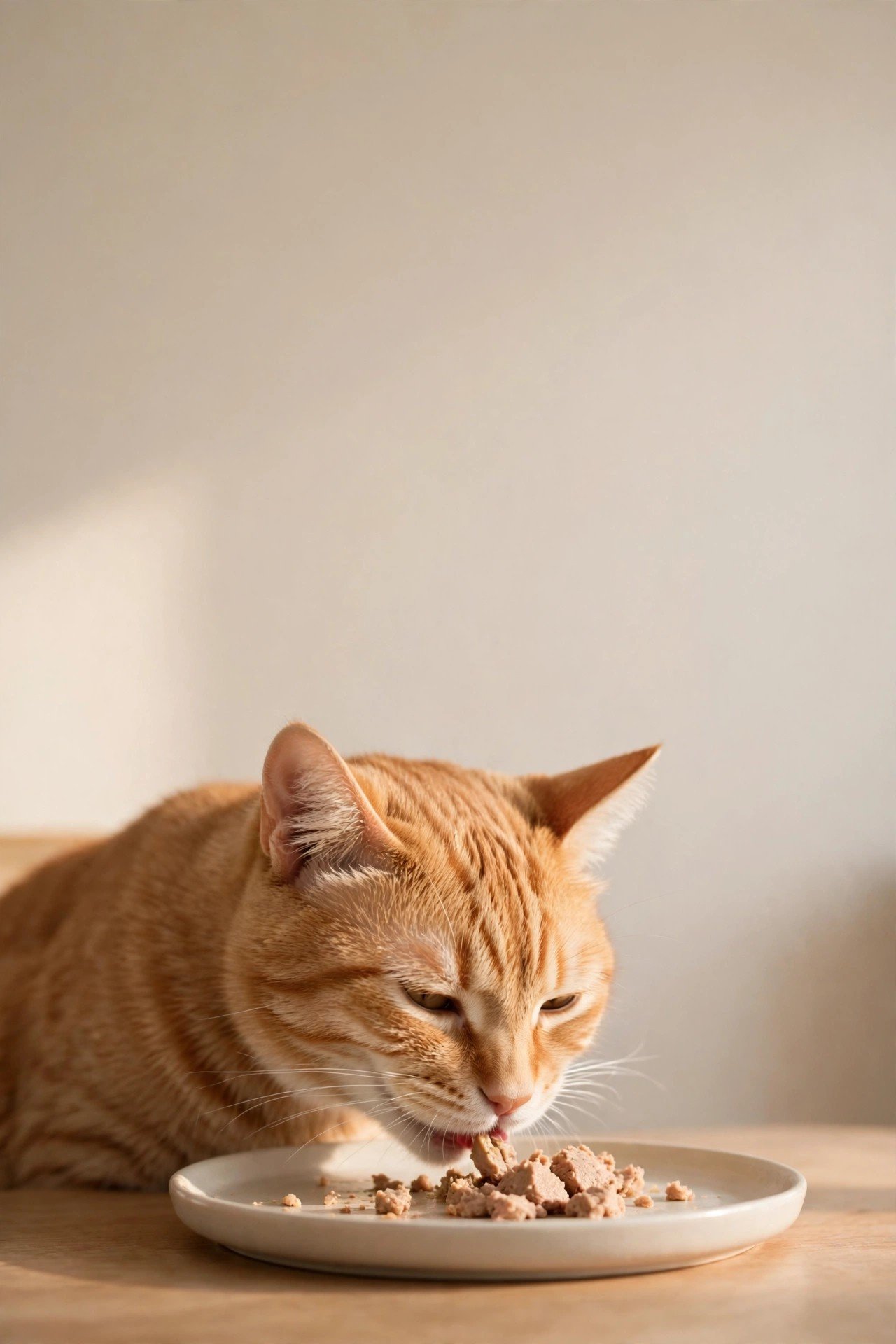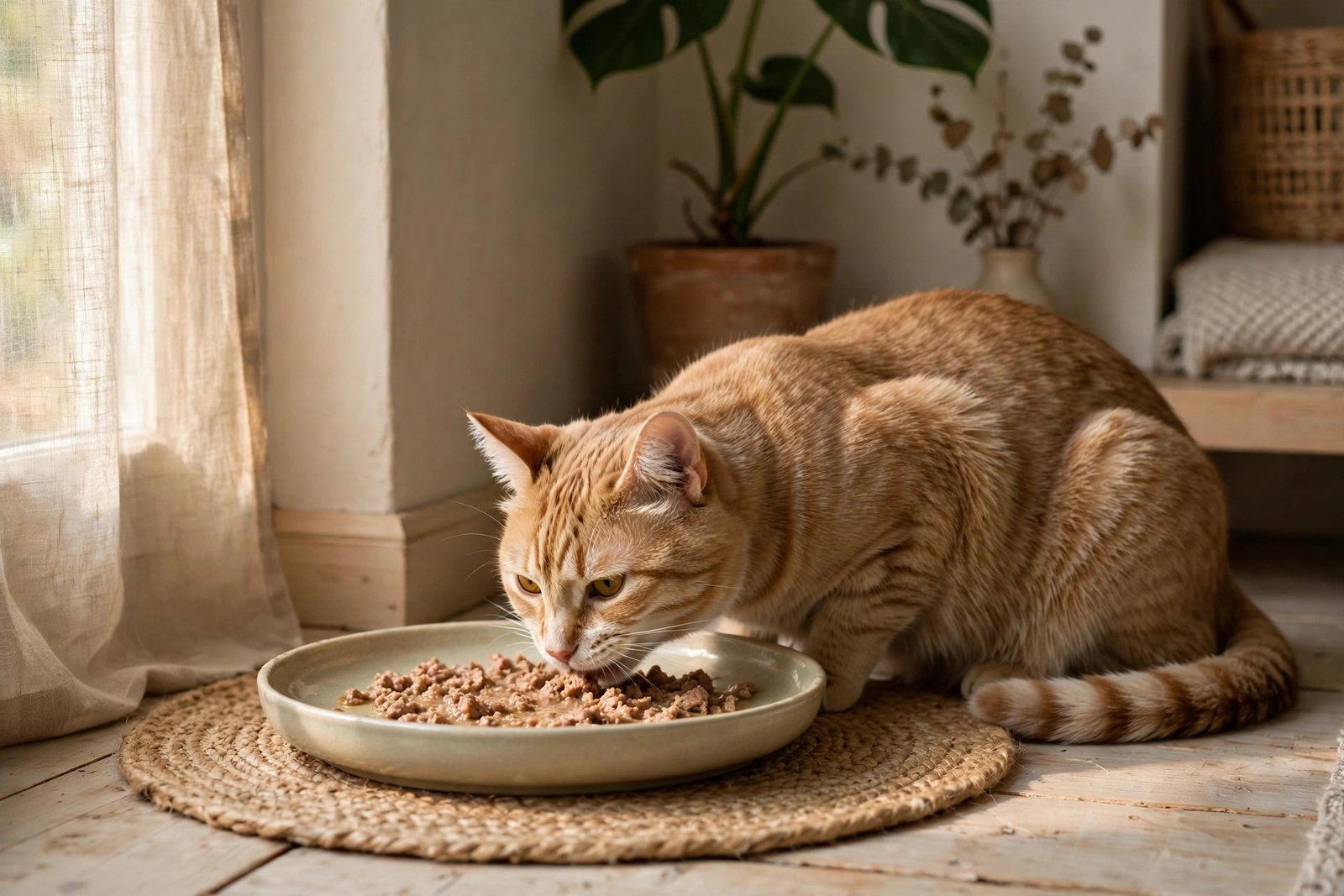
Breakfast goes down in ninety seconds flat, and ten minutes later it comes back up on the rug, barely changed, while your cat looks faintly surprised and then asks for more. If this sounds familiar, you are not alone: bringing food back up after eating is one of the most common worries cat owners bring to vets. Sometimes it is nothing more than a cat who eats like the bowl is about to be stolen. Sometimes it is a hairball. And sometimes it is the first visible sign of something that needs a vet’s eyes.
This guide helps you read what you are seeing: what actually came up, how quickly, and what your cat is like afterwards. Those three details separate most harmless episodes from the ones that matter, and they decide whether the fix is a slower dinner or an appointment.
Quick Answer
Food that comes back up within minutes, whole and undigested, in a cat who then seems perfectly fine, is usually regurgitation from eating too fast, and it often stops with smaller, slower meals. Occasional hairballs, a sausage-shaped bundle of fur brought up after grooming, are also common and usually harmless. But repeated vomiting, vomiting with blood or bile, weight loss, not eating, or a cat who seems tired or unwell afterwards is not a wait-and-see pattern: book a vet visit, and do it sooner for kittens and senior cats. This article is general information only and is not veterinary advice; it cannot diagnose your cat.
A note before we start: one episode in a bright cat who keeps the next meal down is rarely an emergency. Patterns are what matter: how often, what it looks like, and how your cat is in herself. When in doubt, a phone call to your vet costs nothing and settles the question.
Vomiting or Regurgitation? They Are Not the Same
Owners use the word vomiting for everything that comes back up, but vets draw a useful line, because the two have different causes.
Regurgitation: quiet and quick
Regurgitation is passive. The food comes back up with little warning and little effort, often within minutes of eating, and it looks almost unchanged: whole biscuits, sometimes in a tube shape, with little or no bile. The cat is usually unfazed and may even try to eat it again, which is disgusting but genuinely a reassuring sign. Fast eating is the classic cause: a cat who bolts food swallows air with it and overloads the stomach, and up it comes. Competition makes it worse; in multi-cat homes, a cat who fears losing her share eats like a sprinter. If the episodes happen alongside other digestive upsets, our guide on a kitten with diarrhoea covers the young-cat version of a sensitive tummy.
Vomiting: active and unmistakable
Vomiting is work. You will see heaving sides, retching sounds, and often drooling or meowing beforehand. What comes up is usually partly digested, liquid, foamy, or yellow with bile, and it may happen hours after eating rather than minutes. The cat often seems subdued afterwards. Vomiting, especially repeated vomiting, has a longer list of possible causes, from stomach irritation and hairballs to food that does not suit her, infections, swallowed objects, and wider health problems, which is why it earns more respect.
The Fast-Eating Fixes
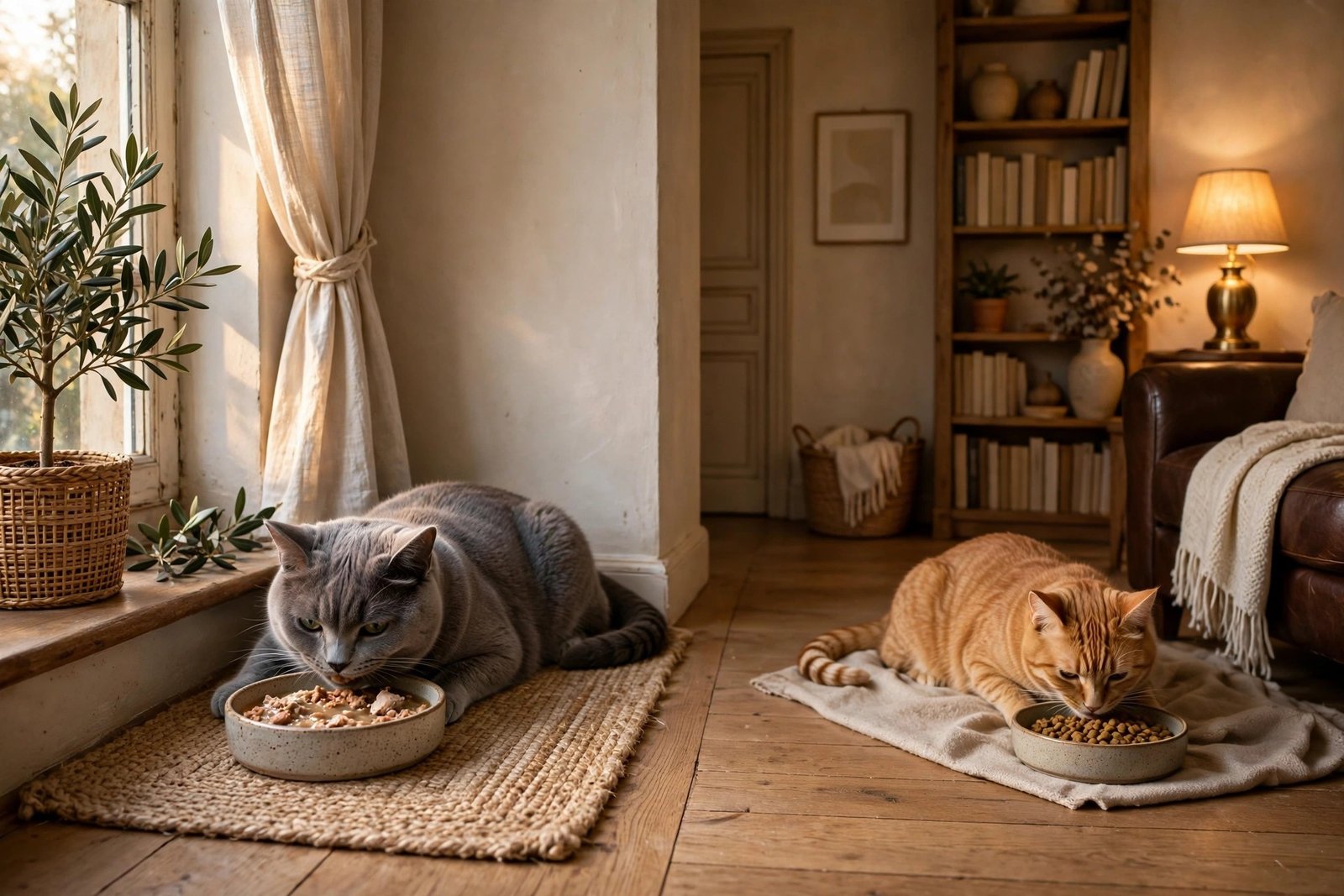
If the pattern fits regurgitation from speed, the fix is to slow the meal down. Work through these in order; most cats need only the first two.
- Smaller meals, more often: split the same daily amount into three or four small meals instead of one or two big ones. A less-full stomach is a calmer stomach, and total food stays exactly the same.
- Spread the food out: scatter dry food over a wide, clean tray or a washable mat instead of piling it in a bowl, so she picks up a few pieces at a time rather than mouthfuls. For wet food, spread it thinly across a flat plate.
- Feed cats separately: if competition is the fuel, feed each cat in her own spot, ideally in different rooms with the door closed for ten quiet minutes. A cat who eats alone, unhurried, often slows down within days. If squabbles are part of a wider litter-area stress picture, our article on a cat not using the litter box shows how often these tensions travel together.
- Keep mealtimes calm and regular: same times, same place, no exciting play session immediately before or after food. A cat wound up from play eats fast and keeps it down badly.
- Rule out the bowl itself: a high-sided deep bowl can bother some cats. A wide, shallow dish is a cheap experiment worth trying.
Hairballs: The Normal Nuisance
Cats swallow loose fur every time they groom, and most of it passes through quietly. Some gathers in the stomach into a hairball, which the cat brings up, usually as a compact, tube-shaped bundle of fur with some liquid. An occasional hairball every few weeks in a long-haired or heavy-grooming cat is normal life. Help by grooming her regularly with a brush, which removes loose fur before she swallows it, and by keeping fresh water available; if she is also drinking noticeably more than usual, that combination deserves its own attention, as our guide on a cat drinking a lot of water explains. What is NOT normal: frequent hairballs week after week, or retching and coughing that produces nothing. Repeated unproductive retching can be a sign of breathing problems or a blockage, and it belongs at the vet, not in the hairball category.
Other Causes Worth Knowing About
If slowing meals down changes nothing, keep the wider picture in mind. Food that does not suit a cat, whether a sudden change, a rich new treat, or a developing sensitivity, can cause repeated vomiting over weeks. So can eating things she should not: houseplants, string, and scraps from bins are regular offenders, and a swallowed object is the serious end of that list. Worms and gut parasites, stomach inflammation, and health problems elsewhere in the body can also show up as vomiting. You cannot sort these at home, and you do not need to: your job is an accurate diary, not a diagnosis.
Keep a Simple Episode Diary
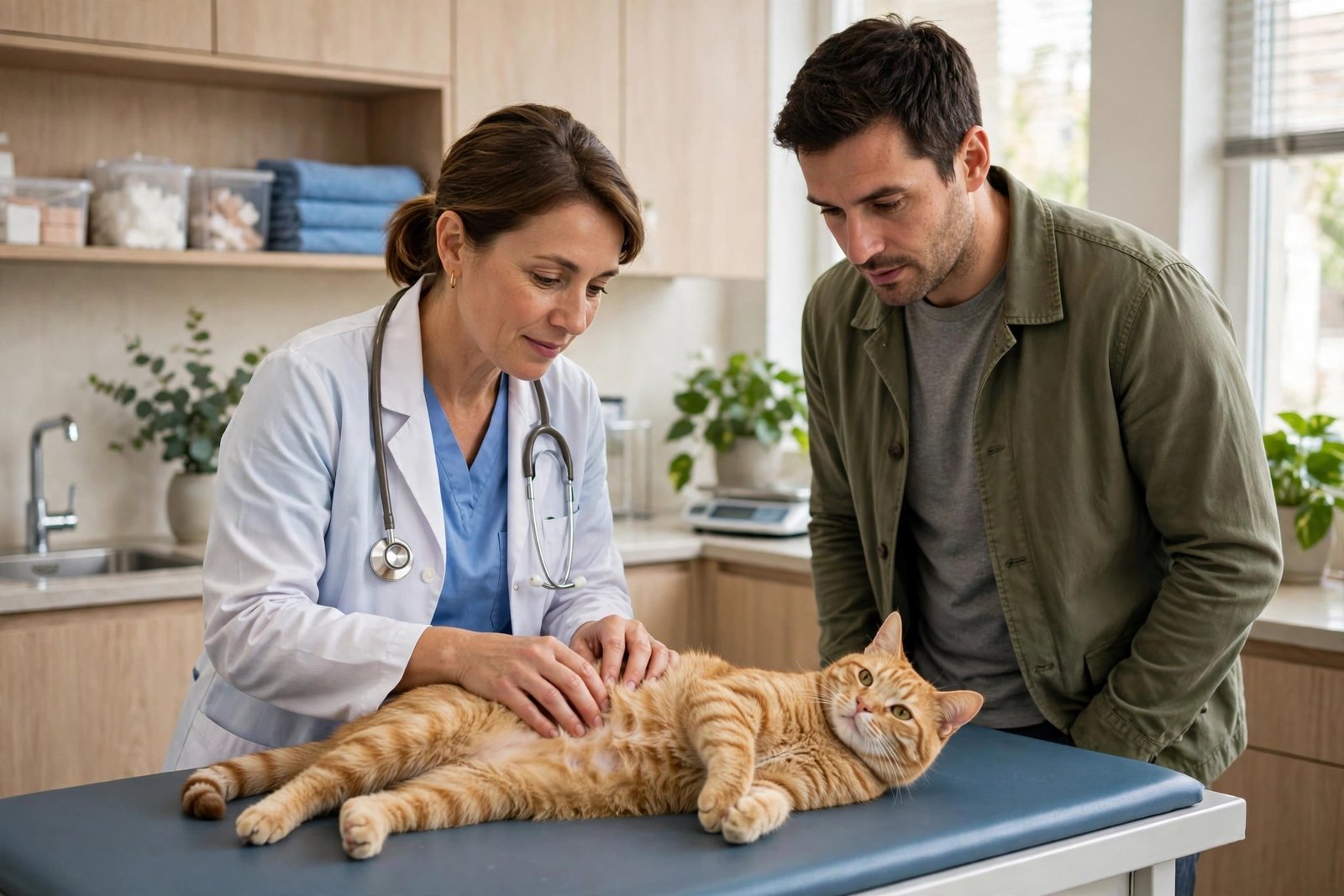
For two weeks, or until the pattern is clear, note each episode: the time, how long after eating, what came up (whole food, part-digested, foam, bile, hairball), and how she was afterwards. Add appetite, litter habits, weight if you can weigh her, and any new food, treat, plant, or product in the home. If the episodes stop with slower meals, the diary proves it. If they continue, the diary is exactly what the vet wants to see, and it will make the appointment far more productive.
Red Flags: Book the Vet
- Vomiting repeatedly: several times in a day, or on most days in a week, or a pattern that lasts beyond a week or two of slower-meal changes.
- Blood in the vomit, vomit that looks dark like coffee grounds, or large amounts of yellow bile with no food involved.
- Weight loss, a thinner feel to her back and hips, or a coat that has gone dull.
- Not eating, or eating far less, alongside the vomiting. A cat who stops eating needs prompt attention in her own right.
- Lethargy: hiding, sleeping far more, not playing, or seeming painful, hunched, or drooling.
- Retching without bringing anything up, a swollen or hard belly, or suspicion she has swallowed string, thread, or a toy part. Treat these as urgent, the same day.
- She is a kitten or a senior cat. Kittens dehydrate quickly and seniors hide more serious causes, so both groups should be seen sooner rather than later, even for patterns you might watch briefly in a healthy adult.
Mistakes to Avoid
- Punishing or fussing over the cat: she is not doing it on purpose and cannot control it. Calmly clean up, note it in the diary, and work on causes.
- Withholding food for long stretches to rest the stomach without vet advice: cats, especially overweight cats, should not go without food for extended periods. Ask the vet before any fasting.
- Changing foods repeatedly and rapidly: each sudden switch is a fresh stomach upset waiting to happen and makes the pattern impossible to read. Change one thing at a time, gradually.
- Giving human stomach medicine or leftover pet medicine: common human remedies can be dangerous to cats. Medication is a vet decision only.
- Assuming every episode is a hairball: frequent bringing-up, especially of food or liquid rather than fur, is not the hairball pattern. Do not let the convenient explanation hide a pattern that needs checking.
Frequently Asked Questions
My cat eats her food again after bringing it up. Should I stop her?
It is revolting but common after regurgitation, and it usually means she feels fine, which is reassuring. You can quietly remove it and offer a smaller, slower meal later; there is no need for drama. If she is doing this often, the answer is slower feeding, not scolding.
How often is it normal for a cat to vomit?
There is no healthy quota, but a rough guide: an occasional episode every few weeks in a bright cat with stable weight, or an occasional hairball, is usually just cat life. Weekly or more, or any episode alongside the red flags above, is a vet visit.
Can stress make a cat vomit after eating?
It can contribute, especially in multi-cat homes where mealtimes feel competitive. Feeding separately in calm spots is both a test and a treatment: if the vomiting stops, stress at the bowl was doing it.
Should I change her food if she keeps vomiting?
Not as a first move, and never in a rapid rotation. First slow the meals down and keep the diary for a week or two. If a food change is needed, your vet can guide it, and a gradual switch over about a week is the safe way to do it.
A cat who brings breakfast back up is usually telling a simple story: too fast, too much fur, or a stomach asking for help. Slow the meals, keep the diary, respect the red flags, and you will almost always know within a fortnight which story yours is telling.