
A kitten with diarrhoea is worrying in a way that the same symptom in an adult cat is not. Kittens are small, their reserves are tiny, and fluid loss that an adult would shrug off can make a young kitten unwell very quickly. That does not mean every loose stool is an emergency: new homes, new food, and a kitten’s immature digestion cause plenty of brief, mild upsets. The skill is knowing which sort you are looking at, and when the answer is simply: vet, today.
This guide walks through the common causes, the warning signs that mean you should not wait, and the gentle home care that is safe while you watch a mild case closely. Nothing here replaces a vet, and with young kittens, in particular, it is always better to call and be reassured than to wait and worry.
Quick Answer
One or two loose stools in a bright, playful kitten who is eating and drinking is often a mild upset from new food, stress, or eating something she should not, and may settle within a day with simple care. But kittens dehydrate fast, so treat diarrhoea as urgent and book a vet the same day if your kitten is very young (under about 12 weeks), if there is blood in the stool, if she is also vomiting, if she is lethargic, hiding, or refusing food, or if the diarrhoea lasts more than a day. Never give any human medicine or leftover pet medicine. This article is general information only and is not veterinary advice.
A note before we start: this guide is general information only, written to help you decide how quickly to seek help. It is not veterinary advice and cannot diagnose your kitten. If anything in the warning list below matches your kitten, skip the home care and call your vet now.
Common Causes of Diarrhoea in Kittens
Food changes and new homes
The single most common cause is a sudden change. A kitten who moves to a new home and a new food on the same day is dealing with stress and an unfamiliar diet at once, and her still-developing gut often protests with a day of loose stool. Rich treats, cow’s milk (most kittens cannot digest it well), and scavenged scraps have the same effect. This kind of upset is typically mild: the kitten stays bright, hungry, and playful while it passes.
Worms and parasites
Kittens very commonly carry worms, often passed from their mother, and these are a frequent cause of ongoing loose stool, a pot-bellied look, and slow growth. Other tiny gut parasites can cause persistent or on-off diarrhoea that does not fully settle. These need proper testing and treatment from a vet; they are one reason a stool sample is so useful at a first appointment.
Infections
Viruses and bacteria can cause diarrhoea in kittens, particularly those not yet fully vaccinated or recently in a shelter or multi-cat environment. Infection is more likely when diarrhoea comes with vomiting, fever, loss of appetite, or a kitten who is clearly unwell rather than just loose.
Eating things she should not
Kittens explore with their mouths. String, bits of toy, houseplant leaves, and rich human food can all upset or irritate a small gut. If a kitten with diarrhoea is also vomiting, straining, or suddenly refuses food, a swallowed object moves up the list of worries, and that combination should be checked the same day.
Warning Signs: Call the Vet the Same Day
With kittens, speed matters more than it does with adults, because dehydration can develop in hours rather than days. Do not wait and watch if you see any of the following:
- Your kitten is very young, roughly under 12 weeks old, and has more than a single loose stool.
- Blood in the stool, or stool that looks black and tarry.
- Vomiting as well as diarrhoea, or repeated vomiting.
- Lethargy: sleeping far more than usual, not playing, hiding away, or seeming weak or wobbly.
- Refusing food, or eating far less than usual. A kitten who is also not eating needs help fast; our guide on a kitten not eating much explains why small kittens cannot afford missed meals.
- Diarrhoea lasting more than 24 hours, even if she still seems bright.
- Signs of dehydration: dry or tacky gums, sunken-looking eyes, or skin that stays tented when gently pinched and released.
If your kitten matches several of these, treat it as urgent and phone your vet or an emergency clinic straight away rather than waiting for a routine appointment.
Safe Home Care for a Mild Case
If your kitten is older, bright, eating, drinking, and has had only a loose stool or two with no warning signs, careful home care for up to a day is reasonable while you watch her closely.
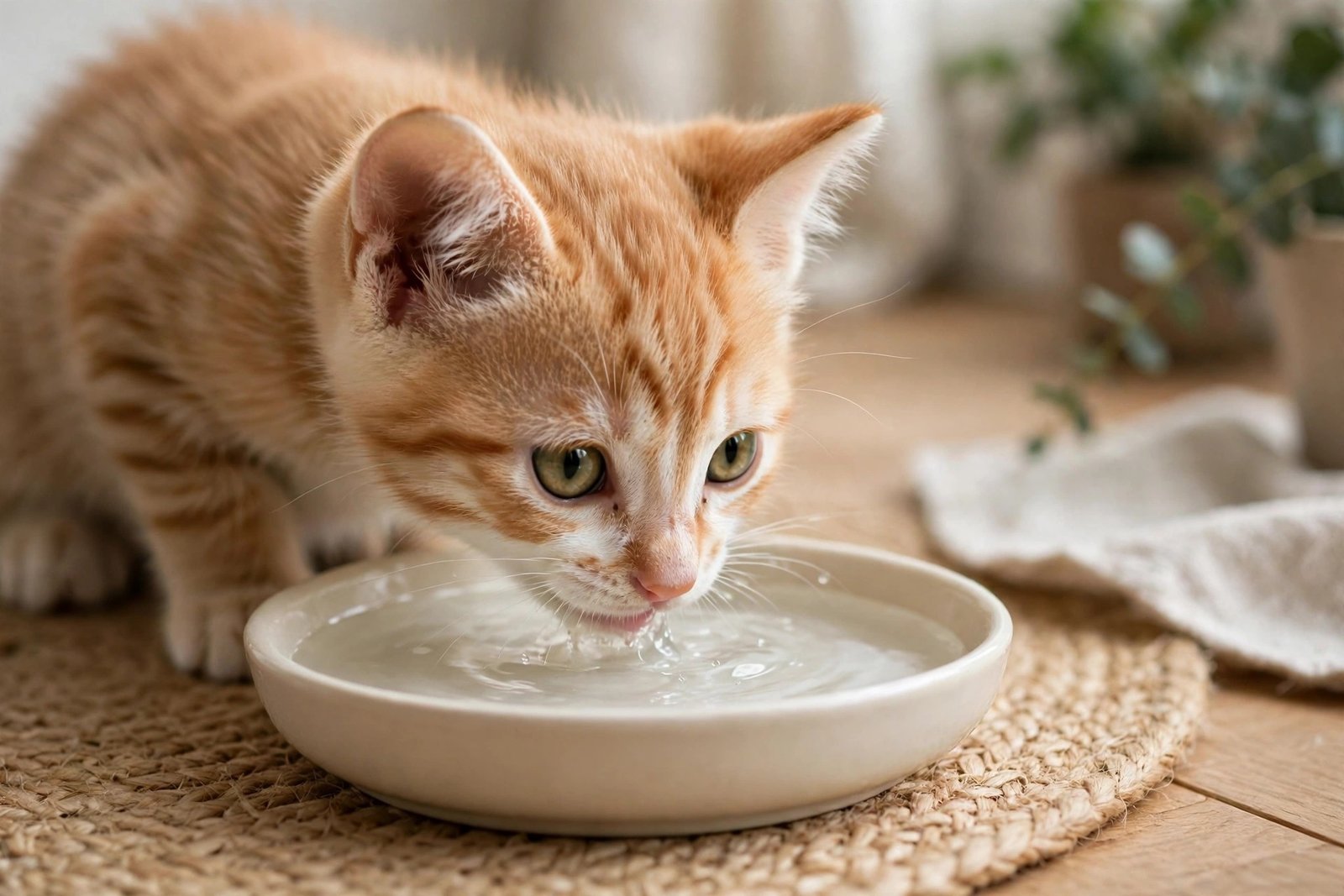
- Keep fresh water available at all times, in a clean shallow bowl, and notice whether she is actually drinking. Fluid is the thing she is losing and the thing she most needs.
- Feed plainly and in small amounts: offer her usual kitten food in smaller, more frequent meals rather than big ones. Do not introduce brand-new foods during an upset, and do not fast a kitten; growing kittens need regular food, and fasting is not the kitten version of resting the stomach.
- Keep the litter box close and watch it: you need to know what is passing and how often. Note the colour, any blood, and how watery it is, because your vet will ask. A kitten going very frequently, or having accidents, is telling you the urgency is rising; the same watching brief applies if you notice her vomiting after eating at the same time, which is a same-day vet sign in a kitten.
- Rest and warmth: let her sleep, keep her in a quiet, warm space, and save the boisterous play sessions for when she is back to normal.
- No medicines of any kind: never give human anti-diarrhoea medicine, painkillers, or anything left over from another pet. Several human medicines are genuinely dangerous to cats, and kitten doses are a vet decision, full stop.
What the Vet Will Do
Knowing what to expect helps you act quickly and calmly. The vet will usually ask about food changes, worming history, vaccinations, and what the stool looks like, then examine your kitten and check her hydration. A stool sample may be tested for worms and parasites. Treatment depends on the cause: fluids for dehydration, a proper kitten-safe worming treatment if parasites are found, dietary support, or further tests and medicine where infection is suspected. Bringing a fresh stool sample in a clean container, and a note of when it started and what she has eaten, saves real time.
Prevention for Next Time
Most repeat upsets are preventable. Change foods gradually over about a week, mixing increasing amounts of the new food into the old. Keep up with the worming schedule your vet sets for kittens, and keep vaccinations current. Keep small swallowable objects, string, and houseplants out of reach, skip the cow’s milk entirely, and keep litter box habits steady; if box routines change suddenly too, our article on a cat not using the litter box helps you separate a litter problem from a tummy problem.
Mistakes to Avoid
- Giving human medicine: human anti-diarrhoea remedies and painkillers can seriously harm cats, and kittens most of all. If a medicine is needed, only a vet can choose it.
- Waiting it out with a very young kitten: kittens dehydrate quickly. Under 12 weeks, or any kitten with blood, vomiting, or lethargy, is a same-day call, not a wait-and-see.
- Fasting a kitten: adult-cat advice does not transfer. Growing kittens need regular small meals; withhold food only if your vet specifically tells you to.
- Offering cow’s milk to settle her: most kittens digest it poorly, and it commonly makes diarrhoea worse, not better.
- Switching foods repeatedly during the upset: chopping and changing makes it impossible to tell what helped and keeps the gut unsettled. Plain, small, familiar meals are the home-care rule.
Frequently Asked Questions
How long can kitten diarrhoea last before it is serious?
In an older, bright kitten, a mild upset may settle within about a day of simple care. Beyond 24 hours, or at any point with blood, vomiting, lethargy, or refusal to eat, it is a vet visit the same day. In kittens under about 12 weeks, do not wait a full day at all.
Can teething or stress cause diarrhoea in kittens?
Stress certainly can: moving home, travel, and big routine changes are classic triggers for a day of loose stool. The kitten typically stays bright and hungry. If she is unwell in any other way, do not put it down to stress; get her checked.
What should I feed a kitten with a mild upset stomach?
Her usual kitten food, in smaller and more frequent meals, with constant access to fresh water. Avoid new foods, treats, and cow’s milk during the upset, and never fast a kitten unless a vet advises it.
Should I take a stool sample to the vet?
Yes, if you can. A fresh sample in a clean, sealed container helps the vet test for worms and other parasites quickly, which are among the most common causes in kittens.
A loose stool in a bouncy, hungry kitten is usually just a rough day. But kittens run on very small reserves, so the rule is simple: watch mild cases closely for no more than a day, and the moment yours is very young, unwell, or not improving, let a vet take it from there.
2 thoughts on “Kitten Has Diarrhoea: Common Causes and When to Call the Vet”