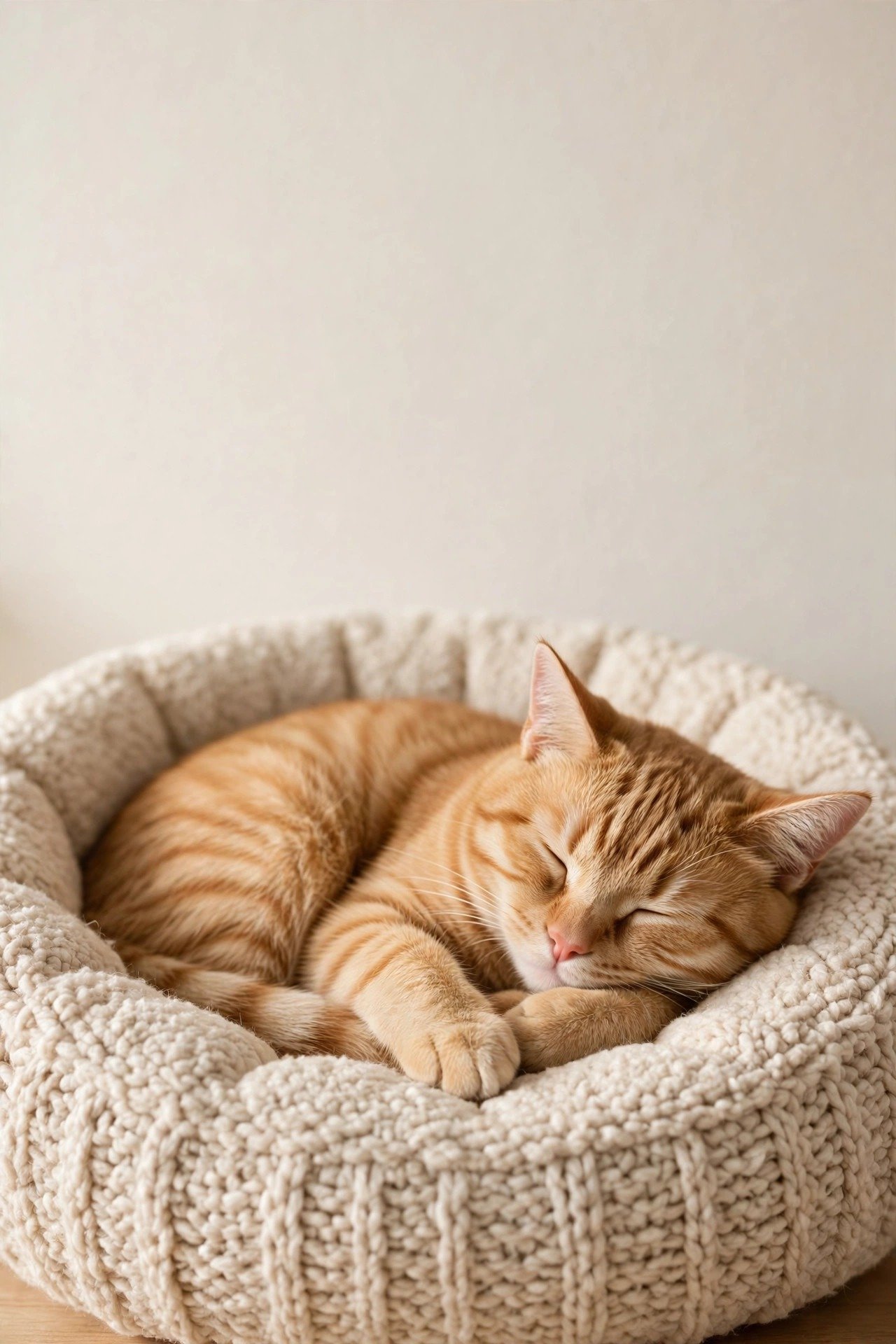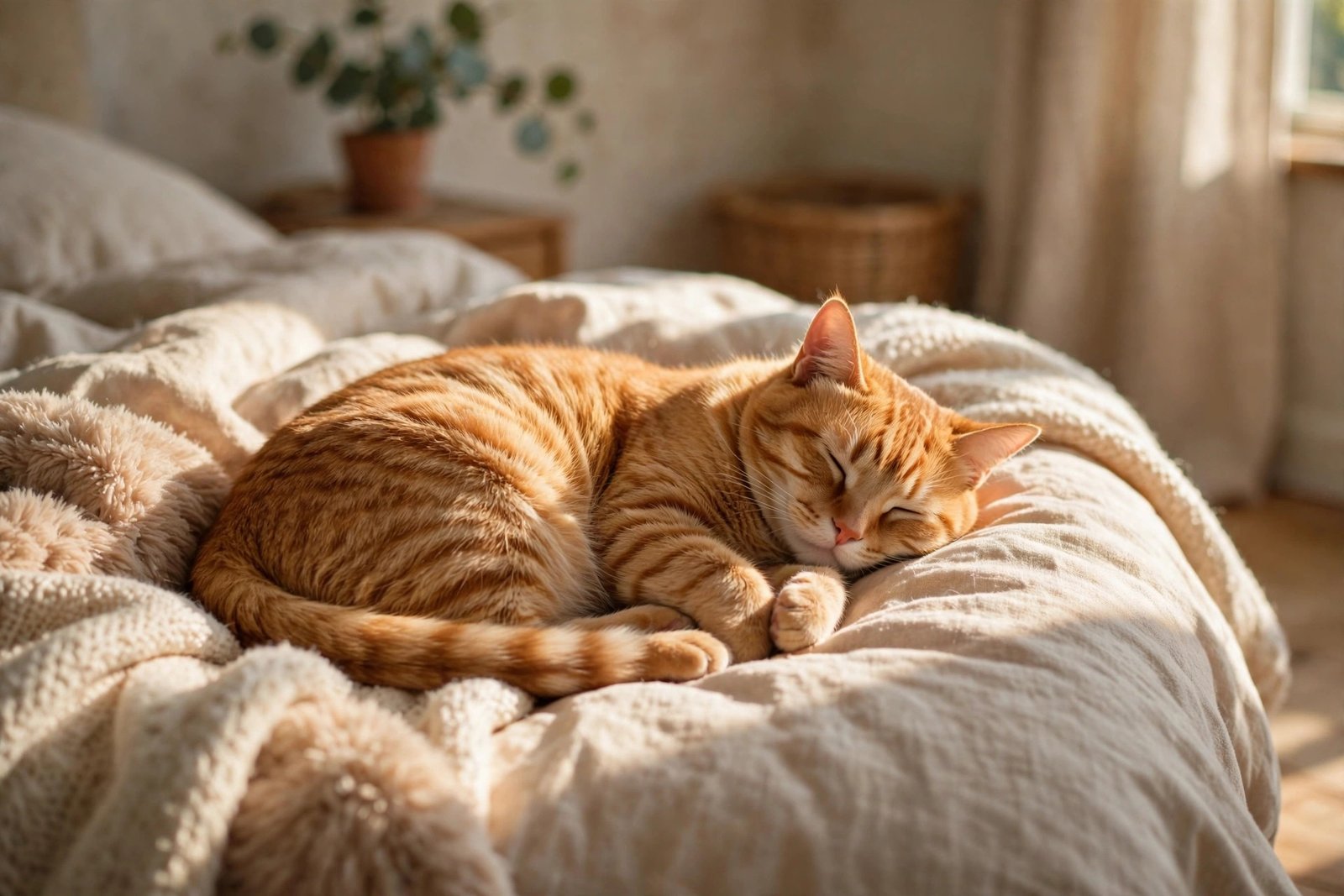
Your cat goes to sleep after breakfast, sleeps through lunch, relocates to a sunbeam for the afternoon shift, and is somehow still sleepy by evening. It is easy to look at a cat who seems to do nothing but sleep and wonder: is this normal, or is something wrong? Usually, it is deeply, gloriously normal — cats are champion sleepers by design. But sleep is also one of the first things that changes when a cat feels unwell, so it pays to know the difference between a contentedly snoozing cat and a sleep change that deserves attention.
This guide explains how much cats sleep at each age, what healthy cat sleep actually looks like, and the companion signs that turn “she sleeps a lot” into “book a vet visit.”
Quick Answer
Healthy adult cats commonly sleep around 12 to 16 hours a day, kittens and senior cats often more, and much of it is light dozing rather than deep sleep. Sleeping a lot is normal when your cat still wakes up bright for meals, play, and company, eats normally, and uses the litter box as usual. Worry when the amount of sleep is a change and arrives with partners: eating less, hiding away, weight change, less grooming, litter box changes, or a cat who is hard to rouse and dull when awake. That combination needs a vet. This article is general information only and is not veterinary advice; it cannot diagnose your cat.
How Much Sleep Is Normal, by Age
- Kittens sleep the most of all — often 18 to 20 hours a day in the early weeks. Growing is expensive work, and kittens crash hard between short, wild bursts of play and eating. A kitten who sleeps a lot but wakes hungry, playful, and growing is doing exactly what kittens do. A kitten who is too sleepy to feed is different, and needs a vet the same day.
- Adult cats typically sleep about 12 to 16 hours in every 24, spread across the day and night. Individuals vary: some healthy adults are at the low end and some at the high end, especially in cold or rainy weather and after very active play days.
- Senior cats (roughly 11 years and older) often sleep more again — sometimes approaching kitten territory. Slower joints, lower energy, and longer recovery make more rest reasonable at this age, but because older cats are also more likely to have health problems, a clear increase in sleep in a senior deserves a vet conversation rather than a shrug.
Wild cats conserve energy between hunts, and your sofa cat runs the same software: sleep is her default energy-saving mode, not a symptom. What matters is not the total number of hours but whether the number has changed for your cat.
What Healthy Cat Sleep Looks Like
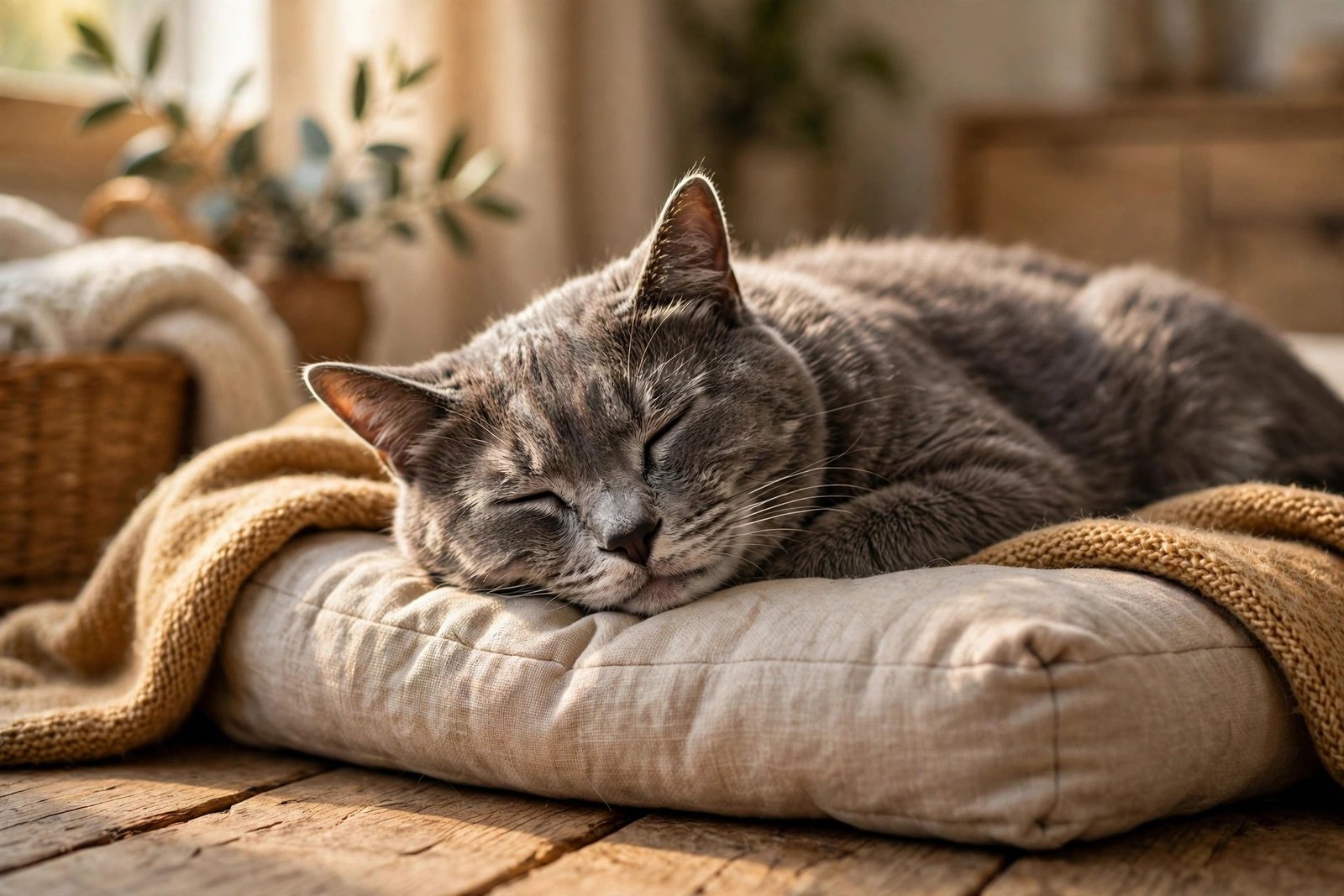
Much of cat “sleep” is light dozing: ears still swivelling towards sounds, body ready to wake in a second. Sprinkled through the day are shorter periods of genuinely deep sleep, with twitching paws and whiskers. A healthy sleeping cat:
- Chooses favourite spots — often warm, high, or near the family — and changes them through the day.
- Wakes easily and brightly for interesting events: a meal, a toy, your arrival home.
- Stretches, grooms, and gets on with her routine when she wakes.
- Keeps her normal appetite, litter box habits, and social pattern between naps.
Crepuscular wiring means many cats are most awake at dawn and dusk and drowsiest in the middle of the day and the middle of the night — although the dawn shift surprises owners who meet the 5 a.m. energy burst from our article on cat zoomies at 3am. A cat whose sleep fills the quiet hours but who is properly awake and engaged at her active times is a healthy cat with a normal rhythm.
The Change That Matters: Sleep Plus Something Else
A vet-level concern is rarely “she sleeps a lot” on its own. It is “she sleeps more than she used to, AND…” Look for the partners:
- Eating less, skipping meals, or weight change in either direction.
- Hiding away to sleep — choosing remote, unusual spots and avoiding the family, instead of napping in her usual places. Hiding after a move to a new house is usually stress; hiding combined with sleep changes or appetite changes is a medical question.
- Less grooming (a dull, scruffy coat) or, the opposite, over-grooming one area.
- Litter box changes: more or bigger clumps, straining, accidents — especially alongside drinking more, which pairs with sleepiness in several conditions a vet should check.
- Dullness when awake: hard to rouse, uninterested in things she normally loves, moving stiffly or slowly, or seeming vacant.
- Conflict at home: sometimes a cat who “sleeps all day” is actually avoiding another cat, keeping out of the way until the house is quiet. If her world has shrunk to one room and she only emerges when the other cat is elsewhere, the sleep may be a strategy rather than rest — look for the guarding and staring patterns described in our cat-conflict signs above.
Boredom Sleep vs Real Sleep
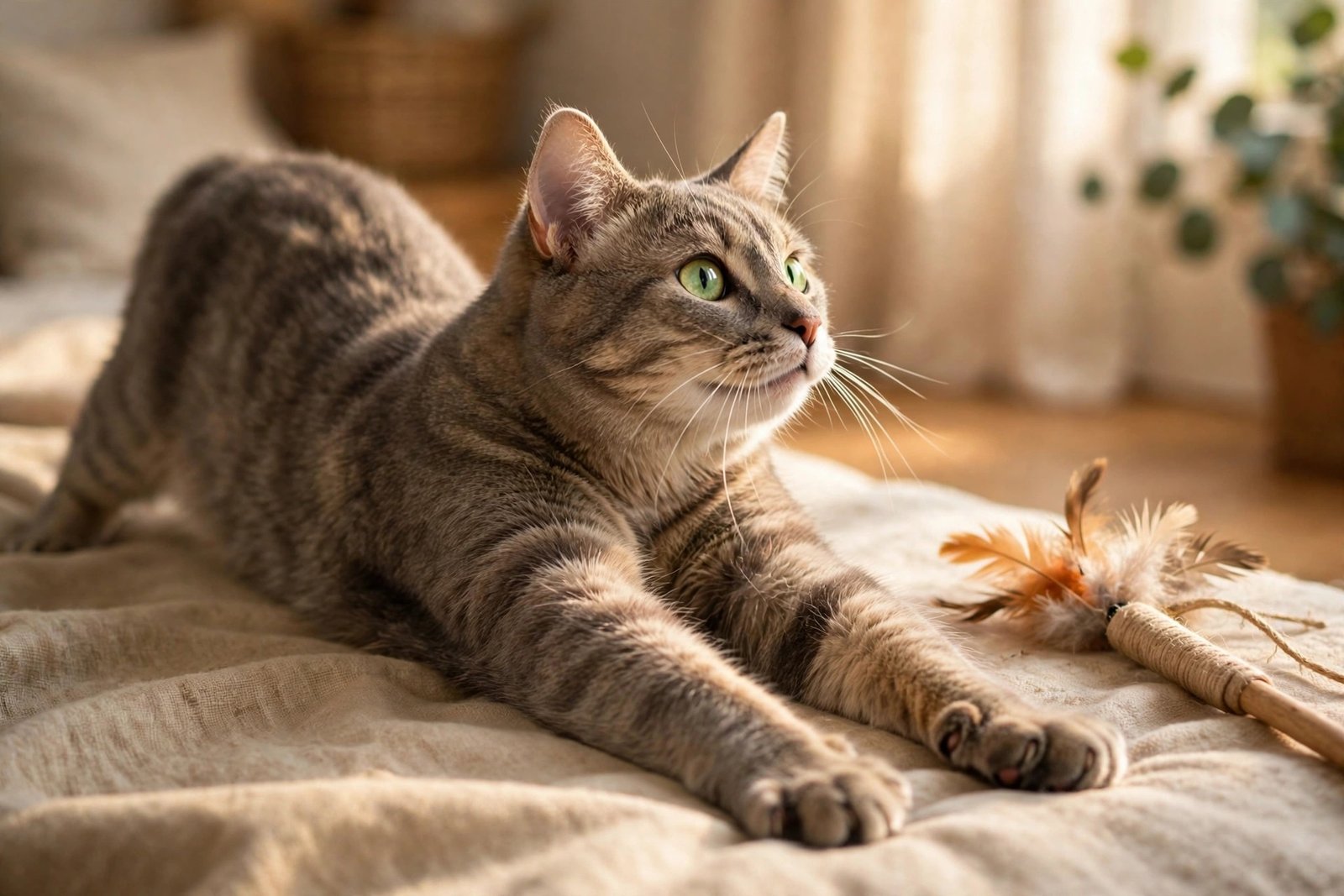
There is one more innocent explanation: the boredom nap. A cat with nothing to do will doze out of sheer lack of options, the way people scroll a phone. The tell is what happens when life gets interesting — a bored cat perks up instantly for a wand toy, a window bird, or a food puzzle, and stays happily engaged. If your cat’s extra sleep disappears the moment enrichment appears, the fix is in our article on indoor cat boredom signs: more play sessions, toy rotation, window perches, and hunting-style feeding. A cat who cannot be interested even by her favourite game is not bored — she needs the vet.
Seniors, Pain, and Sleep: Handle With Care
Older cats sleep more for many ordinary reasons, but pain is a quiet one worth respecting. A cat with sore joints may sleep more because moving is effortful, choose floor-level beds she used to leap past, groom less, and grumble at being picked up. Illnesses common in seniors can also show up first as “just sleeping more.” None of this can be sorted out at home, and guessing helps no one: a senior cat with a clear sleep increase, stiffness, appetite change, or behaviour change should have a vet check, where pain and other causes can be assessed properly. Never give a cat any human pain medicine — common household painkillers are dangerous for cats, and pain relief for cats is the vet’s job alone.
Simple Ways to Support Healthy Sleep
- Keep active times active: two or three play sessions a day, especially one before your bedtime, deepen and consolidate rest.
- Offer choice: a warm enclosed bed, a high perch, and a sunny spot let your cat sleep the way cats prefer — rotating safe lookouts.
- Keep routine steady: regular meals and play times anchor the sleep-wake rhythm.
- Know her normal: once you know your own cat’s usual pattern, a change stands out within days, which is exactly when a vet visit does the most good.
Mistakes to Avoid
- Do not judge your cat by dog standards or human ones. Twelve to sixteen hours is not laziness; it is feline design.
- Do not repeatedly wake a sleeping cat to check on her or for cuddles. Broken sleep is stressful, and a cat who cannot rest properly may become irritable or hide more.
- Do not shrug off a clear change in a senior cat as “just old age” without a vet check. Age explains slower; it should not be used to explain away everything.
- Do not give any medicine — especially human painkillers — to a sleepy cat. If she needs help, the vet provides it safely.
- Do not assume a hiding, sleeping cat is “just moody” when she is also eating less. Sleep plus appetite change is the combination vets most want to hear about early.
Frequently Asked Questions
My cat sleeps 18 hours a day. Is that too much?
For kittens and many seniors, 18 hours can be entirely normal. For a middle-aged adult, it is at the high end but still within the range of healthy individuals — especially in winter, in quiet homes, and for cats whose active hours are intense. The deciding question is change: if 18 hours is her lifelong normal and she wakes bright, eats well, and plays, it is her pattern. If she used to sleep 13 and now sleeps 18, book a vet check.
Why does my cat sleep all day and run around at night?
Cats are wired for dawn and dusk activity, and a cat who conserves energy all day may spend it at 3 a.m. instead. An evening play session followed by a small meal mimics the natural hunt–eat–sleep sequence and shifts much of that energy earlier. Our night-energy guide linked above has the full routine.
Should I worry that my cat sleeps in a new place?
Usually not. Cats rotate sleeping spots for temperature, sunlight, and simple novelty, and a new favourite place is normal exploration. Be more attentive if the new spot is hidden and remote — under a bed in a spare room rather than a new sunny cushion — especially with less socialising or eating. Location plus behaviour change is the signal, not location alone.
When exactly should a sleepy cat see the vet?
Promptly — within days, not weeks — if increased sleep comes with eating less, weight change, hiding, litter box changes, drinking more, vomiting, or dullness when awake. The same day if your cat is hard to rouse, a kitten is too sleepy to feed, or sleepiness arrives suddenly and dramatically. When in doubt, call and describe the change; vets would always rather hear early.