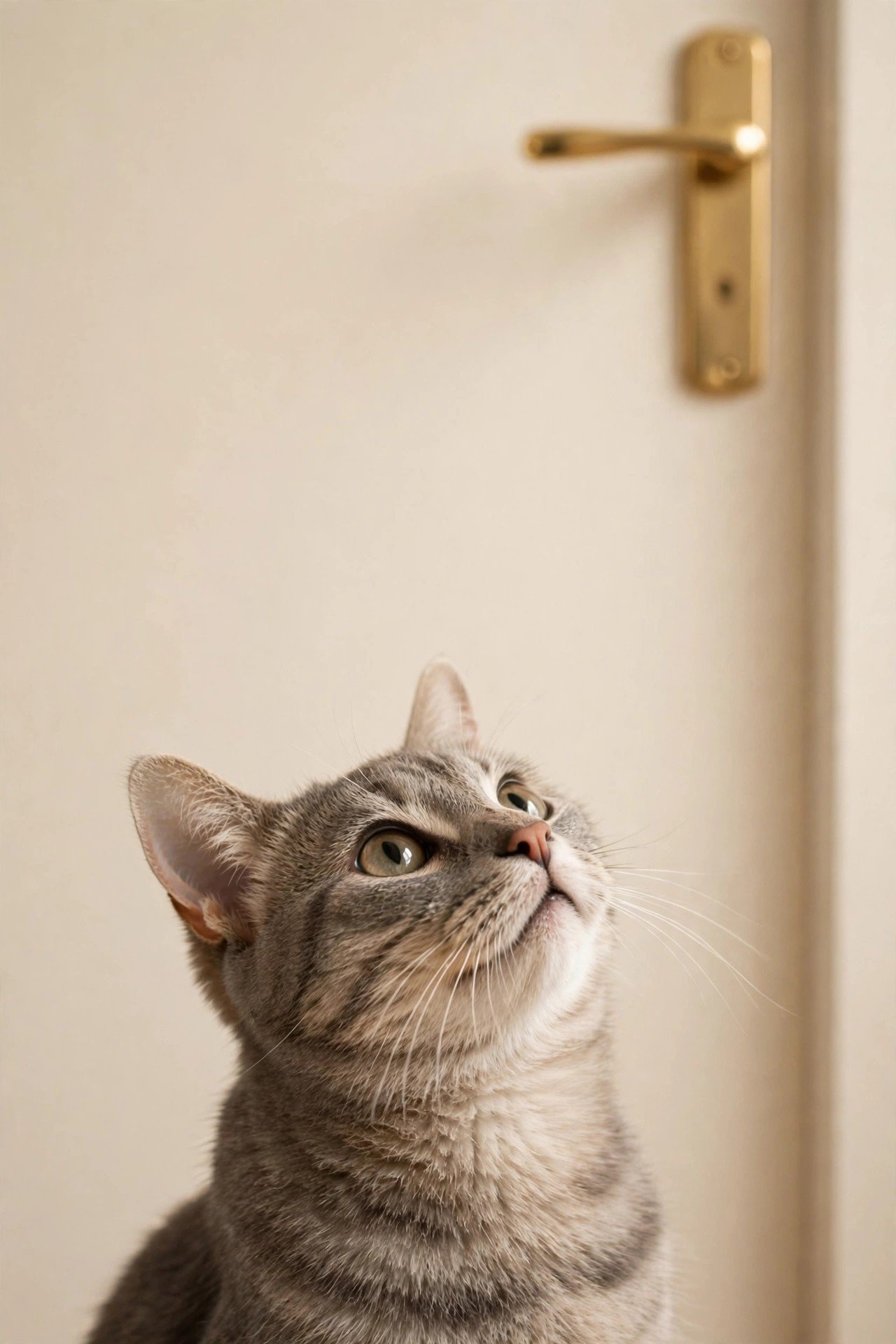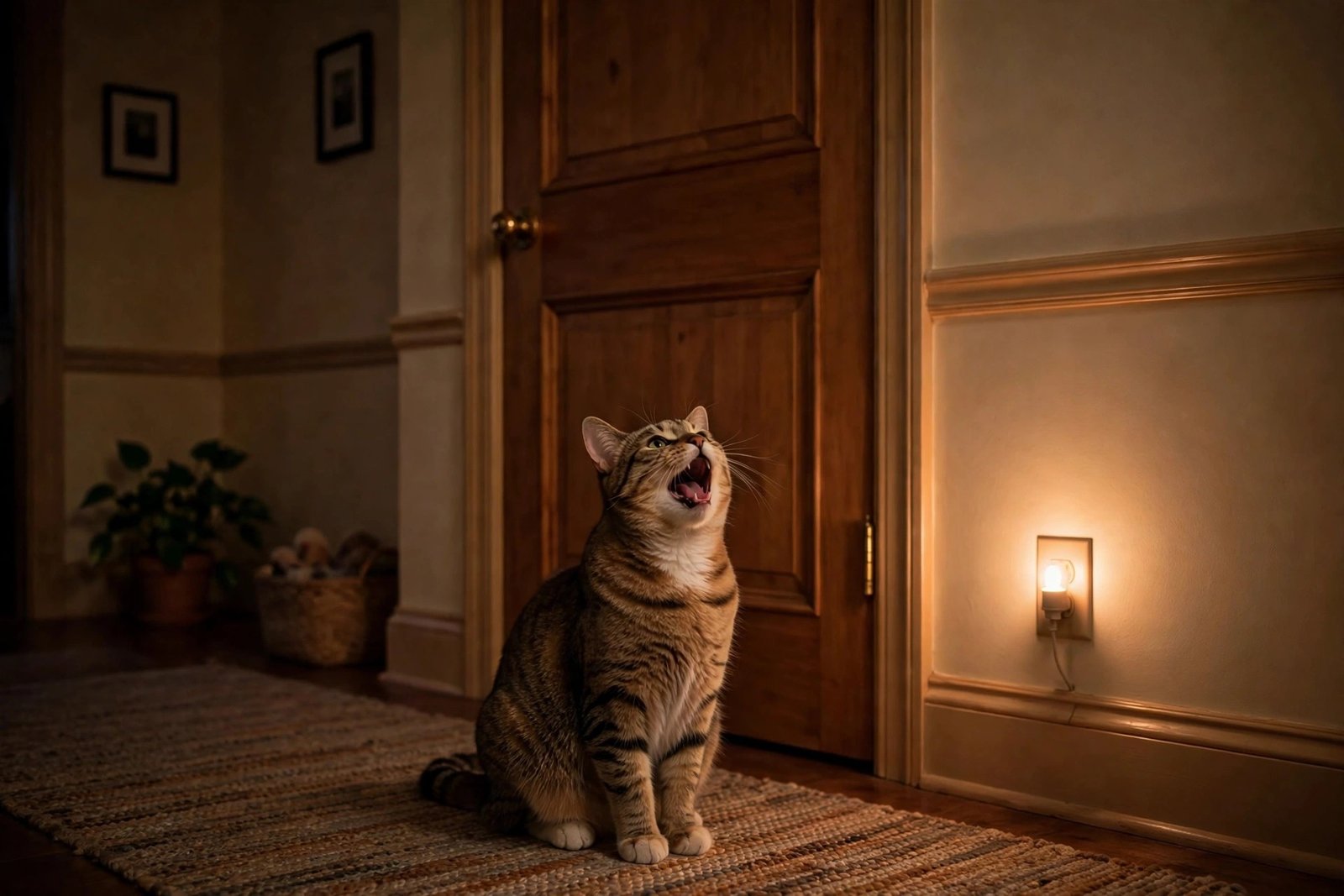
The house is finally quiet, everyone is in bed, and from the other side of the bedroom door comes a determined, operatic meow. Then another. Then scratching. Cats and closed doors have never got along, and a cat who campaigns at doors can cost a whole household its sleep. The encouraging truth is that door meowing is rarely mysterious: your cat wants something specific, has often learned that noise delivers it, and the behaviour can be reduced a great deal with kind, consistent changes rather than battles at 2 a.m.
This guide covers what cats are really asking for at closed doors, why the behaviour grows, and the routine fixes that work — plus the one situation, an older cat yowling at night, that should always start with a vet visit.
Quick Answer
Cats meow at closed doors because doors block something they value: you, a favourite room, a litter box, food, or simply the freedom to patrol their whole territory. Meowing is a learned tool — adult cats aim it at people — and it grows whenever yelling at a door eventually makes the door open. To reduce it, meet the real need before bedtime (play, food, litter access, company), keep responses boring and consistent, and reward quiet behaviour instead. If an older cat suddenly starts yowling at night, book a vet visit first: new night calling in seniors should always be checked medically.
What Your Cat Actually Wants
Access to you
The number-one prize behind a bedroom door is you. Cats may act independent, but many prefer sleeping near their people, and a door between you and her feels wrong to her. This is especially true for cats who have always had access and lost it, after a move, a new baby, or a new rule.
Freedom to patrol
To a cat, the house is one territory, and closed doors chop it into pieces. Some cats object to the closed door itself more than to what is behind it — which is why a cat who demands entry often walks in, looks around, and leaves. She was not asking for the room. She was asking for the option.
A practical need
Sometimes it is simple logistics: the litter box, water, or a favourite sleeping spot is on the other side. Always audit the practical side first. A cat shut away from her litter box overnight is not being difficult; she is being a cat with a genuine problem. In a new home this is common while everyone finds their feet, and it overlaps with the settling-in pattern described in our guide to a cat hiding after moving house.
Attention, food, or entertainment
If meowing at the door has previously produced a person who chats, plays, or tops up the food bowl, you have a trained behaviour — trained by you, accidentally, as most of us do. Boredom fuels it too: an under-stimulated cat with a full tank of evening energy will find a project, and door-campaigning is a project that works. The boredom patterns in our indoor cat boredom signs guide are worth checking if the door serenade is loud and nightly.
Why It Keeps Getting Worse: The Intermittent Reward
Door meowing follows a simple learning rule. If crying at the door sometimes opens it — even one time in ten, even at 4 a.m. when you give in for sleep’s sake — the behaviour becomes stronger and longer-lasting than if it always worked. Unpredictable rewards are the most powerful training there is. This is why the honest fix is never one dramatic night of ignoring; it is every person in the house responding the same calm way, every night, while you also fix the underlying need. Expect a short “extinction burst”: when the old trick stops working, most cats try it louder and longer for a night or two before it fades. That burst is a sign the plan is working, not failing.
Kind Fixes That Actually Reduce Door Meowing
Fix the setup before bedtime
- Run the evening routine. A proper play session followed by her evening meal — the same routine that settles 3 a.m. zoomies — leaves a cat groomed, full, and ready to sleep instead of campaigning.
- Put essentials on her side of the door. If a door must stay closed, her side needs water, a litter box, and a comfortable bed. Remove the genuine reasons to ask.
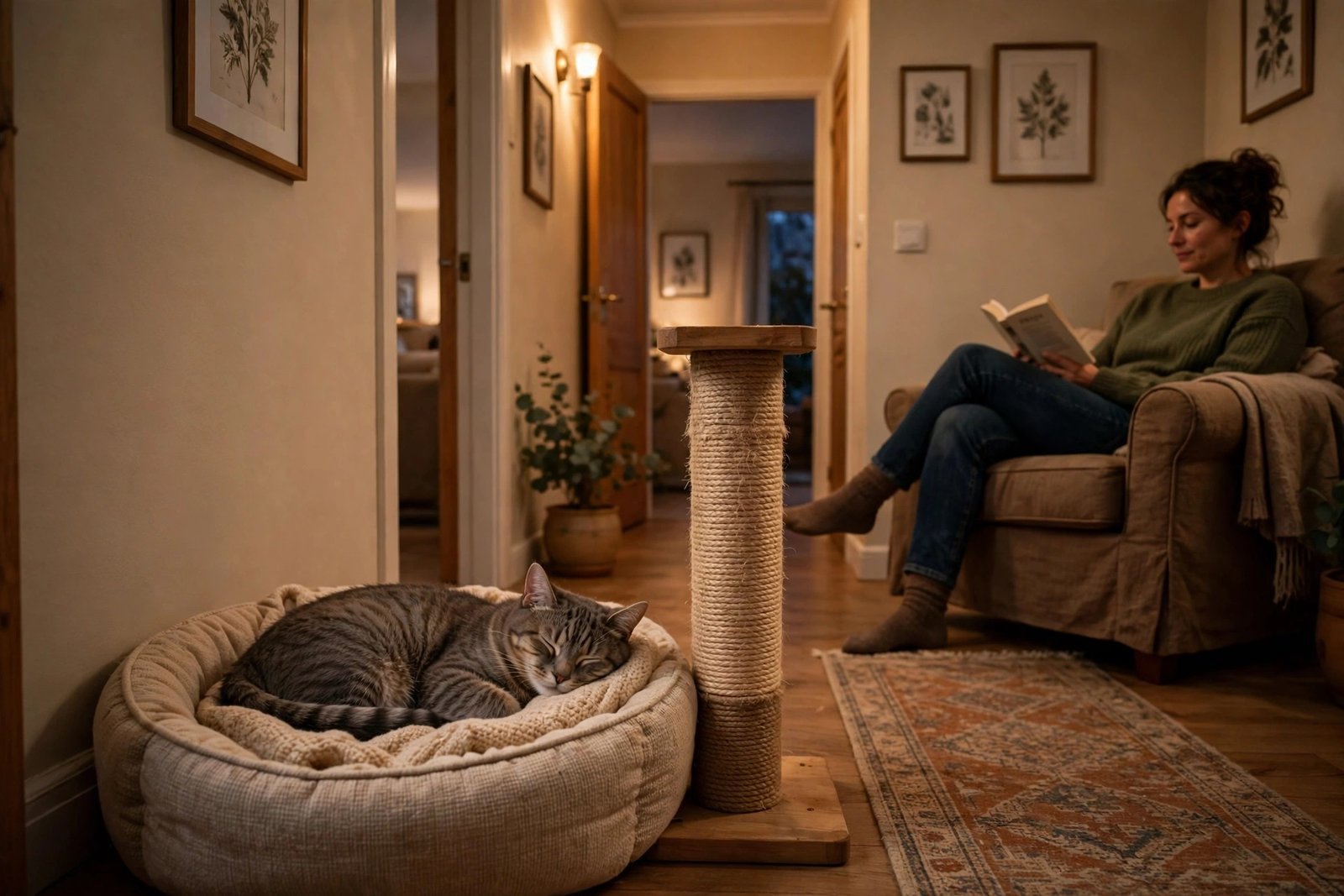
- Give her a door-side alternative. A cosy bed, a scratching post, and a safe toy just outside the bedroom door gives the night a better script than staring at a handle.
Change what meowing earns
- Do not open the door during or right after meowing. Wait for a pause of quiet — even ten seconds — then open it if you were going to anyway. Quiet is what gets rewarded.
- Keep any unavoidable night contact boring: no play, no food, no long talks. Lights low, voice low, business done, done.
- Reward the behaviour you want in the daytime and evening: when she settles on her bed outside the door, or waits quietly, that is the moment for praise, a treat, or a game.
Decide the door policy as a household
The plan collapses if one person secretly opens the door. Agree on the policy together — doors open, doors closed with a full setup on her side, or a cat flap/fitted pet door where that is safe and allowed. Consistency across people and nights is the entire game.
Older Cats Yowling at Night: Start With the Vet
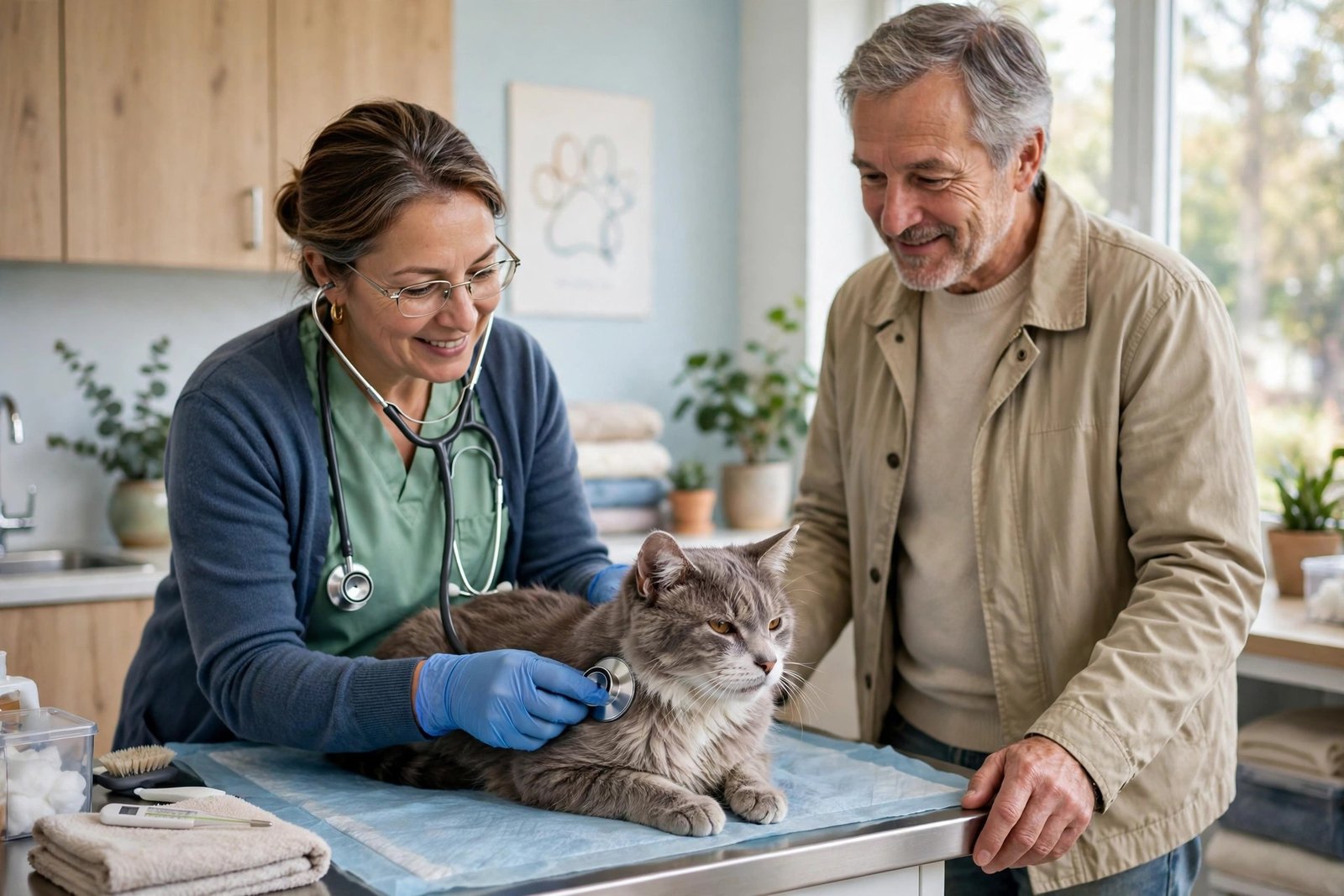
A senior cat who suddenly starts calling at doors or yowling at night is a different case. Older cats can become disoriented after dark, and new night vocalising in a senior can also be linked to pain or other health changes that only a vet can assess. Do not start a behaviour plan for a cat whose night crying is new in old age — book the vet first, mention exactly when it happens and what else has changed, and follow their guidance. This article is general information only, not veterinary advice, and no home routine should delay a check-up for a suddenly noisy senior.
Mistakes to Avoid
- Do not punish, shout at, or spray your cat for meowing at doors. She is asking for something in the only language aimed at humans, and punishment adds stress without teaching her what to do instead — stressed cats usually call more.
- Do not open the door “just this once” after twenty minutes of crying. You have just taught her that twenty minutes of crying is the price, and she will pay it nightly.
- Do not shut a cat away from her litter box, water, or all company as a solution. Removing access creates real distress and new problems, including toileting outside the box.
- Do not feed a meal at 3 a.m. to buy quiet. It works once and installs a permanent early breakfast alarm.
- Do not assume a new night-yowling senior is “just being difficult.” Rule out the vet causes first.
Frequently Asked Questions
How long does it take for door meowing to stop?
With the setup fixed and everyone consistent, many cats reduce noticeably within a week and fade over two to three weeks. Expect one or two louder nights early on — the extinction burst — before it drops. If nothing changes after a few consistent weeks, reassess the setup: unmet needs, like litter access or genuine loneliness, will keep the behaviour alive no matter how consistent you are.
Should I just let my cat sleep in the bedroom?
If it suits you, honestly, it is the simplest solution for many homes — the campaign exists because she wants in, and an open policy ends it tonight. If the door must stay closed because of allergies, a baby, or broken sleep, that is fine too; you just need the full alternative setup on her side and a consistent routine. What matters is choosing one policy and keeping it.
Why does my cat meow at the door and then not come in?
Because the request was the open door, not the room. Cats dislike blocked territory, and once the door is open and the route is available again, many cats are satisfied and wander off. She checked the option existed. Try not to take it personally; it is one of the most cat things a cat can do.
My cat scratches the door as well as meowing. How do I save the paint?
Fix the cause first with the routine and setup above. In the meantime, offer a legal target right by the door — a scratching post or a door-hanging scratcher — and reward its use. Protect the door itself with a clear protector strip if needed while the habit fades. Never punish the scratching; redirect it and make the alternative more attractive.