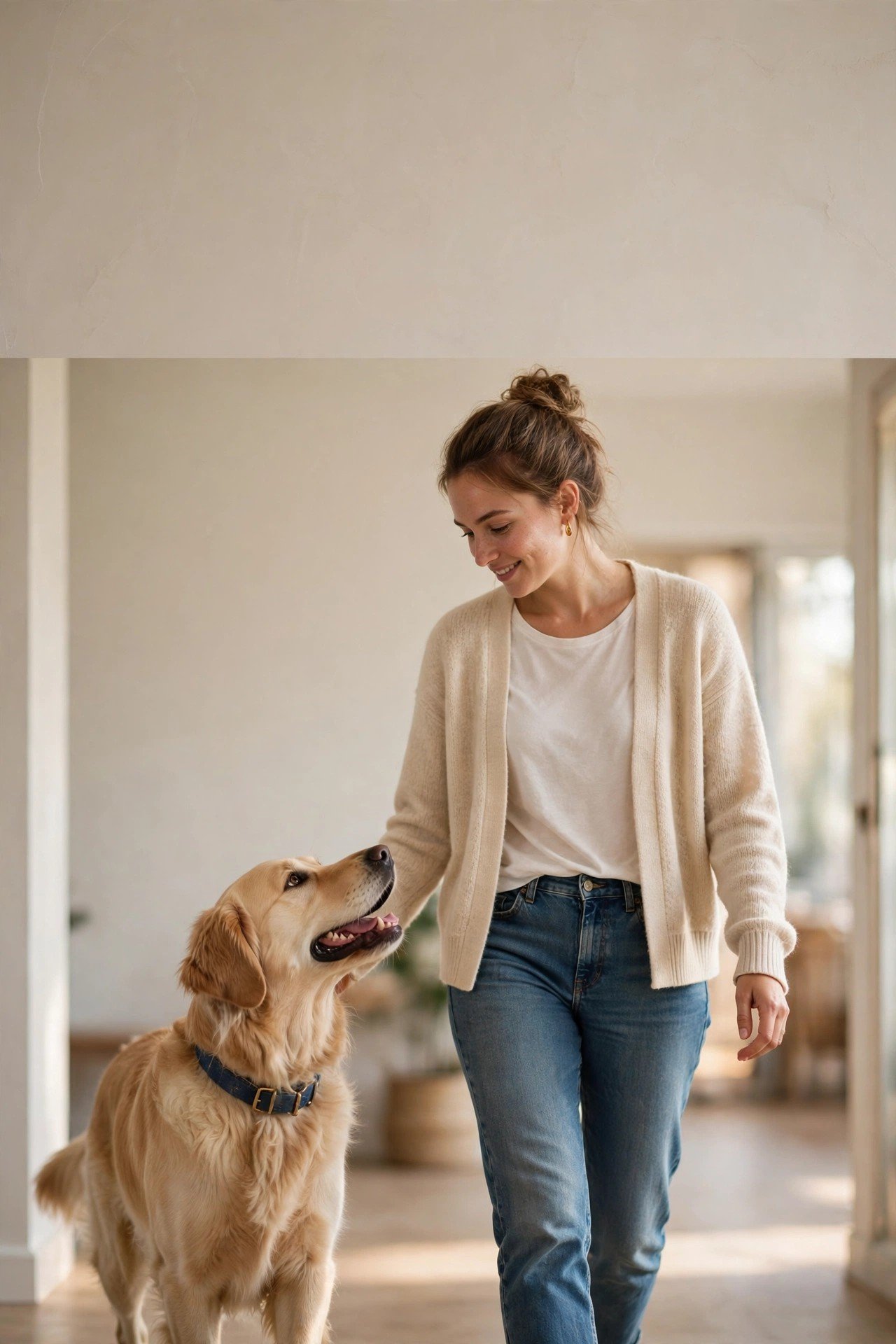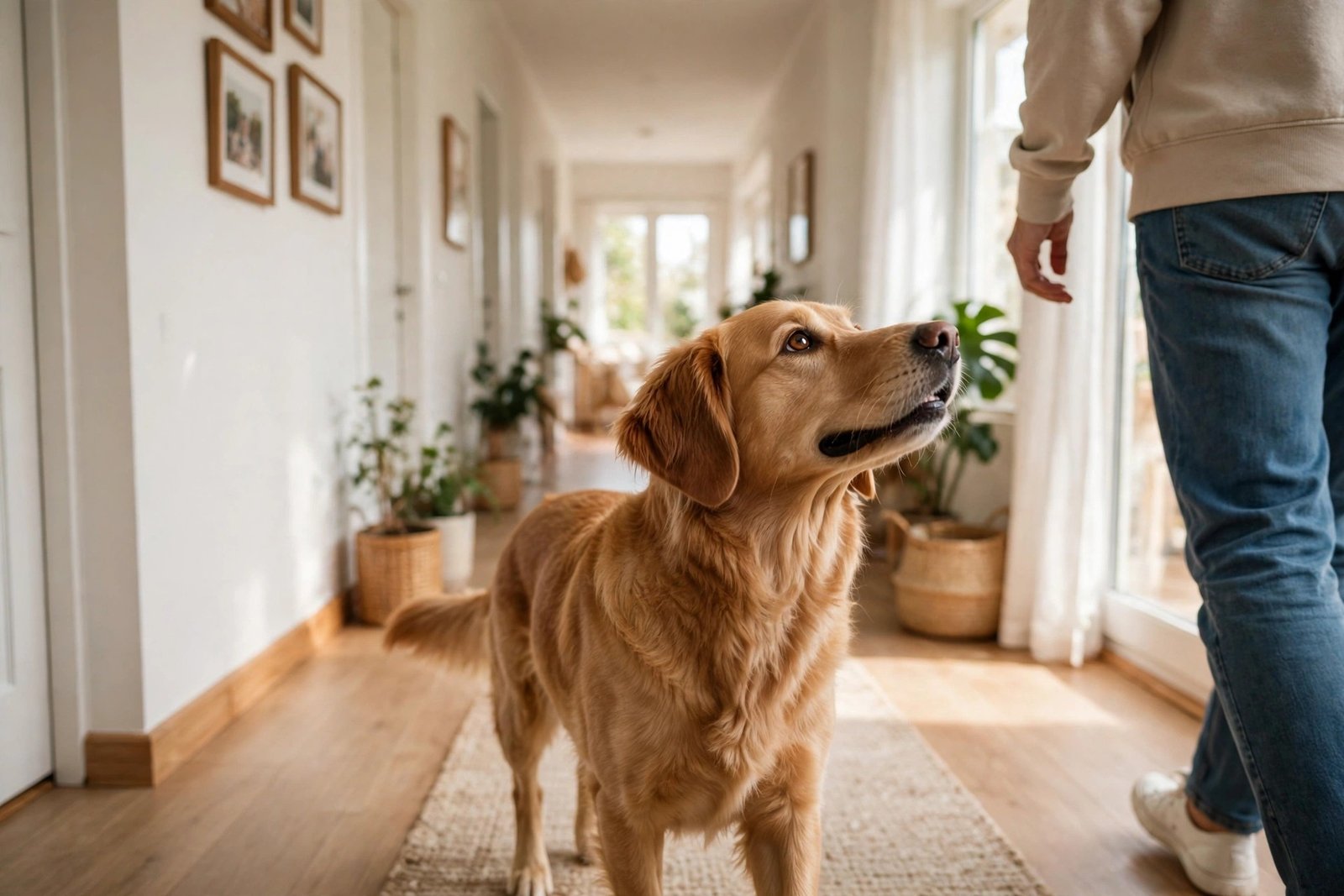
You stand up to make a cup of tea, and your dog stands up too. You go to the bathroom, and there is a nose at the door. You sit back down, and he settles at your feet with a sigh, job done. Living with a dog who follows you everywhere can feel sweet, funny, and, if we are honest, a little much at times. Many owners quietly wonder: is this love, is it normal, or is my dog anxious?
For most dogs, following is normal and healthy. Dogs are social animals who evolved to live close to their group, and you are the centre of your dog’s world. But clingy behaviour can also grow when a dog feels unsure, bored, unwell, or has learned that staying close always pays off. This guide will help you tell relaxed companionship from stressed shadowing, and show you how to build calm confidence without pushing your dog away.
Quick Answer
Most dogs follow their owners because they love company, feel safest near you, and hope something interesting, like food, a walk, or play, is about to happen. It is usually normal. Following becomes a problem when your dog cannot relax if you leave the room, panics at closed doors, pants, paces, whines, or destroys things when left alone. The cure is not less love, but gentle confidence building: reward calm resting away from you, keep arrivals and departures boring, meet his needs for exercise and company, and practise tiny separations that grow slowly.
Why Dogs Naturally Follow Their People
You are his family group
Dogs are group animals by nature. Wild relatives rest, move, and explore together, and pet dogs transfer that instinct to us. Staying near you is simply what a dog’s social brain tells him to do. Puppies do it most strongly, because following keeps them safe while they learn the world, but plenty of happy adult dogs keep the habit for life.
Good things happen around you
From your dog’s point of view, you are the source of almost everything wonderful: meals, walks, games, training treats, and the car rides that lead to the park. Following you is a smart bet. If he stays close, he will not miss the moment the lead comes out or a piece of toast falls. This is hopeful following, and the body language gives it away: loose body, soft ears, a gently wagging tail, and a dog who can still be distracted by a toy or a smell.
Some breeds and ages cling more
Herding and companion breeds were selected to work or live very closely with people, and they often shadow more than independent breeds. Very young puppies, newly adopted dogs still learning that this home is permanent, and older dogs whose sight or hearing is fading also tend to stay closer. An older dog who suddenly becomes clingy deserves extra attention, because a change at that age can reflect how he feels physically as well as emotionally.
Following That Points to Anxiety
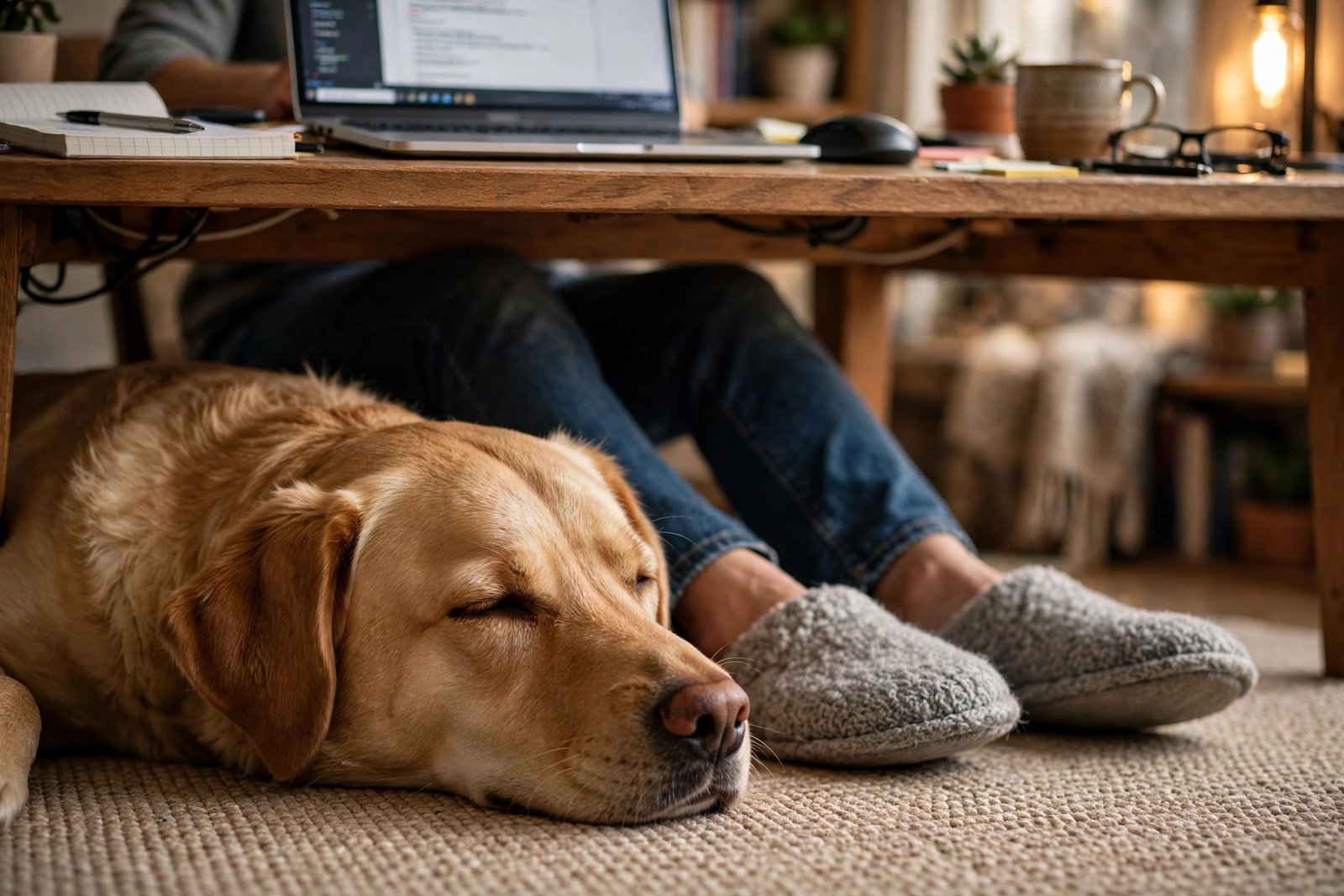
Relaxed following and anxious following look different once you know what to watch for. An anxious dog does not just follow; he monitors. He rests lightly, head up, watching for your smallest movement. He follows at your heels rather than wandering nearby. Closed doors lead to scratching, whining, or panting, and leaving the house can trigger barking, destruction, or toilet accidents in a dog who is normally clean.
Those door-focused behaviours are common, and our guide on how to stop a dog from scratching the door at night walks through the night-time version of this pattern, including how to find out whether your dog needs the toilet, company, or simply a better routine. Anxiety also often shows up in the body. A dog who is stressed at being left may lick and chew at himself for comfort, and our article on why a dog licks his paws all the time helps you separate a stress habit from an itchy skin problem.
Sudden clinginess: check health first
If a normally independent dog suddenly will not leave your side, think health before behaviour. Pain, an upset stomach, feeling sick, or changes in an older dog’s senses can all make a dog seek comfort and safety. Watch for other clues: eating less, sleeping more, restlessness at night, or hiding between bursts of clinging. A dog who stops eating is a dog to watch closely, and our guide on a dog not eating but drinking water explains what to track and when to call the vet. When clinginess is new and unexplained, a vet check is a sensible first step.
How to Build Calm Independence, Step by Step
The goal is not a dog who ignores you. The goal is a dog who adores you and can still relax on his own bed while you cook, work, or shower. That confidence is taught in small, kind steps.
- Set up a comfortable resting place in the room you use most, with a good bed and a long-lasting chew or food puzzle. Send him there with a cheerful cue, reward him for settling, and let that spot become a place where good things happen.
- Reward the behaviour you want more of. When your dog chooses to lie down away from you, even for a few seconds, quietly praise him and occasionally deliver a treat to his bed. Do not call him to you for every reward, or you teach the opposite lesson.
- Practise tiny separations. Step into another room for a few seconds and return before your dog worries. Build the time up very slowly over days and weeks, mixing easy short ones with slightly longer ones, so leaving never predicts distress.
- Make doors boring. Open and close doors during the day without going anywhere, pick up your keys and then sit down again, and put your coat on and stay home. When the warning signs stop predicting departure, much of the panic drains away.
- Keep hellos and goodbyes low-key. Greet your dog calmly after a minute or two at home, and leave without a long emotional farewell. This teaches him that comings and goings are dull everyday events.
- Meet the real needs first. A dog who has had a proper walk, play, training, and company is far more able to rest than an under-exercised, bored dog with energy and worry to burn.
What About Puppies and New Dogs?
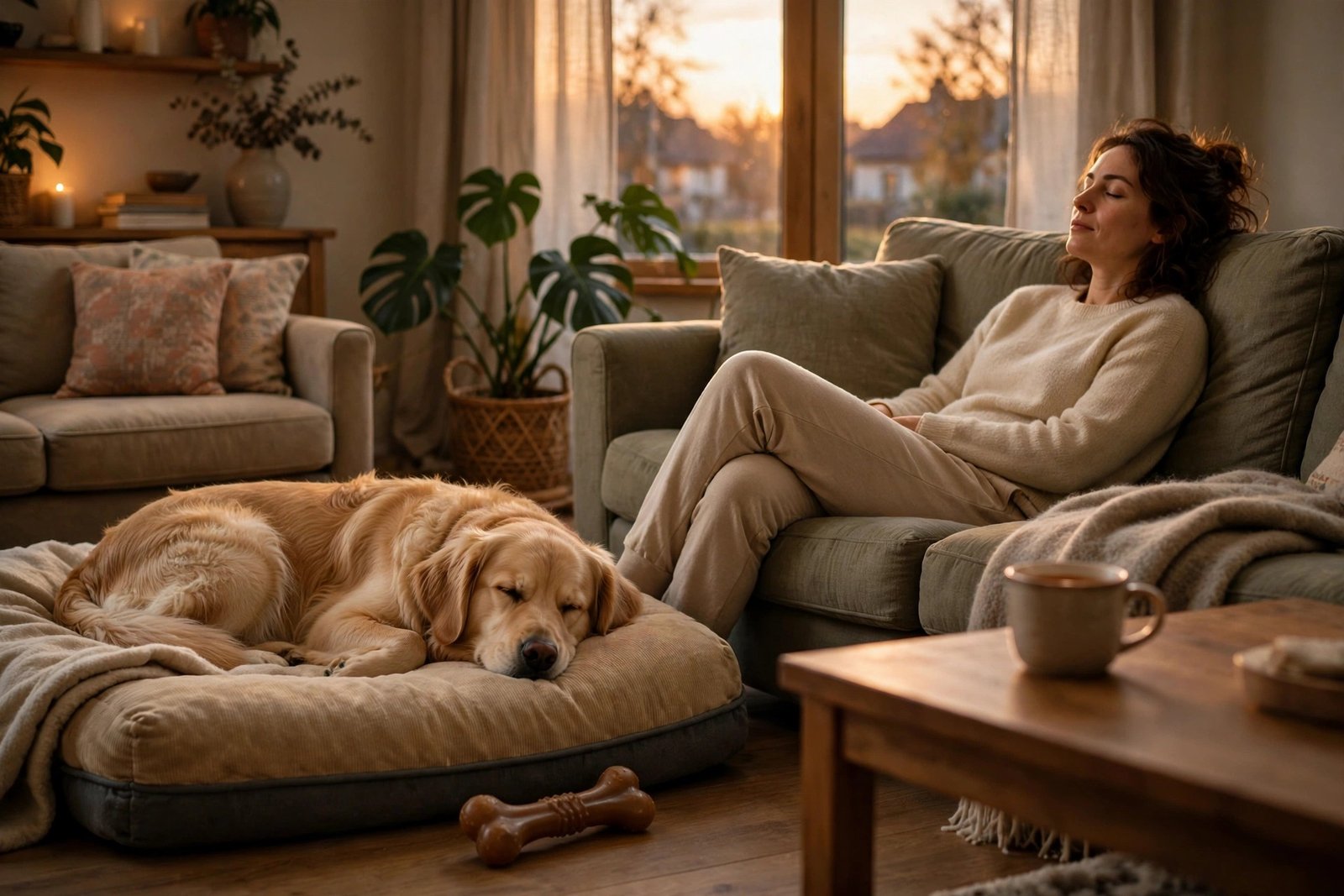
Puppies follow because they are babies, and babies stay near their carers. Do not rush independence in the first days. Let a new puppy or rescue dog settle, sleep near you at first if that helps him feel safe, and then move his bed gradually, a little distance at a time, towards where you want it permanently. Crate or pen training, done slowly and positively, gives many young dogs a den of their own where they learn to switch off. Short, successful alone moments, built from seconds upwards, teach far more than one long, frightening absence.
When to Get Professional Help
Ask your vet for help if the clinginess is sudden, if your dog is older, or if it comes with any physical change. Ask a qualified behaviour professional for help if your dog injures himself, destroys doors or walls, howls for long periods, toilets from stress, or cannot be left at all. True separation anxiety is a panic problem, not naughtiness, and it responds to a structured plan, sometimes with the vet’s support alongside training. The sooner you start, the easier it usually is.
Mistakes to Avoid
- Do not punish following, whining, or scratching. Your dog is not being stubborn or spiteful; he is either social or stressed, and punishment adds fear to both.
- Do not test your dog with a long absence to see how he copes. Flooding an anxious dog with hours alone usually makes the fear stronger, not weaker.
- Do not sneak out without your dog noticing as your main strategy. Dogs notice, and unpredictable disappearances can make monitoring behaviour worse.
- Do not follow your dog’s schedule of constant togetherness and then suddenly change everything in one weekend. Gradual, repeated small steps are what build real confidence.
- Do not get a second dog just to cure clinginess. A companion sometimes helps and sometimes simply doubles the problem, and it is a lifelong commitment, not a training tool.
Frequently Asked Questions
Is it bad that my dog follows me to the bathroom?
On its own, no. Most dogs who trot after you to the bathroom are simply social, curious, and hopeful that the trip ends with something more interesting. It only becomes a concern if your dog cannot cope with a closed door, panics, scratches, or works himself into real distress in those few minutes. Judge the feeling, not the following: relaxed company is fine, panic is a training and welfare issue to work on gently.
Can following me everywhere be a sign my dog is sick?
It can, especially when the behaviour is new. Dogs in pain or feeling unwell often stay close to the person they trust most, and older dogs may cling more if their sight, hearing, or memory is changing. Look for partners to the behaviour: appetite change, tiredness, restlessness, or hiding. If clinginess arrives suddenly in an adult dog, a vet check is the right first step before any training plan.
How long does it take to teach a dog to relax alone?
It depends on how worried your dog is. A mildly clingy dog may settle happily on his own bed within a few weeks of reward-based practice. A dog with true separation anxiety may need several months of very gradual work. Progress is rarely straight: good days and setbacks are normal. Keep sessions short, end before your dog panics, and celebrate small wins, because those are the building blocks.
Should I ignore my dog when he follows me?
No, you do not need to ignore a dog for being near you, and coldness is not the lesson. Instead, manage what following earns. If calm company is what he wants and he is relaxed, that is fine. Teach and reward settling on his bed, keep departures boring, and give attention, play, and affection at times you choose, including plenty of warm interaction. Confidence grows from predictable kindness, not from rejection.