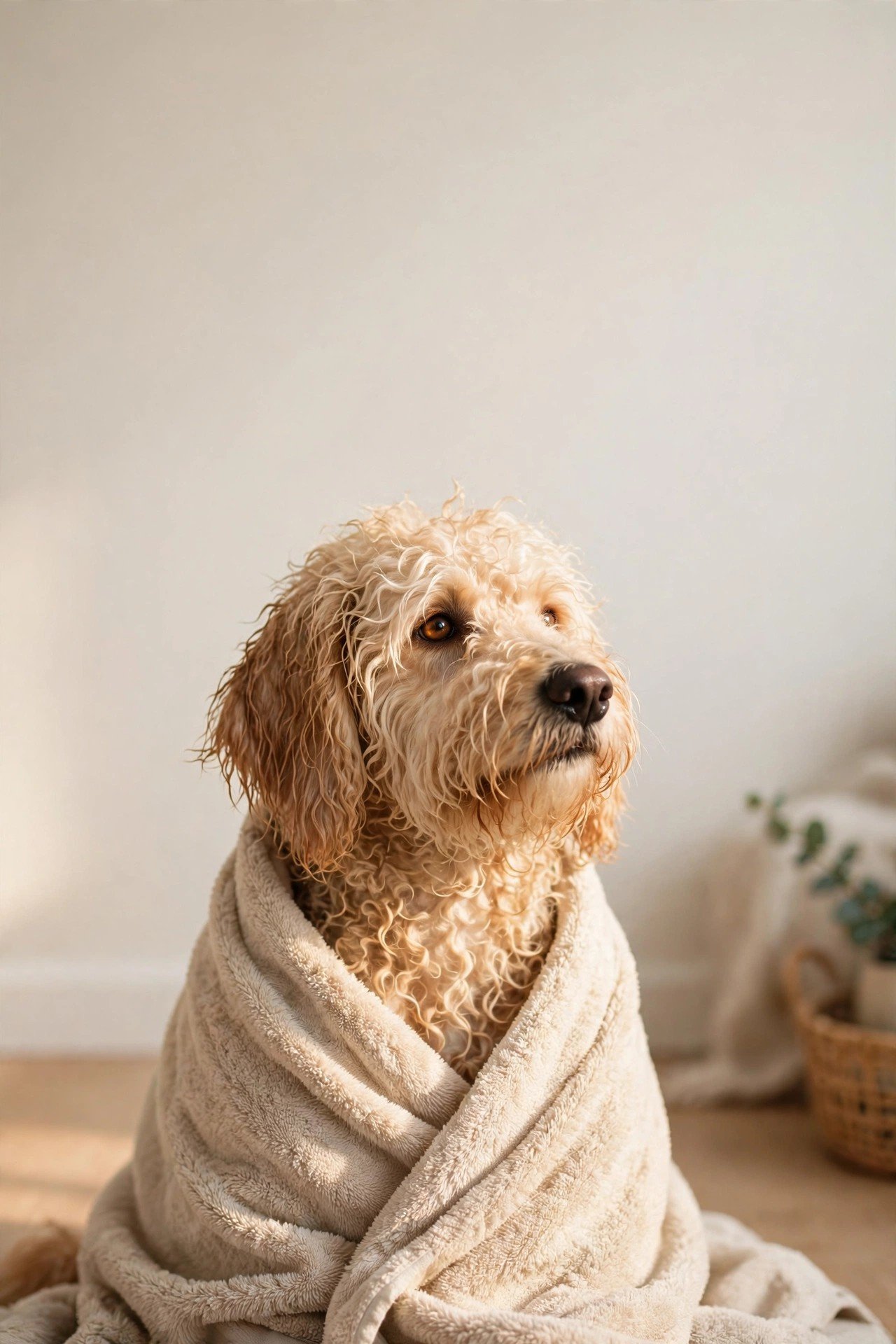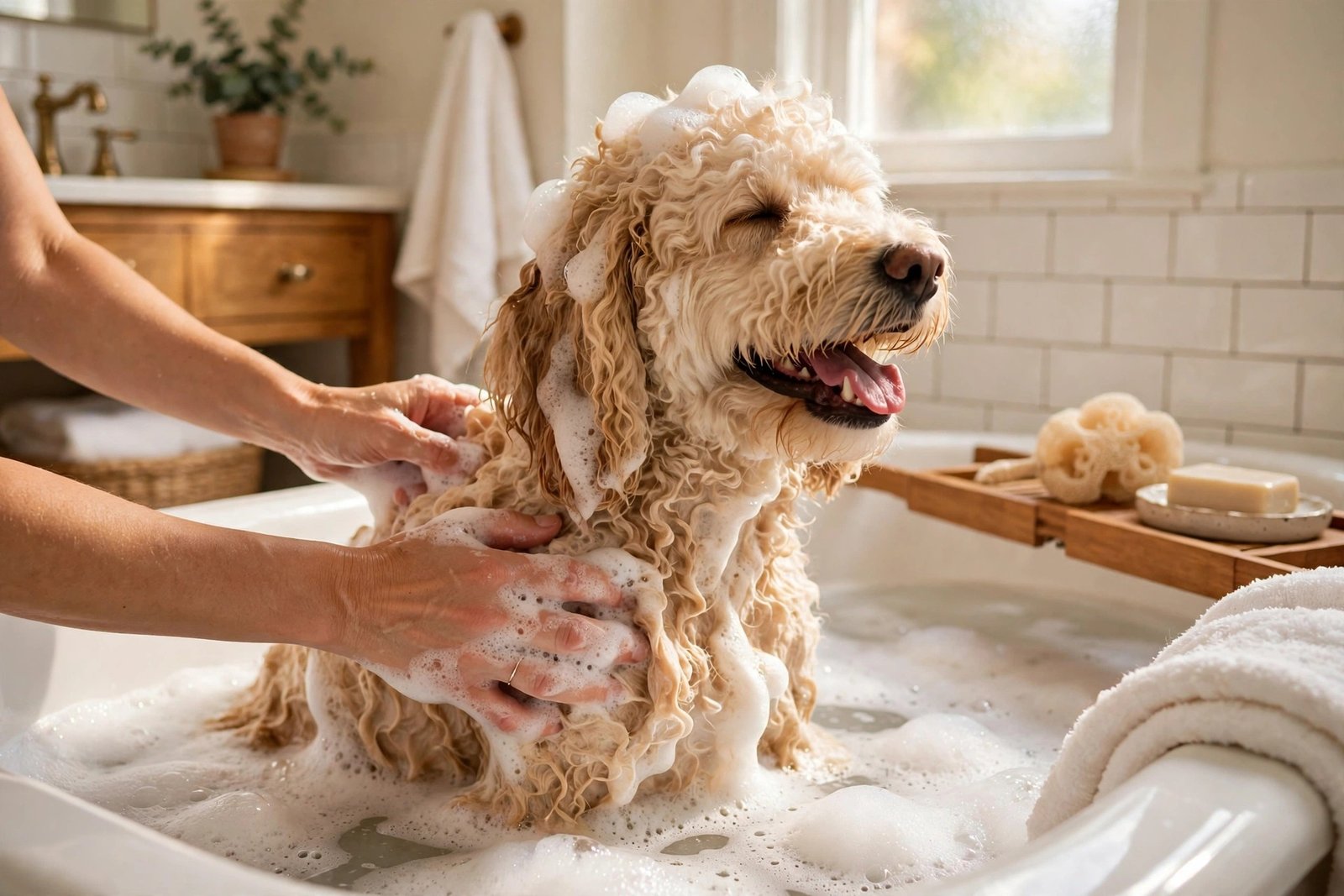
Some dogs seem to attract mud like a magnet. Others stay clean for weeks, then roll in something unspeakable the day before guests arrive. When owners ask me how often they should bathe their dog, they are usually hoping for one simple number. The honest answer is that there is no single schedule that suits every dog. A short-haired dog who lives in a flat needs a very different routine from a thick-coated dog who swims, digs, and sheds heavily.
Bathing too often can dry the skin and make itching and shedding worse. Bathing too rarely can let dirt, loose hair, and smells build up until the coat feels greasy and the skin underneath suffers. In this guide, we will find the middle path for your dog, based on coat type, skin, lifestyle, and a few simple signs you can check at home.
Quick Answer
Most healthy dogs do well with a bath every four to six weeks. Short, smooth coats can often go six to eight weeks, while thick double coats usually suit a bath every four to six weeks, and curly or long coats often need one every three to five weeks, plus regular brushing. Dogs with itchy or sensitive skin may need a different plan, which your vet should guide. Bathe sooner whenever your dog is truly dirty, smelly, or has rolled in something unpleasant. Between baths, brushing, paw rinses, and a wipe with a damp cloth keep most dogs fresh without stripping the skin.
Why Bathing Frequency Matters
A dog’s skin produces natural oils that protect the coat and keep the skin barrier healthy. A gentle bath removes dirt, loose hair, pollen, and excess oil. But frequent bathing with strong products washes away too much of that protection. The result can be dry, flaky skin, a dull coat, and more scratching, which owners then try to fix with yet another bath. It becomes a loop.
Too little bathing causes a different set of problems. Dirt and loose hair stay trapped in the coat, mats form in long or curly fur, and the skin underneath stays damp and warm, which suits bacteria and yeast. Regular, well-spaced baths, combined with brushing, avoid both extremes. If your dog is also licking and chewing at himself between baths, do not assume a bath will solve it. Our guide on why a dog licks his paws all the time explains how to tell an itchy skin problem from a habit or boredom.
A Simple Guide by Coat Type
Short, smooth coats
Dogs with short, sleek coats, such as many terriers, boxers, and beagles, are the easiest to keep. A bath every six to eight weeks is usually enough, and some need even less if they live mostly indoors. A weekly brush with a soft brush or grooming mitt removes loose hair and spreads the natural oils, which keeps the coat shiny between baths. Bathing these dogs monthly out of habit often does more harm than good.
Thick double coats
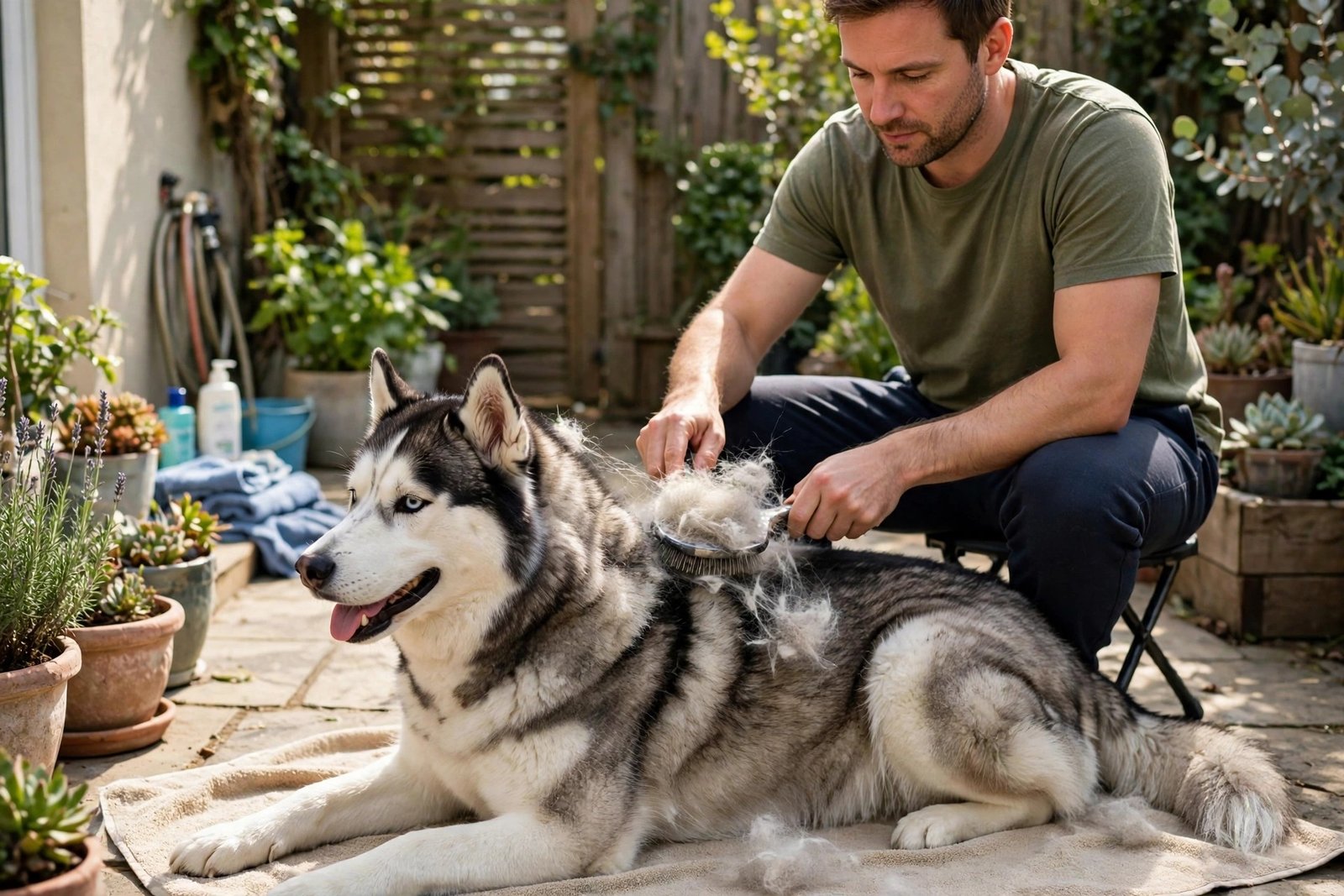
Breeds with a dense undercoat, such as retrievers, huskies, and German shepherds, usually suit a bath every four to six weeks, timed with heavy shedding if possible. The hard part is not the washing, it is the rinsing and drying. Shampoo left in a thick undercoat will itch, and a damp undercoat can smell and irritate skin. Brush before the bath to remove loose hair, rinse longer than feels necessary, and dry thoroughly, right down to the skin. If your dog is in a heavy shedding phase, our guide on a dog shedding a lot all of a sudden will help you judge what is normal seasonal loss and what is not.
Long and silky coats
Long coats tangle easily and trap dirt at the ends. Most long-coated dogs do well with a bath every four to six weeks, provided they are brushed several times a week. Never bathe a badly matted coat before brushing out what you can, because water tightens mats and makes them far harder to remove. If mats are tight to the skin, ask a groomer for help rather than pulling at them.
Curly and wool coats
Curly coats, such as poodles and many poodle mixes, grow continuously and hold dirt close to the skin. These dogs often need a bath every three to five weeks, together with regular clipping. Because the hair does not shed in the usual way, loose hair stays inside the coat and forms mats, especially behind the ears, in the armpits, and around the collar. Brushing between baths matters even more than the bath itself.
Hairless and very short-coated sensitive dogs
Dogs with very little coat can have oilier skin that builds up on the surface. Some need a gentle bath more often, sometimes every two to three weeks, because there is no fur to absorb the oil. Their skin also sunburns and dries easily, so keep products mild and baths lukewarm, and ask your vet what suits your own dog.
Signs Your Dog Needs a Bath Now
- A strong smell that brushing and a paw wash do not fix.
- A coat that feels greasy, dusty, or sticky to touch.
- Visible dirt, mud, or something unpleasant rolled in on a walk.
- Loose hair coming away in handfuls during a shedding phase.
- Dull coat with light flakes, after checking the skin is not red or sore.
And signs to pause and check the skin first: redness, hot spots, sores, a yeasty smell, heavy scratching, or hair loss in patches. A bath will not treat those, and the wrong product can sting. Those dogs need a vet’s advice before a new bathing routine.
Signs You Are Bathing Too Often
If the baths are increasing and the problems are too, step back. Dry white flakes, a coat that feels harsh instead of soft, more scratching in the day or two after every bath, and a dog who has started to dread bath time are all hints that the schedule or the product is wrong. Extend the gap by a week or two, switch to a milder dog shampoo, rinse more thoroughly, and see whether the skin settles.
How to Bathe a Dog Calmly, Step by Step
- Brush first. Remove loose hair and tangles before any water touches the coat.
- Use lukewarm water, never hot. Test it on your wrist, as you would for a child.
- Wet the coat thoroughly, avoiding a strong spray directly in the ears and eyes. Gentle cotton in the ears can help keep water out, and our guide on how to clean a dog’s ears safely at home shows how to care for ears properly after bath day too.
- Use a small amount of shampoo made for dogs, work it in with your fingers, and let it sit for a few minutes if the label advises it.
- Rinse until the water runs completely clear, then rinse once more. Leftover shampoo is a very common cause of post-bath itching.
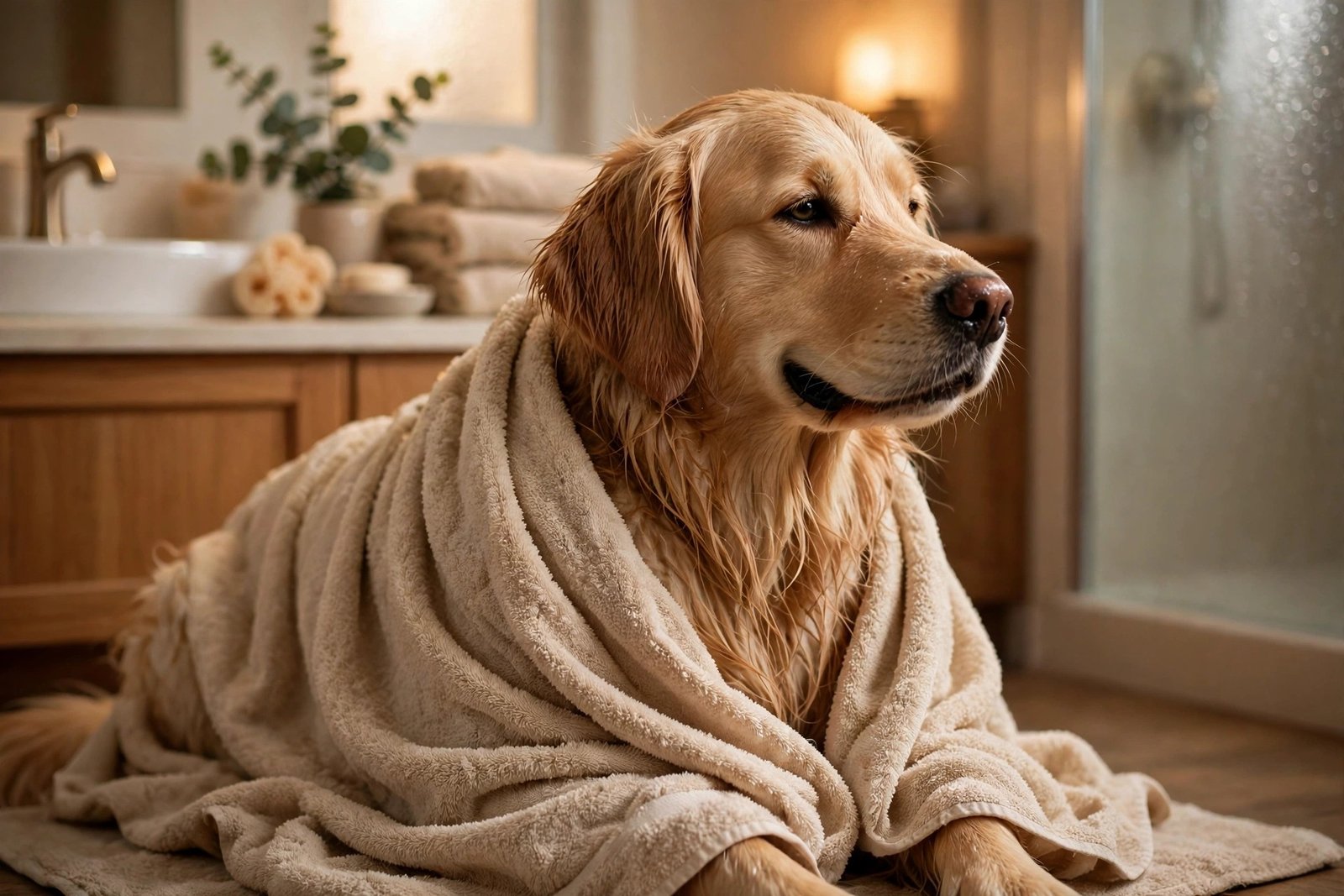
- Dry well with towels, and a dryer on a cool setting if your dog accepts it. Make sure thick coats are dry at the skin, not just on top.
- Reward calmly and finish with a brush once dry. Keep the whole event short, warm, and unhurried.
Keeping Your Dog Fresh Between Baths
Most freshness work happens outside the bath. Brush little and often, rinse muddy paws and bellies with plain water after walks, and wipe short coats with a damp cloth. Wash bedding weekly, because a clean dog sleeping on a dirty bed smells again within days. Check ears, teeth, and paws during the same weekly session, so small problems are caught early. Plain water rinses do not count as baths, and they are the secret to stretching the gap for dogs who love mud.
Mistakes to Avoid
- Do not use human shampoo or washing-up liquid. A dog’s skin has a different balance from ours, and strong detergents strip it and cause itching.
- Do not bathe on a fixed weekly schedule just because it feels cleaner. More is not better for skin.
- Do not bathe a matted coat without brushing first. Water tightens mats against the skin and makes removal painful.
- Do not rush the rinse. Residue left in the coat is one of the top causes of scratching after a bath.
- Do not bath a dog with sore, red, or broken skin in a scented product to cover a smell. That smell is information; get the skin checked.
Frequently Asked Questions
Can I bathe my dog every week?
For most dogs, weekly bathing is too often and will slowly dry the skin, even if the dog looks clean and shiny at first. Some dogs with certain skin conditions are bathed weekly under a vet’s plan with a specific gentle product, and that is different. If your dog gets dirty weekly, use plain water rinses for the mud and keep full shampoo baths spaced further apart.
How often should I bathe a puppy?
Puppies need fewer baths than most owners expect. A gentle bath every four to six weeks, or when truly dirty, is plenty for a healthy puppy. Keep early baths short, warm, and calm, because a puppy’s first experiences shape how he feels about bathing for life. Use only a mild puppy or dog shampoo, rinse very well, and dry him thoroughly so he does not get cold.
My dog hates baths. How can I make it easier?
Build up in small steps on non-bath days: let him stand in the empty bath or shower tray with treats, then with a little water on his paws, then a short rinse. Use a non-slip mat, keep water lukewarm, and work quickly and calmly. A lickable treat spread on the side of the bath can keep many dogs happily occupied. If fear is severe, a kind groomer or your vet can help you plan a gentler approach.
Does bathing help with shedding?
A bath loosens dead hair, so a good brush before and after bath day removes a lot of loose coat at once, which means less hair on your floors for a while. Bathing more often will not reduce how much a dog naturally sheds, though, and over-bathing can make shedding look worse by drying the skin. Brushing is the real tool for shedding; the bath is support.