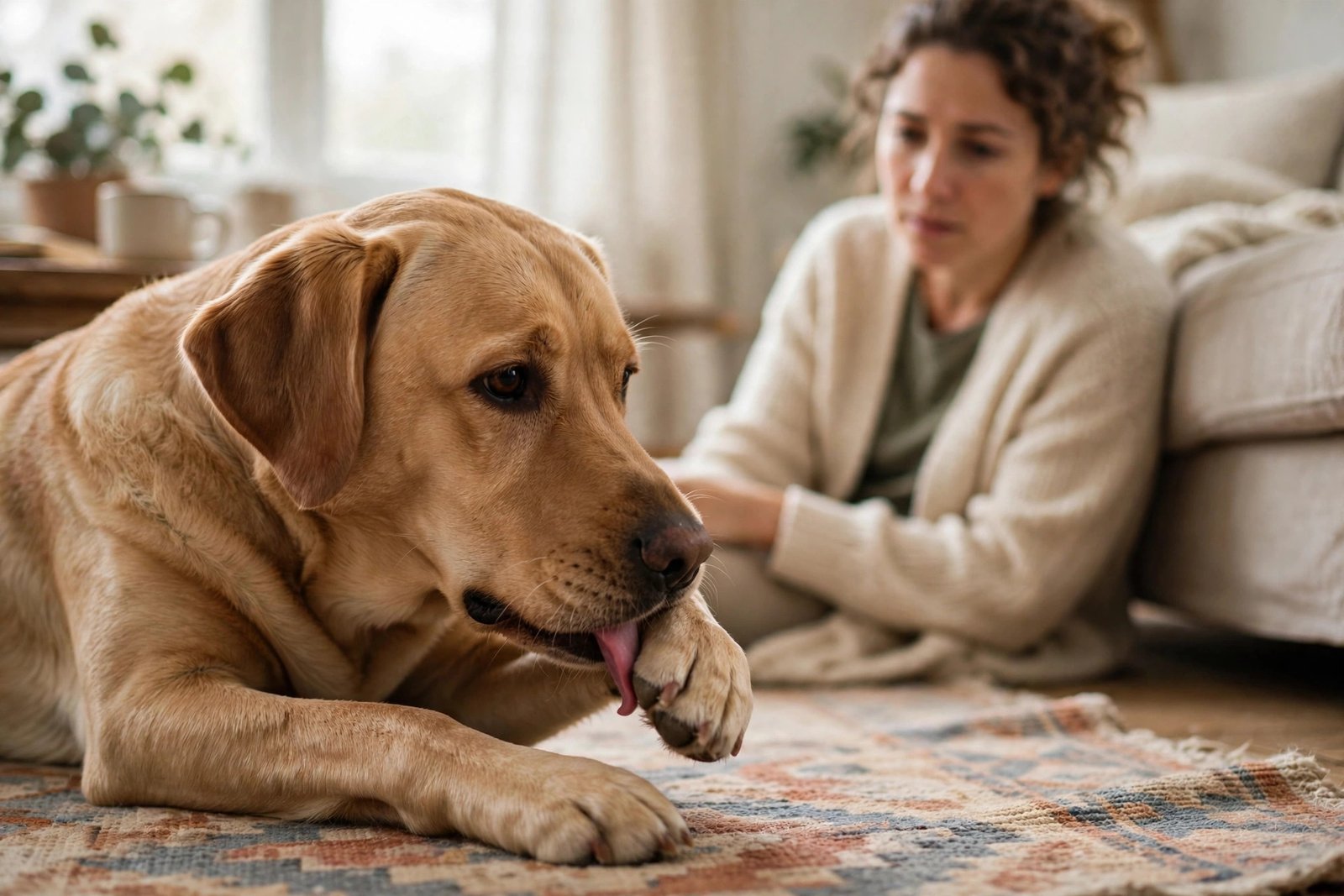
One lick is normal. Dogs groom themselves and clean their feet after a walk. But when your dog licks his paws again and again, every day, until the fur turns pink or brown and you can hear it from the next room, something is driving the behaviour. The paws itch, hurt, or feel strange, or the licking itself has become a habit that soothes him.
The trick is not to stop the licking by force. It is to find what started it. In this guide, we will go through the seven most common causes, how to tell them apart at home, simple care you can start today, and the signs that mean the paws need a vet’s eyes, not just your patience.
Quick Answer
Dogs lick their paws all the time for seven main reasons: allergies, an injury or something stuck in the paw, an infection, dry or irritated skin, pain, boredom or anxiety, and habit. Occasional licking is normal grooming. Constant licking that stains the fur, causes redness, swelling, sores, limping, or keeps your dog awake is not normal and should be checked. Start with a close look at each paw, keep the paws clean and dry, and book a vet visit if the licking lasts more than a few days or the skin looks sore.
Important note: this article is general information only. It is not veterinary advice and it cannot diagnose your dog. Skin and paw problems often look alike, and only a vet who examines the paws can tell them apart for sure.
How to Check the Paws at Home First
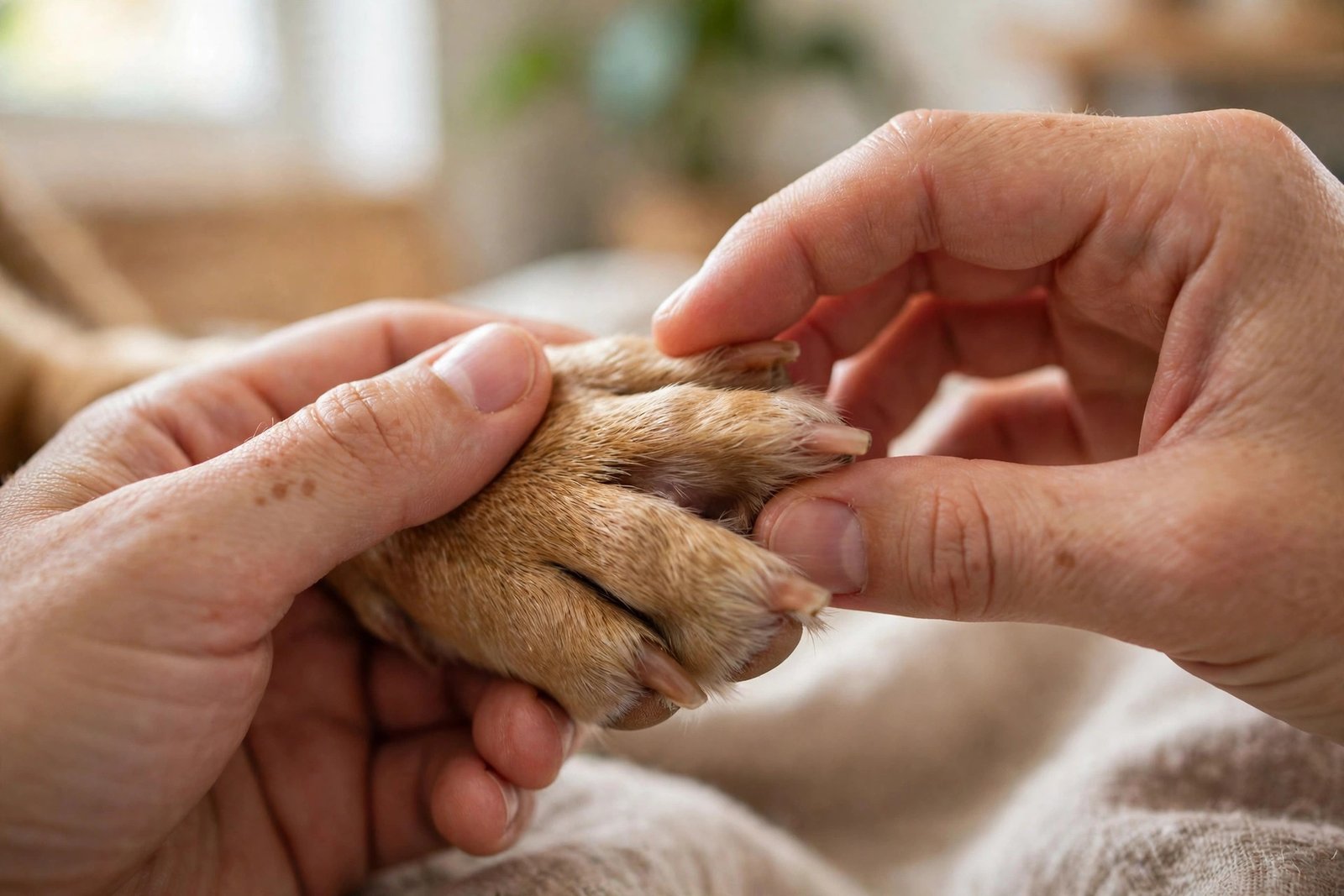
Before you read the causes, sit with your dog in good light and look at all four paws, top and bottom. Spread the toes gently and look between them. Is it one paw or all four? Is the skin red, swollen, or damp? Is there a cut, a thorn, or something stuck between the pads? One sore paw usually points to a local problem like an injury. All four itchy paws more often point to something affecting the whole body, like allergies.
Write down when he licks most: after walks, in the evening, when left alone, or all day. That pattern helps you, and your vet, narrow the cause much faster.
The 7 Common Causes of Constant Paw Licking
1. Allergies
Allergies are the most common cause of itchy paws. Dogs can react to things they touch, like grass, pollen, or cleaning products, or to things they eat. In allergic dogs, the paws, ears, and belly are classic itchy places, and the problem often comes and goes with the seasons. The classic sign is brown or rust-coloured staining on light fur, caused by saliva from weeks of licking. If ear trouble comes with the paw licking, our guide on how to clean a dog’s ears safely at home shows you gentle ear care and the signs that mean the ears need a vet instead.
2. An injury or something stuck in the paw
A cut pad, a torn nail, a thorn, a grass seed, a splinter, or even a small stone can drive a dog to lick one paw over and over. This type of licking usually starts suddenly and focuses on a single paw. The dog may also limp, hold the paw up, or flinch when you touch a certain spot. Grass seeds deserve special care in summer, because they can work their way into the skin between the toes.
3. Infection between the toes
Warm, damp skin between the toes is a perfect home for yeast and bacteria. Infected paws often look red and puffy between the toes, may smell musty or sweet, and can develop small sores. Infection and itching feed each other, and this cycle rarely clears without treatment.
4. Dry, cracked, or irritated skin
Cold weather, hot pavements, road salt in winter, frequent washing, and strong cleaning chemicals can all dry or irritate paw skin. Cracked pads and dry, flaky skin between the toes can itch and sting. Bathing habits matter here too. Washing too often, or with the wrong product, strips natural oils from skin and coat, so it is worth checking your routine against our guide on how often you should bathe a dog.
5. Pain in the paw, leg, or joint
Dogs often lick at a place that hurts, not only a place that itches. Arthritis, a sprain, a nail problem, or a sore joint can all cause steady licking over the painful area. This is easy to miss in older dogs, because they may not limp clearly. If the licking targets one leg or joint, mention pain to your vet.
6. Boredom, stress, and anxiety
A dog with too little to do, or an anxious dog, may lick his paws to comfort himself, the way a person might bite their nails. This often happens when the dog is resting, when the house is quiet, or when he is left alone. Our article on how to stop a dog from scratching the door at night covers the evening routine that also helps anxious lickers settle.
7. Habit that outlived the first cause
Sometimes the first cause, like a small cut or one itchy week, heals, but the licking stays, because licking releases calming chemicals in the brain. Habitual licking usually looks calm rather than frantic, and the dog can often be distracted from it with a game or a walk.
Simple Care You Can Start at Home
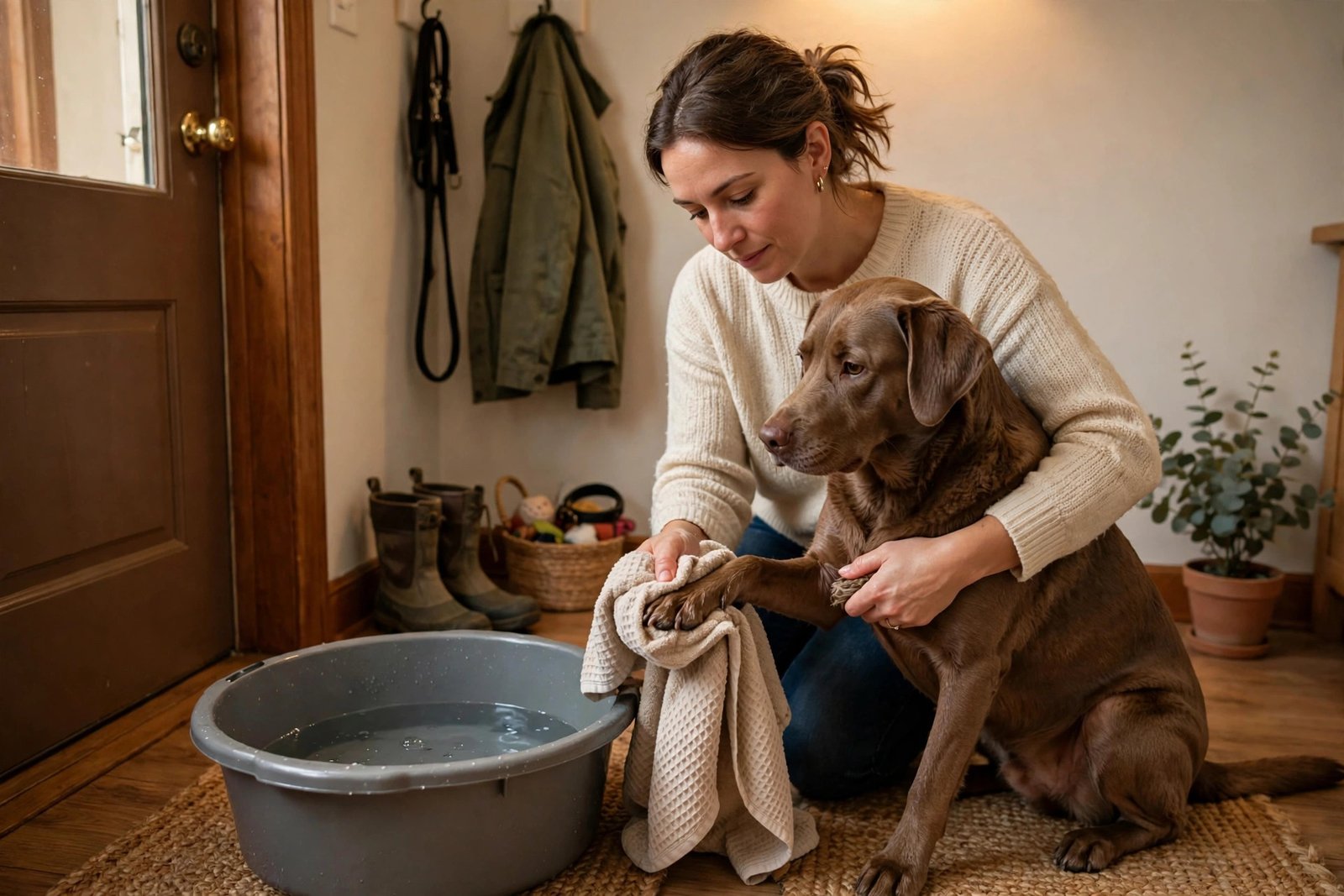
- Rinse and dry the paws after walks. Lukewarm water removes pollen, salt, and dirt. Pat the paws fully dry, especially between the toes, because damp skin invites infection.
- Keep the fur between the pads trimmed if it grows long and holds moisture and dirt. Use care, or ask a groomer or vet nurse to show you once.
- Stop the licking gently when you see it. Call him away, offer a chew, a game, or a short training session. Reward the paws-down, relaxed behaviour you want instead.
- Add interest to his day. Short training games, a sniffing walk where he is allowed to explore smells, food puzzles, and regular play all reduce boredom licking.
- Protect sore paws from more licking if your vet advises it. A recovery collar or a protective boot for short periods can break the cycle while skin heals, but only use one that fits well and check the paw often.
- Note foods, walks, seasons, and new products at home. If licking flares after certain walks or a new floor cleaner, that clue matters.
Do not put human creams or leftover skin medicines on the paws unless your vet has advised them. Dogs lick off whatever you apply, so anything on the paw will also be eaten.
When to See a Vet, and When It Is Urgent
Book a normal vet visit if the licking has lasted more than a few days, if it happens every day, if the fur is stained, or if home care makes no difference within a week. See a vet sooner if you see redness, swelling between the toes, sores, bleeding, a bad smell, limping, or a lump. A sudden focus on one paw with swelling can mean a grass seed or infection and should not wait.
Treat it as urgent the same day if the paw swells quickly, if your dog will not put weight on the leg, if there is a deep cut or a nail torn off, if you suspect a burn from hot pavement or a chemical, or if he is licking and also unwell in himself, for example not eating or being unusually tired. Young puppies and older dogs should also be checked earlier rather than later.
At the clinic, the vet may test a small skin sample from between the toes, check for infection, and ask about food, seasons, and walks. Allergy cases sometimes need a longer plan, including diet trials, skin care, and medicine to control itching. The goal is always the same: treat the cause, not only the licking.
Mistakes to Avoid
- Do not punish or shout at a dog for licking. He is itchy, sore, or anxious, and punishment adds stress without removing the cause.
- Do not use bitter sprays as your only plan. They may pause the licking for an hour while the real problem, such as infection or allergy, gets worse.
- Do not wrap a damp or dirty paw and leave it covered. Trapped moisture makes infections grow faster.
- Do not keep changing his food week by week hoping to find an allergy by luck. Real diet trials take weeks of strict feeding and are best done with your vet’s plan.
- Do not ignore brown staining, red skin, or a musty smell because he still walks happily. Paws often get worse quietly while the dog stays cheerful.
Frequently Asked Questions
Is it normal for a dog to lick his paws every day?
A little daily grooming is normal: a few licks after a walk or before sleep, with healthy pink skin and no staining. It is not normal when licking is long, frequent, hard to interrupt, or changes the skin or fur colour. If you find yourself noticing the licking every day and worrying about it, that is already a good reason to check the paws closely and ask a vet if it continues.
Why are my dog’s paws turning brown where he licks them?
The brown or rust colour comes from natural pigments in saliva reacting with the fur over time. It is a sign of repeated licking over weeks, not a stain from mud. It tells you the licking has been going on longer than you may have realised, and it is often seen with allergies or long-standing irritation. Mention it at the vet visit, because it helps date the problem.
Can I stop paw licking with more exercise alone?
More exercise, sniffing walks, and play help a lot if boredom or stress is the cause, and they support every other kind of treatment. But they will not clear an infection, remove a grass seed, treat joint pain, or control a real allergy. If the skin is red, sore, swollen, or smelly, or if one paw is the focus, get the paw checked first and use exercise as support, not as the only answer.
Why does my dog lick his paws mostly at night?
Night is quiet, there is nothing else to do, and itches and aches feel bigger without distractions, just as they do for people. Some dogs also lick as part of settling to sleep, and anxiety can rise when the house goes dark and still. Note the pattern and tell your vet. If night restlessness comes with other changes, like drinking more or needing the toilet often, those signs belong in the same conversation.
1 thought on “Why Is My Dog Licking His Paws All the Time? 7 Common Causes”