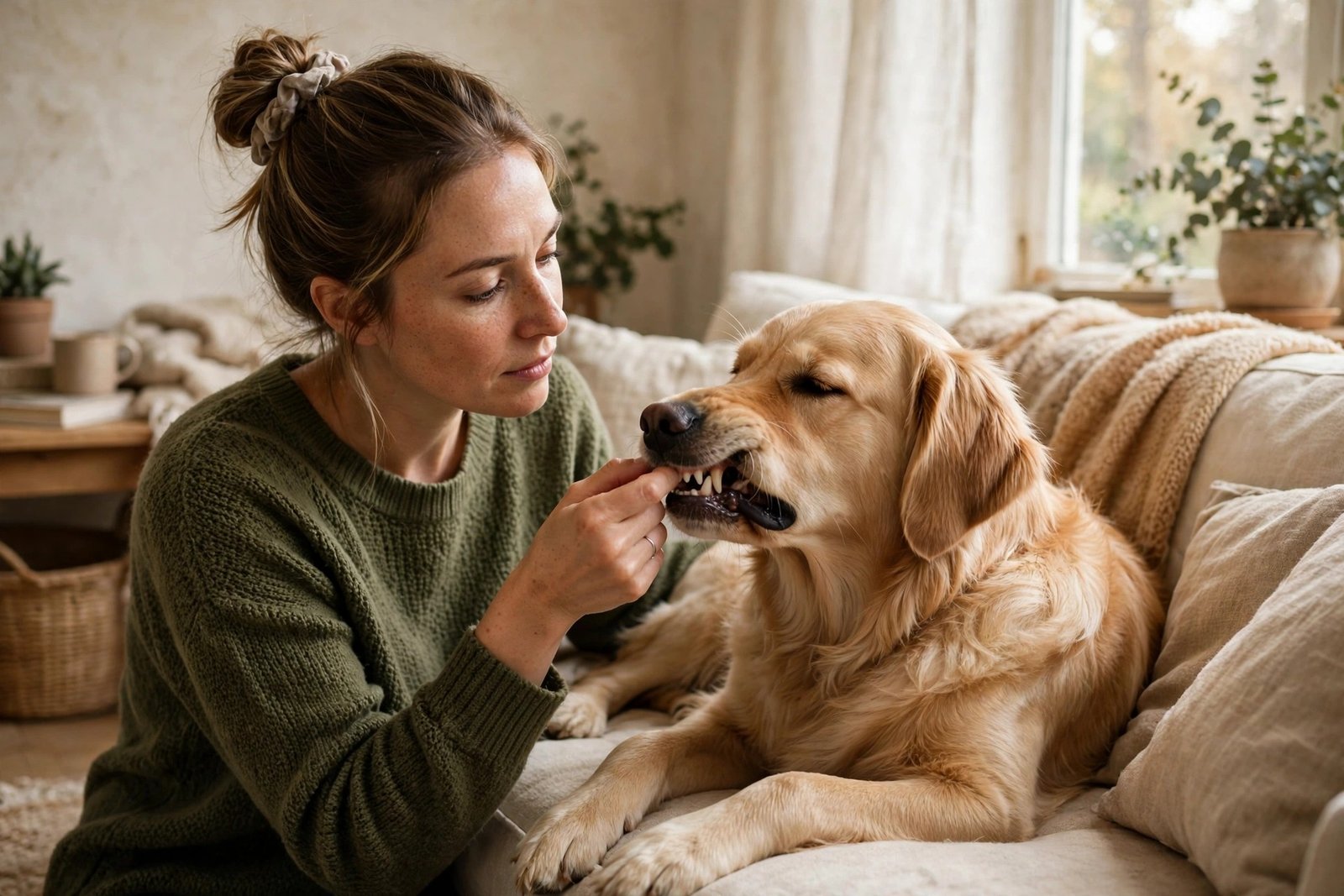
Your dog comes in for a cuddle, yawns in your face, and the smell nearly knocks you backwards. Dog breath is famous for not being lovely, but there is a big difference between normal, slightly doggy breath and a strong, sour, or rotten smell that seems to be getting worse. Bad breath is a small sign owners often laugh about, yet it is also a useful early clue about what is happening in your dog’s mouth, and sometimes in the rest of his body too.
The good news is that most causes can be found with a calm look in the mouth and a vet check, and many improve with simple home care. This guide walks through the common causes, how to check the mouth safely, what helps, and the warning signs that should not wait.
Quick Answer
Mild doggy breath is normal after meals. Breath that is very strong, sweet, sour, or rotten, or that suddenly changes, is usually a sign of plaque and tartar on the teeth, sore gums, food trapped between the teeth, a mouth injury, or an upset stomach. Less often, a change in breath is linked to problems elsewhere in the body, such as the kidneys, liver, or blood sugar. Start with gentle home care: look in the mouth, begin a calm tooth-brushing routine, and offer safe things to chew. If the smell is strong, keeps coming back, or comes with drooling, pawing at the mouth, bleeding gums, or loss of appetite, book a vet visit.
Important note: this article is general information only. It is not veterinary advice and it cannot diagnose your dog. Only a vet who examines your dog, and runs tests if needed, can find the real cause of the smell.
What Normal Dog Breath Smells Like
A healthy dog’s breath is rarely sweet. It usually smells a little like his last meal, and may be stronger first thing in the morning or after a fishy dinner. Older dogs tend to have stronger breath as plaque slowly builds up over the years.
What matters is change and strength. If mild breath now clears a room, something has changed. A sudden change is also worth noting if your dog is eating less, because mouth pain and appetite changes often travel together. Our guide on a dog not eating but drinking water explains what that combination can mean and how to track it at home.
Common Causes of Bad Breath in Dogs
Plaque, tartar, and sore gums
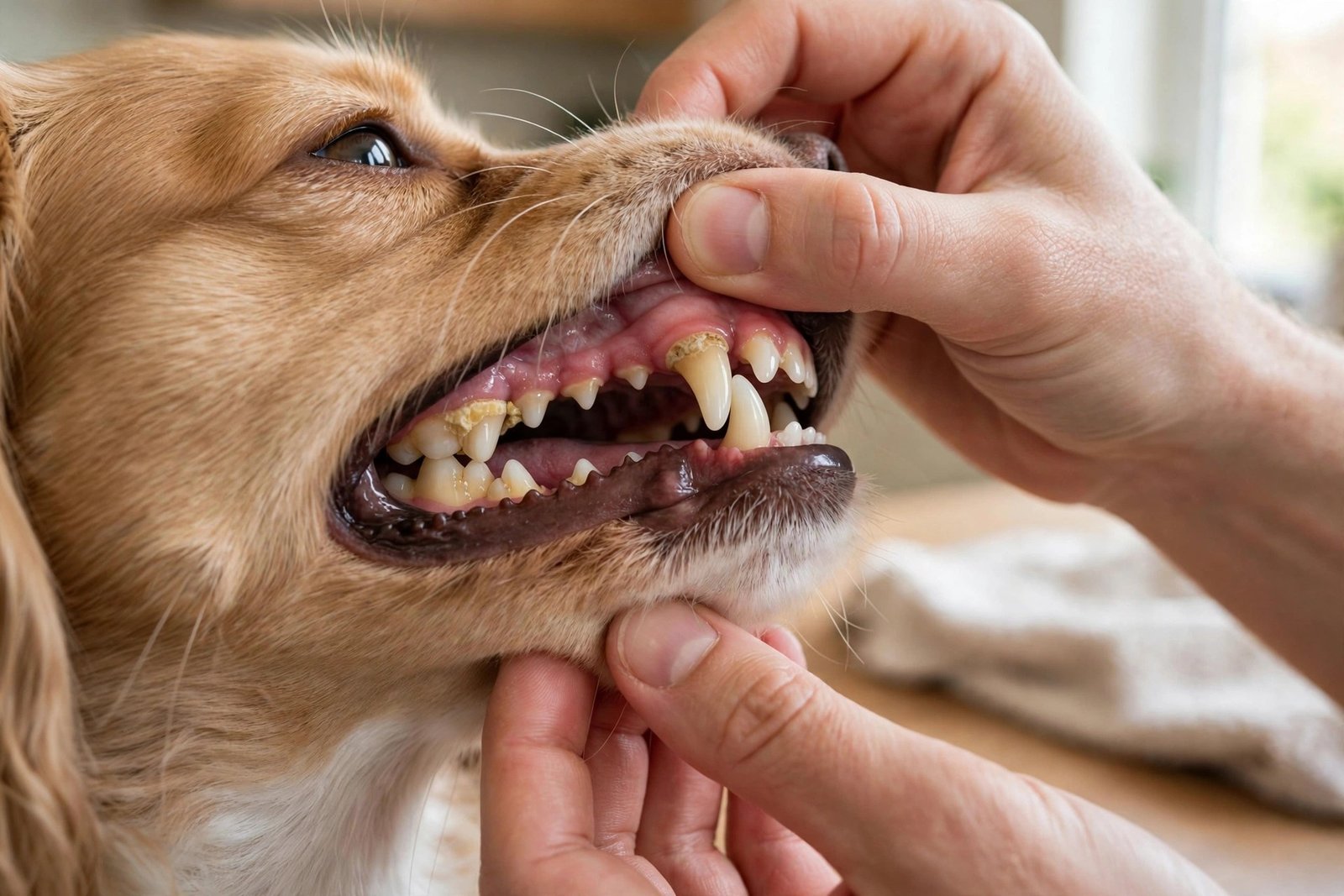
This is by far the most common cause. Every day, a soft film called plaque forms on the teeth. If it is not brushed away, it hardens into tartar, a rough yellow or brown layer, often worst on the back teeth and along the gum line. Bacteria live in plaque and tartar, and those bacteria produce the rotten smell. Over time the gums become red, swollen, and sore, and teeth can loosen. Small dogs and flat-faced breeds often build tartar faster, because their teeth are crowded, but any dog can be affected.
Food or objects stuck in the mouth
A piece of food, a bit of stick, string, or a fragment of a chew can lodge between the teeth, under the gum, or across the roof of the mouth. As it rots, it smells dreadful. Dogs with a stuck object often drool, paw at the face, or suddenly refuse hard food. Never dig blindly with sharp tools. If something is loose and your dog is calm, you may lift it out gently with your fingers, but if it is wedged, leave it for the vet.
Diet and an upset stomach
Strong-smelling foods, raiding the bin, and rich treats can all make breath worse for a day or two. Some dogs also get worse breath when their stomach is unsettled. If bad breath arrives with repeated sickness, it deserves more attention. Our article on a dog vomiting yellow bile in the morning covers the stomach side of that picture and the simple feeding changes that help many dogs.
Mouth injuries, wobbly teeth, and tooth root problems
A cracked tooth, a cut gum, or a hidden problem below the gum line can all cause a strong smell on one side of the mouth. Dogs hide mouth pain well. They may chew on one side only, drop food, or flinch when their face is touched. You often cannot see the real problem at home, because much of a tooth sits hidden under the gum.
Problems elsewhere in the body
Sometimes breath changes because of a wider health problem. A sweet or fruity smell can be linked with blood sugar problems, a smell like urine with kidney problems, and a very strong, unusual smell with tiredness or yellow gums with liver problems. This article cannot tell you which applies to your dog. Treat these smells as a prompt for a vet visit, not as a diagnosis, and let tests give the answer.
How to Check Your Dog’s Mouth Safely at Home
Choose a calm moment, and keep the check short and gentle.
- Sit beside your dog and stroke him until he relaxes.
- With one hand, gently lift the upper lip on one side so you can see the teeth and gums. Look for yellow or brown tartar, red or bleeding gums, and broken teeth.
- Repeat on the other side, and check the big back teeth carefully, as they collect the most tartar.
- If your dog allows it, open the mouth briefly and glance at the tongue and the roof of the mouth for cuts, lumps, or stuck objects.
- Smell each side if you can. A smell that is much stronger on one side is useful information for the vet.
- Stop if your dog struggles, growls, or seems in pain. Forcing a look helps no one, and a vet can examine the mouth safely, with sedation if truly needed.
Write down what you see. It helps to build checks like this into a weekly routine. Our step-by-step guide on how to clean a dog’s ears safely at home shows the same calm, reward-based approach for ear checks, so mouth and ears can become one easy habit.
Home Care That Actually Helps
Brush the teeth, little and often
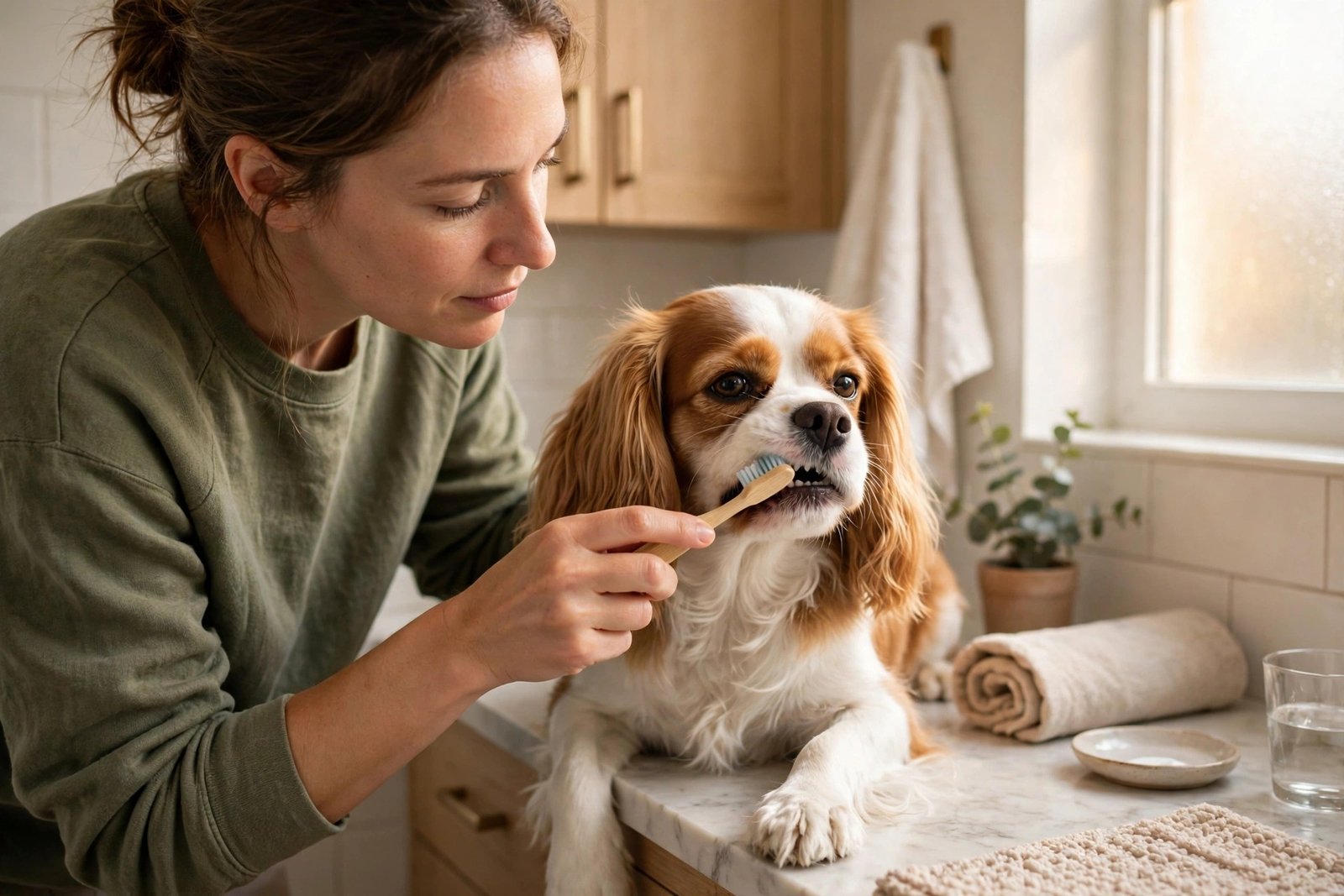
Brushing is the single most useful thing you can do at home. Use a soft brush or a finger brush and toothpaste made for dogs, never human toothpaste. Start with just letting your dog lick the toothpaste, then brush a few teeth for a few seconds, and build up slowly. Aim for the outer surfaces, especially the back teeth. Even three or four times a week makes a real difference, and daily is better.
Use chewing wisely
Chewing scrapes the teeth a little and keeps saliva flowing. Offer safe chew toys and suitable dental chews in moderation, and watch your dog with them. Very hard objects can crack teeth, so if you cannot dent it with a thumbnail, it is probably too hard. Remove small or splintering pieces at once.
Keep food and water simple
Feed regular meals, keep the bin out of reach, and watch what your dog picks up on walks. Wash food and water bowls daily, as a slimy bowl adds its own bacteria. If you change food, do it slowly over a week to avoid upsetting the stomach.
Give home care a fair trial, then judge
If the cause is mild plaque, two to four weeks of brushing should clearly improve the smell. If nothing changes, the cause is probably below the gum line or elsewhere in the body, and home care alone will not fix it.
Mistakes to Avoid
- Do not use human toothpaste, mouthwash, or strong home remedies. Products made for people can harm a dog, and strong scents only mask the smell for an hour.
- Do not try to scrape tartar off at home with metal tools. You can scratch the tooth, hurt the gum, and push bacteria deeper, and tartar under the gum line, where the real problem sits, cannot be reached this way.
- Do not ignore bad breath in an older dog as just old age. Older dogs are exactly the ones most likely to have painful dental disease hiding quietly.
- Do not cover the smell with treats and sprays while skipping a mouth check. Masking a sign delays finding its cause.
- Do not force the mouth open in a dog who is stressed or in pain. A rushed check misses things and can damage trust you need for brushing later.
When to See a Vet, and When It Is Urgent
Book a routine vet visit if the smell is strong, lasts more than two weeks despite brushing, or comes with visible tartar, red gums, drooling, dropping food, or a smaller appetite. The vet may suggest a dental cleaning under anaesthetic to clean under the gum line.
See a vet urgently, the same day, if your dog cannot close his mouth, is drooling heavily, pawing hard at his face, has a swollen face or jaw, is bleeding from the mouth, will not eat at all, or seems weak or in clear pain. A breath change with drinking much more, repeated vomiting, weight loss, or yellow or pale gums also needs a same-day call.
Frequently Asked Questions
Can bad breath mean my dog is in pain?
Yes, it can. Dental disease often hurts quietly for a long time. Clues include chewing on one side, dropping food, eating more slowly, preferring soft food, or becoming head-shy. Dogs rarely stop eating completely because of mouth pain, so do not wait for that. If breath is bad and eating changes even a little, a vet check is worthwhile.
How often should I brush my dog’s teeth?
Daily is ideal, because plaque starts to harden within a day or two. If daily feels impossible, three or four times a week still helps a lot. Short, calm sessions are far better than a long battle once a week. Build up gradually, reward generously, and focus on the outer surfaces of the back teeth.
My dog’s breath smells sweet. Should I worry?
A clearly sweet or fruity change is a reason to book a vet visit promptly, especially if your dog is also drinking more, losing weight, or seems tired. Those signs together can be linked with blood sugar problems. Only tests can say for sure, but it is not a smell to monitor at home for weeks.
Will a dental cleaning fix the smell for good?
A professional cleaning removes tartar above and below the gum line and lets the vet treat sore gums and problem teeth, so breath usually improves a great deal. The smell will slowly return if plaque builds up again, which is why regular gentle brushing after a cleaning keeps the benefit much longer.