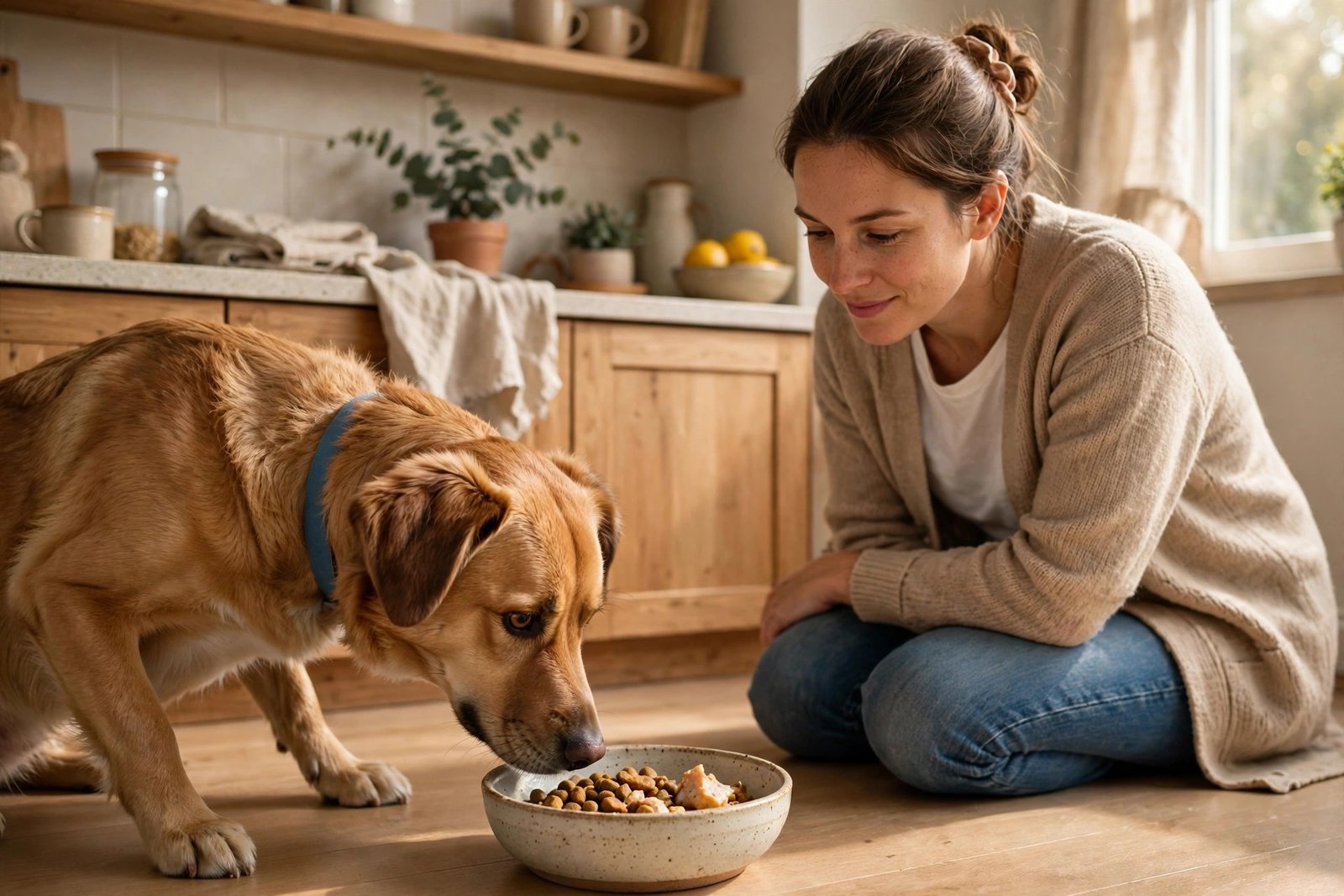
You did your research, chose a better food, filled the bowl with pride, and your dog sniffed it once and walked away. A dog who won’t eat new food can make any owner feel rejected, worried, and tempted to rush back to the old bag. But a turned-up nose in the first days of a food change is very common, and it usually says more about habit than about health.
The important skill is telling the difference between a picky dog who is holding out for something tastier, and a dog whose appetite has genuinely changed. This guide walks you through both: a patient switch plan for the picky ones, and the warning signs that mean the problem is not the food at all.
Quick Answer
Most healthy dogs refuse new food because it smells, tastes, and feels different from what they know, and because waiting has worked before. Stay calm, mix the new food into the old one very gradually over 7 to 10 days, serve meals at set times, and pick the bowl up after 20 to 30 minutes instead of leaving it down or adding toppers. Do not keep swapping foods or dressing the bowl up, as that trains pickiness. However, if your dog stops eating altogether for more than a day or two, or refuses food along with vomiting, diarrhoea, tiredness, or weight loss, skip the plan and see a vet, because that is appetite loss, not pickiness.
Important note: this article is general information only. It is not veterinary advice and it cannot diagnose your dog. Only a vet who examines your dog can tell you why his appetite has changed.
Picky or Unwell? Reading the Difference
Signs it is probably pickiness
A picky dog is usually bright, active, and completely himself in every way except at the bowl. He will happily eat treats, scraps, or the old food if offered. He may eat the old pieces out of a mixed bowl and leave the new ones behind, like a child picking peas off a plate. He drinks normally, plays normally, and his weight is steady. This dog is not ill. He is negotiating.
Signs it is appetite loss instead
Appetite loss looks different. The dog turns away from all food, including favourite treats he would normally never refuse. He may seem quieter, sleep more, or lose interest in walks and play. There may be vomiting, diarrhoea, drooling, lip-licking, or a sore-looking mouth. A dog who is not eating but still drinking water sits somewhere in the middle of these two pictures, and our guide on that pattern explains when waiting is fine and when it is not.
The Patient Switch Plan
Step 1: Mix far more slowly than you think
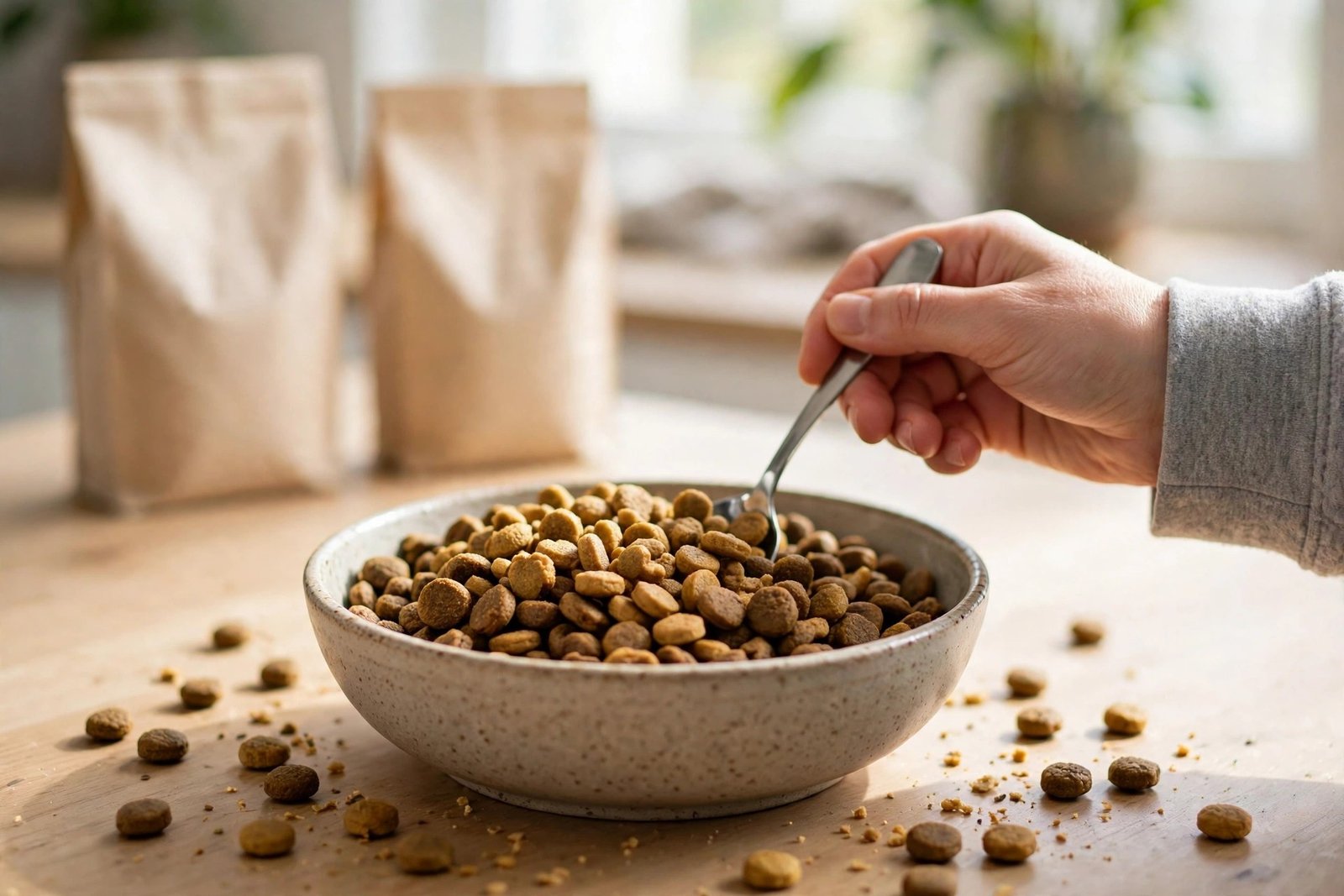
Most failed switches happen because the change was too fast. Start with about three quarters old food to one quarter new food for two or three days, then half and half, then mostly new, and only then fully new. Sensitive or suspicious dogs may need even smaller steps. Our full guide on how to switch dog food without upsetting the stomach lays out the day-by-day schedule and the tummy signs to watch for as you go.
Step 2: Serve meals, not an all-day buffet
Put the bowl down at a set time, leave it for 20 to 30 minutes, then pick it up calmly, finished or not, and offer nothing until the next meal. A healthy dog will not starve himself over a flavour preference, but he will wait all day if he believes something better is coming. Free-feeding makes this worse, because the bowl is always there and there is never a reason to eat now. This is one of the reasons we compare grazing versus scheduled meals in a separate guide: set mealtimes give you both appetite information and gentle hunger at the right moments.
Step 3: Keep the bowl boring
When a dog refuses a meal and the owner adds cheese, gravy, or a handful of treats “just so he eats something”, the lesson lands instantly: refusing works. From then on, the plain bowl is only ever a starting point for negotiations. Serve the mixed food plainly and kindly, praise him when he eats, and resist improving the offer. Most picky dogs give in within two or three meals once the pattern is clear.
Step 4: Make the new food smell inviting
A splash of warm water over dry food releases more smell and softens the texture, which helps many hesitant dogs. Serving food at room temperature rather than fridge-cold helps too. Warmth and smell are fair tricks. A rotating parade of toppers is not.
Step 5: Check the practical details
Sometimes the food is fine and the setup is not. Old food that has gone stale in an open bag, a bowl in a noisy or stressful spot, a new bowl that slides or clangs, or a portion so large it overwhelms a small dog can all cause refusals. Store food sealed, feed in a calm corner, and try a modest first portion of the mixture. A dog who eats half happily is easier to build on than a dog facing a mountain.
When to Stop the Plan and See a Vet
Pickiness is a behaviour. The signs below are not, and they deserve a vet visit rather than more patience:
- Not eating at all for more than 24 to 48 hours (sooner for puppies, tiny dogs, and dogs with existing health conditions).
- Refusing favourite treats as well as meals, which suggests he cannot eat, not that he will not.
- Vomiting, diarrhoea, drooling, or repeated lip-licking alongside the food refusal.
- Lethargy — sleeping much more, reluctance to walk, or a generally flat, unwell manner.
- Weight loss, or a visible change in body shape over a few weeks.
- Signs of mouth pain: dropping food, chewing on one side, pawing at the face, or bad breath that is new.
A dog who has always been a light, picky eater and is otherwise thriving is a different case from a dog whose appetite changed suddenly. Sudden change is the detail your vet will care about most, so note when it started and what else changed at the same time.
Mistakes to Avoid
- Switching foods again and again. Buying a third and fourth food in the same month teaches your dog that every refusal produces a new menu. Choose one good food and give the gradual plan a fair two weeks.
- Hand-feeding or adding toppers to “rescue” a meal. Occasionally sweet, but as a pattern it trains refusal. If he does not eat, the bowl goes away, kindly and without drama.
- Leaving the bowl down all day just in case. Constant access removes hunger, hides how much he actually ate, and lets food go stale. Set meals give you information pickiness hides.
- Assuming every refusal is fussiness. A dog who stops eating suddenly, especially an older dog or one with other symptoms, may be unwell or in pain. Behaviour plans are for bright, healthy dogs.
- Making the switch all at once because he “seemed fine with it”. Even willing eaters can get an upset stomach from a sudden change. Gradual mixing protects the tummy while his taste buds catch up.
Frequently Asked Questions
How long can a healthy dog refuse new food before eating?
Most picky but healthy adult dogs start eating the new mixture within one to three meals once they learn nothing better is coming, and nearly all eat within a day. That is safe for a healthy adult dog, but it is not a test to stretch: puppies, very small dogs, elderly dogs, and dogs with health conditions should never be left to skip meals for long, and any dog who eats nothing at all for more than 24 to 48 hours should see a vet.
Should I mix wet food in to make the new food more appealing?
A small amount of warm water is the better first trick, because it boosts smell without changing the deal. Mixing in wet food or toppers can work in the short term, but the dog often then refuses the food without them, and you have added a permanent extra. If you do use a little wet food as a bridge, reduce it step by step over the same days that the new food increases.
My dog eats the old food out of the mix and leaves the new food. What now?
Slow down and make the steps smaller, for example nine parts old to one part new, and stir the mix well with a splash of warm water so the flavours blend and picking becomes harder. Hold each step for an extra day or two. Patient, tiny increases win this game far more often than bigger jumps do.
Could my dog simply not like this particular food?
Yes, genuine preferences exist, and after a fair, gradual two-week trial with a bright, healthy dog, it is reasonable to choose a different food and switch to it slowly instead. That is different from swapping after one refused bowl. Give one food a proper chance first, so you can tell a real dislike from a dog who has simply learned to wait.
1 thought on “Dog Won’t Eat New Food? A Patient Switch Plan That Works”