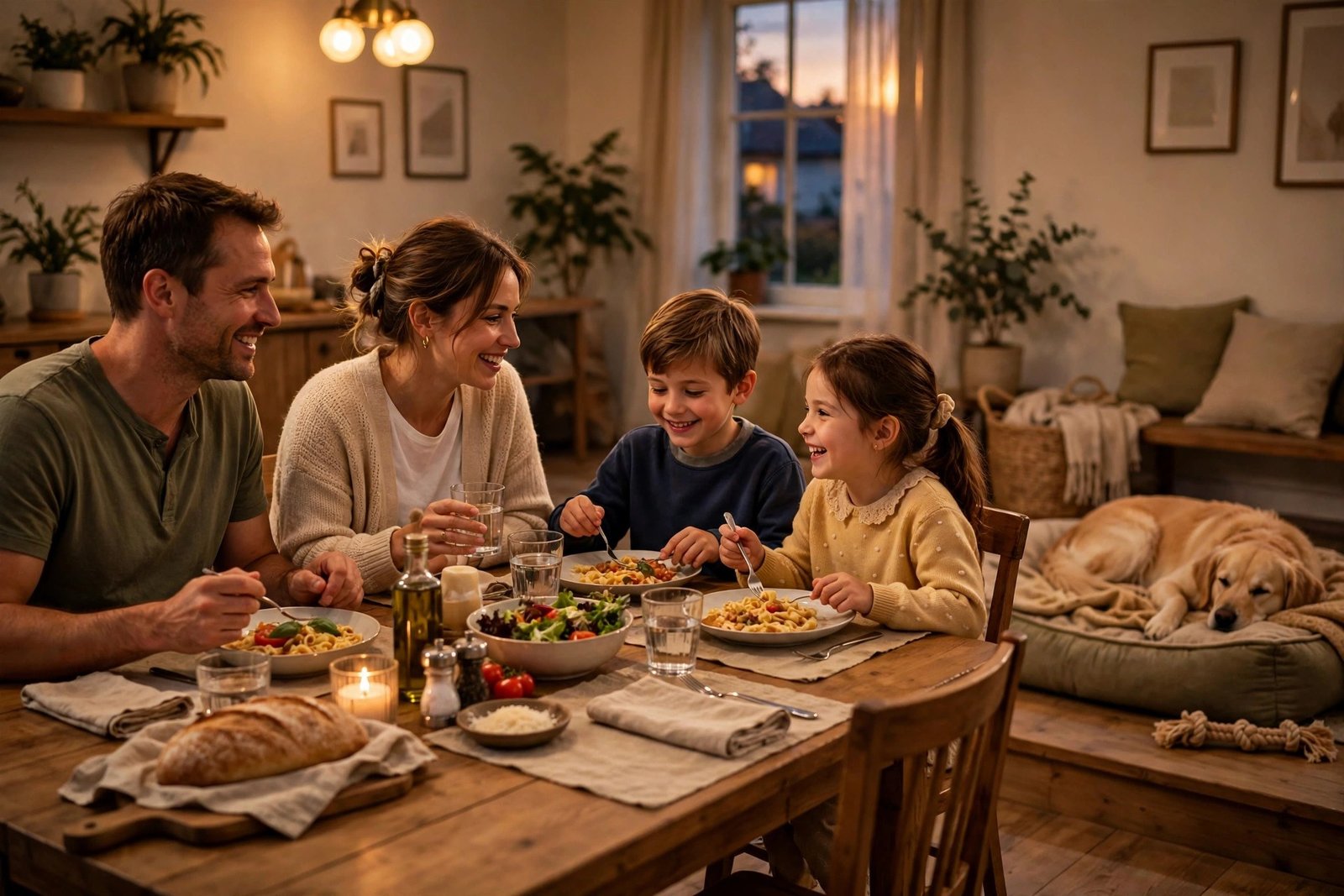
You sit down to dinner, and within seconds there is a chin on your knee, a paw on your leg, and a pair of eyes following every forkful. Dog begging at the table is one of the most common behaviour complaints in any home, and also one of the most misunderstood. Your dog is not being rude, greedy, or badly raised. He is doing something that has worked before, probably many times.
The kind way to stop begging is not punishment. It is a clear new rule, the same rule from every person in the house, and a better job for your dog to do while you eat. This guide gives you a simple plan that most families can start tonight.
Quick Answer
Dogs beg because begging has been rewarded, sometimes just once or twice, with food, attention, or eye contact. To stop it kindly: never feed your dog from the table or from anyone’s plate, teach him a “place” routine where he settles on his bed during meals and is rewarded there, feed him his own meal before you eat if that helps, and make sure every person in the house follows the same rule. Expect the begging to get stronger for a few days before it fades, because your dog will test whether the old trick still works. Calm consistency, not scolding, is what ends it.
Why Begging Works So Well on Us
Begging survives because it is powerful training, running in the wrong direction. Your dog does not need to be fed from the table every day. Being fed occasionally is actually more powerful, because unpredictable rewards keep a behaviour alive for a long time. One scrap from one soft-hearted person can undo a week of everyone else being consistent.
Attention counts as a reward too. Laughing at him, talking to him, pushing him away gently ten times, or making long eye contact all tell your dog that sitting by the table gets him noticed. Even telling him off is attention. This is why the fix is never one person’s job. It is a house rule, and it has to include guests.
The Kind Plan: A Place to Settle While You Eat
Step 1: Choose his spot
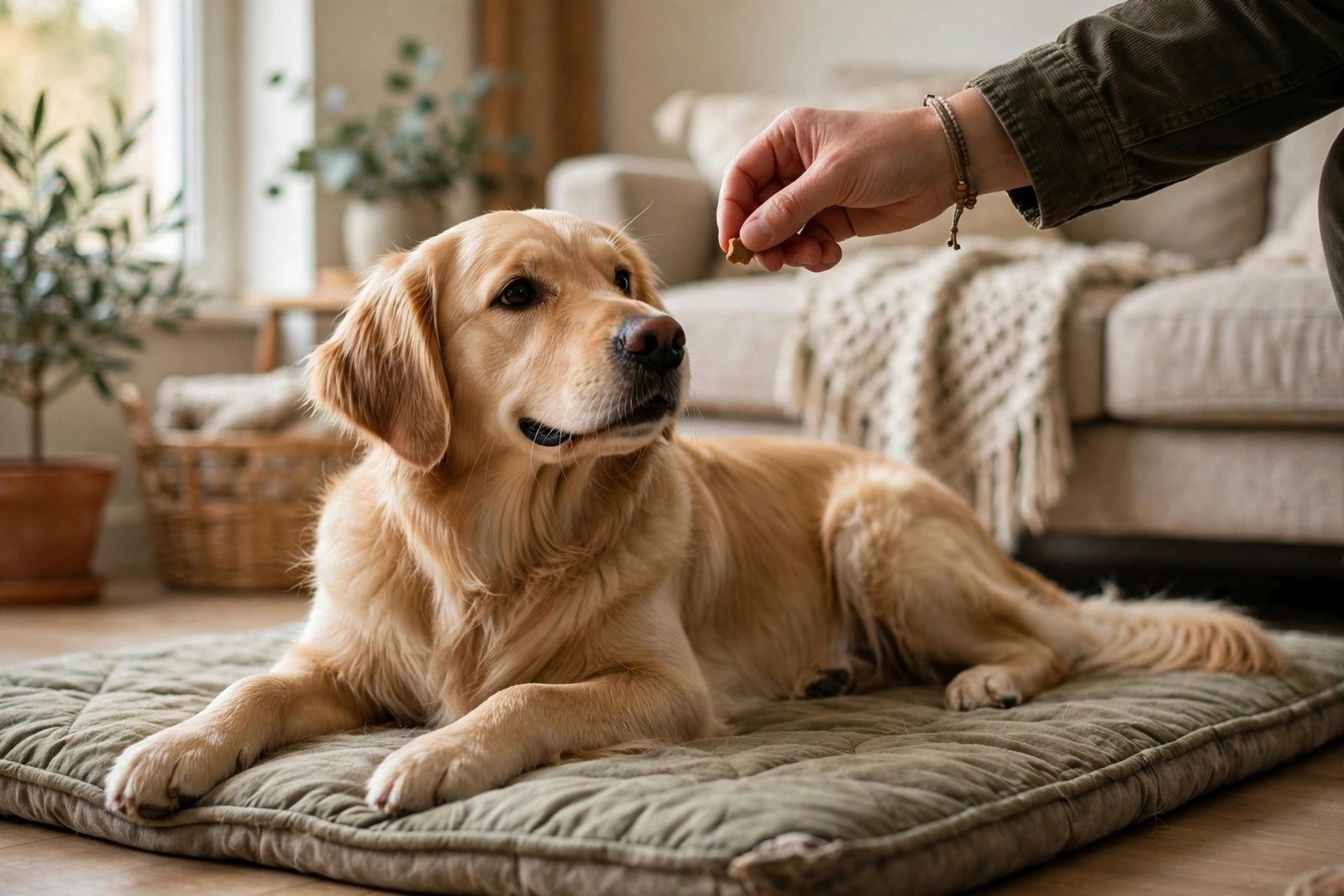
Pick a bed or mat within sight of the table but not next to it, ideally a few steps away. Your dog should be able to see the family and feel included, without being close enough to rest his chin on anyone. Use the same spot every meal.
Step 2: Teach “place” outside mealtimes first
Do not start the training at a real dinner, when he is already excited. Practise at quiet times: lead him to the bed, say your word such as “place” or “bed”, reward him for stepping on it, then for lying down, then for staying a few seconds. Keep sessions short and cheerful, and use small treats taken from his normal daily food allowance so his diet does not grow. Our guide on dog treats and how many is too many shows how to budget training rewards inside the day’s food.
Step 3: Build up the stay slowly
Over several days, reward him for staying on the bed for longer stretches while you sit at the table, stand up, and move around. If he gets up, calmly lead him back without fuss or scolding, and make the next try a little easier. The aim is a dog who understands that lying quietly on his bed is a well-paid job.
Step 4: Use it at real meals
At dinner, send him to his place as you sit down, and reward him there at intervals for staying calm. A long-lasting chew or a food-stuffed toy given on the bed can help young or food-obsessed dogs in the early weeks. Feed him his own dinner just before yours if an empty stomach makes him worse. Some dogs hang around the table simply because mealtimes are when they follow their people everywhere, a habit we explore in our guide on why a dog follows you everywhere.
The House Rules That Make It Work
- Nothing from the table, ever. No scraps, no “just this once”, no food dropped on purpose. If you want to give him a leftover, put it in his bowl after the meal, away from the table.
- Everyone follows the rule, including guests. Tell visitors kindly and clearly before the meal: “Please ignore him completely while we eat, it is part of his training.” Most guests are happy to help when they know it matters.
- Ignore begging completely. No eye contact, no talking, no pushing away. The moment he settles on his bed or lies down quietly, that is when attention and rewards appear.
- Reward the behaviour you want. Calm lying-down anywhere sensible during meals should earn praise and the occasional reward, delivered away from the table.
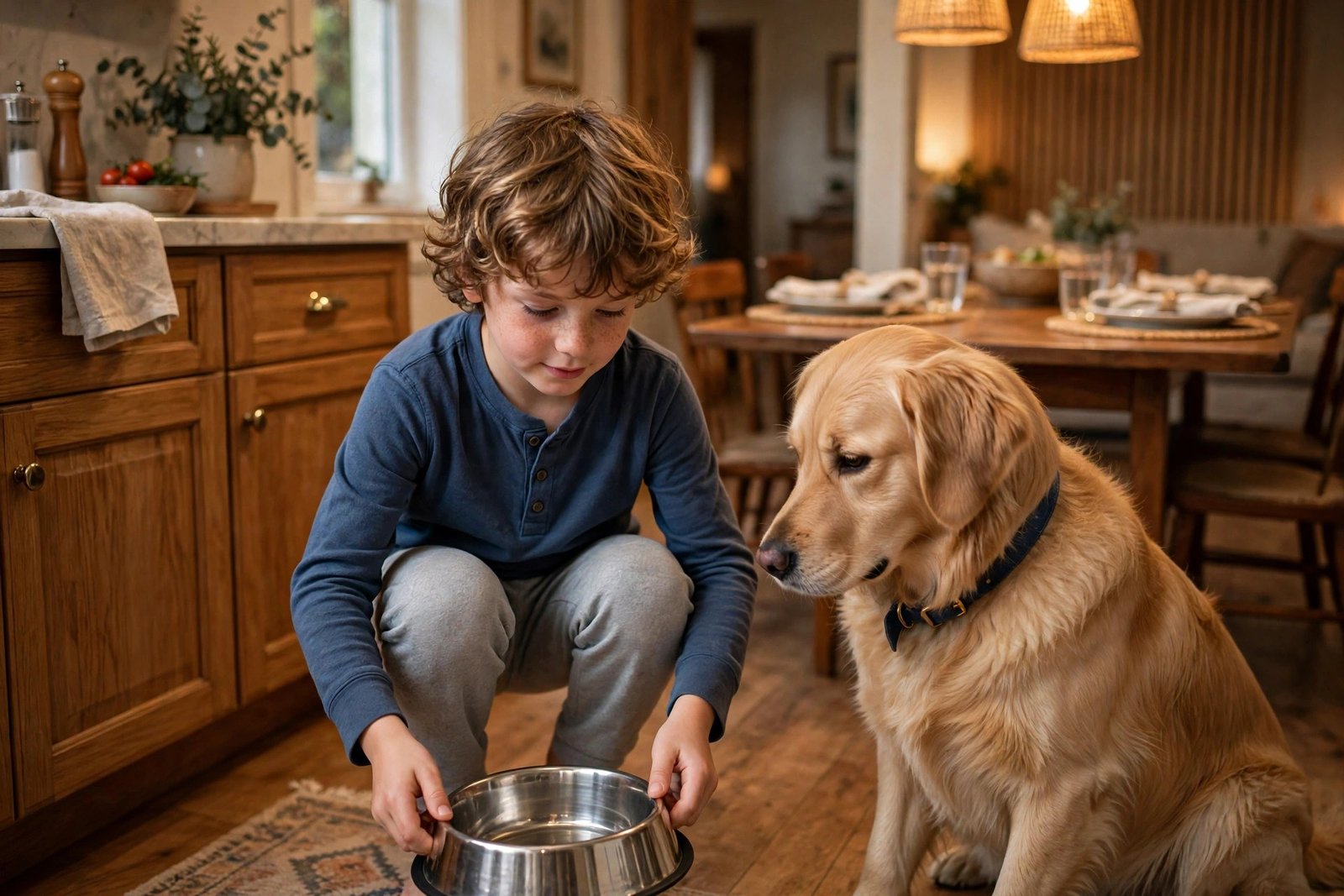
- Keep children in the plan. Children are the most common source of secret snacks. Give them a job instead: they can be the ones to put his dinner in his bowl before the family eats.
What to Expect: It Gets Worse Before It Gets Better
When a behaviour that used to pay stops paying, dogs usually try harder for a while. Trainers call this an extinction burst. Your dog may stare more intensely, add whining, pawing, or a bark or two, and test different people at the table. This does not mean the plan is failing. It usually means it is working, and he is checking whether the old rules really have changed. If everyone holds the line calmly for those few days, the begging fades quickly afterwards. If even one person gives in during the burst, the behaviour comes back stronger, because your dog has learned that persistence pays.
Is He Begging, or Is He Actually Hungry?
Occasionally a dog’s table manners get worse because something else has changed. A dog who has started losing weight, whose portions were cut recently, or whose appetite has suddenly grown along with bigger thirst should not simply be trained harder. If your dog seems obsessed with food all day, not just at the table, our guide on a dog who is always hungry but acting normal explains how to check portions and body condition, and which signs mean a vet visit instead of a training plan.
Mistakes to Avoid
- One person sneaking scraps. The single biggest reason begging never ends. The rule has to hold for every person, every meal, or it holds for no one.
- Punishing the begging. Shouting, pushing him away, or sending him out of the room in anger teaches him nothing except that mealtimes are stressful. It can also make him sneaky, stealing food when no one is looking. Calm ignoring plus rewarding the bed is faster and kinder.
- Feeding him from your plate “to keep him quiet”. This works for thirty seconds and trains begging for life. If he needs something to do, give him his own chew on his bed, not your dinner.
- Starting the training at a big family dinner. Build the place habit at quiet times first. A roast dinner with six guests is an exam, not a first lesson.
- Expecting results in one meal. A habit built over months takes days to weeks of consistency to fade, with a bump in the middle. Judge the plan after two consistent weeks, not after one hard evening.
Frequently Asked Questions
How long does it take to stop a dog begging at the table?
With the whole household consistent, most dogs improve noticeably within one to two weeks, though the first few days often look worse as your dog tests the new rule. Dogs who have been fed from the table for years take longer than young dogs, but the plan is the same: no food from the table, a rewarded place to settle, and patience through the testing phase.
My dog only begs from one person. What should we do?
That person is, knowingly or not, the rewarding one, through scraps, eye contact, or attention. The fix is for that person to become the most consistent of all: complete ignoring during meals, and rewards only when the dog is settled on his bed. It often helps if someone else handles the rewards at first, so the dog stops watching that person’s hands.
Is it okay to give my dog leftovers at all?
Plain, dog-safe leftovers in small amounts are fine for most dogs, but how you give them matters. Put them in his bowl, after your meal, away from the table, and count them as part of his day’s food. Never feed from the plate or table itself, and avoid anything salty, fatty, spicy, or cooked with onion or garlic, which are not safe for dogs.
Should I shut my dog out of the room while we eat?
A baby gate or closed door is a reasonable management tool while training is in progress, especially with guests or very young children, as long as your dog is calm about it and has a comfortable place to rest. But management alone does not teach him anything. Pair it with place training, so he gradually learns to be in the room, settled on his bed, while the family eats.
1 thought on “Dog Begging at the Table: How to Stop It Kindly”