
It is 3 a.m. and from the bathroom comes the unmistakable sound: scratch, scratch, scratch, scrape — your cat, digging at the walls of her litter box long after she has finished her business. She is not doing it to annoy you. Digging and covering are deep instincts, and the wall scratching is usually her way of saying the box is not quite right: too small, too shallow, covered when she wants it open, or filled with litter she cannot dig in the way she wants to.
This guide explains what is normal digging, what counts as excessive wall scratching, and the practical changes, including where the box lives at night, that quieten the whole performance down without ever scolding your cat for being a cat.
Quick Answer
A bit of digging before and after using the box is completely normal; a cat covers her waste to hide her scent, and some cats are simply enthusiastic diggers. Scratching at the walls, the floor around the box, or the air instead of the litter usually means she cannot dig the way she wants: the box is too small to turn in, the litter is too shallow to cover anything, or a hooded box is trapping smell and making her reluctant to step fully inside. Fix the setup first: a bigger, open box, litter around 5 to 7 cm deep, and a quieter night-time spot away from bedrooms. Most wall scratching fades within days once the box works for her.
What Normal Digging Looks Like
Healthy litter box behaviour has a pattern: step in, sniff, dig a shallow hollow in the litter, go, then turn and cover it with a few purposeful strokes. The whole visit usually takes under a minute. Some cats barely cover at all, which is also normal, especially in confident indoor cats. Others dig with real dedication. Individual style varies, and as long as the scratching happens in the litter, finishes when the covering is done, and your cat seems relaxed, there is nothing to fix but your sleep, which we will come to.
When Scratching Becomes a Message
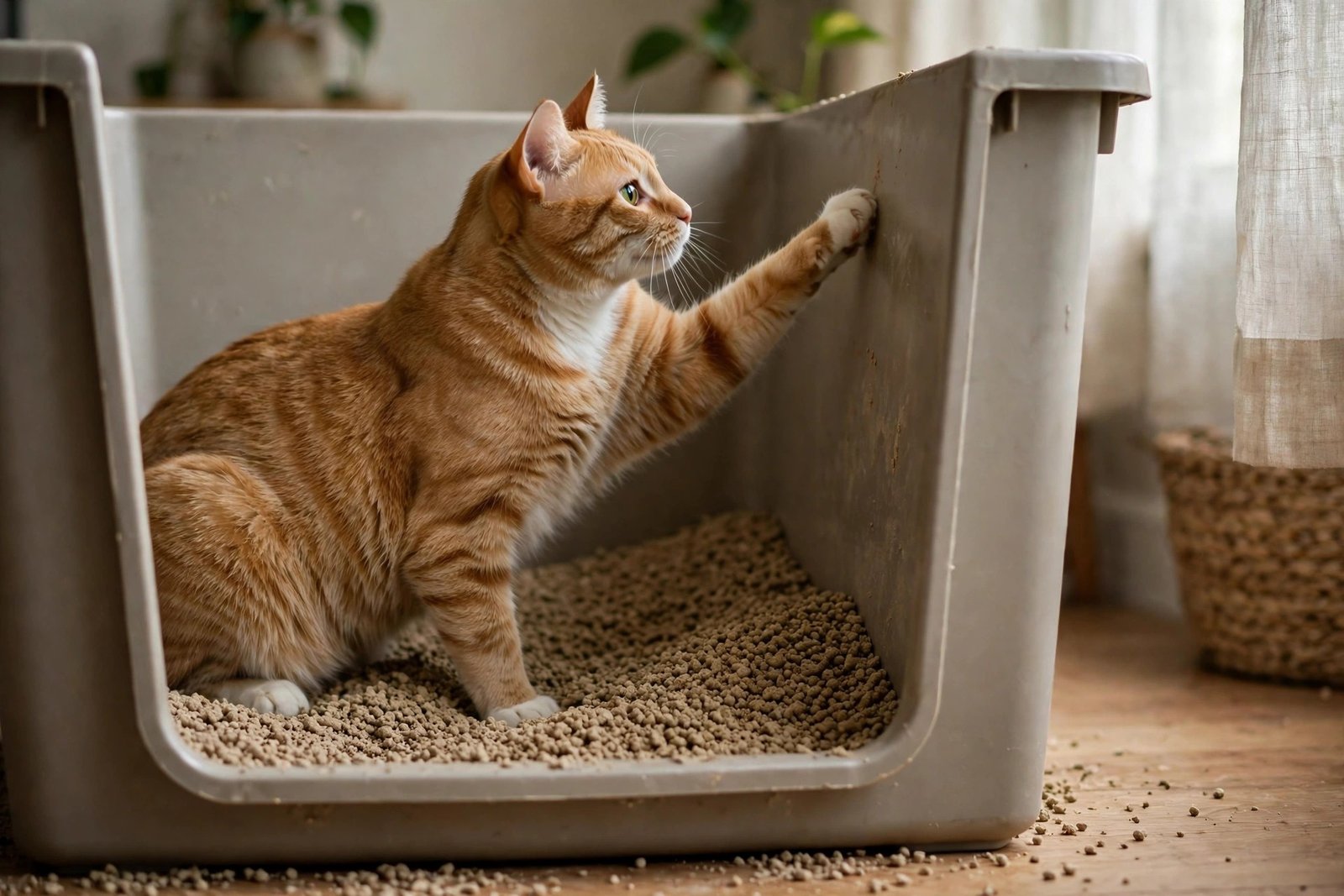
Excessive scratching looks different: long sessions of scraping at the box walls, the rim, the floor beside the box, or the wall behind it, sometimes for minutes, and sometimes leaving the waste completely uncovered. Cats scratch a surface when they want to cover a smell but cannot do it in the material in front of them. In other words, she is trying to bury the waste with the box itself, and that is useful information about the setup.
- The box is too small: if she cannot turn around comfortably and dig in the litter, she paws at whatever she can reach: the walls. A good guide is a box at least one and a half times your cat’s length from nose to tail base.
- The litter is too shallow: with only a sprinkle of litter, there is nothing to cover with. She knows it, and keeps searching for material, which comes out as wall and floor scratching.
- A hood or liner is in the way: covered boxes trap smell inside, and many cats respond by perching half in, half out, and scratching at the entrance and walls. Plastic liners snag claws and are a very common scratching trigger.
- The litter itself feels wrong: a sudden change of litter type, or large coarse grains some cats dislike underfoot, can shift her digging to the walls.
The Setup Fixes That Work
Start with the simplest change: size up the box. A larger, open, high-sided tray gives room to dig and keeps litter in, without trapping smell the way a hood does. If you use a covered box, try two weeks with the lid off and compare the noise; many owners are surprised how much scratching disappears.
Next, set the litter depth to around 5 to 7 cm and keep it topped up. Deep enough litter lets her bury properly and finish the job, which is what ends the session. Choose a litter she has shown she likes, change types gradually if you must change at all, and remove any plastic liner. If scratching started right after a switch of litter, brand of box, or room, that timing is your biggest clue: undo the change and test.
Also check the number and placement of boxes. A cat who treks to a single box in a distant room may rush and dig frantically. If your count is below the one-per-cat-plus-one guide, our article on how many litter boxes you need explains the rule and where the extras belong.
Quieting the Night-Time Session
Cats are naturally active at dusk, dawn, and in small bursts overnight, so some night visits are unavoidable. What you can change is how much they disturb you:
- Move the box, not the cat: if the main box echoes through a bathroom next to your bedroom, relocate a night box to a spot with soft flooring and a door or hallway between it and your bed. Move it gradually over a few days if your cat is set in her ways.
- Add a mat: a litter mat under and around the box softens scratching and digging sounds, and catches stray grains.
- Scoop before bed: a freshly scooped box needs less excavation. Cats dig more in a used box, searching for a clean patch.
- Burn off energy in the evening: a play session followed by the last meal an hour or so before your bedtime helps many cats settle into a longer, quieter sleep stretch.

The Messy Cousin: Litter Flying Everywhere
Enthusiastic digging often comes with litter sprayed across the floor. High sides, a roomy box, and the right depth reduce most of it, and our guide to why cats kick litter everywhere covers the full set of fixes if tracking and scattering are problems in your home too.
When to Mention It to the Vet
Wall scratching by itself is a setup issue, not a medical one. But mention litter habits at the vet if the scratching arrives with other changes: visiting the box much more often, straining, crying in the box, passing very little, or new accidents outside the box. Those signs point away from the tray and towards discomfort, and our guide on a cat not using the litter box explains which signs are urgent. This article is general information only and not veterinary advice.
Mistakes to Avoid
- Scolding or rushing in mid-scratch: punishing a cat around the litter box creates anxiety about the box itself and can turn a small habit into avoidance and accidents. Never punish; adjust the setup.
- Solving noise with a tiny covered box: a small hooded box often increases wall scratching and traps smell, the opposite of the goal.
- Keeping litter shallow to save money: thin litter cannot be dug or covered with, which is exactly what triggers the scratching. Depth is the fix, not a luxury.
- Changing everything at once: swap one thing at a time, box, depth, or location, so you learn what actually worked.
- Ignoring a sudden change in habit: a lifetime calm cat who abruptly digs frantically and visits constantly deserves a health check, not just a new tray.
Frequently Asked Questions
Why does my cat scratch the wall instead of the litter?
She is trying to cover her waste with something. When the litter is too shallow, the box too small, or a hood stops her digging properly, she paws the nearest surface instead. Fix the box size and litter depth first.
Is it bad if my cat does not bury her waste?
Usually not. Some cats, especially confident indoor cats, leave waste uncovered as a natural scent signal. It only needs attention if it is a sudden change or comes with other new litter habits.
Will a covered litter box stop the scratching noise?
Often the opposite. Hoods trap smell and limit turning room, which can increase wall scratching. Many cats quieten down in a larger open box with higher sides.
How can I stop the 3 a.m. digging from waking me?
Scoop before bed, add a mat, burn off energy with evening play and a last meal, and if needed place a night box further from your bedroom with soft flooring underneath. Do not punish the behaviour; change the environment.
Your cat is not being difficult. She is doing an ancient, careful job with the tools she has been given. Give her a box big enough, litter deep enough, and a peaceful place for it, and the midnight drumming usually settles into a few quiet strokes.
1 thought on “Cat Scratching the Litter Box Walls at Night? Why It Happens and How to Quiet It”