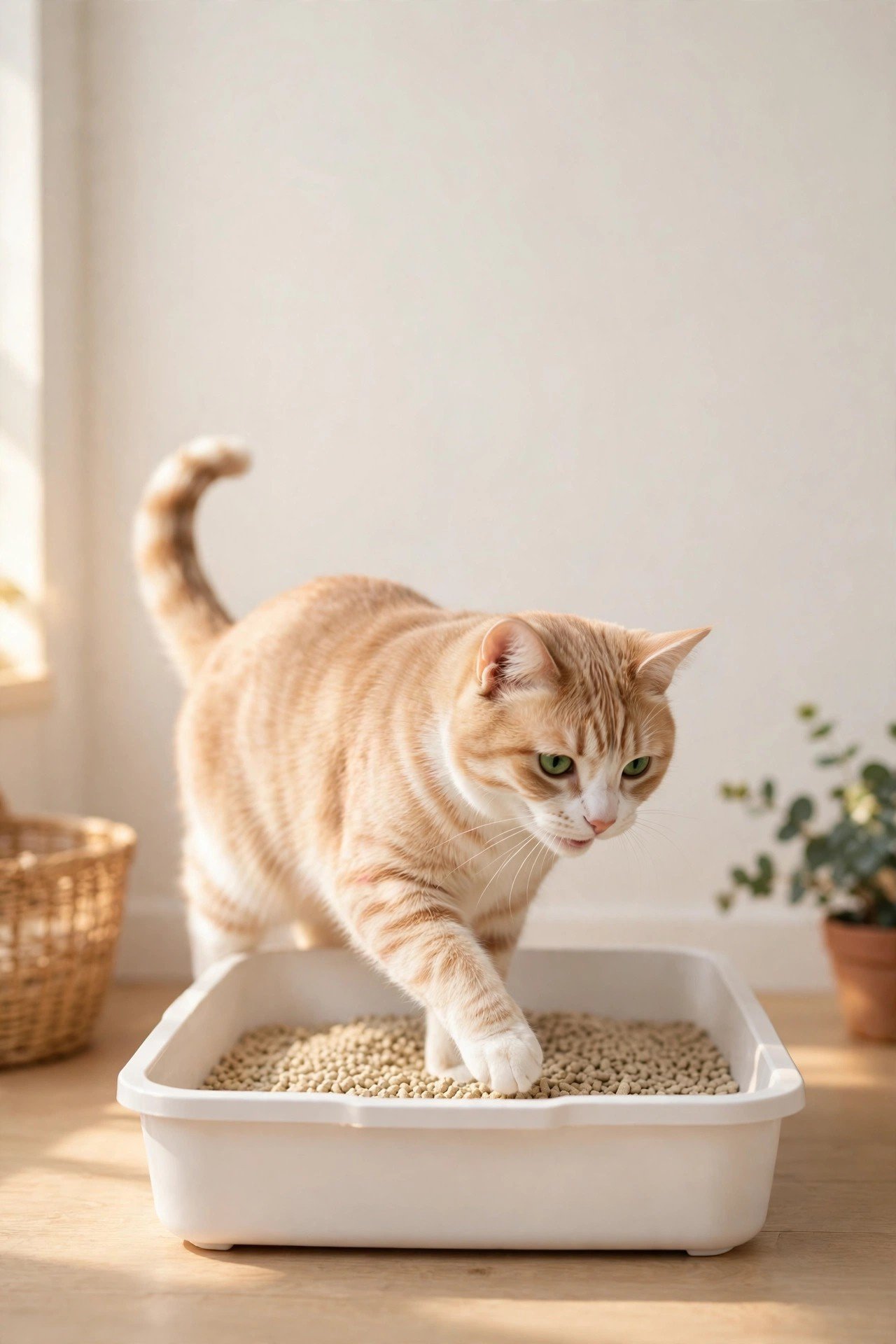
Most litter box problems trace back to one unglamorous truth: cats are fastidiously clean animals living with a toilet that only gets attention when it starts to smell. By the time a human nose notices, a cat’s nose, which is far more sensitive, has been objecting for days. The good news is that a clean box is not about effort or expensive products. It is about three simple rhythms: a quick daily scoop, a weekly refresh, and a proper deep clean on a regular cycle.
This guide sets out all three, step by step, with the small details that make the difference: how deep the litter should be, what to wash with, what never to use, and when the box itself, not the litter, is the problem. Follow the rhythm for a month and most smell complaints, and a good share of litter box refusals, quietly disappear.
Quick Answer
Scoop solids and clumps once a day at minimum, twice if you can. Top up to keep the litter about 5 to 7 centimetres deep. Once a week, or whenever the litter stops clumping cleanly, empty the box fully, wash it with warm water and a little mild, unscented washing-up liquid or mild soap, dry it completely, and refill with fresh litter. Every 6 to 12 months, judge the box itself honestly: scratched, stained plastic holds smell no washing can remove, and a new box is the real fix. Never use bleach-heavy, strongly scented, or ammonia-based cleaners inside the box.
The Daily Routine: Two Minutes That Matter Most
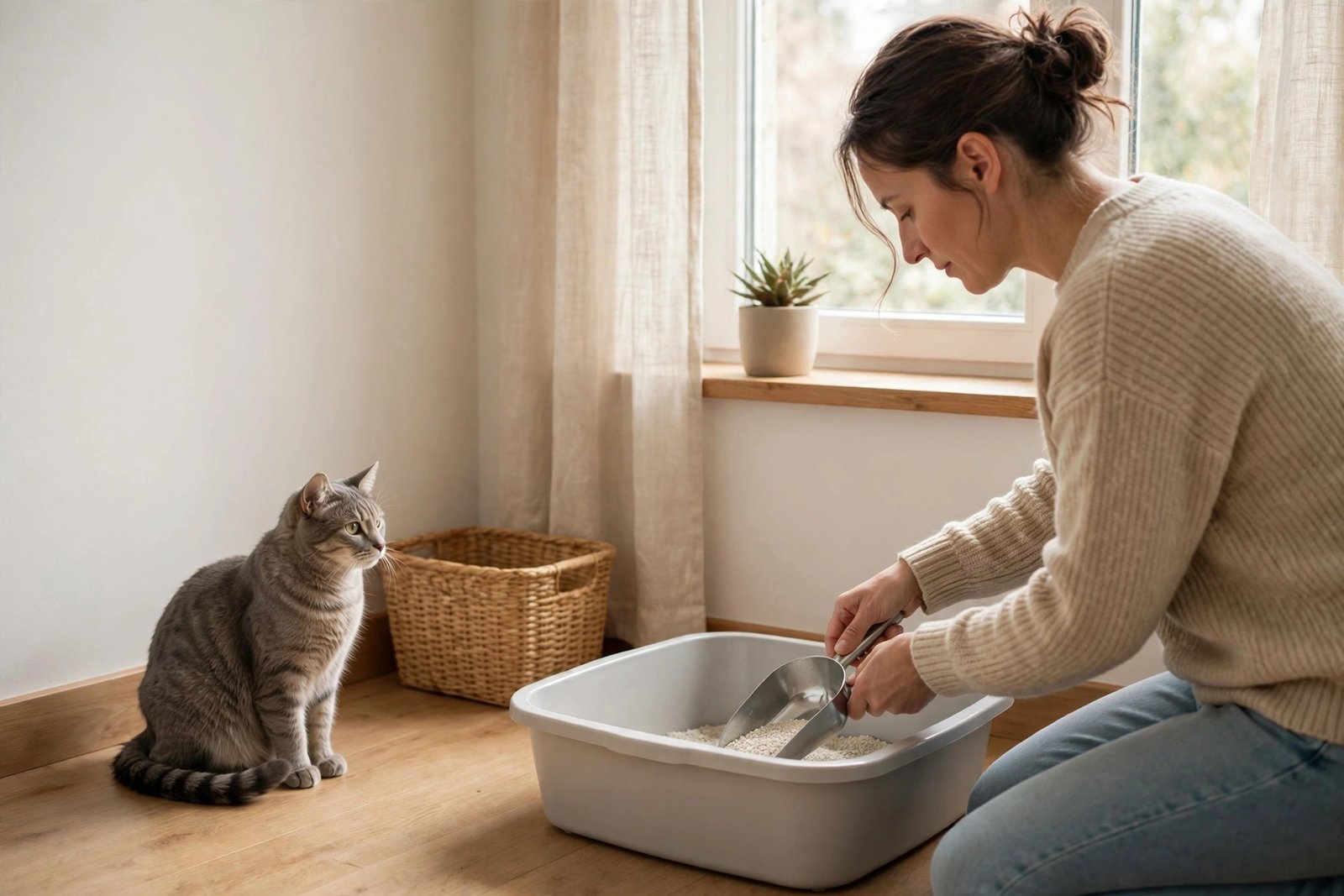
- Scoop once a day, minimum: remove solids and urine clumps, and any scattered litter that has been kicked out. Twice a day is better, especially in multi-cat homes or small flats where the box shares your air.
- Top up as you go: scooping removes litter as well as waste. Add a scoop or two of fresh litter after cleaning to hold the depth steady at around 5 to 7 cm, deep enough to dig and bury in, which is what makes a cat feel the job is properly done.
- Check the whole picture while you are there: how much urine, how many stools, anything unusual. You are the only one who sees this evidence daily, and changes in it are early health clues. Bigger clumps plus a thirstier cat, for instance, is a vet conversation; our guide on a cat drinking a lot of water explains why.
- Wash your hands afterwards, and keep the scoop in one dedicated spot by the box so the habit stays effortless.
That is the whole daily job. The reason it works is simple: waste never gets the chance to sit, break down, and perfume the house, and the box always looks and smells acceptable to the animal whose opinion actually decides whether it gets used.
The Weekly Refresh and the Deep Clean
Daily scooping slows the decline; it does not stop it. Fine litter dust, tiny clump fragments, and bacteria build up in the litter itself, and scratched plastic gradually absorbs odour. This is the reset, done weekly for a full litter change if you use non-clumping litter, or whenever clumping litter stops performing crisply, and as a proper wash every few weeks either way:
- Empty everything into a bin bag. Tie it and take it straight outside; do not leave a bag of used litter sitting by the box.
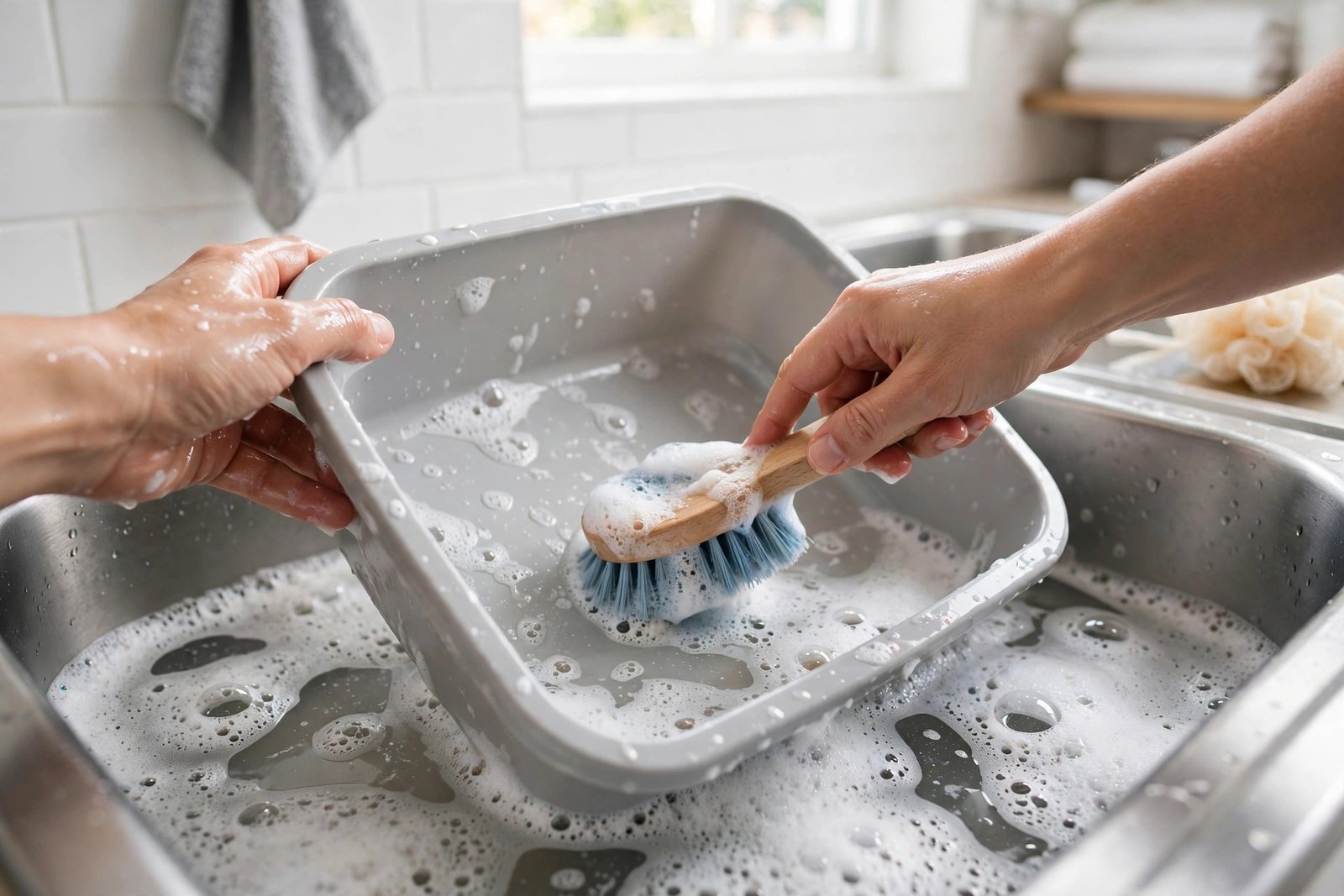
- Wash with warm water and mild, unscented soap or a little washing-up liquid, using a dedicated brush or sponge that lives with the cleaning kit and never travels to the kitchen sink jobs. Scrub corners and any scratched areas where residue hides.
- Rinse thoroughly: soap residue is itself a smell cats dislike, and it can make fresh litter clump oddly.
- Dry completely before refilling. Litter poured into a damp box clumps on contact and starts life already compromised. A few minutes in the sun is ideal where possible.
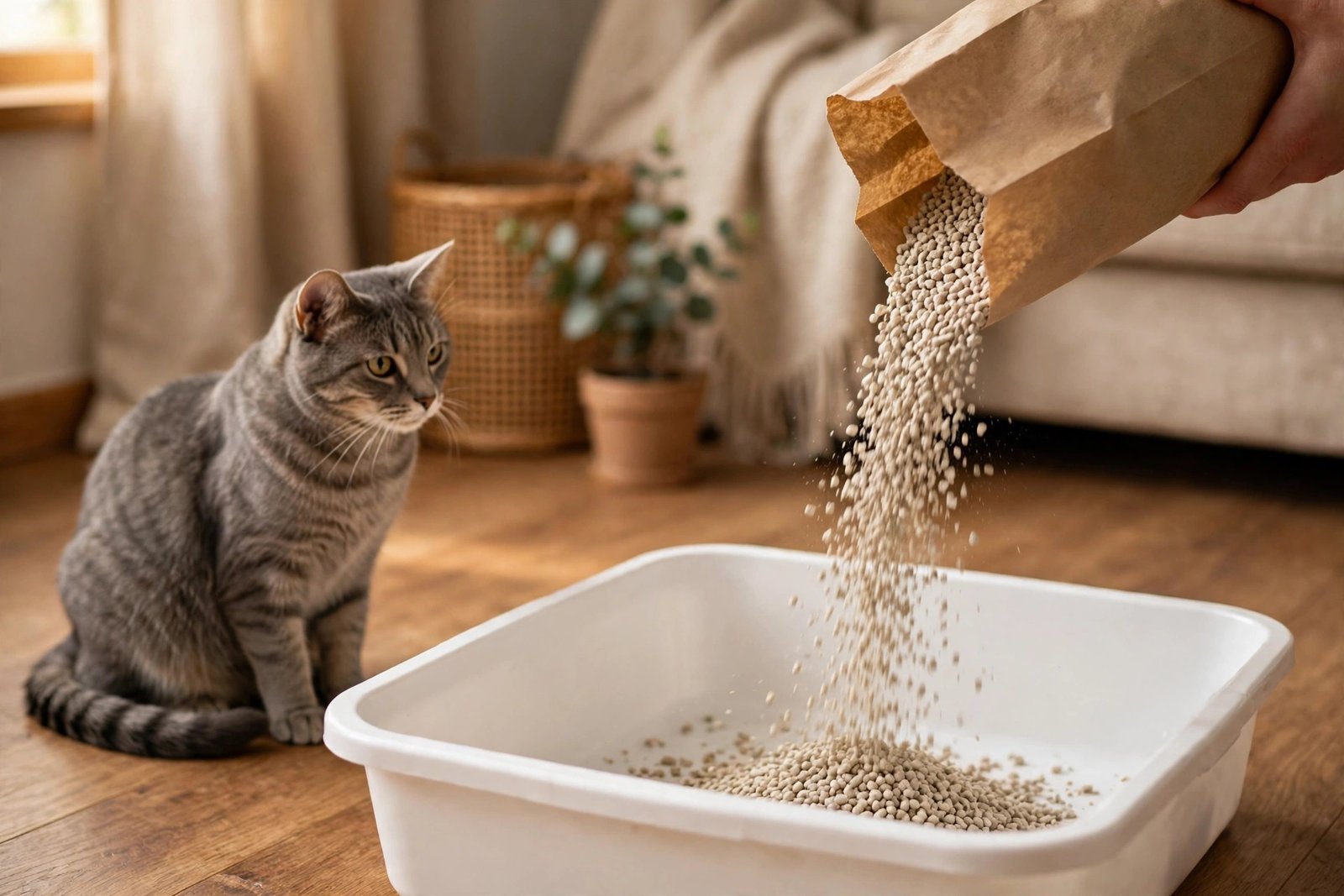
- Refill to 5 to 7 cm with fresh litter, and sweep or vacuum the area around the box, including the mat, which collects tracked litter and dust all week.
If you follow this and the box still smells within a day or two of a deep clean, the problem is no longer your routine. Our guide on a litter box that smells bad even after cleaning digs into the hidden causes, from urine-soaked plastic to accidents hidden outside the box.
What to Clean With, and What to Avoid
Safe and simple
Warm water and a mild, unscented soap or washing-up liquid handle the box itself perfectly well. For the floor around the box, and for accidents elsewhere in the house, an enzyme-based pet cleaner, used as its label directs, is the right tool, because it breaks down the organic compounds that keep calling a cat back to the same spot. Plain white vinegar diluted in water is also useful on hard floors for a general freshen-up.
Never in or near the box
- Strongly scented cleaners and disinfectants: a box that smells of pine or citrus to you smells overwhelming to a cat crouching in it, and scent is one of the classic reasons cats quietly defect to a laundry pile. Some disinfectant ingredients are also unsafe for cats, who groom residues off their paws.
- Ammonia-based cleaners: urine itself contains ammonia-like compounds. Cleaning with ammonia can leave the area smelling, to a cat, like a marked toilet spot, the exact opposite of what you want.
- Bleach in the box: strong bleach is harsh, leaves residues a cat then walks through and grooms off, and mixed with urine residue is a genuinely bad combination. It is unnecessary; soap and water do the job.
- Scented litter as a cover-up: heavily perfumed litter is a human solution to a human problem. Many cats dislike it, and it masks the warning smell that tells you the box needs attention rather than solving anything.
The Box Itself: Size, Numbers, and When to Replace It
Cleaning cannot fix the wrong hardware. The box should be big enough for your cat to enter, turn around, and dig comfortably: a useful rule is about one and a half times the cat’s length from nose to tail base. Kittens and older, stiffer cats need a low entry side they can step over easily. As for numbers, one box per cat plus one spare, in different spots, is the standard that prevents most queueing and guarding problems; our article on how many litter boxes you need explains the rule and where the extras should go.
And judge plastic honestly. Litter box plastic gets scratched by claws and digging, and those scratches harbour bacteria and odour that no amount of scrubbing fully shifts. If a deep-cleaned, dry box still smells before any cat uses it, the box is done. Replacing it once a year or so is not extravagance; it is the single most effective deep fix there is, and cats notice the difference immediately.
A Simple Schedule to Stick On the Fridge
- Daily: scoop, top up to depth, quick glance at what you removed, hands washed.
- Weekly: full litter change for non-clumping litter; mat shaken or washed; floor around the box swept or vacuumed.
- Every few weeks: full empty, wash, rinse, complete dry, fresh litter, for every box including clumping-litter ones.
- Every 6 to 12 months: honest inspection of each box; replace any that stay smelly after washing, are deeply scratched, or have been outgrown.
Mistakes to Avoid
- Scooping only when it smells: that is cleaning to a human schedule. A cat’s nose is far ahead of yours; by smell o’clock she has been tolerating a dirty toilet for days, which is how carpets start looking attractive and litter box refusals begin.
- Using strong scents to cover the problem: perfumed litter, scented cleaners, and plug-in air fresheners beside the box all make the box less acceptable to the cat while convincing you it is clean.
- Keeping litter too shallow to save money: a thin layer cannot absorb or bury properly, reaches the plastic instantly, and smells faster. It costs more in full changes than it saves.
- Washing with the kitchen sponge or in the kitchen sink area used for food prep: keep a dedicated brush and, ideally, a utility sink, bath, or outdoor tap for box washing.
- Punishing a cat for accidents: a dirty box is a human scheduling problem. Scolding adds stress, which makes litter problems worse, never better. Fix the box, not the cat.
Frequently Asked Questions
How often should I completely change the litter?
For non-clumping litter, about once a week. For clumping litter, a full change every two to four weeks is typical, with daily scooping and top-ups in between, and sooner whenever it stops clumping cleanly or smells despite scooping.
Can I flush cat litter or poop?
Do not flush litter, even types labelled flushable, unless your local rules and plumbing clearly allow it; it is a common cause of blockages. Scoop waste into a bag and bin it with household waste, following local guidance.
My cat digs for ages and scatters litter everywhere. Is that a cleaning issue?
Partly, yes: too-shallow litter invites marathon digging, and the right depth plus a larger box settles many diggers. Enthusiastic burying is also just normal cat behaviour, and mats and box placement help a lot, if mess is the main problem.
Is it safe to clean the litter box while pregnant or unwell?
Pregnant people and anyone with a weakened immune system are usually advised to avoid litter duties where possible, because cat faeces can carry a parasite of concern. If it cannot be avoided, scoop daily, wear gloves, and wash hands thoroughly afterwards, or ask your doctor for guidance.
Two minutes a day, a proper wash on a rhythm, and the honesty to replace a tired box: that is the entire secret. A litter box kept this way never becomes a household smell at all, and your cat gets the clean toilet she has been politely asking for.