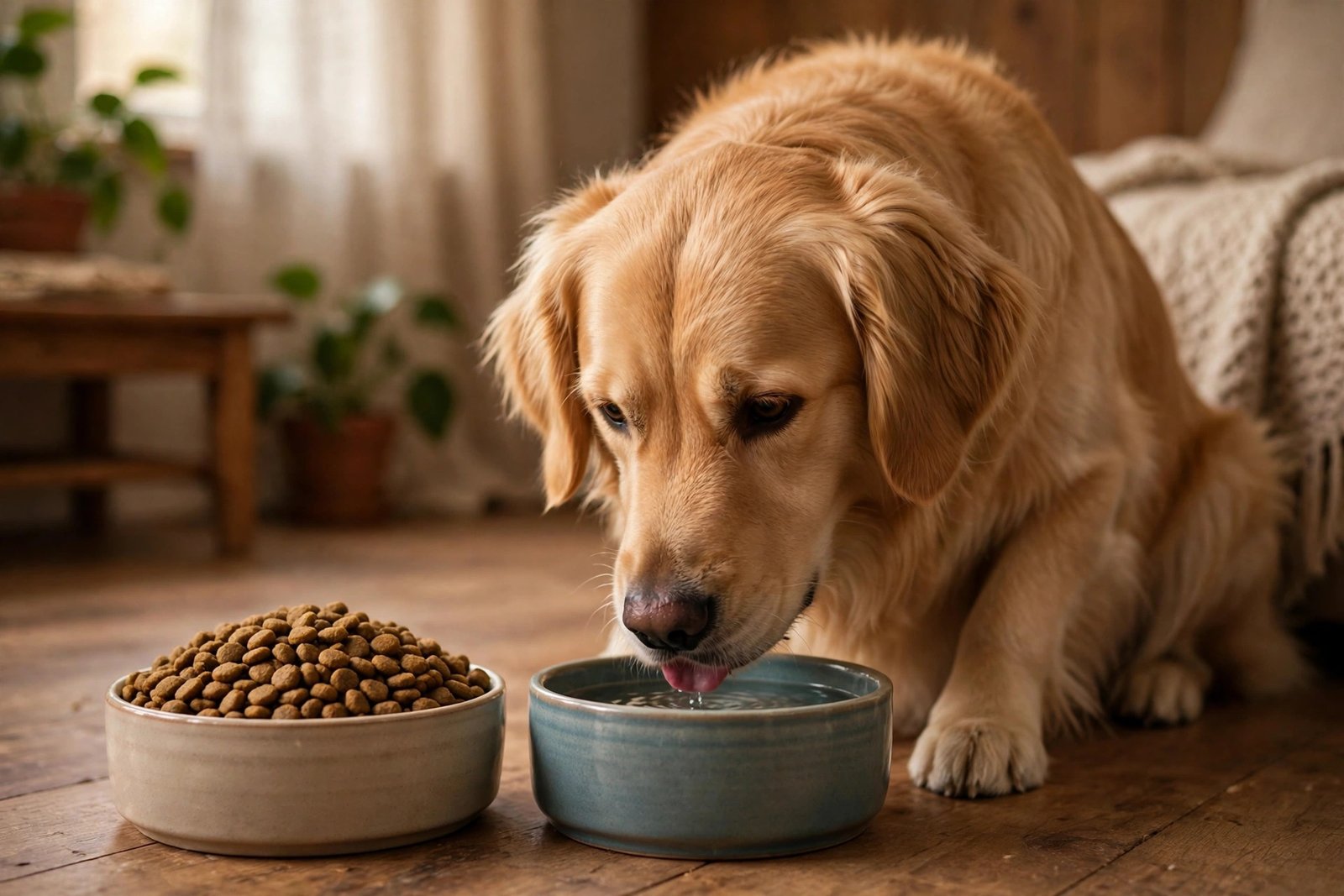
It is a strange and worrying sight. Your dog turns his nose away from his food bowl, leaves his favourite meal untouched, but then walks to the water bowl and drinks happily. He is not refusing everything, just the food. So what does that mean? Is he being fussy, is his stomach upset, or is something more serious going on?
A dog who will not eat but still drinks water is giving you a useful clue. Drinking shows he still has some energy and interest in the world, and it helps protect him from dehydration. But a lost appetite is never something to ignore, because dogs usually love their food. In this guide, we will look at the most common reasons, what you can safely try at home in the first day, the signs that mean you should not wait, and how the vet will work out the cause.
Quick Answer
A dog may stop eating but keep drinking because of a mild stomach upset, mouth pain, stress, a food change, feeling sick, pain somewhere in the body, or the early stage of an illness. If an adult dog misses one meal but is bright, drinking, and behaving normally, you can watch him closely for up to 24 hours. Puppies, small dogs, old dogs, and dogs with other symptoms should be seen much sooner. If your dog will not eat for more than 24 hours, or also has vomiting, diarrhoea, tiredness, pain, or heavy drinking, book a vet visit the same day.
Important note: this article is general information only. It is not veterinary advice and it cannot diagnose your dog. Loss of appetite has many possible causes, and only a vet who examines your dog can find the right one.
Why Drinking Water Is a Good Sign, but Not the Whole Story
Water and food are controlled by different feelings in the body. A dog can feel sick enough to refuse food while still feeling thirst normally. That is why many dogs with mild nausea will drink but not eat. Drinking also tells you he can swallow comfortably and is not completely weak or collapsed.
Still, drinking does not rule out a problem. Some conditions actually cause more drinking at the same time as a poor appetite. If your dog is drinking much more than usual as well as not eating, that combination is more concerning than either sign alone. Our guide on why your dog drinks so much water explains how to measure intake and which causes vets check first.
Think of eating and drinking as two separate report cards. One good mark does not cancel out a bad one.
Common Reasons a Dog Stops Eating but Keeps Drinking
A mild stomach upset or nausea
This is the most common reason. Eating something from the garden, a rich new treat, a sudden food change, or travel sickness can all make a dog feel sick for a few hours. A nauseous dog may lick his lips, drool, eat grass, or swallow often. He will usually refuse food but still drink small amounts.
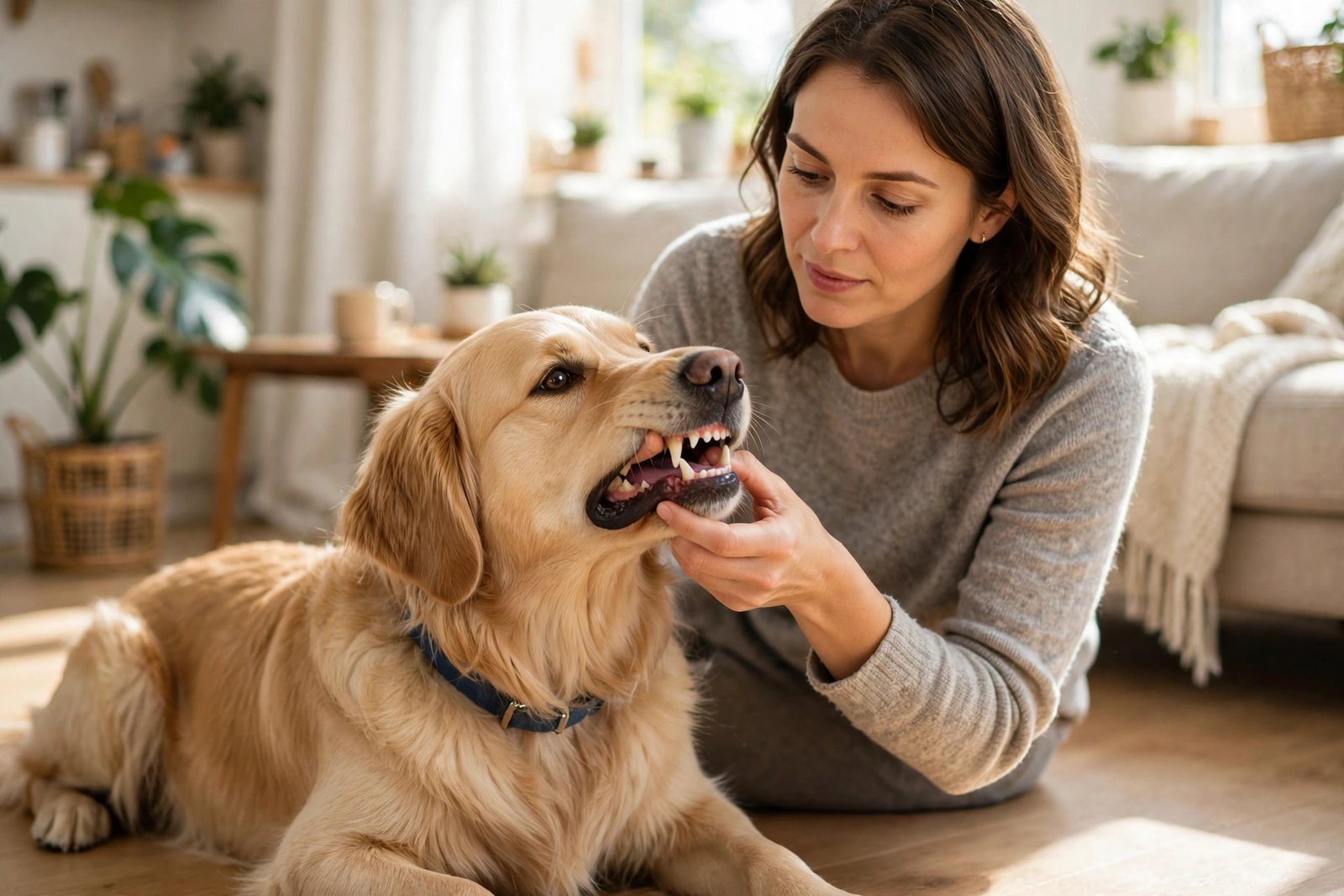
Mouth, tooth, or throat pain
A sore tooth, inflamed gums, an object stuck between the teeth, or a cut in the mouth can make chewing painful. These dogs often want food, walk to the bowl, then back away. They may drop dry food, chew on one side, or prefer soft food. Bad breath together with a poor appetite is another hint, and our article on dog bad breath covers the mouth causes owners often miss.
Stress and change
Moving house, a new baby or pet, guests staying over, fireworks, or a stay in kennels can all take away a dog’s appetite for a day. Stress usually affects eating before it affects drinking. A stressed dog may also pace, pant, hide, or follow you around the house.
Fussiness and food problems
Sometimes the dog is fine and the food is the problem. Stale dry food, a recipe change by the maker, a bowl that smells of washing liquid, or too many treats during the day can all lead to a refused meal. A truly fussy dog, however, is still bright, playful, and happy to eat treats, which is very different from a sick dog who refuses everything.
Pain or illness elsewhere in the body
Pain from joints, the back, the belly, or an injury can lower appetite. So can many illnesses, including infections, kidney or liver problems, and stomach or bowel disease. In these cases the lost appetite is usually joined by other signs, such as low energy, hiding, whimpering, vomiting, diarrhoea, coughing, or drinking much more or much less than usual.
What You Can Safely Do at Home in the First 24 Hours
If your adult dog is bright, drinking, and has no other worrying signs, calm home care for one day is reasonable. Keep it simple and gentle.
- Check the food first. Smell it, check the date, and try a fresh portion in a clean bowl. Offer a small amount of his normal food warmed slightly, which releases more smell.
- Try a smaller, quieter meal. Feed in a calm place, away from other pets and children, and lift the bowl after 20 minutes instead of leaving food down all day.
- Keep fresh water available at all times, and note roughly how much he drinks.
- Look in his mouth only if he is comfortable with it. Check for red gums, a broken tooth, bad smell, or something stuck. Stop at once if he is in pain or snaps.
- Take his temperature only if you know how and he is calm. A normal dog temperature is about 38 to 39.2 degrees Celsius. Do not struggle with a distressed dog to get a reading.
- Write down what you see: last meal eaten, treats given, vomiting, stool changes, new medicines, and anything he may have eaten outside.
- Offer gentle normal exercise, but skip rich treats, table scraps, and new foods while his appetite is low.
Do not try to force food into his mouth, and do not give human painkillers or stomach medicines. Several common human medicines are dangerous for dogs, and they can also hide signs the vet needs to see.
When Not Eating Means See the Vet Today
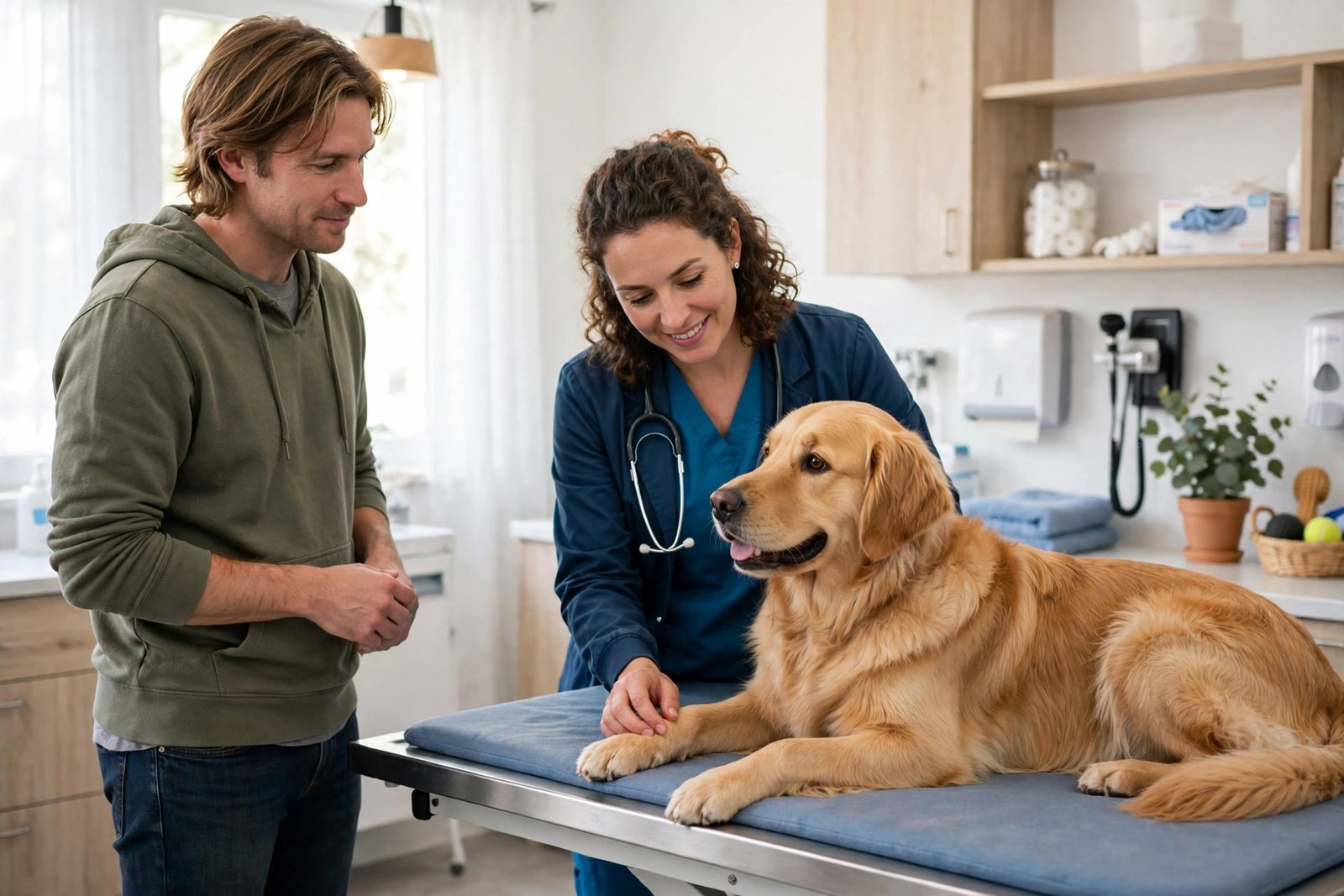
Some dogs should not be watched at home at all. Contact a vet the same day if your dog will not eat and any of the following apply:
- He is a puppy under six months, a very small dog, an old dog, or a dog with a known long-term illness such as diabetes.
- He has vomited more than once, has diarrhoea, or has blood in vomit or stool.
- He seems painful, restless, weak, wobbly, or unusually sleepy.
- His belly looks swollen or tight, or he is trying to vomit but nothing comes up. This needs emergency help at once.
- He is also drinking far more than usual, or has stopped drinking as well.
- He may have eaten something poisonous, a cooked bone, a toy, socks, or any object.
- He will not eat for more than 24 hours, even if he still seems bright.
Vomiting together with no appetite deserves special care. If vomiting is part of your dog’s picture in the morning in particular, our guide to a dog vomiting yellow bile in the morning explains that specific pattern and its own warning signs.
What the Vet Will Check
The vet will usually start with a full examination, including the mouth and teeth, the belly, the heart and chest, and your dog’s weight and temperature. Your notes about food, treats, medicines, and toilet habits will help a lot. Depending on what the vet finds, the next steps may include blood tests, a urine test, an X-ray or scan of the belly, or a closer look at the teeth under sedation.
Treatment depends entirely on the cause, which is why guessing at home rarely works. A dog with nausea may need medicine to settle the stomach, a dog with tooth pain may need dental treatment, and a dog with an infection may need fluids and other care. The aim of the visit is not just to get one meal into him. It is to find and fix the reason he stopped eating.
Mistakes to Avoid
- Do not keep changing foods every few hours. Rich, new, or fatty foods can make nausea and diarrhoea worse.
- Do not hand-feed treats all day to prove he can eat. A sick dog refusing his meal but taking sausage is still a sick dog.
- Do not wait a week because he is still drinking. Drinking helps, but a dog cannot live on water, and late treatment is often harder.
- Do not give human medicines, leftover antibiotics, or another pet’s medicine.
- Do not punish or pressure a dog who will not eat. Loss of appetite is a symptom, not bad behaviour, and pressure only adds stress.
Frequently Asked Questions
How long can a healthy adult dog go without eating?
Many healthy adult dogs can safely miss food for 24 hours as long as they are drinking and seem well, but that does not mean you should simply wait and see for days. Use 24 hours as your limit for home watching. If he still will not eat after that, or if he develops any other symptom sooner, call the vet.
My dog will not eat his meal but will eat treats. Is he just being fussy?
He may be, especially if he is bright, active, drinking normally, and his weight is steady. Treats taste and smell stronger than normal food, though, so even a mildly nauseous dog may accept them. If the pattern lasts more than a day or two, if the treats also start to be refused, or if anything else changes, treat it as a health sign, not fussiness.
Should I offer chicken and rice to a dog who will not eat?
A small, plain, bland meal is often used for mild stomach upsets, but it is not right for every dog, and it should not delay a vet visit when warning signs are present. If you try it, keep portions small, use no salt, skin, bones, or sauces, and return to normal food slowly. If he refuses even a bland meal, that is useful information for the vet.
Is it an emergency if my dog will not eat but is drinking a lot?
It is urgent enough for a same-day vet call. Heavy drinking together with no appetite can point to problems that need tests, such as kidney, liver, hormone, or womb infection issues. If he is also weak, vomiting, has a swollen belly, or is an unspayed female who seems unwell after a season, treat it as an emergency and go in at once.
2 thoughts on “Dog Not Eating but Drinking Water: What It Means and What to Do”