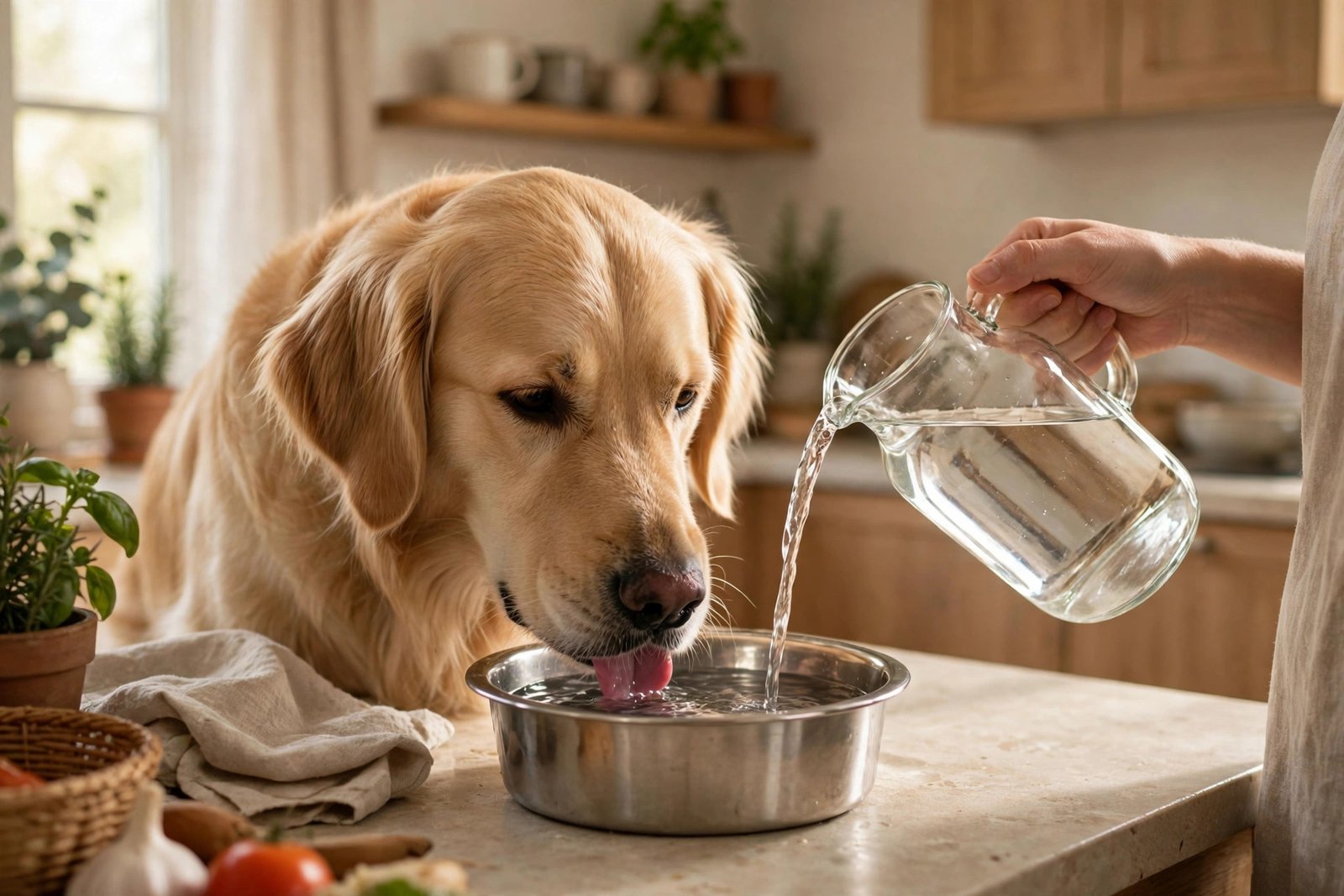
You fill the water bowl in the morning, and by lunch it is empty again. You fill it in the evening, and your dog is still standing over it, drinking like he has just crossed a desert. If this sounds familiar, you are not alone. A sudden change in how much a dog drinks is one of the most common worries owners notice at home, and it is right to pay attention to it. Drinking more is not a disease by itself. It is a sign. Sometimes the reason is simple and harmless, like hot weather or a salty meal. Sometimes it is the first quiet clue that something inside the body needs help.
The good news is that you do not have to guess. This guide walks through how much water is normal, the everyday causes of extra thirst, the health causes that need a vet visit, and a simple way to measure your dog’s drinking at home.
Quick Answer
A healthy dog usually drinks about 50 to 60 millilitres of water per kilogram of body weight each day, which is roughly one ounce per pound. Dogs drink more on hot days, after exercise, after salty food, and when they eat dry food. If your dog is suddenly drinking much more than usual for more than a day or two, is drinking through the night, or also needs to urinate much more often, book a vet visit. Extra thirst that lasts, especially in an older dog, should always be checked, because it can be an early sign of kidney, liver, hormone, or blood sugar problems.
Important note: this article is general information only. It is not veterinary advice and it cannot diagnose your dog. Only a vet who examines your dog and runs tests can find the real cause.
How Much Water Is Normal for a Dog?
Most dogs drink around 50 to 60 millilitres per kilogram of body weight in 24 hours. A 10 kilogram dog will usually drink about 500 to 600 millilitres a day, a little over two cups. A 25 kilogram dog may drink around one and a quarter to one and a half litres.
Your dog’s normal amount also depends on daily life. Dogs who eat dry kibble drink more than dogs who eat wet food, because wet food already contains a lot of water. Active dogs, growing puppies, and mothers feeding puppies also drink more. What matters most is change. If your dog has always emptied one bowl a day and now empties two, that change matters. A clear change from his own normal pattern is the real warning sign.
Everyday Causes of Drinking More
Before you worry, check the simple causes first. Many cases of extra thirst have an easy explanation and settle within a day.
Hot weather and exercise
Dogs cool down by panting, and panting loses water fast. On hot days, after a long walk, or after excited play, a dog may drink two or three large bowls in a short time. This is normal, as long as the drinking slows down once he is cool and rested.
Food and treats
Salty treats, chews, and some human foods make dogs thirsty for several hours. A switch from wet food to dry food will also raise daily drinking, because the body must get that water from the bowl instead of from the meal. If the extra thirst started on the same day as a food change, this is the most likely reason.
Medicine
Some common medicines, especially steroids and some medicines for seizures or heart problems, make dogs drink and urinate much more. If the change began after a new medicine was started, call your vet and ask about it. Never stop a prescribed medicine on your own, but do report the change.
Stress, excitement, and habit
Some dogs drink when they are anxious or bored. Visitors, a new pet, fireworks, or a change in routine can all increase trips to the bowl for a short time.
Health Causes That Need a Vet Visit
When extra thirst lasts for several days without a clear everyday reason, a health problem may be behind it. The list below is not a diagnosis. These are conditions vets commonly check for when a dog drinks too much, and each one needs tests to confirm.
- Kidney problems, where the kidneys cannot save water the way they should, so the dog urinates more and drinks more to replace it.
- Diabetes, where high blood sugar pulls water out of the body and causes strong thirst, often with weight loss and a bigger appetite.
- Liver problems, which can change thirst, appetite, energy, and the colour of the gums or eyes.
- Hormone problems, such as an overactive adrenal system, which often cause thirst together with a round belly, thin skin, and hair loss.
- An infection in the womb in unspayed female dogs, which is an emergency and often causes thirst, tiredness, and loss of appetite.
- High calcium levels or certain other blood changes, which only a blood test can find.
- Bladder or urinary infections, which more often cause frequent small urinations, but can also increase drinking.
Most of these causes also bring other changes, such as urinating more, weight change, or low energy. If your dog has also stopped eating, read our guide on a dog not eating but drinking water, because that combination tells the vet a different story.
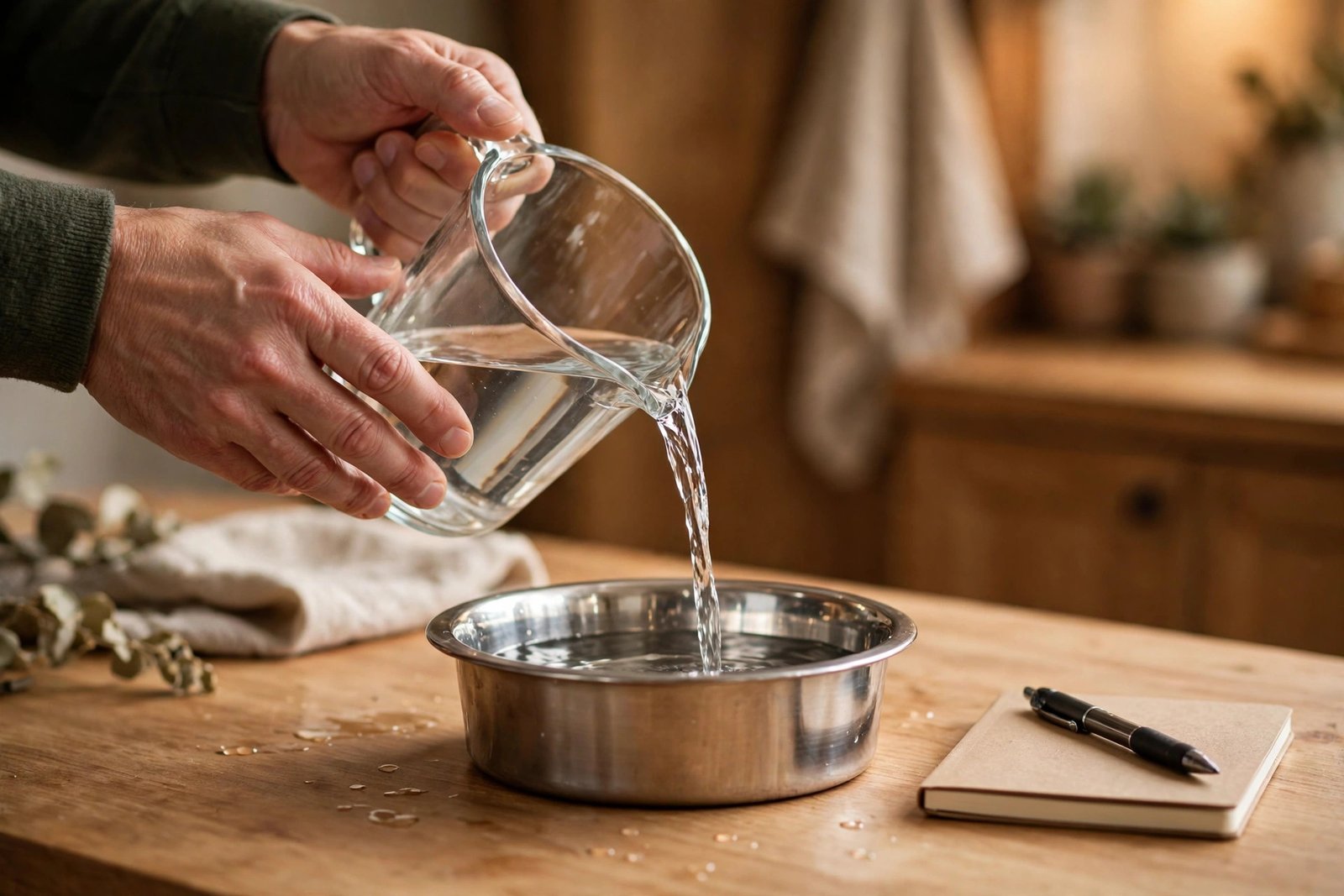
How to Measure Your Dog’s Drinking at Home
For two or three days, measure what your dog drinks. This often makes the vet visit much more useful.
- Start in the morning with a clean bowl. Measure the water you pour in with a kitchen jug, and write the amount down.
- Top up the bowl only from the same jug, and note each refill.
- At the same time the next morning, measure what is left and subtract it from the total you poured.
- Weigh your dog, or use his last vet weight, and compare the total with the guide of 50 to 60 millilitres per kilogram.
- Write down toilet habits too: more trips outside, night-time urination, or accidents in the house.
- Note appetite, energy, vomiting, diarrhoea, and any new medicine or food.
Bring these notes to the appointment. A simple record like this helps the vet decide which tests are needed first, and it can save you money on tests that are not needed yet.
What the Vet May Do
At the clinic, the vet will usually examine your dog, ask about food, medicines, and toilet habits, and then suggest a few basic tests. A urine test is often the first step, because it shows how well the kidneys are working and can reveal sugar or infection. A blood test can check the kidneys, liver, blood sugar, and calcium. Some dogs also need blood pressure checks or scans, but many cases are narrowed down by those first two tests.
Do not limit your dog’s water before the visit unless the vet asks you to. If you can, bring a fresh urine sample in a clean container, collected the same morning.
Mistakes to Avoid
- Do not restrict water to stop the drinking or the night-time urination. The drinking is a response to a need, not bad behaviour.
- Do not wait for weeks because your dog still seems happy. Some causes, like early kidney or blood sugar problems, are much easier to manage when caught early.
- Do not change food again and again while you wait. Each change clouds the picture and can upset the stomach.
- Do not rely on a single day of heavy drinking after a hot walk. Look at the pattern over two or three normal days.
- Do not ignore night-time change. A dog who suddenly needs water and toilet trips through the night is telling you something has shifted. Night-time habits are also why some owners first notice a problem through door scratching, and our article on how to stop a dog from scratching the door at night explains how to separate a toilet need from a habit.
When to See a Vet Urgently
Most cases of extra thirst can wait for a normal appointment within a few days. Some cannot. Contact a vet the same day, or an emergency clinic, if your dog is drinking a lot and also shows any of the following: vomiting again and again, refusing all food, extreme tiredness, collapse, a swollen belly, pale or yellow gums, straining to urinate with little coming out, or, in an unspayed female, thirst with discharge and illness soon after a season. Puppies and very old dogs should also be checked sooner, because they become dehydrated and unwell faster.
One more daily care point is worth remembering while you monitor drinking: thirst, skin, and coat health are linked. If you also notice heavy shedding or a dull coat, our guide to a dog shedding a lot all of a sudden will help you decide whether that change is normal or part of the same picture.
Frequently Asked Questions
How much water is too much for a dog in one day?
As a rough guide, drinking more than about 100 millilitres per kilogram of body weight per day is considered too much and should be checked by a vet. For a 10 kilogram dog, that is more than one litre a day on a normal, cool day without heavy exercise. Use it as a guide, not a rule, and remember that a clear change from your dog’s own normal amount matters just as much.
Can stress really make my dog drink more water?
Yes. Anxious or excited dogs often drink more for a short time, for example during storms, fireworks, travel, or when visitors arrive. This type of drinking settles when the dog calms down. If the extra drinking continues on calm, normal days, stress is unlikely to be the full explanation and a vet check is wise.
My dog drinks a lot but seems completely fine. Should I still go to the vet?
Yes, if it lasts more than a day or two without a clear cause like heat or a food change. Some of the conditions behind extra thirst begin quietly, while the dog still eats, plays, and looks well. Early testing is usually simple, and finding a cause early almost always gives you more and better options.
Should I take water away at night so my dog sleeps through?
No. A dog who is drinking more because his body needs water should not have it taken away, especially overnight. Instead, offer a last drink and a last toilet trip before bed, keep water available, and book a vet check if the night-time drinking is new. Restricting water can hide the sign without helping the cause, and it can be harmful.
2 thoughts on “Why Does My Dog Drink So Much Water? Causes and When to Worry”