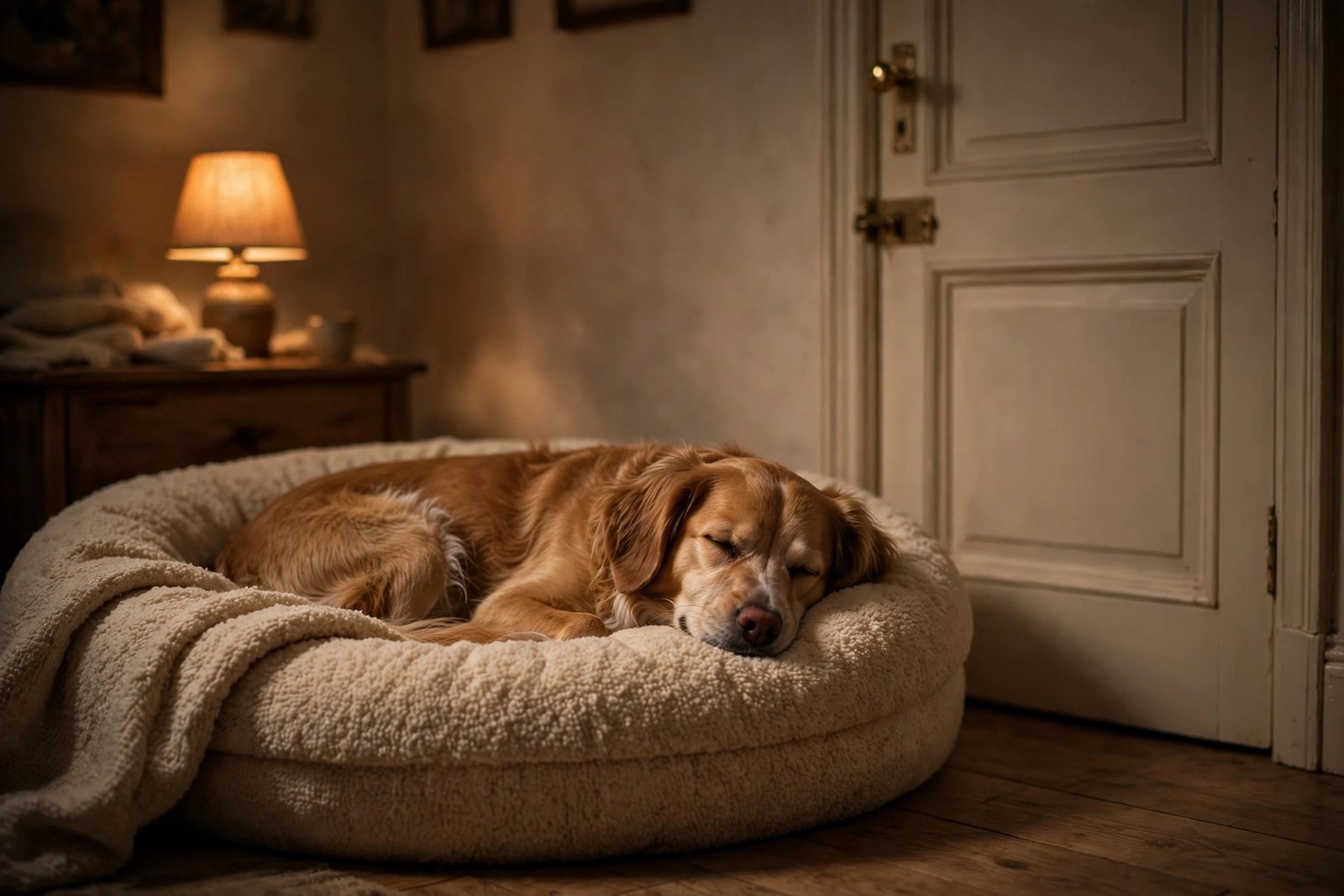
It is two in the morning, and there it is again: scratch, scratch, scratch on the bedroom or kitchen door. Your dog wants something, and he wants it now. By morning there are marks on the paint, you have had broken sleep, and everyone in the house is tired and a little cross. If this is happening in your home, take a breath. Door scratching at night is very common, and it is almost never spite. Your dog has learned that scratching works, or he genuinely needs something during the night.
The way to stop it is not to punish the scratching. It is to work out what your dog is asking for, meet that need before bed, and then calmly teach him that quiet behaviour, not scratching, is what gets results. This guide gives you a simple plan that works for most dogs within one to three weeks.
Quick Answer
To stop a dog scratching the door at night, first rule out a real need: a last toilet trip right before bed, water available, a comfortable warm bed, and no pain or illness. Then add exercise and calm play earlier in the evening so he is ready to sleep. Teach and reward quiet settling on his bed, and protect the door while training so the habit cannot continue. Most importantly, do not open the door or give attention while he is scratching, because that teaches him scratching works. Wait for a quiet moment, even a few seconds, and reward the quiet instead.
First, Work Out Why Your Dog Is Scratching
The same scratching sound can mean very different things. Your fix will only work if it matches the cause, so spend two or three nights noticing the pattern before you change anything.
He needs the toilet
This is the first cause to check, especially in puppies, old dogs, and dogs who drank a lot in the evening. A dog who scratches and then goes straight outside to urinate when you open the door is telling the truth: he needed to go. If your dog is also drinking much more than normal in the evening, read our guide on why a dog drinks so much water, because extra thirst and night-time toilet trips often come together and may need a vet check.
He wants to be with you
Many dogs scratch simply because the people they love are on the other side of the door. Dogs who follow their owners from room to room all day often struggle most at night. If that sounds like your dog, our article on why your dog follows you everywhere will help you build his confidence during the day, which makes nights easier too.
He is anxious, bored, or not tired
A dog who slept all day while you were out may be wide awake at midnight. Anxiety can also rise at night when the house goes quiet: storms, outside noises, or a change in routine can all unsettle a dog. Scratching can also start as a small habit and grow because it once earned a big, exciting reaction.
He is uncomfortable or in pain
An uncomfortable bed, a room that is too hot or too cold, itchy skin, or pain can all make a dog restless at night. Watch for other clues, such as heavy panting, moving from bed to floor again and again, or licking at his skin. A dog who is suddenly restless at night after years of sleeping well deserves a vet check, especially if he is older.
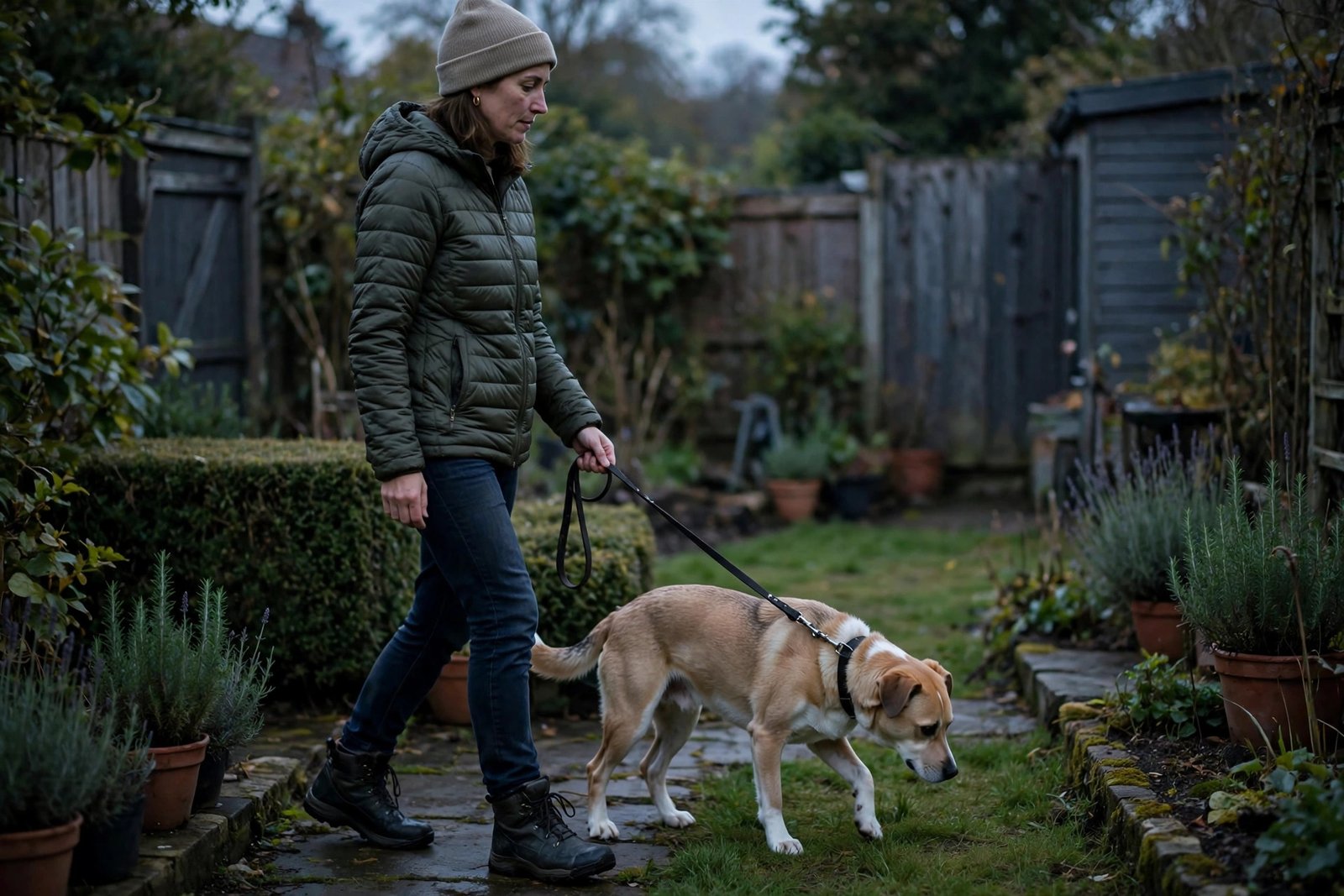
The Night-Time Plan, Step by Step
Step 1: Build a proper evening routine
Dogs settle best when the evening is predictable. About two to three hours before bed, give your dog his main evening exercise: a good walk, gentle play, or training games that use his brain. Mental work, like finding treats hidden in a box or practising simple commands for rewards, tires most dogs more kindly than wild running. Finish exciting play at least half an hour before bed so he has time to come down from the fun.
Step 2: Last toilet trip, every night
Right before you go to bed, take your dog out on a lead to his toilet spot, even if he went out an hour ago. Keep it calm and boring: no games, just a quiet chance to go. Praise him when he does, then come straight back in. This one habit solves the problem completely for many dogs, because the most common honest reason for night scratching is a full bladder.
Step 3: Make his sleeping place worth choosing
His bed should be soft, warm, and in a quiet, draught-free spot. Some dogs sleep better in a crate with the door open or closed if they were crate trained as puppies and see it as their own safe den. An item of clothing that smells of you can comfort a dog who misses you. If he scratches at one particular door, consider whether his bed can be moved closer to where the family sleeps while you train.
Step 4: Settle him with a clear bedtime cue
Use the same short routine each night: toilet trip, water, bed, a calm word or two, lights down. A long-lasting chew or a food toy given only at bedtime can help him link his bed with good things. Choose something safe that he can have without supervision worries in your home, and take away anything that could break into pieces.
Step 5: Reward quiet, ignore scratching
This is the heart of the training. If he scratches, wait. Do not shout through the door, because even cross attention is still attention. The moment he is quiet, even for five seconds at first, that is your moment. In the early nights you may need to go to him during a quiet pause, praise softly, settle him again, and leave. Over several nights, make the quiet time longer before you respond. He is learning a new rule: quiet dogs get visits, scratching dogs get nothing.

Protect the Door While You Train
Training takes days, but your door can be damaged in one night, and every successful scratch also keeps the habit alive. While you train, use a baby gate a short distance in front of the door, a clear protective panel made for doors, or move his sleeping area so he cannot reach the door he targets. Trim nails regularly too, because well-kept nails do less damage and are healthier. Blunt, regularly checked nails are part of normal care, just like the regular bathing routine explained in our guide on how often you should bathe a dog.
Avoid closing a distressed dog in a far room and leaving him to scratch and cry for hours. That does not teach calm. It teaches panic, and it is unfair. If your dog is truly distressed, go back a step: let him sleep closer to you, then move his bed away very gradually over days or weeks as his confidence grows.
Special Cases: Puppies and Older Dogs
Puppies cannot hold their bladder all night, and expecting it causes exactly the scratching and crying you want to avoid. For a young puppy, plan one calm toilet trip in the night, keep it boring, and return him to bed right away. As he grows, that trip is needed later and later, then not at all. Keep praise soft so the trip does not turn into a midnight party.
Older dogs may need the toilet more often, may feel pain when lying in one position, or may become confused at night. A softer, thicker bed, a night light, and a vet check for pain or early confusion can make a big difference. Never punish an old dog for a need he cannot help.
Mistakes to Avoid
- Do not open the door while he is actively scratching, even to tell him off. Opening the door is the prize, whatever your tone.
- Do not punish, shout at, or spray a dog for night scratching. Fear makes night anxiety worse and damages trust.
- Do not skip the last toilet trip. Many simple cases are solved by this alone.
- Do not give a huge late meal or let him drink nothing in the evening. Feed at a sensible time and always leave water available.
- Do not expect one perfect night. Habits built over weeks take days to fade, and there is often one worse night just before the habit breaks. Stay consistent.
- Do not ignore a sudden change. A dog who has always slept well and suddenly cannot settle may be in pain or unwell and needs a vet, not training.
Frequently Asked Questions
How long does it take to stop door scratching at night?
Most dogs improve noticeably within three to seven nights once their real need is met and the routine is consistent, and the habit is usually gone within two to three weeks. Puppies take longer because their bladder is still developing. If nothing has improved after two weeks of consistent work, look again for a missed cause, such as pain, anxiety, or a toilet need.
Should I let my dog sleep in my room to stop the scratching?
That is a personal choice, and it does solve the problem for dogs whose only wish is to be near you. If you prefer him to sleep elsewhere, do it gradually: start with his bed near your room, reward calm settling, and move it slowly to its final place over one to two weeks. Sudden distance is what triggers most night protests.
My dog only scratches when there is a storm or fireworks. What should I do?
That is fear, not habit, and it needs comfort rather than training. Let him be near people, close curtains, keep lights and gentle background sound on, and offer a safe hiding place he chooses himself. Never ignore a frightened dog in the name of training. If storms cause severe panic, talk to your vet about longer-term help.
What if my dog scratches and then does not need the toilet when I open the door?
Then the scratching is probably about attention or habit. Keep the response boring: no play, no fuss, a quick look to confirm he is safe, then back to bed for everyone. Put your energy into the daytime side instead: more exercise, more training games, and strong rewards for quiet settling at bedtime. The pattern usually fades once scratching stops paying.

2 thoughts on “How to Stop a Dog From Scratching the Door at Night”