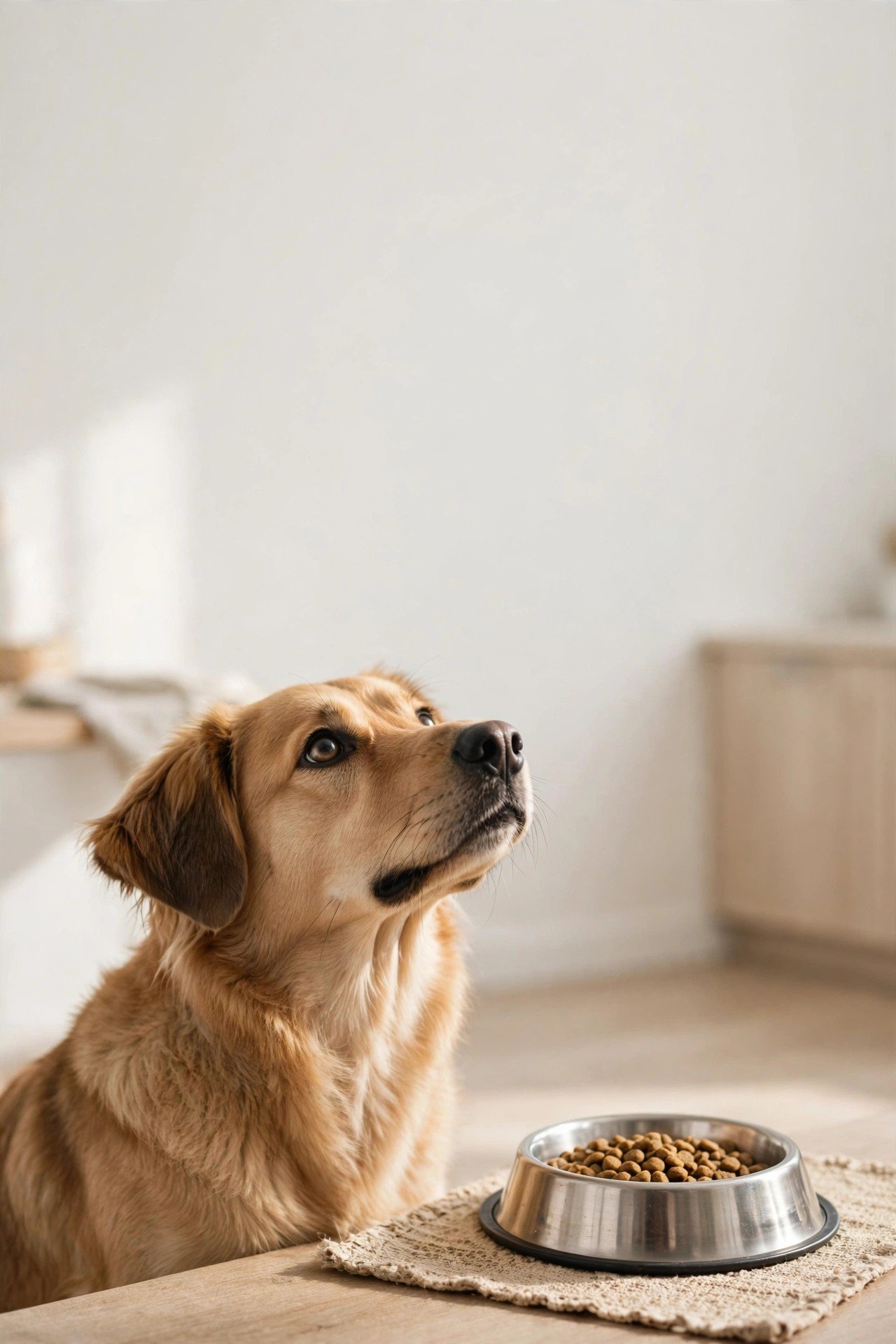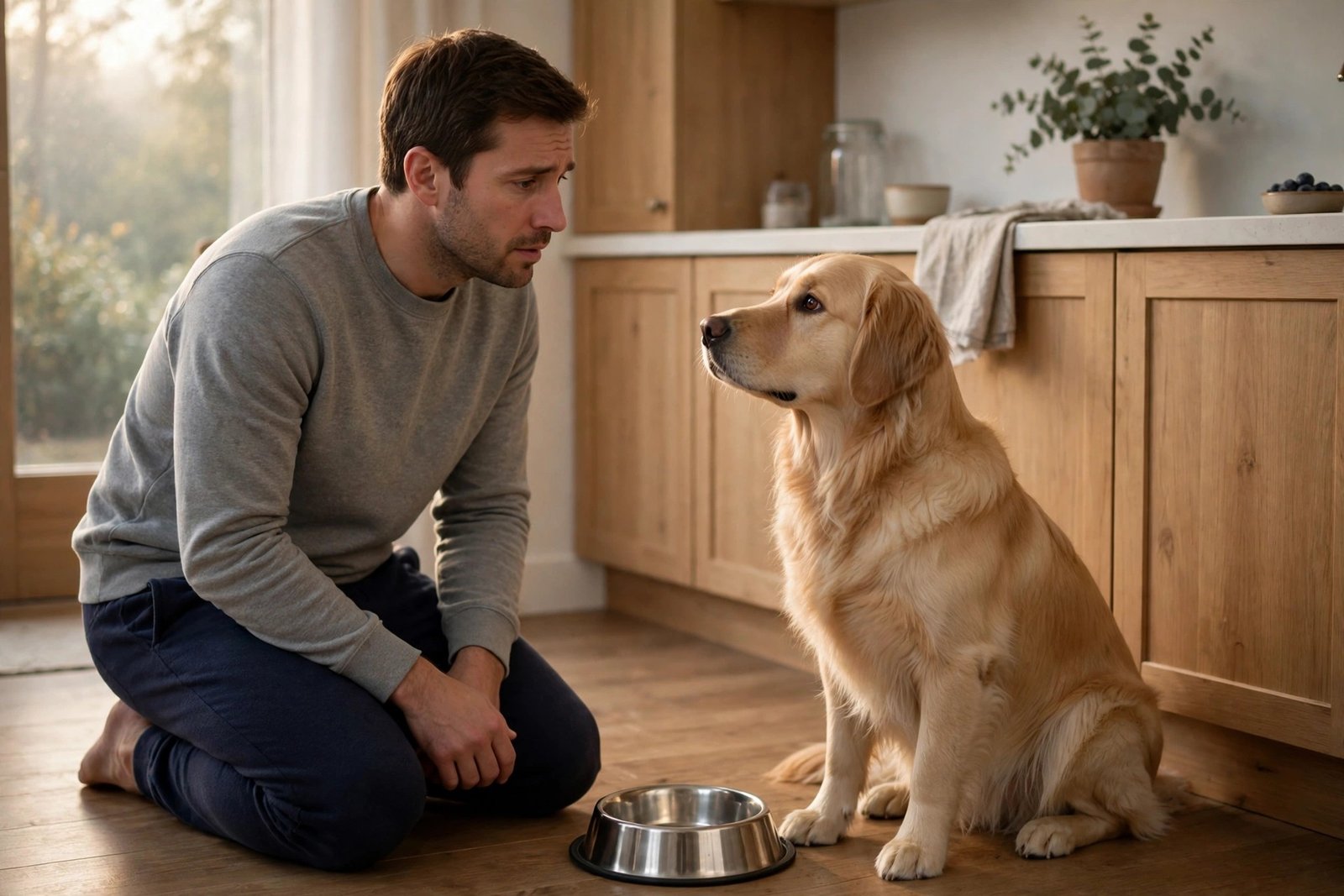
It is a sound no dog owner sleeps through: the retching, usually at five or six in the morning, followed by a small pool of yellow or yellow-green liquid on the carpet. If your dog vomits yellow bile in the morning but then trots off happily, eats breakfast, and seems completely himself, you are dealing with one of the most common, and usually one of the most fixable, stomach patterns in dogs. An empty stomach overnight is very often the whole story.
That said, vomiting is a sign, not a diagnosis, and repeated vomiting should not be ignored. This guide explains what bile is, why morning is the classic time, the feeding changes that help most dogs, other causes to keep in mind, and the warning signs that mean your dog needs a vet, not a later dinner.
Quick Answer
Yellow vomit is usually bile, a digestive liquid that can irritate an empty stomach. Many dogs bring it up early in the morning because their stomach has been empty for ten or more hours since dinner. This pattern often improves with a small late-evening snack, a slightly later or larger evening meal, and regular meal times, so the stomach is not empty for so long. If vomiting is frequent, happens at other times too, or comes with not eating, diarrhoea, weight loss, pain, or tiredness, it needs a vet visit rather than home changes.
Important note: this article is general information only. It is not veterinary advice and it cannot diagnose your dog. Only a vet who examines your dog, and runs tests if needed, can find the real cause of repeated vomiting.
What Bile Is and Why the Vomit Is Yellow
Bile is a yellow-green digestive fluid made by the liver and stored in the gallbladder. It is released into the intestine to help digest fats. When a dog’s stomach is empty for a long time, some bile can wash backwards into the stomach. Bile irritates the empty stomach lining, and the stomach’s response is to get rid of it, which is why the vomit is yellow, sometimes foamy, and usually contains little or no food.
This helps you read the sign. Yellow bile on waking, with no food in it, points to an empty stomach. Vomit containing food points to a different timing problem. Vomit that is brown, bloody, or looks like coffee grounds is more serious, and needs a vet the same day. Note too the difference between true vomiting, with stomach heaving, and regurgitation, where food slips back up easily, because vets use that detail.

Why Morning, and Which Dogs Get It?
The classic pattern looks like this: dinner at six in the evening, breakfast at seven next morning. That is thirteen hours with an empty stomach, and for some dogs it is simply too long. Bile builds up overnight, the stomach becomes irritated and nauseous, and the dog vomits shortly before breakfast. Then, confusingly, he usually eats breakfast with enthusiasm and is fine all day.
Any dog can do this, but it is seen often in dogs fed with a long overnight gap, dogs fed very early dinners, and sensitive-stomached dogs. If the morning sickness started after you changed meal times or moved to one meal a day, that change is your first clue. Appetite matters too: a dog who regularly skips meals ends up with an emptier stomach, and our guide on a dog not eating but drinking water will help you sort out whether the appetite itself needs attention.
Simple Feeding Fixes That Help Most Dogs
Offer a small bedtime snack
This is the single most effective change for the classic pattern. Give a small, plain snack an hour or so before bed: a few pieces of his normal kibble or a plain dog biscuit. You are not adding a meal, just placing a little food in the stomach to soak up bile overnight. Take the calories out of his daytime food if weight is a concern, so the total stays the same.
Move dinner later, or split it
If dinner is early, shift it later if your routine allows, or split the evening meal in two, with the last portion just before bed. Both shorten the longest empty stretch without feeding more overall. Keep breakfast time steady too, because a reliable routine lets the stomach settle into a rhythm.
Divide the day’s food into smaller, more frequent meals
Dogs who also seem sensitive at other times often do better on three or four smaller meals instead of one or two large ones. Smaller meals keep a little food in the stomach for more of the day. Change gradually, then give the new routine at least two weeks before you judge it, unless symptoms get worse.
Keep food changes slow and treats simple
Rich treats, fatty scraps, and sudden food changes can unsettle a sensitive stomach. Switch foods slowly over seven to ten days, keep evening snacks plain, and avoid table scraps close to bedtime. Fresh water should always be available overnight. Nauseous dogs sometimes drink oddly too, and our guide on why a dog drinks so much water explains the drinking changes worth reporting to your vet.
Other Causes of Yellow Vomiting to Keep in Mind
An empty stomach explains the neat morning-only pattern, but it is not the only cause of yellow vomit, and it should not be assumed when the picture is different. Other possibilities include:
- Eating grass, rubbish, rich food, or something found outside that irritated the stomach.
- A mild stomach and gut upset, especially if there is also diarrhoea or gurgling.
- Food that does not suit the dog, where vomiting and loose stools keep returning over weeks.
- Inflammation of the stomach, intestine, or pancreas, which usually brings pain, poor appetite, or repeated sickness.
- A blockage from a swallowed object, which is serious and often causes repeated vomiting, drooling, and a painful belly.
- Worms, infections, or wider health problems, which vets consider when vomiting is frequent or the dog is losing weight or condition.
Breath and mouth health can add clues as well. A dog whose stomach is unsettled for weeks often has worse breath, and a sore mouth can change how and when he eats, which then affects the stomach. Our guide on a dog with bad breath shows how to check the mouth safely at home while you work through the feeding pattern.
How to Track the Pattern Before the Vet Visit
If you end up at the vet, a short diary makes the visit far more productive. For two weeks, note the time of the vomiting and what it looked like, meal and snack times, whether your dog ate happily afterwards, stools, water intake, energy, and any new food or treats. Patterns jump out on paper that are impossible to remember. A dog who vomits only at 5 a.m. twice a week and is otherwise thriving tells a very different story from a dog who now vomits daily and leaves meals.
Mistakes to Avoid
- Do not withhold food for long periods to rest the stomach when the pattern is morning bile vomiting. Long fasts make the empty-stomach problem worse, not better.
- Do not keep adding more food overall. The bedtime snack should come out of the day’s allowance if your dog gains weight easily, or you will trade one problem for another.
- Do not give human stomach medicines or painkillers unless your vet advises them. Some common household medicines are dangerous for dogs.
- Do not ignore vomiting that changes character. More frequent, at different times, with food refusal, or with blood or a coffee-ground look, it is no longer the simple pattern.
- Do not punish or scold a dog for being sick indoors. He did not choose the timing, and stress helps no stomach settle.
When to See a Vet, and When It Is Urgent
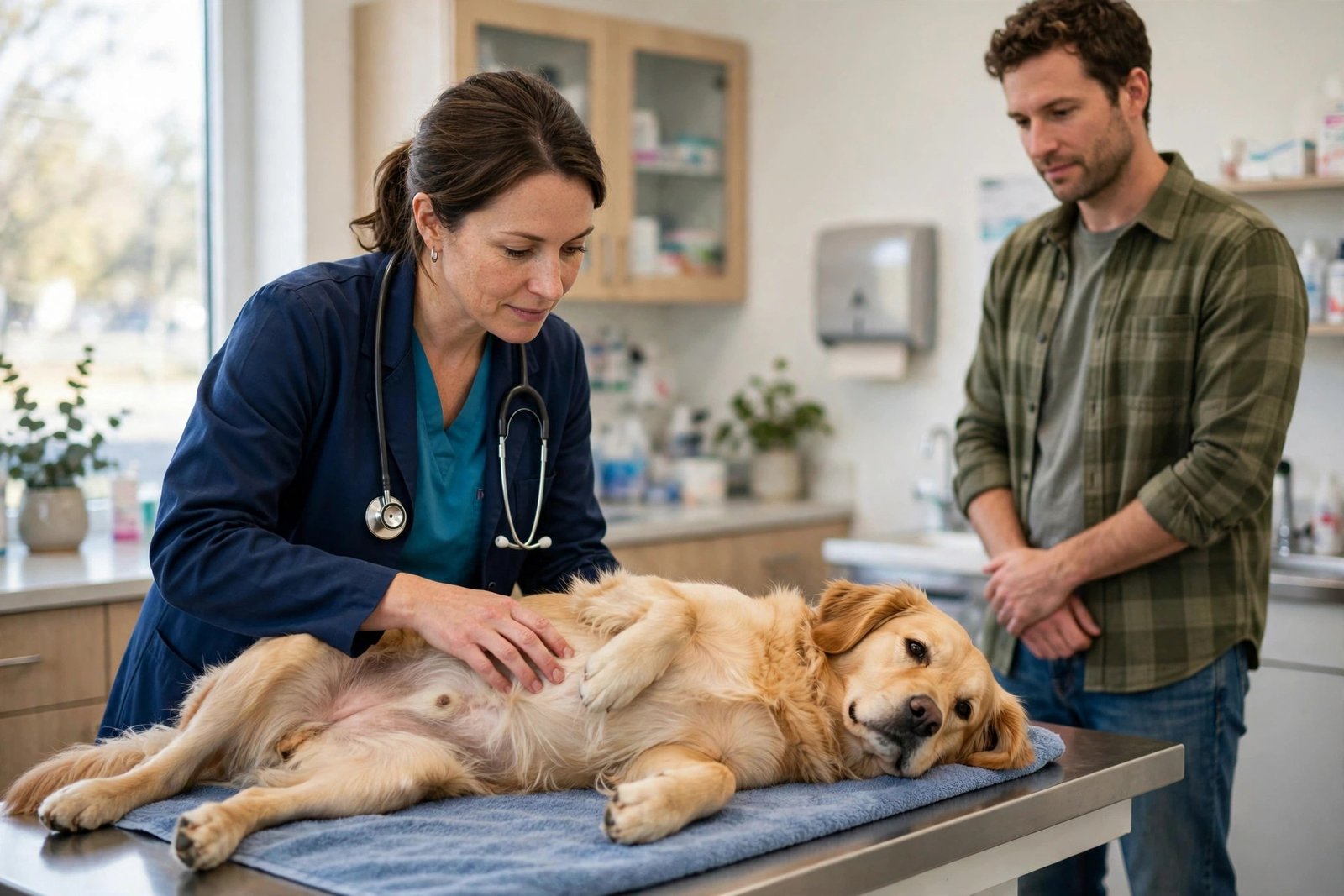
Book a routine vet visit if morning vomiting happens more than once or twice a week, continues beyond two weeks of feeding changes, or happens at other times too. Also book if your dog is a puppy or a senior, is losing weight, or has a long-term health condition, because the vet may want to check for causes beyond meal timing.
See a vet urgently, the same day, if your dog vomits repeatedly in a short period, cannot keep water down, retches without bringing anything up, has a swollen or painful belly, passes black or bloody stools, vomits blood or material like coffee grounds, seems weak, collapsed, or very unwell, or may have swallowed a toy, sock, bone, or other object. Puppies dehydrate quickly, so repeated vomiting in a puppy is always same-day. Trust the whole picture: a bright dog with one yellow puddle at dawn is usually fine to manage at home first; a dull, uncomfortable dog is not.
Frequently Asked Questions
Is vomiting yellow bile dangerous for dogs?
Occasional morning bile vomiting in a dog who is otherwise bright, eating well, and keeping a stable weight is usually not dangerous, and it often stops with a bedtime snack and a shorter overnight fast. It becomes a concern when it is frequent, changes pattern, or appears with other signs such as appetite loss, diarrhoea, weight loss, pain, or low energy. Those dogs need a vet to find the cause rather than more home changes.
What is the best bedtime snack for a dog who vomits bile?
The best snack is a small amount of plain, familiar food your dog already digests well: a few pieces of his normal kibble is the simplest choice. Rich, fatty, or brand-new foods can upset the stomach you are trying to settle. Give it about an hour before bed, keep it small, and take the same amount out of his daytime meals if his weight needs watching, so you are moving food, not adding it.
Why does my dog eat grass before vomiting yellow bile?
Many nauseous dogs seek out grass, then vomit soon afterwards. Owners often assume the grass caused the sickness, but usually the dog already felt sick and the grass was the response. An occasional grass-and-vomit morning fits the empty-stomach pattern. If it becomes frequent, treat it as a sign the stomach needs a vet’s attention.
How long should I try feeding changes before seeing a vet?
For a bright adult dog with the classic morning-only pattern, two weeks of a bedtime snack and steady meal times is a fair trial. Most empty-stomach cases improve clearly within that time. Do not wait out the two weeks if vomiting becomes more frequent, appears at new times, or arrives with appetite loss, diarrhoea, weight loss, or tiredness. And if there is no improvement at all after two weeks, book the visit anyway; the pattern needs a closer look.