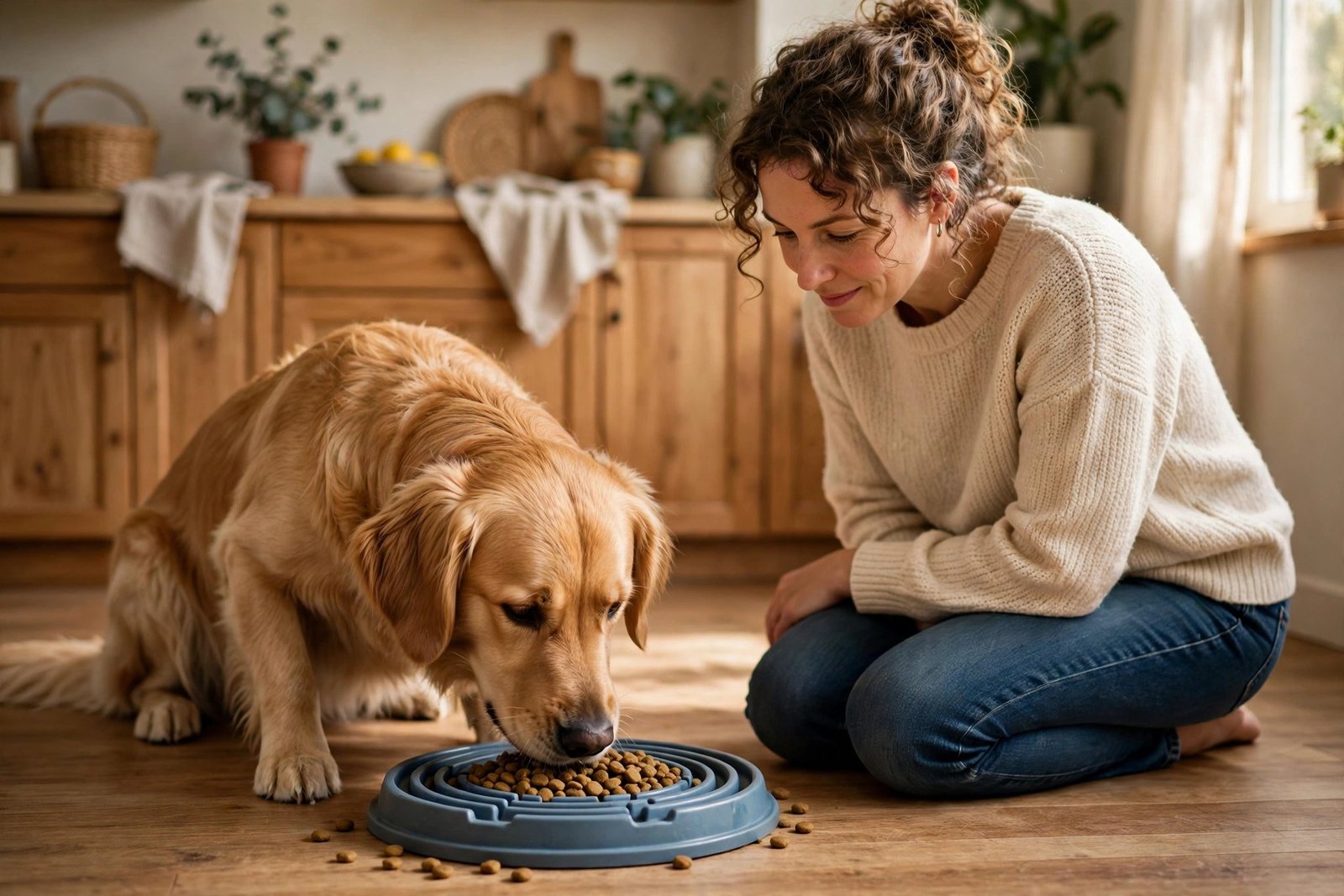
The bowl goes down, and before you have even stood up straight, it is empty. Your dog eats like the food might be taken away at any second: big gulps, barely any chewing, and sometimes a burp or a sick-up a few minutes later. It is a very common problem, and the good news is that it is one of the easiest feeding habits to change.
Slow feeding is not about fancy equipment. It is about making the meal physically slower, calmer, and more spread out, so your dog’s stomach and brain have time to keep up. This guide explains why dogs gulp, what can go wrong, and the simple methods that actually work.
Quick Answer
Dogs eat too fast mainly because of instinct, competition, habit, or genuine hunger at mealtimes. Gulping can cause gagging, coughing, vomiting soon after eating, gas, and discomfort, and in large, deep-chested breeds it may add to the risk of a dangerous stomach problem called bloat. Slow your dog down by splitting the meal into smaller portions, spreading food out, or using a slow feeding method such as a puzzle bowl, scatter feeding, or a lick mat. Feed dogs separately in multi-dog homes. If your dog regularly vomits after meals, struggles to swallow, or has a swollen, hard belly with retching, see a vet.
Why Dogs Eat Too Fast
Instinct and competition
Dogs come from ancestors who competed for food. Eating quickly, before another animal took it, was a survival skill. Many dogs keep this “eat first, chew later” style even in a safe kitchen. Puppies from large litters often learn it early, because the slowest puppy got the least milk and later the least food.
Habit and past experience
Rescue dogs who once went hungry, and dogs who have always eaten next to other dogs, may gulp for years out of habit. The behaviour can also build slowly: a dog who is a little hungry at each meal starts eating faster, and fast eating itself becomes the routine.
Real hunger at mealtimes
Sometimes fast eating is a clue to look at the bigger picture. Long gaps between meals, portions that have not kept up with a growing or very active dog, or a schedule where all the food arrives in one big meal can leave a dog truly ravenous by dinner. If your dog seems obsessed with food all day as well as fast at meals, our guide on a dog who is always hungry but acting normal helps you check portions and body condition first.
What Can Go Wrong When a Dog Gulps
Most gulping dogs suffer nothing worse than discomfort, but it is worth knowing the risks.
- Gagging and choking. Large mouthfuls of dry food, swallowed with air, can stick or go down awkwardly. Most dogs cough it clear, but it is frightening and best prevented.
- Vomiting soon after eating. A stomach hit with a big pile of dry food and air often sends some of it back. If your dog is regularly sick after meals, slow feeding is the first fix to try. Dogs who bring up yellow bile on an empty stomach are a different pattern, covered in our guide on a dog vomiting yellow bile in the morning.
- Gas and discomfort. Swallowed air plus fast fermentation means more wind, gurgling, and restlessness after meals.
- Bloat, in some breeds. In large, deep-chested breeds, a serious emergency called bloat (where the stomach fills with gas and can twist) is a known risk, and eating very fast is one of the habits often linked with it. This does not mean slow feeding guarantees safety, but vets commonly advise slower, smaller meals for these breeds. Know the emergency signs: a swollen or tight belly, trying to vomit but bringing nothing up, drooling, restlessness, and pain. That combination is an emergency vet visit, day or night.
Slow Feeding Methods That Actually Work
Split the meal into smaller portions
The simplest method needs nothing at all. Give a third of the meal, let your dog finish and settle for a minute or two, then add the next third. You can also spread the day’s food across more, smaller meals instead of one or two large ones. Our guide on how many times a day to feed a dog explains how to adjust meal frequency by age and size.
Use a slow feeder or puzzle bowl
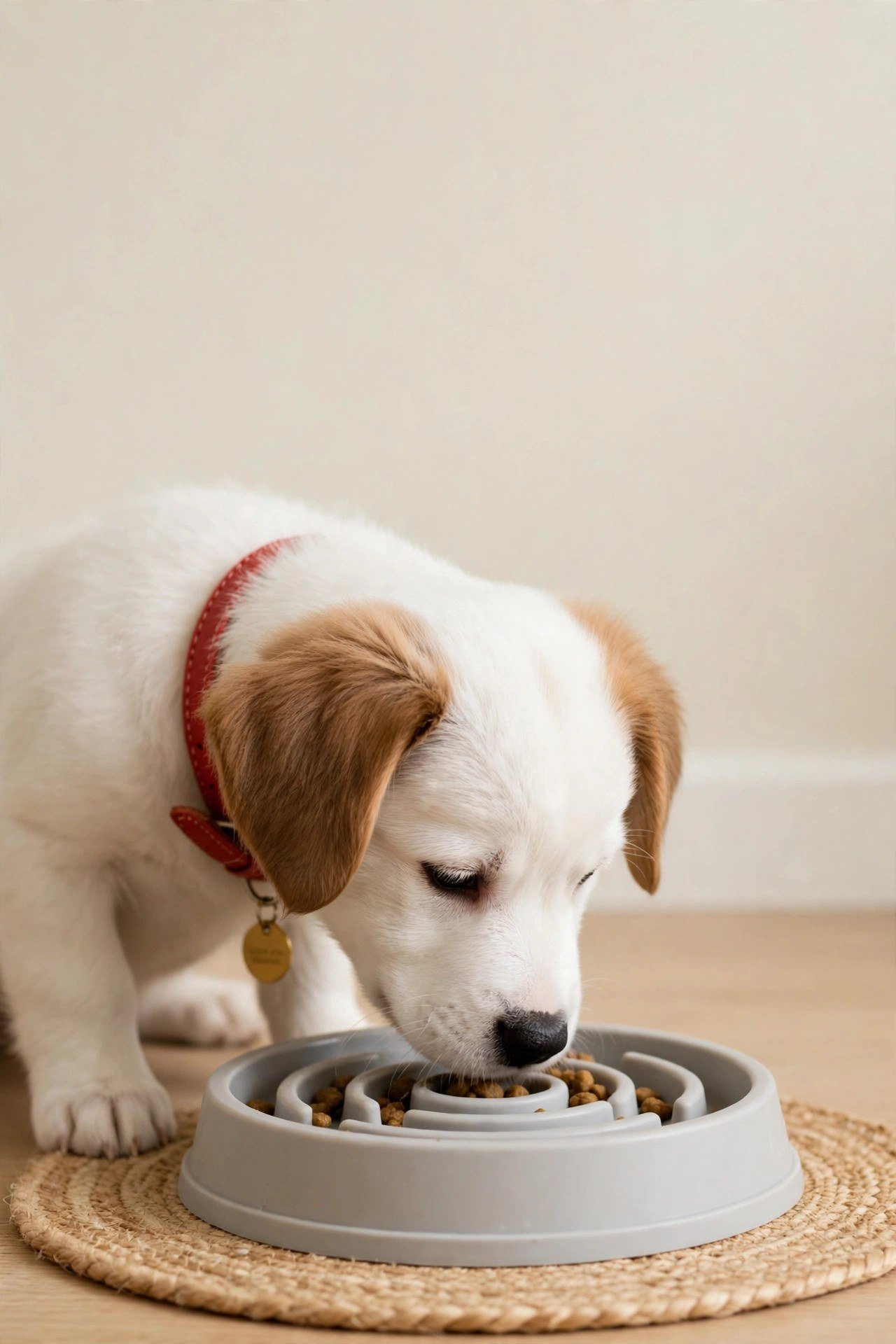
These bowls have ridges and channels that force a dog to work the food out bit by bit with his tongue instead of scooping huge mouthfuls. Choose a sturdy one that cannot be flipped or chewed, and supervise the first few uses. Most dogs accept them quickly and even seem to enjoy the game.
Scatter feeding
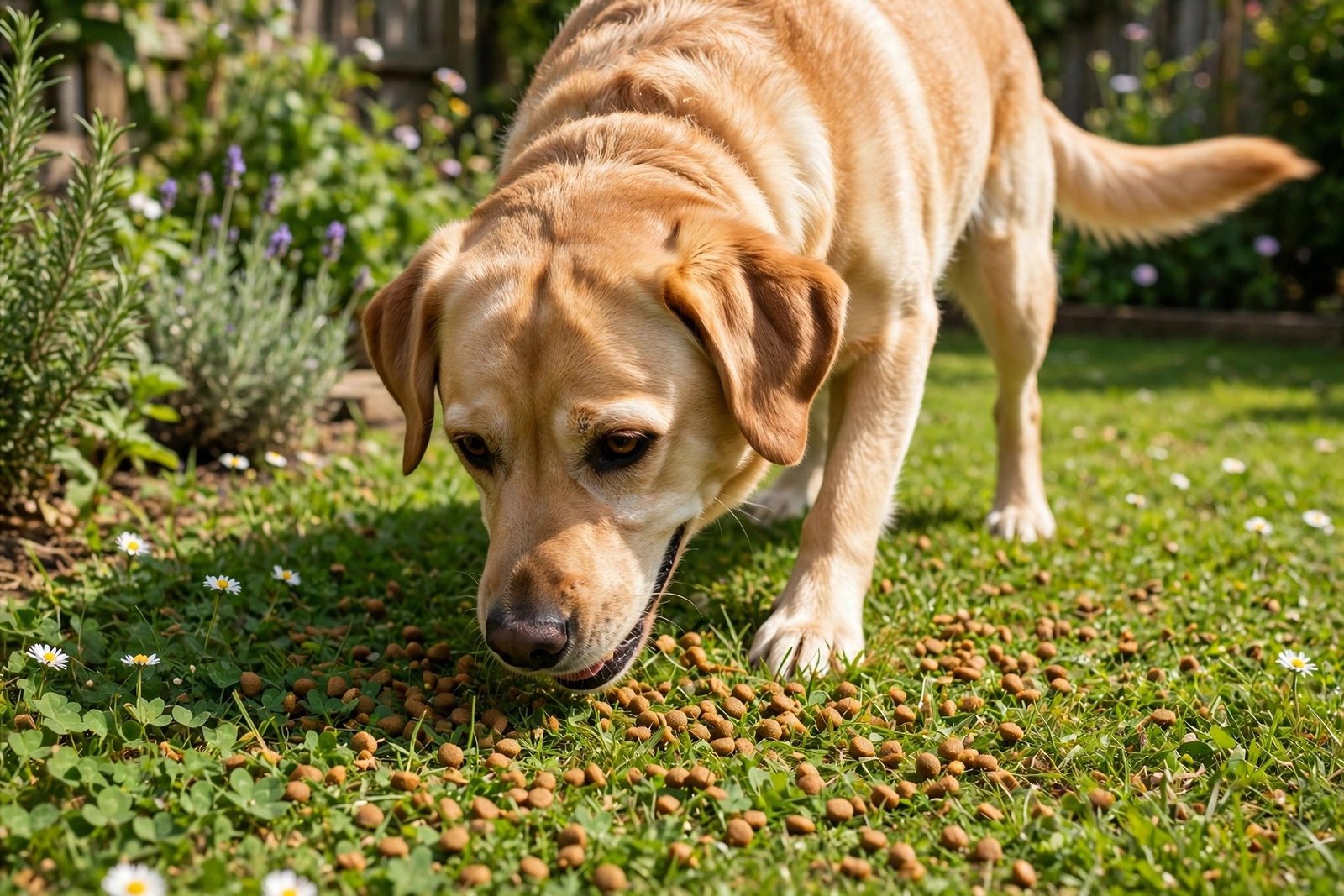
Spread dry food across a patch of clean grass, a snuffle-style mat of fleece strips, or a large tray, and let your dog hunt for it piece by piece. Sniffing and searching slows eating dramatically and tires the brain as well as filling the stomach. This works especially well for dogs who love using their noses, which is most dogs.
Lick mats and wet food
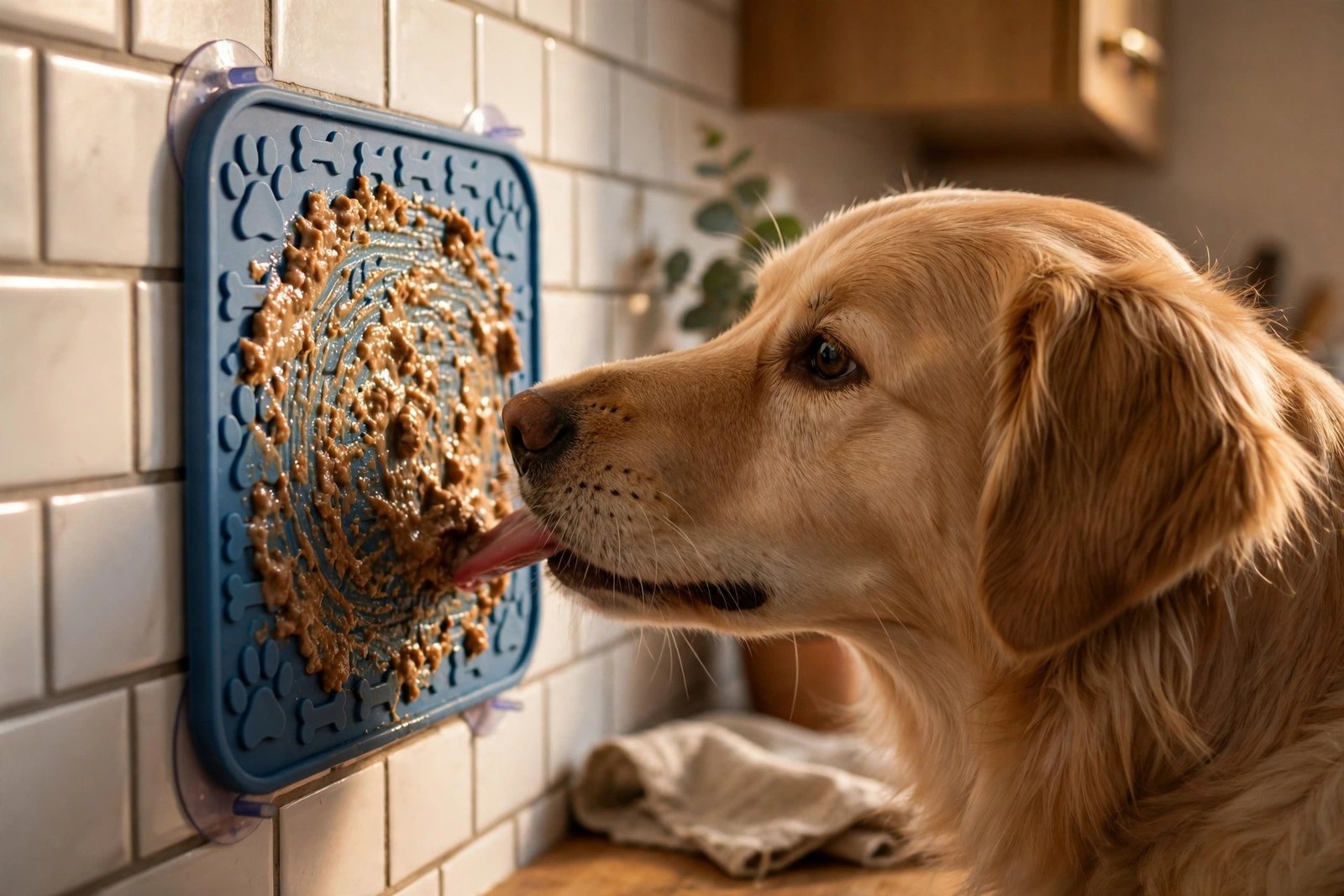
Spreading wet food, or a little soaked dry food, thinly over a textured lick mat turns gulping into licking, which is naturally slow and calming. Freezing the filled mat for a short time stretches the meal even further. This is a kind option for anxious dogs and for dogs recovering from the habit of inhaling dry food.
Slow things down with water and soaking
Soaking dry food in warm water until it softens makes it harder to inhale in big dry chunks and easier on the stomach. It also slows the meal because the food has more volume. This can suit older dogs and dogs with sensitive mouths too.
Calm Mealtimes Matter as Much as the Bowl
- Feed dogs separately. In multi-dog homes, feed each dog in his own space, out of sight of the others if possible. Removing competition removes the biggest reason to gulp.
- Keep the area quiet. Feed away from excited children, doorbells, and general chaos. A calm dog eats slower than an aroused one.
- Do not hover or snatch the bowl. Taking food away mid-meal teaches a dog that food disappears, which makes gulping worse, not better.
- Wait before exercise. Avoid vigorous play or running for a while before and after meals, which is sensible for all dogs and especially for large, deep-chested breeds.
When Fast Eating Needs a Vet, Not a New Bowl
Slow feeding fixes habit. It does not fix illness. See a vet if your dog vomits after most meals even when eating slowly, coughs or gags on food often, drools or paws at the mouth, has trouble swallowing, loses weight, or suddenly starts eating much faster along with a bigger appetite. Those patterns can point to mouth pain, stomach problems, or other health issues that need checking in person. And remember the bloat emergency signs for large, deep-chested dogs: a swollen, drum-like belly with unproductive retching is an emergency, not something to watch at home.
Mistakes to Avoid
- Putting a big rock or ball in the bowl and walking away. Makeshift obstacles can chip teeth or be swallowed, and unsupervised tricks are risky. Use a purpose-made slow feeder or scatter feeding instead, and supervise at first.
- Making the puzzle too hard. If a dog cannot get the food at all, frustration replaces gulping. Start easy, let him succeed, and increase difficulty slowly.
- Feeding all dogs together and hoping for the best. Competition is the fastest way to keep fast eating alive. Separate spaces fix more than any bowl can.
- Punishing vomiting after meals. A dog who is sick after gulping is not being naughty. Slow the food down and keep mealtimes calm; scolding only adds stress around eating.
- Ignoring a sudden change. A dog who has always eaten fast is usually a habit case. A dog who suddenly speeds up, or starts vomiting regularly, deserves a vet check rather than another feeding gadget.
Frequently Asked Questions
Is it bad for a dog to eat fast if he seems fine afterwards?
It is not ideal, but many fast eaters cope. The main everyday problems are gagging, bringing food back up, and a lot of swallowed air. Slowing the meal down is simple and cheap, and it makes digestion more comfortable, so it is worth doing even if your dog seems fine. For large, deep-chested breeds, slower eating is also one of the sensible steps owners take to reduce strain around the bloat risk.
How long should a dog’s meal take?
There is no perfect number, but a meal that disappears in under a minute is too fast for most medium and large dogs. Aim for several minutes of eating instead. With a slow feeder, scatter feeding, or split portions, many dogs stretch their meals to five or ten minutes, which is a good, comfortable pace.
My dog flips the slow feeder bowl over. What else can I try?
Try a heavier bowl, a bowl with a non-slip base, or place it on a mat in a corner. If flipping continues, switch methods: scatter feeding on grass or a large tray has nothing to flip, and a lick mat with suction cups, or split portions served one at a time, also work well.
Can fast eating cause bloat?
Bloat has several risk factors, and eating very fast is one of the habits often associated with it in large, deep-chested breeds, because gulping swallows extra air and delivers a large volume quickly. Slowing meals down and feeding smaller, more frequent meals are commonly recommended precautions for these breeds, but they cannot remove the risk completely. Learn the signs, a swollen tight belly, retching without bringing anything up, drooling, and restlessness, and treat them as an emergency.
1 thought on “Dog Eats Too Fast? Slow Feeding That Actually Works”