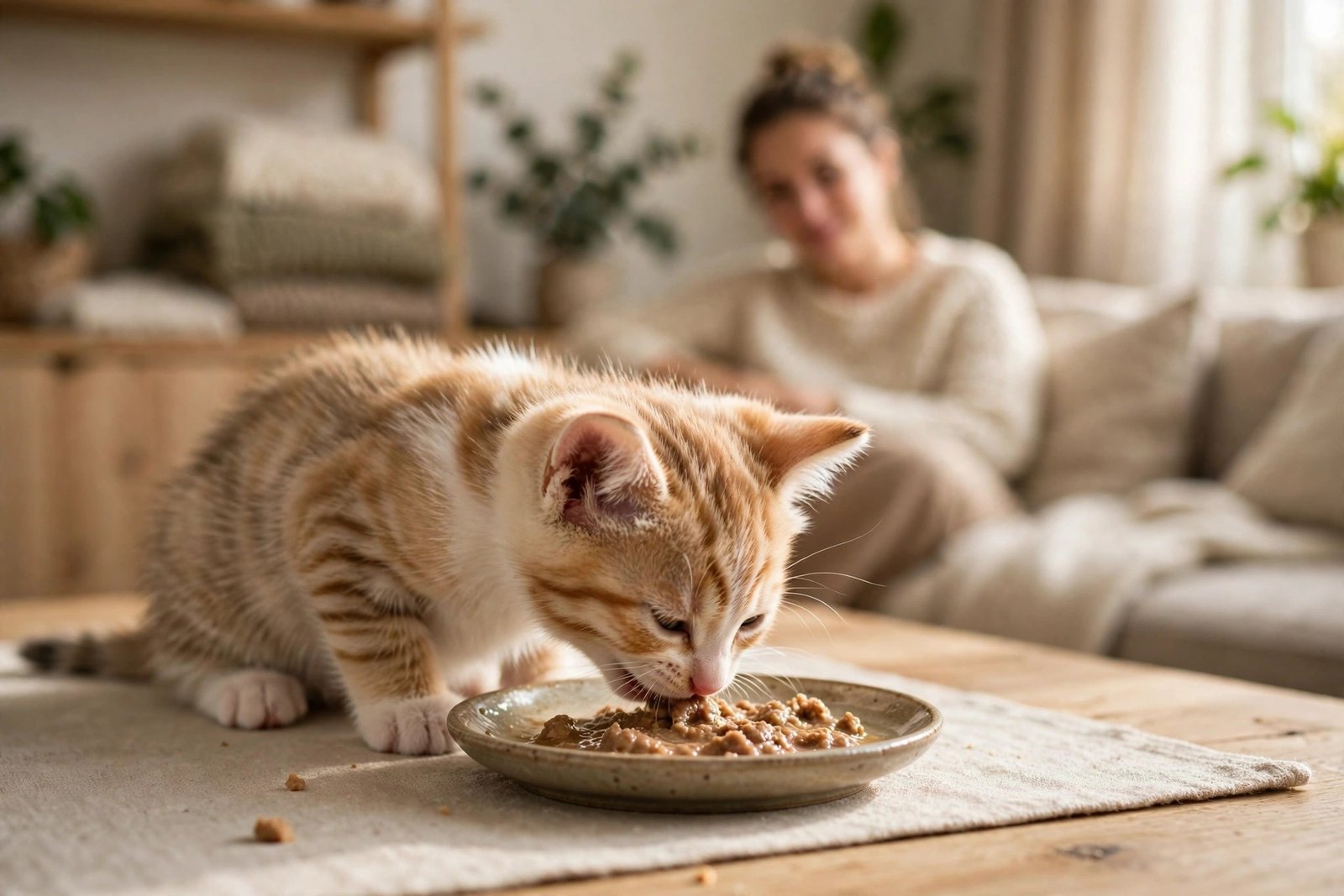
Your new kitten takes three bites, licks her lips, and trots away from a bowl that still looks full, and your heart sinks a little. Is she eating enough? Is something wrong? A kitten not eating much worries every new owner, and it deserves a calm, careful answer.
Many kittens are simply nibblers by nature, with tiny stomachs built for little and often. But kittens are also small, fast-growing animals with very little in reserve, so the line between normal nibbling and a real worry matters more than it does in adult cats. This guide shows you how to tell the difference, how to encourage a healthy appetite, and exactly when to stop watching and call the vet.
Quick Answer
A healthy kitten often eats small amounts many times a day rather than big meals, especially in the first days in a new home. Offer small, frequent meals of kitten food in a quiet spot, warm wet food slightly to release its smell, and watch the whole picture: a kitten who plays, purrs, uses the litter box, and gains weight steadily is usually fine. But kittens go downhill fast. A kitten who eats nothing for 24 hours needs a vet that day, and a very young kitten of eight to twelve weeks should be seen even sooner, after roughly half a day of refusing food, or immediately if she seems weak or unwell in any way.
Important note: this article is general information only. It is not veterinary advice and it cannot diagnose your kitten. Only a vet who examines your kitten can tell you why her appetite has changed.
What Normal Kitten Eating Looks Like
A kitten’s stomach is tiny, about the size of a walnut in a young kitten, so she is built to graze: a few bites, a play, a nap, then a few bites more. Across a whole day of nibbling, a healthy kitten usually eats a sensible total, even though every single visit to the bowl looks small.
Young kittens also eat unevenly. Growth comes in bursts, and appetite follows it. Add the stress of a new home, new smells, and a new routine, and many kittens eat lightly for the first two or three days before their appetite blooms. Weight is your best guide: a thriving kitten gains steadily week by week, feels rounded rather than bony, and has energy to burn between naps.
Weaning Kittens and Very Young Kittens
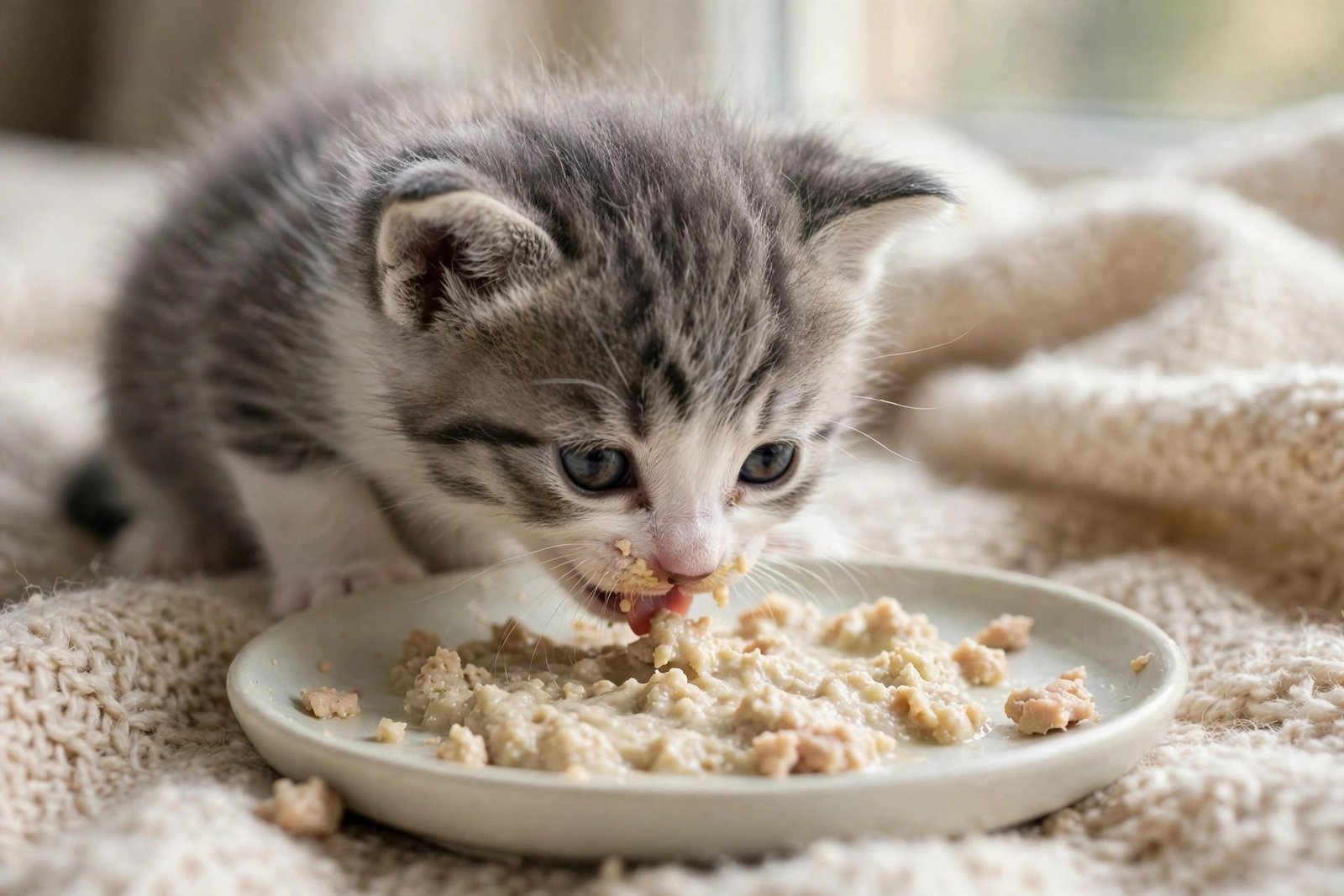
The youngest kittens need extra understanding. A kitten between four and eight weeks is learning to eat solid food at all, and meals look messy and tiny: a few licks of softened food, a face washed, a wander away, then back again. That stop-start pattern is normal during weaning, as long as the overall trend across the week is towards eating more, not less. Offer very soft food or dry food soaked until mushy, spread thinly on a flat saucer so she can lap rather than bite.
Orphaned or hand-reared kittens are the exception to every relaxed rule in this article. A kitten who is still being bottle-fed, or who has only just weaned, has almost no reserves at all. If a kitten that young refuses a feed, feels cold, cries weakly, or seems floppy, she needs a vet immediately, not in the morning. Keep her warm on the way, because a cold kitten cannot digest food properly anyway.
Gentle Ways to Encourage a Light Eater
Make the food easy to smell and eat
Cats rely on smell far more than taste. Wet kitten food warmed for a few seconds until it is just lukewarm releases much more aroma and tempts many reluctant kittens. Serve food in a shallow dish so her whiskers are not squashed against deep sides, and offer small amounts often rather than one large portion that dries out and loses its appeal.
Keep mealtimes calm and predictable
Feed in the same quiet corner, away from loud appliances and busy doorways, and let her eat in peace without children or other pets crowding her. A nervous kitten eats far better when the bowl feels safe. Keep the routine steady: same place, same times, same food.
Resist the urge to keep changing foods
It is tempting to open tin after tin hunting for the one she loves. A sudden merry-go-round of new flavours can upset a small stomach and teaches nothing. If a food change is genuinely needed, mix the new food in gradually over several days. A kitten whose appetite problems come with an upset tummy needs a different kind of help, and our guide to kitten diarrhoea explains the warning signs to watch for there.
When Not Eating Is a Real Worry
Call your vet the same day if you notice any of the following:
- Your kitten has eaten nothing at all for 24 hours, or for about half a day if she is under twelve weeks old.
- She refuses food and also vomits, or vomits more than once in a day. Our guide to a cat vomiting after eating covers that pattern in more detail.
- She has diarrhoea, especially alongside not eating.
- She seems weak, wobbly, unusually sleepy, or uninterested in play and people.
- She has runny eyes or nose, sneezing, or noisy breathing, since a blocked nose stops kittens smelling food.
- She is losing weight, or you can suddenly feel her ribs and spine easily.
- She cries at the bowl, drools, or paws at her mouth, which can mean mouth pain.
Do not adopt a wait-and-see approach with a kitten the way you might with a sturdy adult cat. Small bodies have small reserves of energy and fluid, and a kitten who was merely quiet in the morning can be genuinely unwell by evening. Vets would far rather see a kitten early and send her home with a clean bill of health.
Stress, Change, and the First Week at Home
If your kitten arrived recently, light eating is often part of settling in. Everything is new: the house, the people, the sounds, even the water. Keep her world small at first, one calm room with her food, water, bed, and litter box, and let her explore the rest gradually. Appetite usually follows confidence within a few days. Litter habits settle at the same pace, and if your cat is also missing the box, our guide to a cat not using the litter box works through those causes step by step.
Mistakes to Avoid
- Waiting too long because she is still playing a little. With kittens, 24 hours without food is already too long to wait.
- Offering cow’s milk. Many kittens cannot digest it well and end up with diarrhoea on top of a poor appetite. Fresh water is the right drink.
- Force-feeding or pushing food at her face. This frightens kittens and can create a lasting dislike of the bowl. A kitten who truly cannot be tempted needs a vet, not pressure.
- Swapping foods every day. Constant change upsets small stomachs and hides the real pattern of what she eats.
- Judging by one meal. Look at the whole day and the whole kitten: energy, weight, litter habits, and total food eaten.
Frequently Asked Questions
How much should a kitten eat each day?
It depends on her age, weight, and the food itself, so follow the feeding guide on your kitten food as a starting point and adjust by her body condition. Most young kittens do best on several small meals a day, and a healthy kitten should gain weight steadily. Your vet can confirm at her first check that she is growing as she should.
Is it normal for a kitten to eat less on the first days at home?
Yes, mild light eating for two or three days is very common while a kitten settles in, as long as she is eating something, drinking, playing, and using the litter box. Eating nothing at all is different: that needs a vet within 24 hours, and sooner for a very young kitten.
Should I leave dry food out all day for a nibbling kitten?
A small measured amount of dry kitten food left down can suit grazers, as long as you refresh it daily and still offer proper wet meals at set times. That way you can see what she truly eats, and wet food is not left sitting out to spoil.
My kitten eats well some days and barely at all on others. Should I worry?
Appetite that rises and falls with growth spurts is normal in a bright, gaining kitten. Keep a simple note of what she eats and weigh her weekly. If the low days start to outnumber the good ones, or she stops gaining, book a vet check rather than continuing to guess.
2 thoughts on “Kitten Not Eating Much? Normal Nibbling vs a Real Worry”