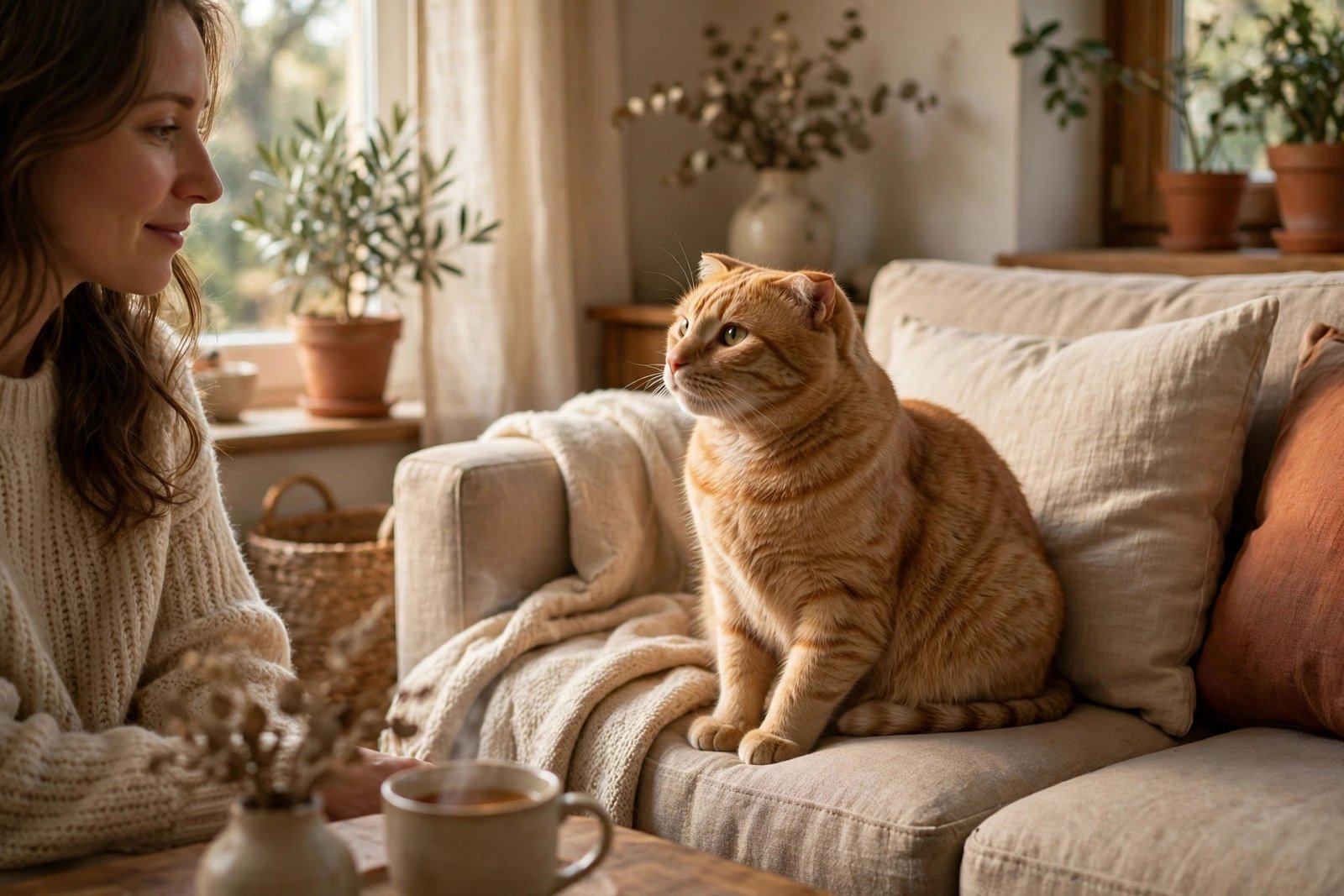
You look up from your phone and there she is: sitting perfectly still, eyes fixed on you, not blinking, not moving. It can feel loving, funny, or faintly like being watched by a tiny furry supervisor. Cats stare for many reasons, and once you learn to read the rest of the body that goes with the stare — the ears, the tail, the blinking, the posture — the message is usually easy to understand.
This guide walks through the common reasons cats stare at their people, how to tell a relaxed, friendly gaze from a tense or over-stimulated one, and how to answer your cat in her own language.
Quick Answer
Most staring is communication, not rudeness. A soft gaze with slow blinks usually means your cat feels safe and affectionate. A fixed stare paired with a still body and slow tail sweeps often means she wants something — food, play, or your attention on a closed door. A hard, unblinking stare with ears flattened, a puffed or lashing tail, and a low crouch is a warning to give her space. The golden rule: never judge the eyes alone. Read the whole cat.
The Friendly Stare: Slow Blinks and Soft Eyes
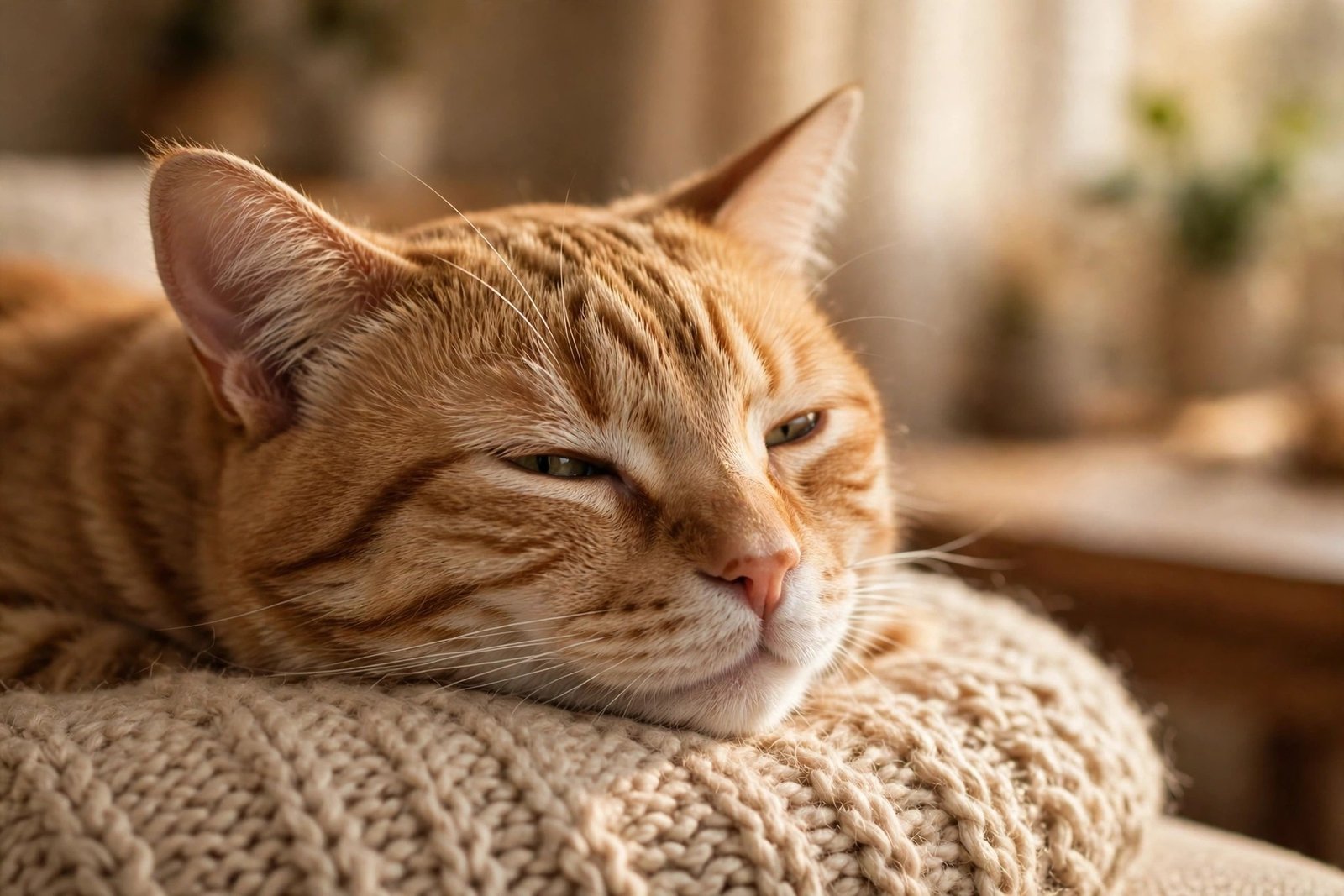
The sweetest look a cat gives is the slow blink: she gazes at you, then closes her eyes slowly and lazily, sometimes looking away afterwards. Cat behaviourists read this as a sign of trust and contentment — in cat language, closing your eyes in front of someone means you feel safe with them. You can answer in kind. Look at her softly and slow-blink back. Many cats will blink back, look away calmly, or come over for a rub. It is a real conversation, and it builds trust, especially with shy cats.
A relaxed staring cat has soft, almond-shaped eyes rather than wide round ones, ears in their normal forward position, whiskers relaxed, and a body that is loose — lying on her side, loafing with paws tucked, or sitting comfortably. If the tail is still or moves in a lazy tip-flick, all is well. This cat is not asking for anything in particular. She is simply keeping you company in the way cats do: by being near and keeping an eye on her favourite person.
The “I Want Something” Stare
Cats learn quickly that humans respond to eye contact, so staring becomes a polite — or not so polite — request system. Common versions:
- The food stare. Delivered near the bowl, the kitchen, or at the usual feeding time, often with a tour guide walk: she stares, walks a few steps towards the kitchen, looks back to check you are following. Near feeding time it is hard to misread.
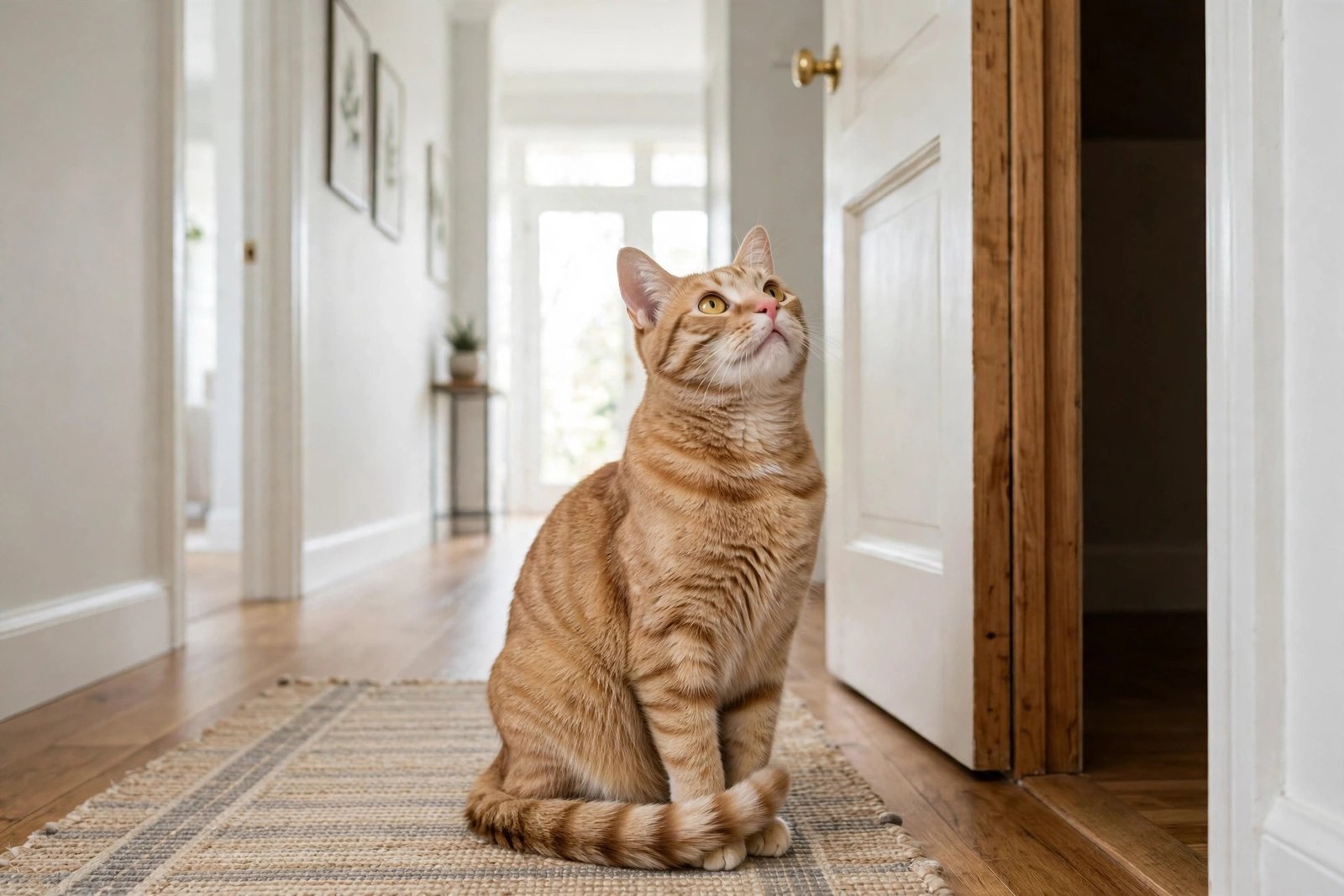
- The door stare. Sitting by a closed door and staring at you is a clear request for a staff member to operate the handle. If door demands are a nightly event in your home, our article on why cats meow at closed doors explains what she wants and how to reduce the campaign.
- The play stare. Crouched, eyes wide and bright, tail tip twitching, staring at you or at a toy nearby — this is a cat asking for a game. Answering with a wand toy redirects that focused energy somewhere healthy. Cats whose staring regularly turns into pouncing on hands or feet are often under-played; the boredom clues in our guide to indoor cat boredom signs are worth a look.
- The lap stare. Some cats stare at an occupied lap, a laptop, or a book with great intensity. Translation: you are in the warm spot, or the thing you are looking at should be her.
Reading Ears, Tail and Body Alongside the Eyes
Ears tell you the mood
Ears forward and relaxed: interested and calm. Ears rotating or twitching: listening, mildly stimulated, processing. Ears flattened sideways or pinned back: irritated, anxious, or over-stimulated — a clear signal to pause whatever you are doing, especially petting. A cat can go from enjoying a stroke to being done with it quickly, and flattened ears plus a fixed stare is the classic “stop now” combination.
The tail adds the punctuation
A tail held up with a soft curve: friendly and confident. A slow sweep from side to side while staring: she is focused and aroused — deciding something, often whether to pounce or to leave. Fast lashing or thumping: irritation is building. A puffed tail with a hunched or sideways body: fear or a cat trying to look bigger; give her room and let her retreat.
Posture completes the picture
A loose, wiggly body means relaxation even if the stare is long. A tense, still, crouched body with weight shifted forward means a pounce is brewing, usually playful if aimed at a toy, less welcome if aimed at your ankles. Weight shifted back, body low and ready to flee, means she feels cornered. Cats almost always show their intentions honestly; we just have to watch more than the eyes.
The Hard Stare: When to Give Space
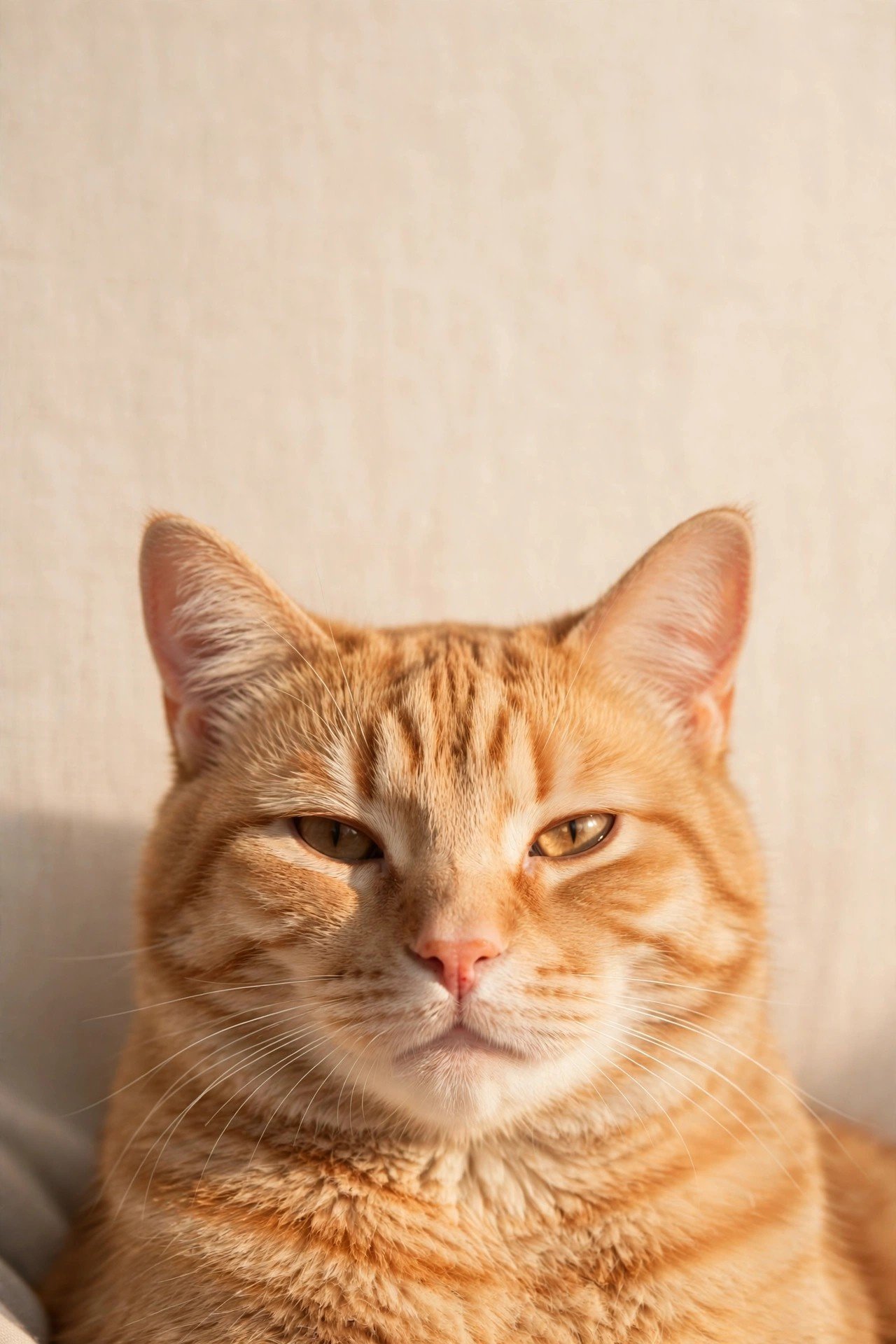
In cat-to-cat language, a direct, unblinking stare is a challenge. Your cat rarely means it that way with you, but a hard stare can appear when she is guarding something — a favourite spot, a high-value treat, a windowsill another cat wants — or when she is in pain or feeling unwell and does not want to be approached. Do not stare back intensely or lean in; that raises the tension. Blink slowly, soften your gaze, turn slightly sideways, and let her choose what happens next. If hard staring is new, frequent, or paired with hiding, appetite change, or growling, a vet check is sensible: behaviour changes are often the first visible sign that a cat feels unwell.
Why Cats Stare While You Sleep, Eat, or Work
Staring at a sleeping owner is usually a mix of curiosity and scheduling: your cat’s active hours start before yours, and a face is interesting when it is about to produce breakfast. This early waking is closely related to the famous 3 a.m. zoomies — same body clock, quieter delivery. Staring during your meals is simpler: your food smells wonderful and staring has worked before. Stay consistent about not feeding from your plate and the habit usually fades. And staring at you while you work? You are the most interesting, warmest, most predictable thing in her territory. For a cat, watching you is entertainment, security, and affection all at once.
Mistakes to Avoid
- Do not punish or shout at a cat for staring. It is communication, not defiance, and frightening her only damages trust and can turn a relaxed cat into an anxious one.
- Do not stare back hard and lean over her to “win.” In cat language that is a threat, and it can provoke the very reaction you are trying to avoid.
- Do not ignore the warning version of the stare. Flattened ears, a lashing tail, and fixed eyes during petting mean stop — carrying on is how people get scratched and then blame the cat.
- Do not assume every stare is a food request and feed it. Answering every gaze with a meal trains more staring and adds unwanted weight. Check the body, the place, and the clock first.
- Do not grab or kiss a hard-staring cat’s face. Let her come to you; choice is what makes contact pleasant for cats.
Frequently Asked Questions
Why does my cat stare at me and then blink slowly?
That slow blink is one of the clearest signs of trust a cat can give. She is telling you she feels safe enough to close her eyes around you. Blink slowly back, then look away gently. Many cats visibly relax, return the blink, or come closer. It is a lovely way to greet a shy or rescue cat without crowding her.
Why does my cat stare at nothing?
Usually she is not staring at nothing — she is listening. Cats hear far higher sounds than we do and see movement in dim light, so a “blank” stare is often aimed at a sound inside a wall, an insect, or something outside the window. It is normal. Only worry if staring into space comes with other changes, like confusion, loss of balance, or behaviour change, which should be checked by a vet.
Is it bad to stare back at my cat?
A soft gaze with slow blinks is fine and even friendly. A hard, direct, unblinking stare while leaning over her is different — cats read that as confrontational. Keep your eyes soft, blink slowly, and let your body stay relaxed and slightly turned. That is polite cat etiquette, and cats respond to it noticeably.
Why does my cat stare at me in the bathroom?
Because you are a captive audience and cats know it. You are sitting still, at her height, in a room with interesting running water, and you cannot leave quickly. Many cats also simply enjoy routines and follow their person from room to room. It is normal companionship, not a problem — though closing the door is also allowed.
2 thoughts on “Why Does My Cat Stare at Me? Reading Your Cat’s Eyes and Body Language”