
Few things test a cat owner’s patience like finding a puddle on the bathmat or a surprise behind the sofa from a cat who has a perfectly good litter box. When a cat stops using the litter box, it feels personal. It almost never is. Your cat is not being spiteful, stubborn, or naughty. She is telling you something, in the only way she can, that something about her body, her box, or her world is not right.
The way through is methodical rather than angry: rule out medical causes first, then work through the box itself, and then look at stress at home. This guide walks you through that order, because fixing the wrong thing first is the main reason litter problems drag on for months.
Quick Answer
Always start with the vet, not the mop. Urinary pain and illness are the most common reasons a cat avoids the box, and a cat who is straining to pass urine, especially a male cat who cannot pass any, needs a vet the same day, as an emergency. Once health is cleared, check the basics most owners miss: enough boxes (one per cat plus one spare is the usual guide), a litter she actually likes, a box big enough and in a quiet, easy place, and scooping at least once a day. Then look for stress: new pets, building work, visitors, or changes at home. Never punish your cat for accidents; it makes the problem worse every time.
Step 1: Rule Out Medical Causes First
A cat who associates her box with pain will avoid it, quite reasonably, hoping a different spot will hurt less. Urinary infections, bladder crystals and stones, constipation, arthritis that makes climbing into a high-sided box painful, and several other conditions can all start as “litter box problems”.
Book a vet visit early, and treat these signs as urgent:
- Straining in the box, crying while trying, or passing only tiny drops of urine.
- A male cat who cannot pass urine at all: this is an emergency, the same day, without waiting.
- Blood in the urine, or visiting the box far more often than usual.
- Going outside the box along with eating less, hiding, or seeming unwell.
Even if your cat seems fine otherwise, a vet check comes first. It is far kinder, and far cheaper in the long run, than months of experimenting with litters for a cat whose real problem is pain. Once your cat has a clean bill of health, move on to the box itself.
Step 2: Check the Box Setup
Enough boxes, in the right places
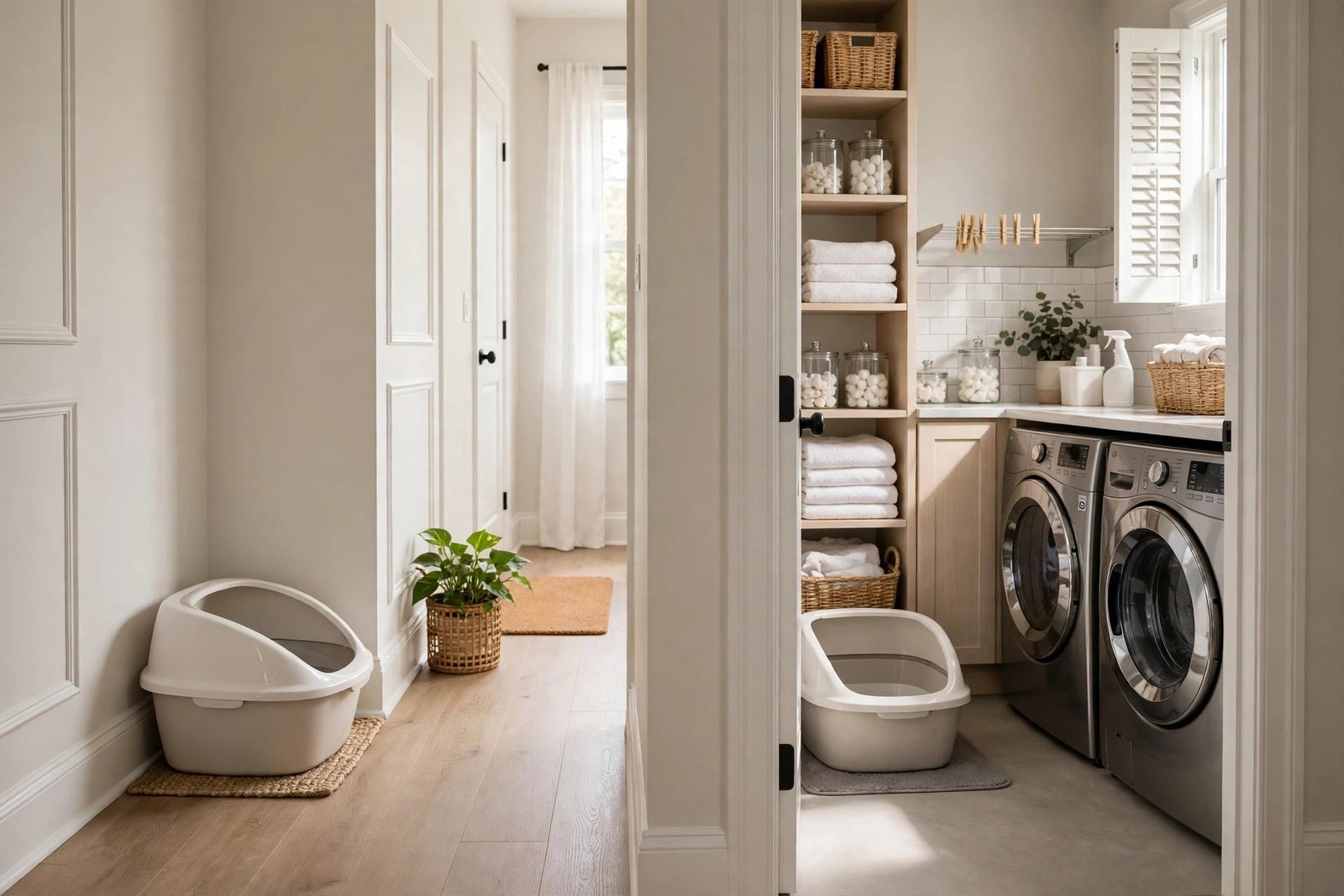
The standard guide is one box per cat, plus one spare, placed in different spots rather than side by side. Two boxes next to each other count as one location to a cat. Our guide on how many litter boxes you need explains the maths and the placement rules in full. Boxes belong in quiet, private, easy-to-reach places, away from food and water, and not beside a roaring washing machine or a door that bangs.
A box your cat can actually use
Many boxes sold for kittens are simply too small for an adult cat, who needs room to turn around, dig, and posture comfortably. Older cats and sore cats may need a lower side to step over. Some cats strongly dislike covered boxes, which trap smells inside exactly where the cat has to breathe them. If your cat perches on the edge or goes right beside the box, size, height, and the lid are prime suspects.
The litter itself
Most cats prefer a fine, unscented litter that feels soft underfoot. Strongly perfumed litters smell pleasant to us and overpowering to a cat standing in them. A recent change of litter is one of the most common triggers of all, so if the problem began with a new bag, that is your answer. Depth matters too: most cats like enough litter to dig in properly, roughly a few centimetres.
Step 3: Cleanliness, Because Cats Are Fastidious
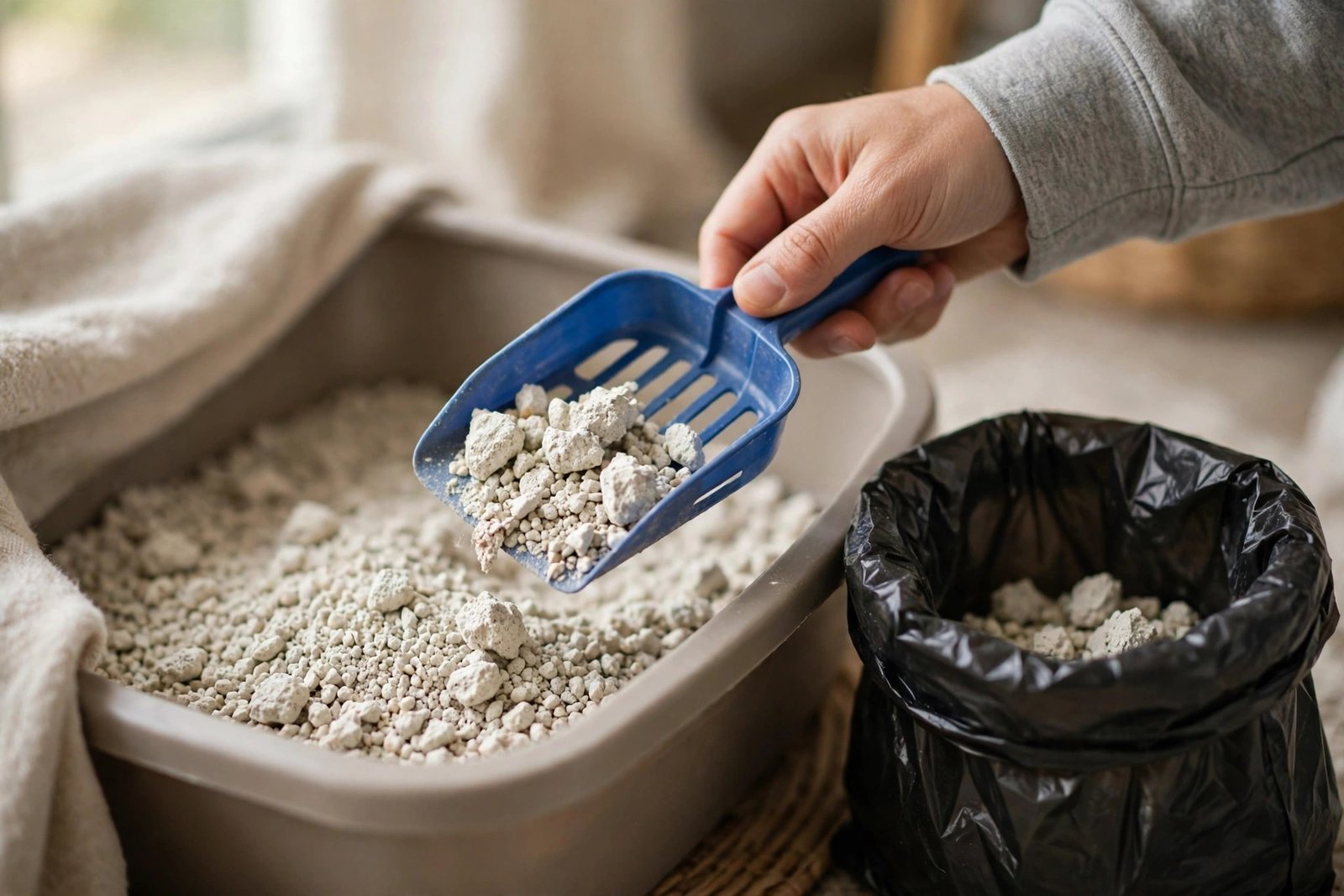
A cat’s nose is far more sensitive than yours, and a box that smells acceptable to you may smell dreadful at cat height. Scoop at least once a day, twice if you can, top up litter as needed, and wash the whole box regularly with mild, unscented cleaning. Our guide on how to clean a litter box properly gives a simple schedule. If accidents are happening in one favourite wrong spot, clean that area thoroughly with a cleaner made for pet messes, because leftover scent tells your cat “toilet here” long after you can smell nothing.
Spraying is a different problem
Before moving on, it is worth separating two behaviours owners often mix up. A cat who empties her bladder on flat surfaces, the floor, a rug, a bed, is toileting outside the box, which is what this guide covers. A cat who backs up to a wall, furniture, or curtains and sprays a small amount onto a vertical surface is usually marking, which is a different behaviour with different causes, often linked to territory and stress. Marking still deserves a vet check if it is new, because urinary discomfort can sit behind it too, but the fixes are not the same, so noting which one your cat is doing helps your vet a great deal.
Step 4: Look for Stress at Home
If health and the box both check out, think about what changed. Cats are creatures of routine, and litter habits are often the first thing to wobble when life shifts: a new baby, a new pet, a house move, building work, a family member moving out, even new furniture. A cat who is being bullied by another cat near the box may quietly choose a safer corner instead.
Give her time, keep routines steady, and make sure she has quiet hiding and resting places of her own. If one cat is guarding the box area, add a box in a completely different part of the home. And if the accidents began the week your kitten or cat arrived, remember settling-in stress is normal and usually temporary; the same patience that helps a kitten who is not eating much in a new home applies here too.
Mistakes to Avoid
- Punishing your cat. Shouting, rubbing her nose in it, or carrying her angrily to the box teaches only fear of you, and stressed cats avoid boxes more, not less. Never punish; it cannot work and always backfires.
- Skipping the vet. Treating a medical problem as a behaviour problem wastes months and lets a painful condition go untreated.
- Changing everything at once. New litter, new box, new room, all in one weekend, means you never learn which thing fixed it. Change one thing at a time.
- Moving the box suddenly. If you must move it, shift it gradually, a little each day, or place a second box in the new spot first.
- Using strong scents to mask the problem. Perfumed litter and air fresheners near the box often make a cat avoid it even more.
Frequently Asked Questions
Why is my cat suddenly not using the litter box?
Sudden changes are most often medical, especially urinary pain, or linked to something that just changed at home: new litter, a moved box, building work, or a new pet. Start with a vet visit to rule out pain and illness, then check what changed in the days before the accidents began.
My cat uses the box for urine but poops outside it. Why?
This split often points to the box itself or to mild pain when passing stool, such as constipation, so a vet check still comes first. It can also mean the box feels too dirty by the second visit of the day, or that your cat prefers separate spots; an extra box in a different place frequently solves it.
How long does it take to fix litter box problems?
Once the real cause is found and fixed, many cats return to the box within days. Medical causes need treatment first, and stress-related cases can take a few weeks of calm, steady routine. If nothing improves after two or three weeks of working through the steps, go back to your vet and ask about further help.
Should I confine my cat to one room to retrain her?
A short stay in one calm room with everything she needs, food, water, bed, scratching post, and a clean box, can help some cats reset the habit, especially after a house move. It should feel like a safe retreat, never a punishment, and it works best alongside fixing the original cause.
3 thoughts on “Cat Not Using the Litter Box? Work Through These Causes First”