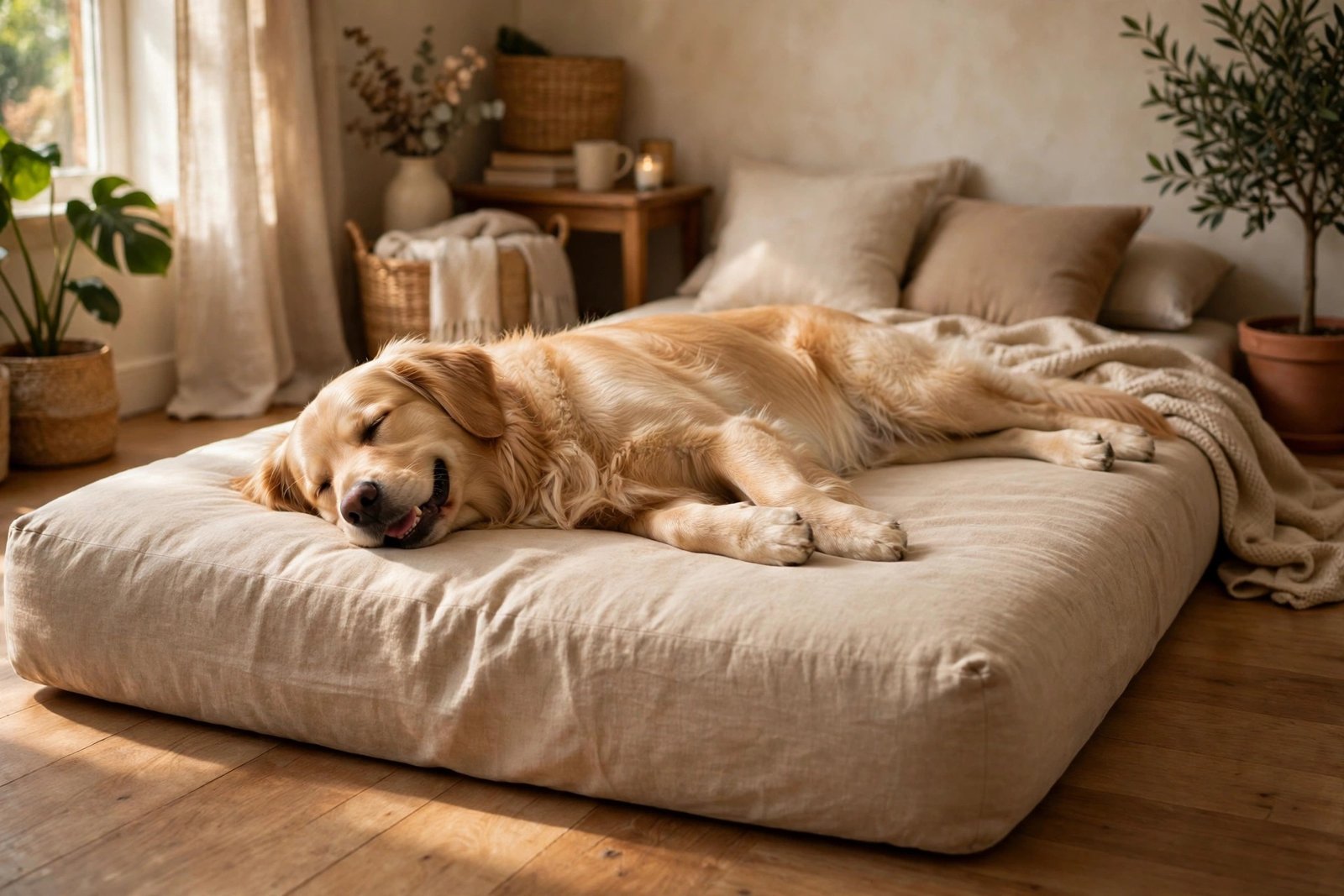
A dog bed that is too small leaves your dog curled tighter than he wants, hanging off the edge, or — most telling of all — choosing the floor instead. A bed that suits his size and sleeping style becomes the most-used piece of furniture in the house. The trouble is that dog bed sizes are vague: one maker’s “large” is another’s “medium,” and weight charts alone mislead, because a leggy dog and a stocky dog can weigh the same and sleep completely differently. The reliable method is to measure your dog, match the bed to how he actually sleeps, and then choose shape and fill. This guide shows you each step.
Everything here is general guidance on sizes, shapes, and materials — no brands, just a method you can use with any bed you are considering.
Quick Answer
Measure your dog from nose to the base of his tail while he is standing, then watch how he sleeps. For a dog who curls up, choose a bed with an inner sleeping area at least his nose-to-tail length, or a round bed about that in diameter. For a dog who sprawls, add 20–30 cm (roughly 8–12 inches) to his full stretched length. When between sizes, size up: too big can be padded with a blanket, too small cannot be fixed. Then match the shape to the style — round or bolstered for curlers and leaners, flat and rectangular for sprawlers — and pick a washable cover, because a bed you cannot wash will not stay pleasant for long.
Step One: Measure Your Dog Properly
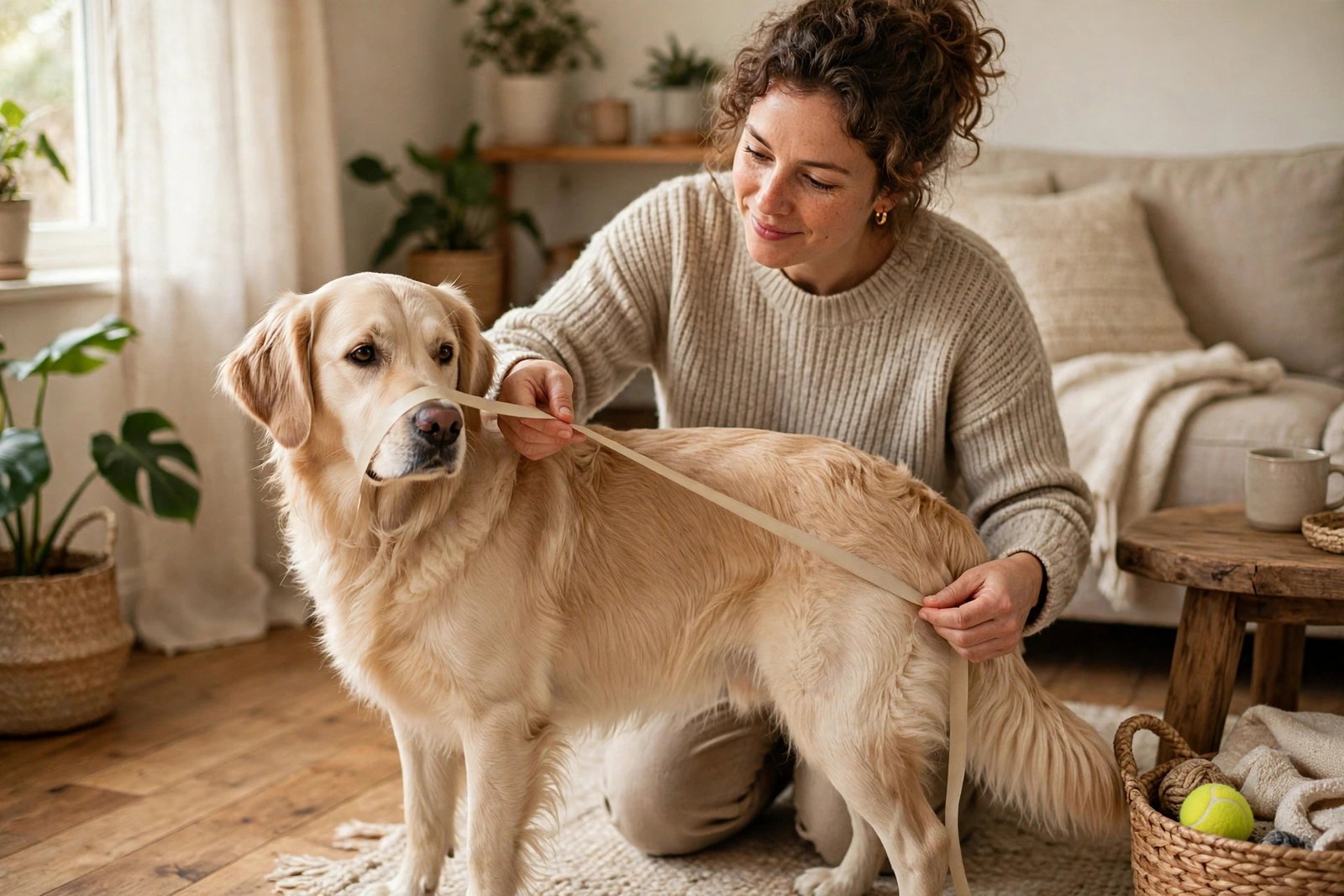
You need two measurements, and neither is his weight:
- Nose to tail base: with your dog standing, measure from the tip of his nose to where his tail joins his body (not the tail tip). This is his body length.
- His sleeping footprint: when he is asleep in his favourite position, quietly measure the space he actually occupies — the diameter of the curl, or the full length from nose to back paws when stretched. Take this measurement two or three times on different days; dogs are honest about their size only when asleep.
Shoulder height helps too for raised or bolstered beds: a dog should be able to step in comfortably without jumping, which matters greatly for puppies, seniors, and any dog with stiff joints. If your dog is still growing, measure now and expect to size up once more before adulthood — or buy the adult size for his expected build and pad the extra space with a rolled blanket so it still feels snug and safe.
Step Two: Match the Bed to His Sleeping Style
The curler
Sleeps nose-to-tail in a donut, often against something. Curlers feel secure in round beds or rectangular beds with raised edges, where the inner sleeping space roughly equals his curled diameter — and as a guide, a bed’s inner length of at least his nose-to-tail measurement lets him curl without compressing. Many of the dogs who trail you from room to room, like those in our article on why a dog follows you everywhere, are curlers who like a bed near your chair or sofa.
The sprawler
Sleeps flat on his side, legs extended, taking maximum territory. Sprawlers need a flat, open bed — a mattress-style rectangle with an inner length of his stretched-out sleeping length plus a margin of about 20–30 cm, and no high walls stealing space. If his paws or head regularly hang off his current bed, it is too small, whatever the label said.
The leaner and burrower
Leaners sleep pressed against a wall, sofa arm, or your leg; they love bolster beds, with a raised edge on one or more sides to push against and rest a chin on. Burrowers dig and nest before settling and like a bed with a loose blanket or a cave-style cover they can get under. For both, usable inner space still follows the same measuring rules — the bolster is extra, not part of the sleeping area, so measure the flat part inside the edges.
Step Three: Shape and Fill, in General Terms
- Flat mattress beds: best for sprawlers, big dogs, and seniors who need an easy step-in. Look for enough thickness that you cannot feel the floor when you press your hand firmly into it.
- Bolster beds: raised edges suit leaners, curlers, and head-resters, and give nervous dogs a sense of walls. Check the inner dimensions, not the outer.
- Donut/calming-style round beds: plush rings that curlers sink into; wonderful for small and medium curlers, less practical for large sprawlers.
- Fill types: ordinary polyester stuffing is light and cheap but flattens fastest; shredded or solid foam holds shape and supports joints better and suits seniors and heavy dogs; heavier, denser beds stay put on hard floors. Press before you trust: a bed that bottoms out under your hand will bottom out under your dog.
Shedding households should think about the cover as much as the fill — a smooth, tightly woven, removable cover releases hair far better than a deep plush one, and our guide on a dog shedding a lot all of a sudden covers the coat side of that equation.

Step Four: The Washable Cover Is Not Optional
Dogs bring mud, drool, hair, and the occasional accident to bed. A removable cover that goes in the washing machine is the difference between a bed that lasts years and one that smells by spring. Ideally the inner cushion or foam has a water-resistant liner too, so accidents do not soak through to the fill. Bath-day is also bed-day in many homes — if you follow our guide on how often to bathe a dog, wash the cover on the same rhythm and the whole routine stays effortless. Buy the bed you can clean, not just the bed that looks good on day one.
Where the Bed Goes Matters Too
The best-sized bed in the wrong place will be ignored. Dogs choose warm, draught-free spots near the family’s activity but out of walkways; many like a wall behind them. Put new beds where your dog already naps if you can — he has done the location research for you. Households may need two modest beds (living room and bedroom) rather than one grand one he must commute to. And note the social side: a dog who likes to sleep near you will use a correctly sized bed beside the sofa far more than a deluxe one in an empty room.
Mistakes to Avoid
- Do not buy by weight charts or breed labels alone. Measure your actual dog; two dogs of the same weight can differ by 20 cm in sleeping length.
- Do not count the bolster or raised rim as sleeping space. Only the flat inner area counts towards the size your dog needs.
- Do not choose the smaller size to save money or floor space when your dog measures between sizes. Size up — a blanket makes a big bed cosy, but nothing makes a small bed bigger.
- Do not skip the washable cover. An unwashable bed becomes a smell problem no amount of airing fixes, and dogs themselves start avoiding it.
- Do not force the issue if your dog ignores a new bed for the first days. Put his blanket on it, reward him for stepping in, and let him adopt it in his own time — and never drag him onto it.
Frequently Asked Questions
How do I know if my dog’s bed is too small?
Watch him sleep: regularly hanging paws, head, or hips off the edge, curling tighter than his natural curl, or choosing the floor, rug, or sofa over the bed all say the bed is too small or the wrong shape. A quick test: the inner sleeping area should fit his favourite sleeping position entirely, with a little room to spare. If he only fits diagonally, size up.
Should I size up for a puppy?
You can, but pad it. A puppy alone in an adult sprawler’s bed can feel exposed and may even toilet in a far corner of it, because it feels like “room,” not “bed.” Fill the spare space with a rolled blanket so the sleeping nest matches his current size, and unroll as he grows. Expect at least one size change between a young puppy and his adult build.
Is a bigger bed always better?
No — bigger is better only up to the point where the dog still feels enclosed enough to relax. Curlers and anxious dogs often sleep worse on a huge open mattress than in a snug round bed with edges. Size up one step from the minimum his measurements give you, not three, and match the shape to his style first; size is the second decision, not the first.
How thick should a dog bed be for a senior dog?
Thick enough that his elbows, hips, and spine never press through to the floor — test by kneeling on the bed: if your knee finds the floor quickly, his joints will too. Firm, supportive foam-type fills suit seniors better than soft stuffing they sink into and struggle to rise from, and a low step-in height matters as much as thickness. If your senior is also slowing down generally, mention it at his next vet check rather than only upgrading the furniture.