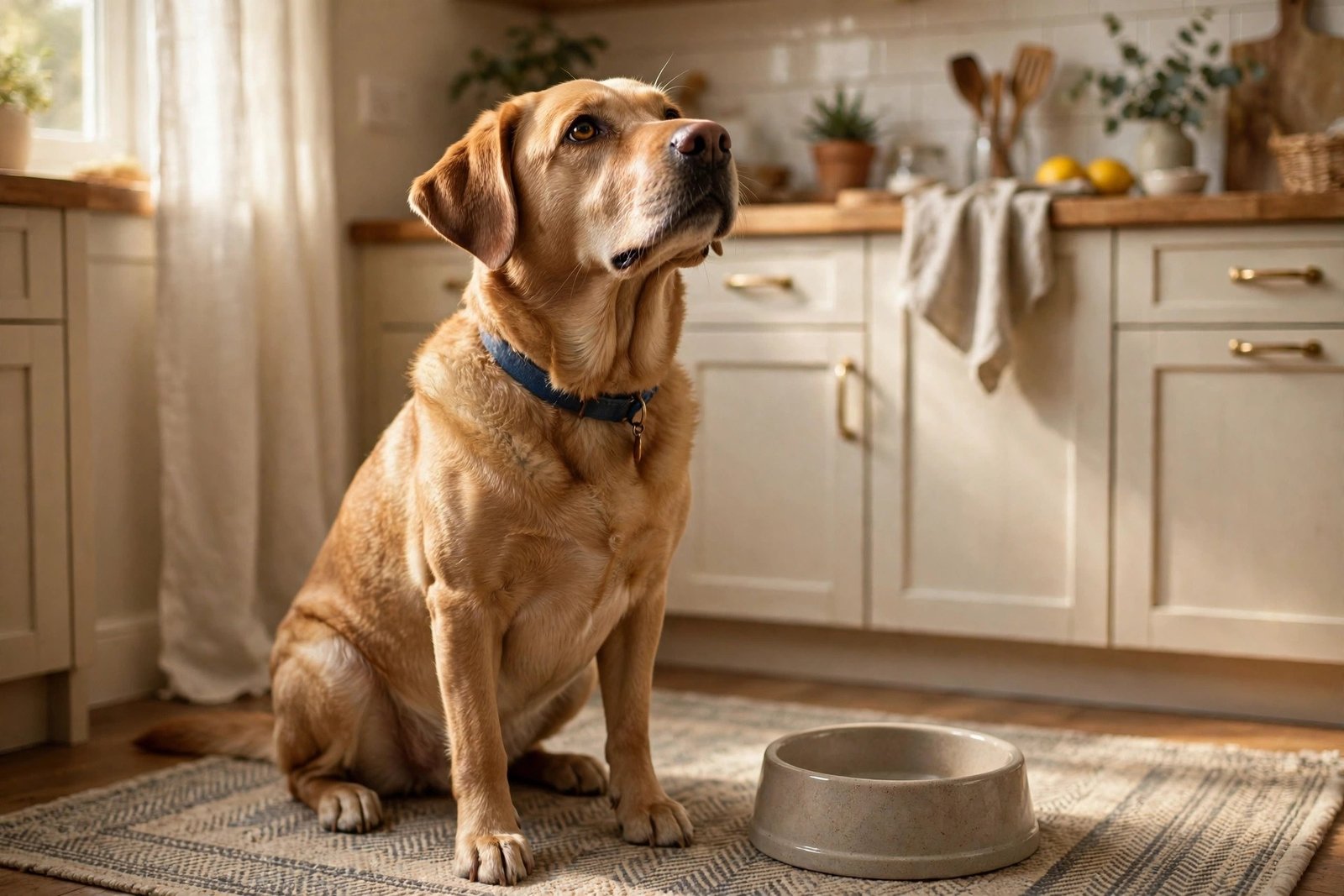
Your dog finishes breakfast, licks the bowl until it shines, and then looks at you as if the meal never happened. An hour later he is sitting by the food cupboard. By evening he is following every person who walks towards the kitchen. He seems happy, active, and completely normal in every other way, so why does he act as if he is starving?
For most healthy dogs, the answer is reassuring: acting hungry is normal dog behaviour, and it often has more to do with portions, habit, and opportunity than with a real problem. This guide helps you check the simple things first, and it also explains the few signs that do deserve a vet visit.
Quick Answer
Most dogs are born opportunists. In the wild, their ancestors ate whenever food appeared, so a healthy dog will happily accept extra food even when his stomach is full. If your dog is a steady weight, bright, active, and eating and drinking normally, constant “hunger” is usually habit, boredom, slightly small portions, or a routine that has taught him begging works. Check his body condition, measure his food honestly for a few days, and count treats and extras as part of the day’s food. Book a vet visit if the hunger is new and intense, or if it comes with weight loss, much bigger thirst, vomiting, or diarrhoea.
Important note: this article is general information only. It is not veterinary advice and it cannot diagnose your dog. Only a vet who examines your dog, and runs tests if needed, can rule out a health cause.
Why Healthy Dogs Act Hungry All the Time
Opportunistic eating is built in
Dogs did not evolve with regular mealtimes. Their ancestors survived by eating what they found, when they found it, because the next meal was never promised. That wiring is still there. A dog who has just eaten a full meal can still feel a genuine urge to eat a sausage that falls on the floor. It is not greed and it is not a sign you are starving him. It is simply an old survival program doing its job.
Begging is a learned habit
Dogs repeat what works. If sitting by the table, staring, pawing, or barking has produced food even a few times, your dog has learned that these behaviours pay. He will use them often, especially at the moments food has appeared before, which is why hunger behaviour usually looks worst in the kitchen and around your own mealtimes.
Boredom can look like hunger
For many dogs, food is the most exciting event of the day. A dog with too little to do may focus on food because there is nothing else to focus on. If the “hunger” appears mostly on quiet days or when you are busy, boredom may be a bigger part of the picture than an empty stomach.
Step One: Check the Portions Honestly
Before worrying, do a calm audit of what your dog really eats in a day. Many owners are surprised by what they find.
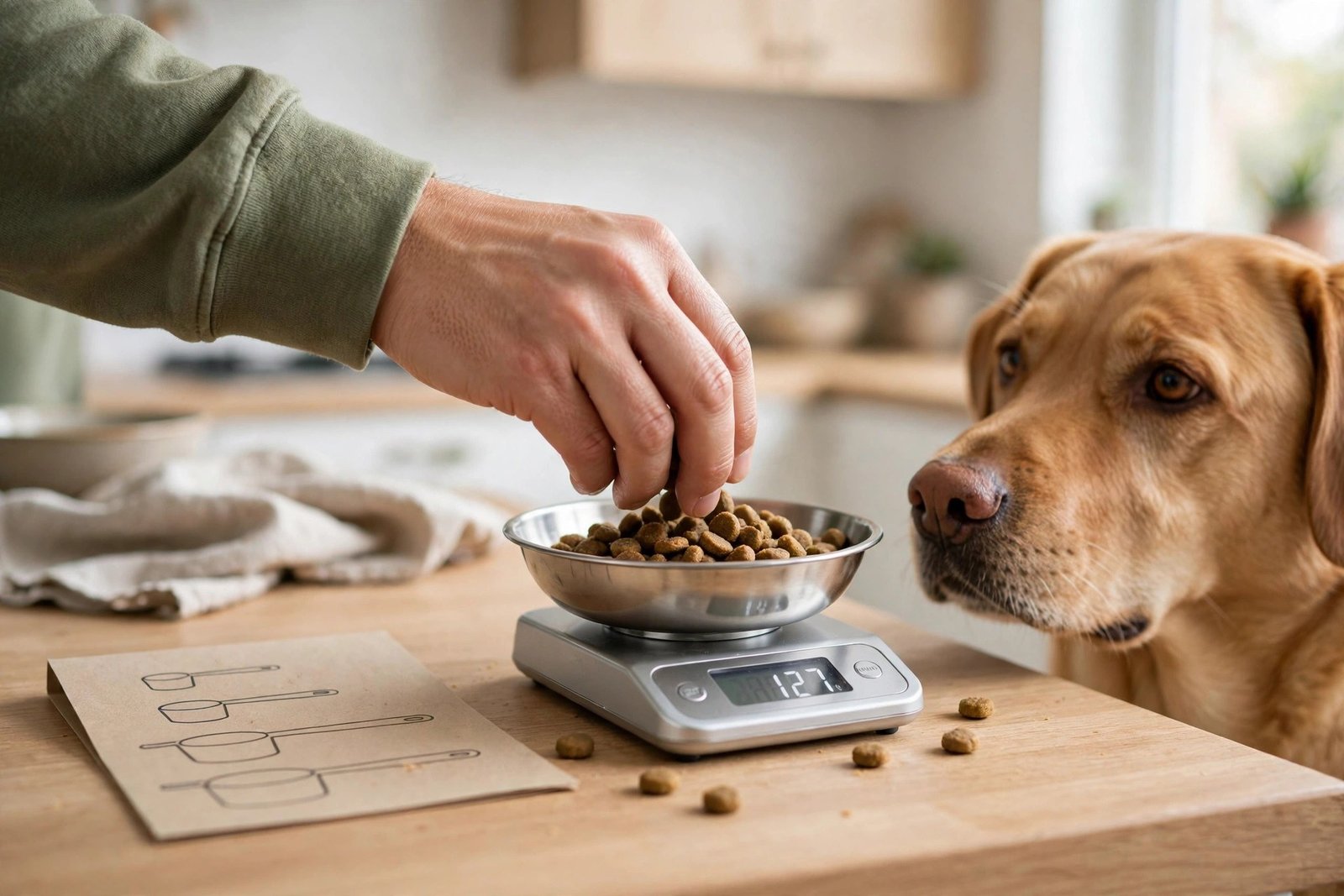
- Use the feeding guide on the food. Every complete dog food carries a feeding guide based on your dog’s weight. It is a starting point, not a perfect answer, but it shows whether your portions are roughly in the right area.
- Weigh the food for a few days. A scoop that looks the same can hold very different amounts. Kitchen scales take ten seconds and remove the guesswork.
- Count everything, not just meals. Treats, chews, training rewards, the corner of your sandwich, and food from other family members all count. In some homes, extras quietly add up to a whole second meal. Our guide on dog treats and how many is too many explains how to fit treats inside the day’s food without spoiling the fun.
- Check the whole household. Ask everyone who feeds the dog to say so. Double breakfasts happen more often than you would think, especially in busy homes.
If the audit shows portions are well below the guide for your dog’s weight, increase slowly towards the guide over a week or so and watch his body condition. Sudden big increases are not needed and can upset the stomach.
Step Two: Check Body Condition, Not Just the Bowl
A dog’s shape tells you more than his behaviour does. You do not need special tools, just your hands and eyes.
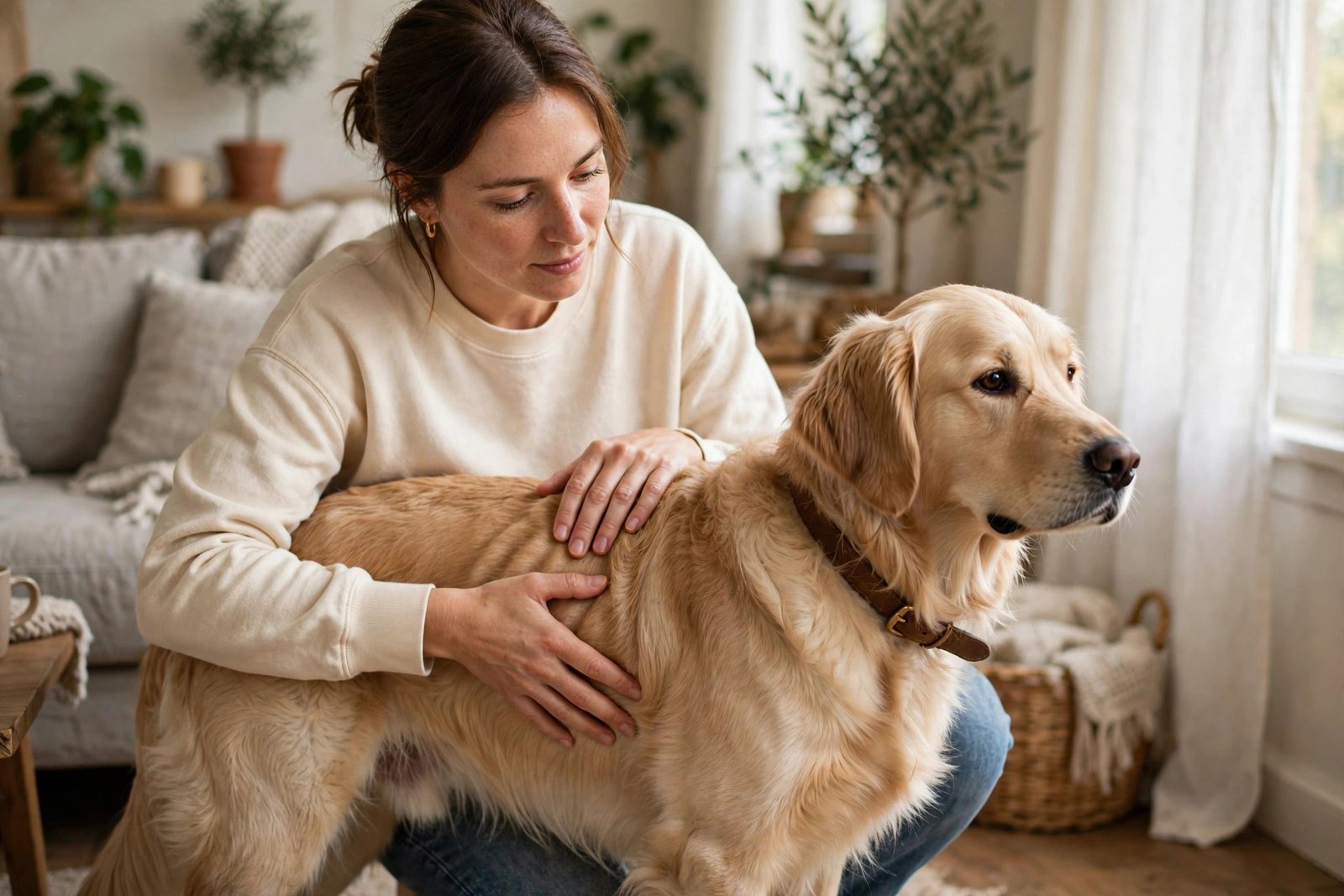
- Feel the ribs. Run your hands gently over his ribcage. On a dog at a healthy weight, you can feel the ribs easily under a thin layer of fat, like feeling the back of your hand. If the ribs stick out sharply and are very easy to see, he may need more food. If you have to press hard to find them, he does not, no matter how hungry he acts.
- Look for a waist. Viewed from above, most dogs should narrow a little behind the ribs. Viewed from the side, the tummy should tuck up slightly behind the chest rather than hanging level or low.
- Watch the trend. Weigh your dog every few weeks if you can. A steady weight with a good body shape means the food amount is probably right, even if the acting says otherwise.
Step Three: Fix the Routine Around the Food
If portions and body condition are fine, the fix is usually about routine rather than quantity.
- Feed at set times. Regular meals teach a dog when food happens and when it does not. Predictable feeding times reduce all-day pestering in most homes. Our guide on how many times a day you should feed a dog explains how to set a schedule that suits your dog’s age and size.
- Stop feeding from the table and sofa. Every scrap given outside mealtimes teaches begging. It only takes one soft-hearted person to keep the habit alive.
- Fill the gaps with activity. A sniffy walk, a short training game, or a chew toy offered before your own dinner gives your dog something better to do than watch you eat.
- Slow the meal down. A dog who inhales his food in thirty seconds may feel less satisfied than one who takes ten minutes. Scattering part of the meal in the grass or using a slow feeding bowl stretches the meal and the feeling of having eaten.
When Constant Hunger Can Be a Health Sign
Sometimes, a real increase in appetite is the body asking for help. In general terms, hunger that is truly bigger than before, and does not settle when portions and routine are sorted, can be linked to things such as hormone conditions that affect blood sugar or stress hormones, problems with how the gut or pancreas absorbs food, intestinal parasites, or certain medicines, including steroids, which are well known for making dogs ravenous.
This is why a change matters more than the behaviour itself. A lifelong food-lover who has always begged is one thing. A dog who was calm around food and has become obsessed over a few weeks is another, and that change deserves a vet’s opinion. If the hunger comes with much heavier drinking and urination, read our guide on why a dog drinks so much water, because appetite and thirst changes together are exactly the kind of pattern a vet wants to check.
See a Vet If You Notice These Signs
Book a vet appointment if acting hungry comes with any of the following:
- Losing weight even though he is eating well or eating more than before
- Drinking much more water than usual, or needing to urinate much more often
- Repeated vomiting or diarrhoea
- A swollen, round belly with a thin back and legs
- Eating non-food items such as soil, stones, or faeces, and it is getting worse
- A sudden, intense change in appetite that is new for your dog
- Low energy, weakness, or any behaviour that is out of character
None of these signs means something terrible on its own, but together with a big appetite they form a pattern that should be checked in person, not guessed at home.
Mistakes to Avoid
- Feeding more because he acts hungry. Appetite is a poor measuring tool. Many dogs will eat themselves into obesity if the bowl follows their acting instead of their body condition.
- Cutting food sharply because you feel guilty. If you suspect you have been overfeeding, reduce slowly and check body condition over weeks, not days. Very sudden cuts can leave a dog genuinely hungry and frustrated.
- Ignoring the extras. Judging portions by meals alone, while treats and scraps flow freely, means the audit never tells the truth.
- Assuming a big appetite is always “just him”. A long-standing habit is usually fine. A new and growing hunger, especially with thirst or weight change, should not be waved away.
- Using food as the only entertainment. If food is the only highlight of the day, your dog will think about it all day. Walks, play, sniffing games, and training use the brain and reduce food focus.
Frequently Asked Questions
My dog acts starving but the vet says his weight is perfect. Is he really hungry?
Probably not in the way you fear. A dog at a healthy weight, on reasonable portions, is not suffering from hunger just because he begs. What he feels is the old opportunistic urge to eat when food is around. Keeping set mealtimes, removing scraps, and adding more activity usually reduces the performance a lot within a few weeks.
Should I feed my dog more if he is always looking for food?
Only if his body condition says he needs it. Feel his ribs and look for his waist first. If he is lean, ribs very easy to see, and his weight is dropping or below where it should be, a slow increase towards the food’s feeding guide makes sense. If his shape is good, more food will only add weight, not satisfaction.
Can treats really make that much difference?
Yes. Treats and chews can be surprisingly filling, and in many homes they add a large share of the day’s food without anyone noticing. That can cut both ways: a dog may get too much food overall, or his proper meals may have been cut back to “make room”, leaving him short of real nutrition at mealtimes. Counting treats as part of the day’s food fixes both problems.
When should I stop managing this at home and see a vet?
See a vet if the hunger is new, intense, or growing, or if it arrives with weight loss, bigger thirst or urination, repeated vomiting or diarrhoea, a swollen belly, or a drop in energy. A vet can examine your dog and, if needed, run simple tests to check for the general health causes that home care cannot find.
1 thought on “Dog Always Hungry but Acting Normal? Portions, Habit or a Problem”