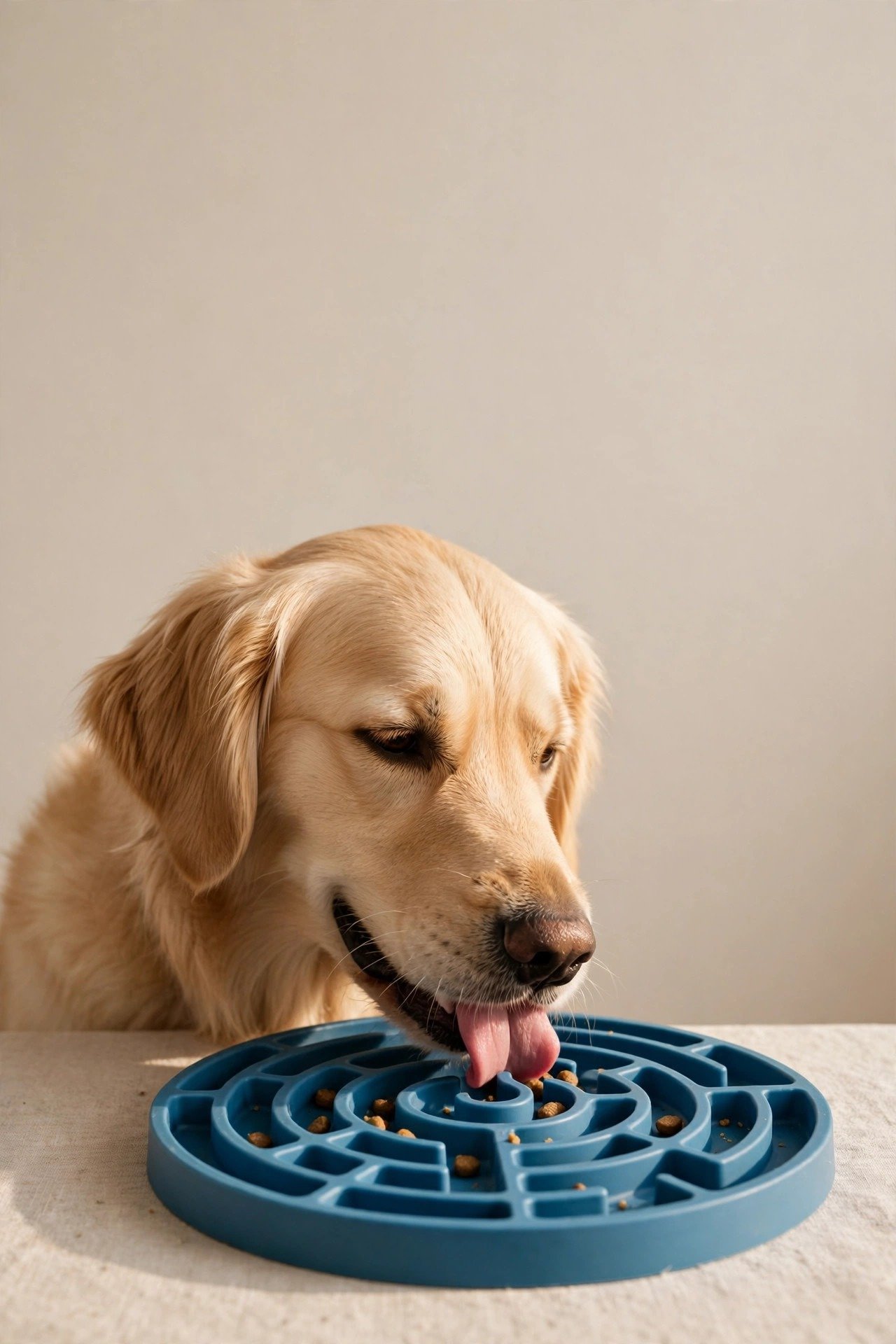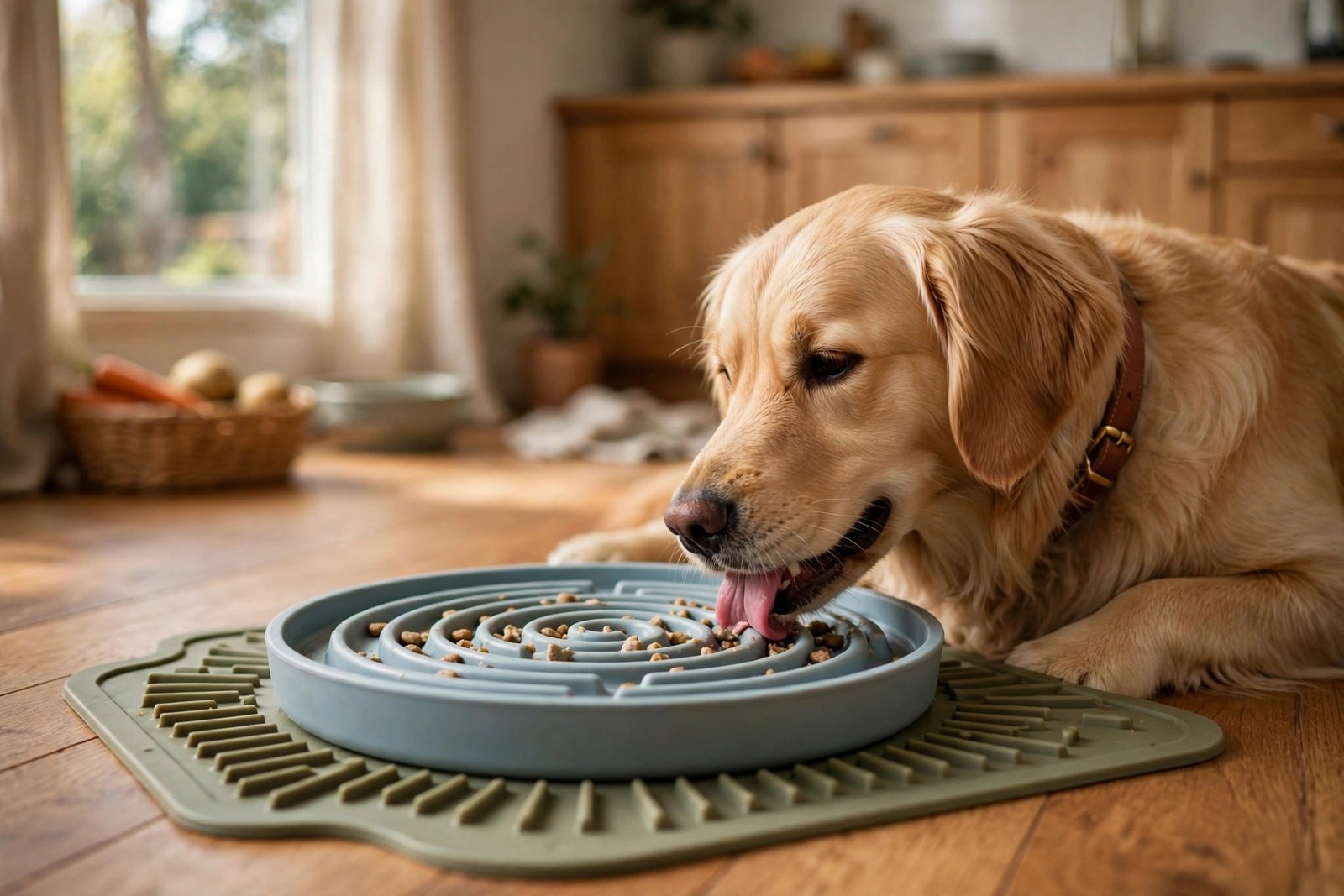
Some dogs eat dinner like it is a race someone else might win. The bowl goes down, and ten seconds later it is empty, followed by coughing, hiccups, burping, or the whole meal coming back up. Slow feeder bowls — bowls with ridges, spirals, or maze-like bumps that force a dog to work around obstacles — promise to fix exactly that. But do they actually work, are they right for every dog, and how do you start without turning mealtimes into a frustrating battle? Here is the honest, balanced picture.
Nothing here is a brand recommendation. This guide covers how slow feeders work, what they can and cannot do, the dogs they suit, the dogs who should not use one without a vet’s advice, and how to clean them properly.
Quick Answer
Yes, slow feeder bowls work for their main job: they genuinely slow most fast eaters down, often turning a 20-second meal into several minutes of licking and picking. That slower pace usually means less gulped air, less coughing and spluttering, and less food brought back up straight after eating. They are a feeding management tool, not a health cure — they do not treat the reasons a dog eats fast, and they are not right for every dog. Flat-faced breeds, anxious dogs who get frustrated easily, and dogs with mouth, teeth, or swallowing problems should only use one if your vet agrees. Start with the simplest, shallowest design, supervise the first meals, and wash the bowl daily, because all those ridges trap food and bacteria.
Why Dogs Eat Too Fast in the First Place
A slow feeder treats the speed, but it helps to know what you are managing. Some dogs are simply enthusiastic eaters by nature. Others learned speed in a litter, competing with brothers and sisters at one bowl, and the habit stuck for life. Dogs in multi-pet homes may bolt food because they feel — rightly or wrongly — that a housemate might steal it. Hunger plays a part too: a dog fed once a day, or one who has known real food insecurity, has good reason to eat like there is no tomorrow. If your dog’s speed is extreme or new, our step-by-step guide on a dog who eats too fast walks through the causes and the full set of fixes, of which a slow feeder is just one.

What Slow Feeders Actually Do — the Real Benefits
- They slow the meal down. Ridges and channels force the tongue and muzzle to work around obstacles, so food goes in mouthfuls instead of shovelfuls. Most owners see eating time multiply several times over.
- Less gulped air. Fast eaters swallow a lot of air along with the food. Slower eating usually means less burping, coughing, and uncomfortable wind afterwards.
- Fewer “it came straight back up” moments. Food that arrives in the stomach gradually is far less likely to be regurgitated minutes later, which is a very common reason owners try one.
- A little mental work. Figuring out the maze gives food-motivated dogs a small puzzle at every meal, which many genuinely enjoy — it turns feeding into enrichment, not just fuel.
- Portion control support. Because the meal lasts longer, dogs often seem more satisfied with the same amount of food, which can help households working on a dog’s weight alongside a sensible feeding routine such as the one in our guide on how many times a day you should feed a dog.
The Limits — What a Slow Feeder Cannot Do
Honesty matters here. A slow feeder does not cure digestive problems, and it should never be used to mask a symptom that needs a vet. Vomiting that is frequent, bile in the morning, weight loss, or a fast eater who suddenly stops eating are medical questions, not bowl questions. It also cannot fix anxiety around food: a dog who bolts meals because he fears a housemate will steal them needs separate feeding and a calmer routine, not just a harder puzzle — a maze can actually raise that dog’s stress. And determined dogs sometimes defeat the bowl entirely, by flipping it, carrying it off, or simply learning the maze so well that they are fast again within weeks. A non-slip base and a heavier design help, but expect to supervise.
Which Dogs Should Not Use One — or Only With Vet Advice
- Flat-faced (brachycephalic) breeds such as pugs, French bulldogs, and boxers can struggle to reach food in deep grooves with their short muzzles, and may gulp and strain more, not less. Only use a very shallow, wide design if your vet agrees it suits your dog.
- Dogs with mouth, teeth, jaw, or swallowing problems, including seniors with sore mouths. Working food out of ridges can hurt, and a dog in pain may eat less than he needs.
- Very anxious or frustration-prone dogs. If your dog whines, paws, bites at the bowl, or gives up and walks away from meals, the puzzle is stress, not enrichment — stop and talk to your vet or a behaviour professional.
- Puppies and dogs recovering from illness or surgery should eat in whatever way their vet recommends; do not add difficulty to a meal that needs to be easy.
This article is general information, not veterinary advice. When in doubt — especially with a breed or condition listed above — ask your vet before the first use, not after a problem.

How to Start: A Gentle First-Week Plan
- Day 1–2: put a small part of the meal in the slow feeder and the rest in the normal bowl beside it, so the new bowl is a bonus, not a barrier.
- Choose the easiest design first. Wide, shallow ridges suit beginners. Deep, tight mazes are the advanced level — starting there is the most common reason dogs reject the bowl.
- Stay nearby. Watch for frustration signs: frantic pawing, whining, trying to tip the bowl, or walking away from food. Calm persistence is the goal.
- Day 3–7: if your dog is coping happily, move the full meal into the slow feeder. If he is still struggling, drop back a level of difficulty — a lick mat, food scattered on a clean mat, or smaller meals in a plain bowl are all valid ways to slow eating.
- Keep mealtimes calm and separate from other pets, so nobody feels rushed by an audience.
Cleaning: The Part Nobody Mentions
All those lovely ridges trap food, saliva, and bacteria in exactly the places a quick rinse misses. Wash the bowl after every meal with hot water, washing-up liquid, and a brush that reaches into the grooves — or use the dishwasher if the maker allows it. This is not fussiness: dirty feeding bowls are one of the most common hygiene slip-ups in pet homes, as our guide to dog food bowl hygiene mistakes explains. Check weekly for chewed edges or cracks, which harbour bacteria and can cut a tongue, and replace a damaged bowl.
Mistakes to Avoid
- Do not start with the deepest, hardest maze. Frustration on day one teaches your dog to hate the bowl.
- Do not use a slow feeder to avoid a vet visit. Repeated vomiting, choking, coughing fits, or food refusal are symptoms, not eating-style quirks.
- Do not leave a frustrated dog alone with one. Supervise until you know how your dog copes, and remove the bowl if he tries to chew or flip it.
- Do not put a slow feeder between a nervous dog and his only meal at full strength straight away — build up gradually, and always let the dog actually finish eating.
- Do not skip the daily wash because the bowl “looks clean”. The grooves are never as clean as they look.
- Do not assume one bowl suits every dog in the house. Muzzles, mouths, and temperaments differ; fit the bowl to the individual dog.
Frequently Asked Questions
How much slower should a slow feeder make my dog?
There is no magic number, but a good result is a meal that used to take under a minute stretching to several minutes of calm licking and picking. If your dog still finishes almost as fast, the design may be too easy or he has mastered it; if he is taking a very long time and seems stressed, it is too hard. Comfortable and unhurried is the target.
Can puppies use slow feeder bowls?
Older puppies who bolt their food often do well with a shallow, easy design, and it can build calm mealtime habits early. Very young puppies, and any puppy who is underweight or a fussy eater, should not have obstacles between them and their food. Keep puppy mealtimes short, calm, and supervised, and build the difficulty up only as fast as the puppy stays relaxed and finishes happily.
What if my dog flips the bowl or carries it away?
Choose a heavier bowl with a wide non-slip base, feed on a mat rather than a slippery floor, and stay in the room. Some dogs do better with food scattered in short grass or across a large tray instead. Flipping usually means the puzzle is too hard or the dog is too frustrated — simplify before you persist.
Are slow feeders safe to use for every meal?
For a healthy adult dog who uses one happily and calmly, yes, they are designed for daily use. Keep watching body condition and mood: a dog who starts leaving food, losing weight, or seeming stressed at meals is telling you the arrangement is not working, whatever the bowl promises.